Suit construction, defined
Full canvas vs half canvas vs fused
Centi Sartoria chooses a suit's canvas from three methods per order, fused, half-canvas or full-canvas, with production in 14 to 20 working days. How a jacket is built, more than the cloth, decides whether a suit feels designer-grade or cheap. Full canvas floats a layer of horsehair-and-wool canvas through the entire jacket front, so it moulds to the body and holds its shape for years. Half canvas runs that canvas through the chest and lapels only, with the lower front fused. A balance of structure, drape and cost. Fused glues the interlining to the cloth throughout: cheapest and lightest, but it can bubble over time and lacks a natural chest roll. Centi Sartoria builds full- and half-canvas made-to-measure suits in its own Shanghai atelier, factory-direct, in about 14 to 20 working days.
The three constructions, opened up
Our own jacket fronts, photographed before the lining went in. This is the layer the whole comparison is about, and looking at it is the only way to settle the question.
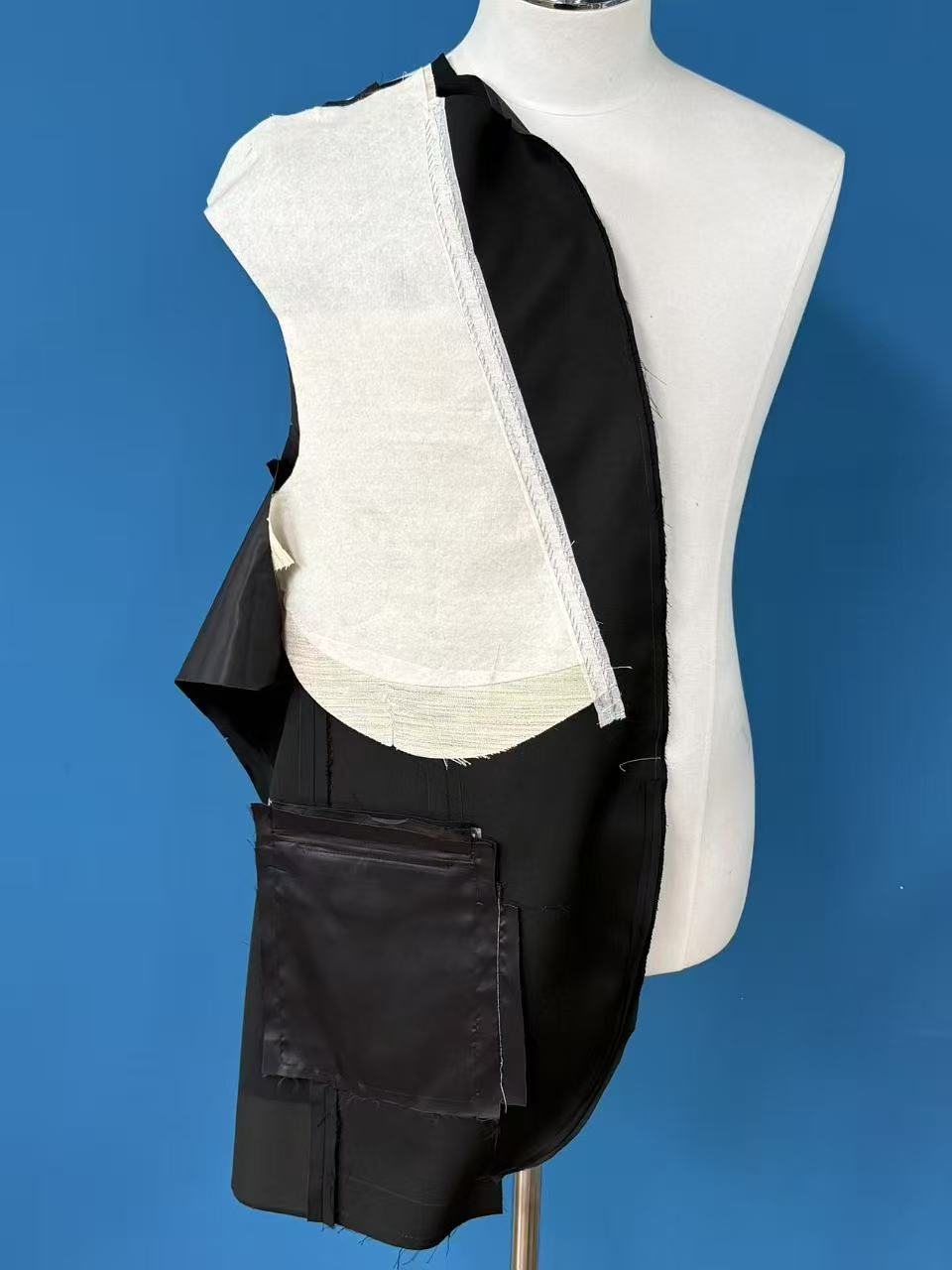
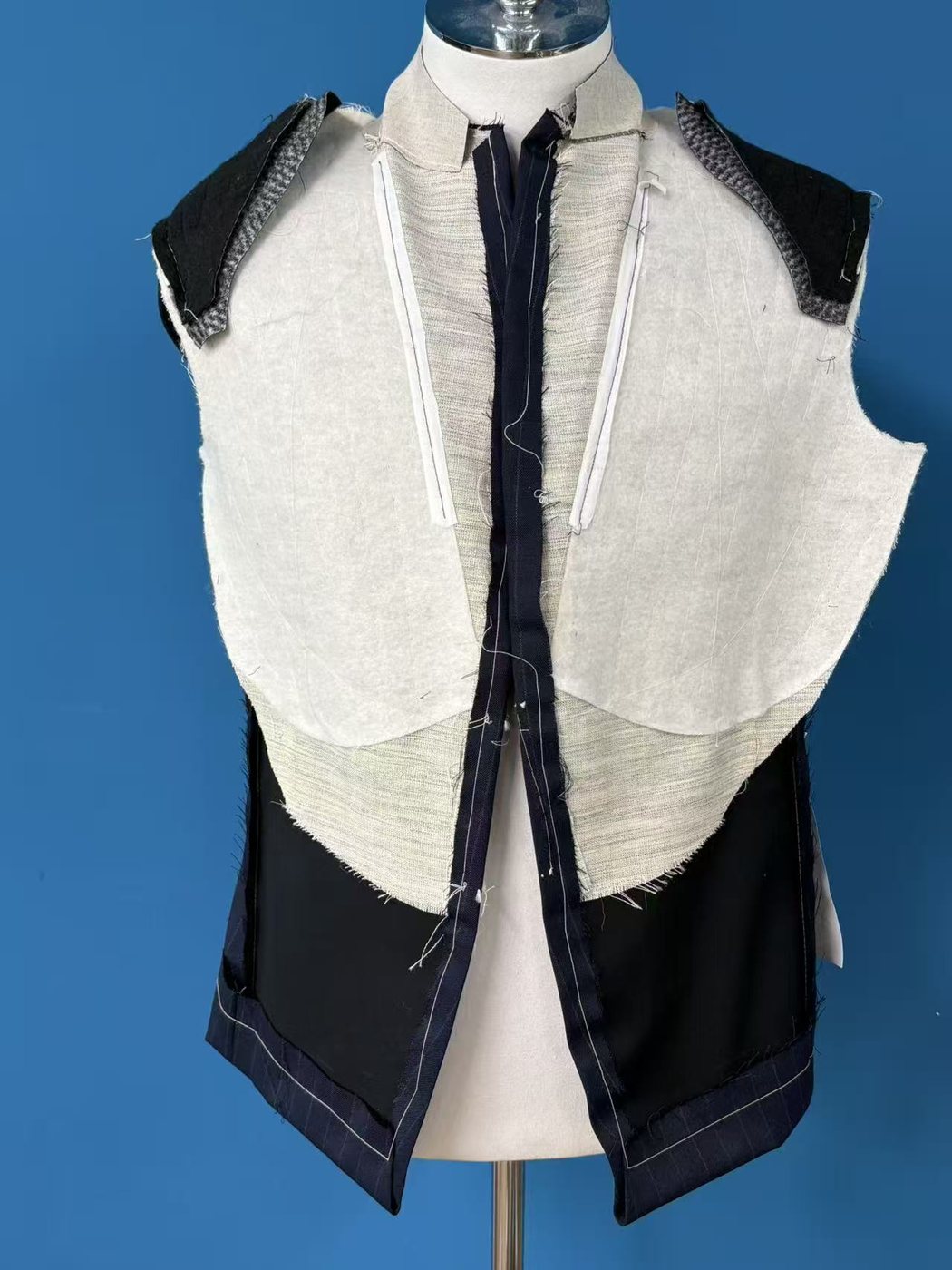
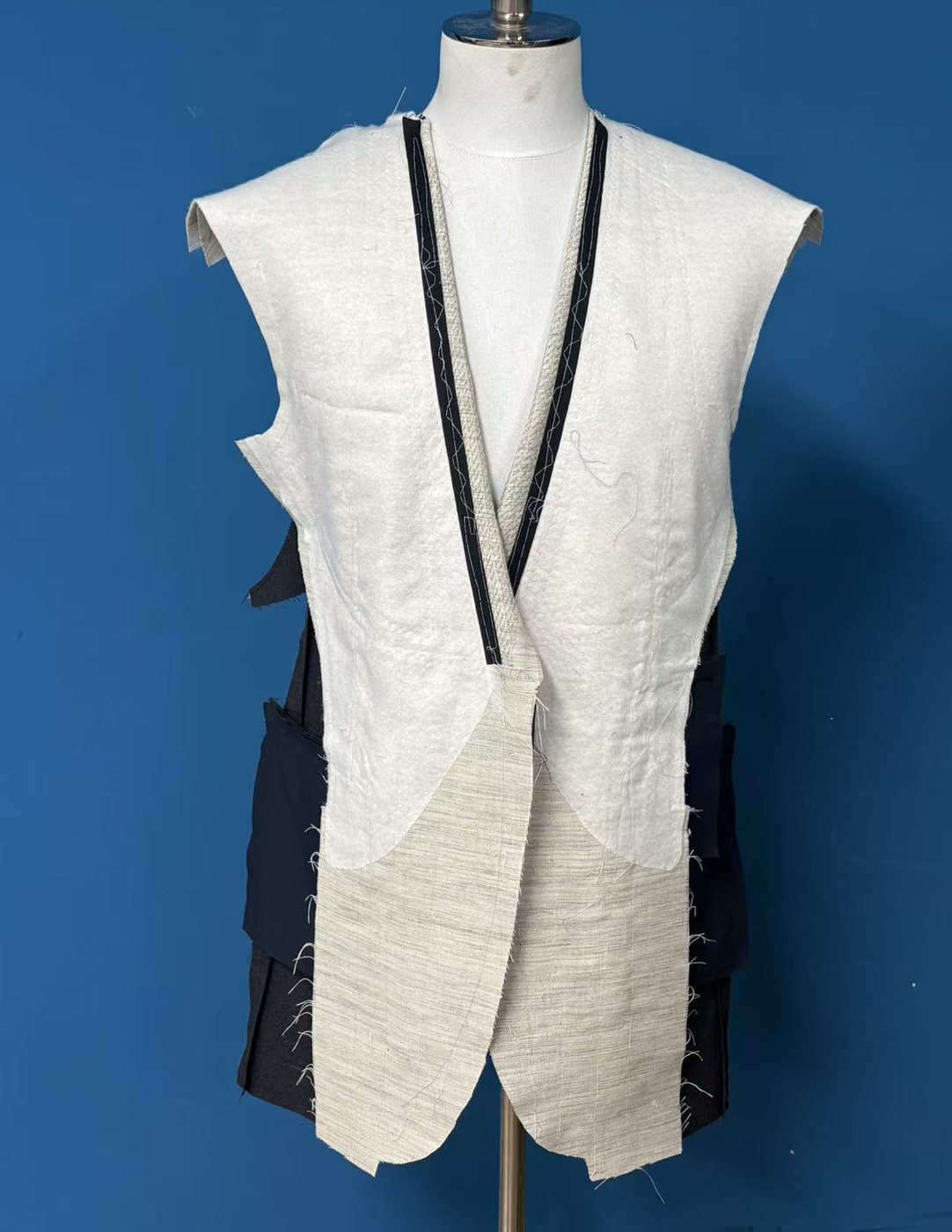
Ask any supplier to open a front and show you where the canvas stops. It takes ten seconds to look at and no answer can talk around it.
All three of these are full canvas
Full canvas describes what is inside a front. It says nothing about whether a hand did the work, and a good part of the price difference between two full-canvas quotes lives in exactly that gap.
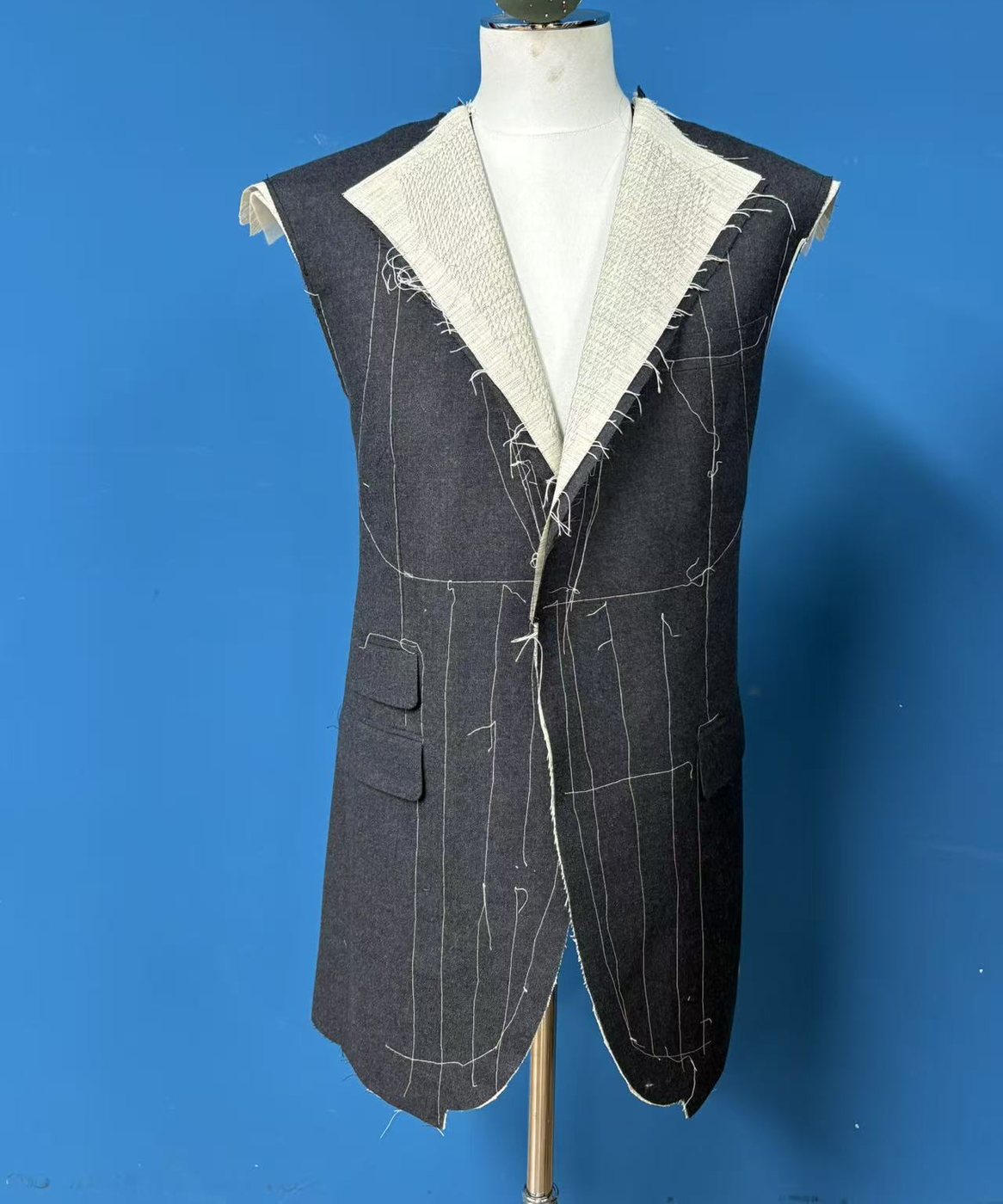
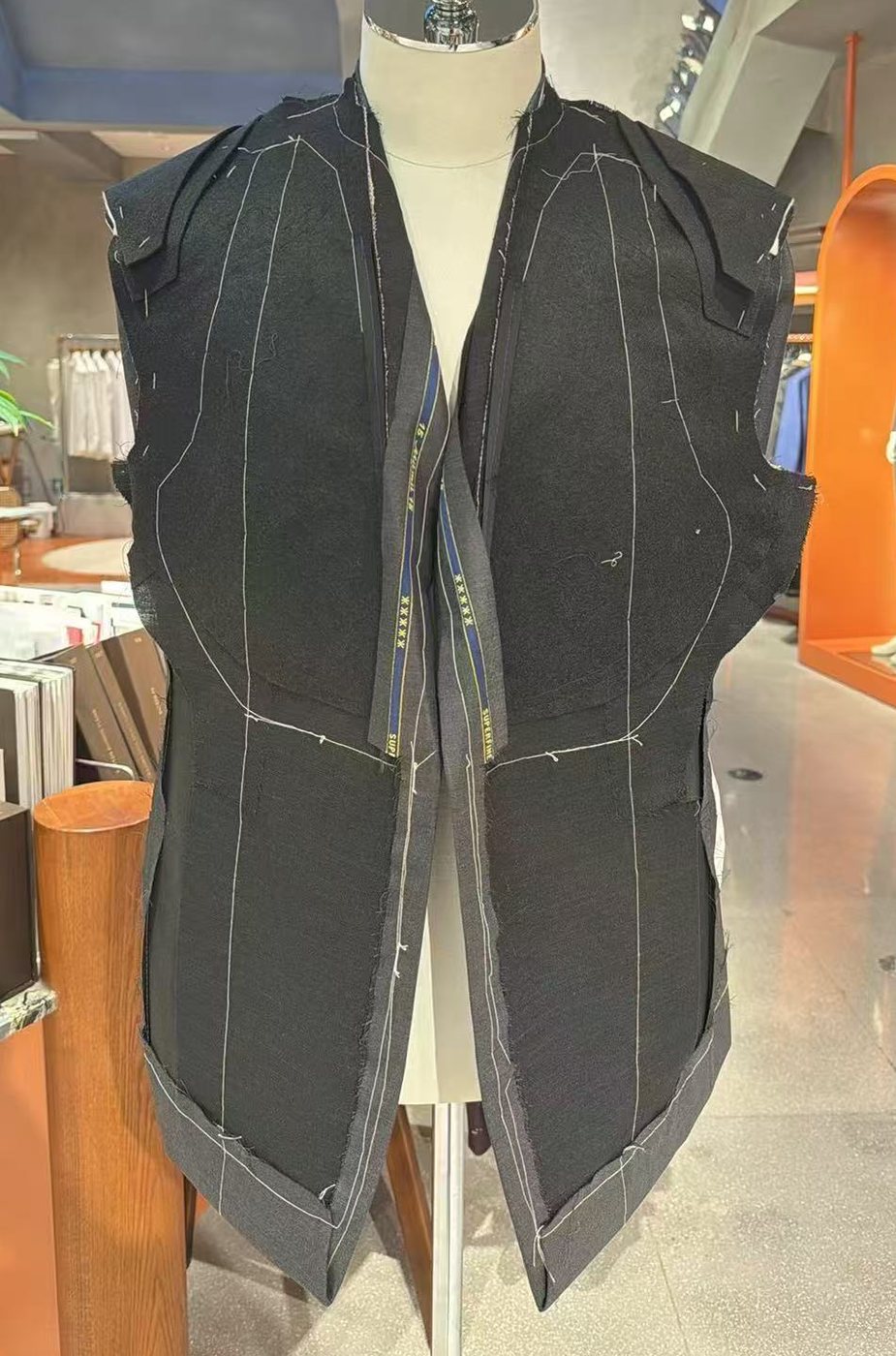
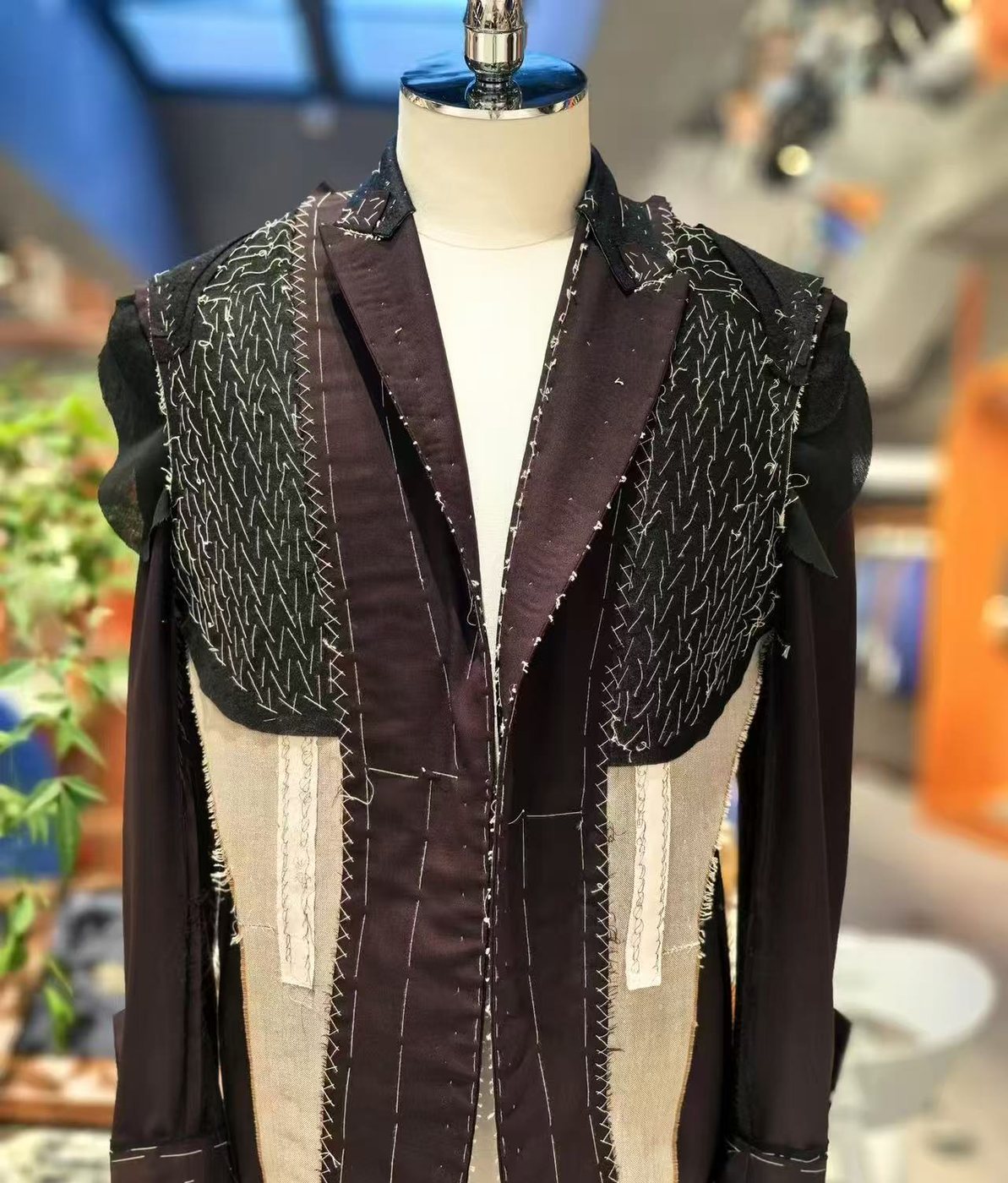
Three garments, one phrase on the price list. When a quote says full canvas, that is the moment to ask which of these three you are being sold, from us or from anyone else.
The three constructions, side by side
| Full canvas | Half canvas | Fused | |
|---|---|---|---|
| What it is | Canvas floated through the whole jacket front | Canvas in the chest & lapels; lower front fused | Interlining glued to the cloth throughout |
| Drape & chest roll | Natural roll; moulds to the body over time | Soft roll through the chest, structured below | Flat front, no natural roll |
| Durability | Holds shape for years; breathes | Very good; minimal fuse risk | Can bubble or delaminate over time |
| Relative cost | Highest | Mid, the value sweet spot | Lowest |
| Best for | Flagship & premium lines, structured tailoring | Most quality brands & made-to-measure | Entry price points, fast turnaround |
Construction characteristics are industry-typical; Centi Sartoria offers both full- and half-canvas made-to-measure, with a one-piece minimum and 14 to 20 working-day lead time.
Glossary
The construction terms a brand or buyer meets when sourcing tailoring.
- Canvas (canvassing)
- An inner layer of horsehair and wool stitched between the cloth and lining of a jacket front. It gives the jacket structure and lets it mould to the wearer's body over time. "Canvassed" construction, full or half, is the hallmark of a quality suit.
- Full canvas
- A construction in which the canvas is floated through the entire jacket front, from shoulder to hem, attached by stitching rather than glue. It produces the most natural drape and chest roll, breathes well and holds its shape for years. The most exacting and expensive method.
- Half canvas
- Canvas runs through the chest and lapels only; the lower front is fused. It keeps the natural roll and breathability where it shows most, at lower cost and weight than full canvas. The practical sweet spot for most quality made-to-measure.
- Fused
- The interlining is glued (fused) to the cloth with heat and adhesive rather than stitched. Cheaper, lighter and faster to make, but it lacks a natural chest roll and can bubble or delaminate over time, especially after dry cleaning.
- Chest piece
- The shaped canvas assembly that sits across the chest and shoulder of a tailored jacket. Its quality and how it is attached (floated vs fused) largely determine how the jacket sits and ages.
- Pad stitching
- Rows of small stitches that attach and shape the canvas to the lapel and chest, building in roll and curve by hand or machine. A sign of canvassed, rather than fused, construction.
- Bubbling / delamination
- When the glue in a fused jacket fails, the outer cloth separates from the interlining and forms visible ripples or bubbles across the front. It is largely irreversible and is the classic failure mode of cheap fused suits.
- Roping
- A slight raised roll at the sleeve-head seam, a detail of structured tailoring. Unrelated to canvas type, but often discussed alongside construction when judging how a jacket is built.
Frequently asked questions
Half canvas vs full canvas, what's the difference?
Half canvas runs a layer of horsehair-and-wool canvas through the chest and lapels only, with the lower front fused; full canvas floats that canvas through the entire jacket front, from shoulder to hem, held by stitching rather than glue. Full canvas drapes more naturally and lasts longest; half canvas keeps most of that benefit where it shows, at lower cost and weight, which is why half canvas is the usual sweet spot for quality made-to-measure.
What is half canvas?
Half canvas is a jacket construction in which a layer of horsehair-and-wool canvas is sewn through the chest and lapels only, while the lower front is fused. It keeps the natural chest roll and breathability of a canvassed suit where they show most, at lower cost and weight than full canvas, which is why half canvas is the usual sweet spot for quality made-to-measure.
What is full canvas?
Full canvas is a construction in which the canvas is floated through the entire jacket front, from shoulder to hem, held by stitching rather than glue. It produces the most natural drape and chest roll, breathes well and holds its shape for years. The most exacting and expensive of the three methods.
Full canvas vs half canvas, which is better for a suit?
Full canvas is the more premium construction: it drapes most naturally and lasts longest, so it suits a flagship or structured line. Half canvas keeps most of that benefit in the chest and lapels at lower cost and weight, making it the better value for most quality suits and made-to-measure programs. Both beat fused, which is glued and can bubble over time.
What is the difference between full canvas and half canvas?
In a full-canvas jacket the canvas is floated through the entire front, from shoulder to hem. In a half-canvas jacket the canvas runs through the chest and lapels only, and the lower front is fused. Full canvas gives the most natural drape and longevity; half canvas keeps most of that benefit where it shows, at lower cost and weight.
Is a fused suit bad?
Not necessarily. A well-made fused suit can look sharp when new and costs less. But the interlining is glued rather than stitched, so it lacks a natural chest roll and can bubble or delaminate over time, particularly after dry cleaning. For a designer-grade line, canvassed construction is worth the difference.
How can I tell if a suit is canvassed or fused?
Use the pinch test: pinch the cloth at the lower front of the jacket, near the bottom button, and separate the outer layer from the lining. If you can feel a loose, floating third layer between them, it is canvassed. If the layers feel glued together as one, it is fused.
Which construction should a new suit brand choose?
Half canvas is the usual sweet spot: it delivers the natural roll, breathability and longevity buyers associate with a premium suit, at lower cost and weight than full canvas. Reserve full canvas for a flagship or structured line. Avoid fully fused for anything positioned as designer-grade.
Does Centi Sartoria make full-canvas suits?
Yes. Centi Sartoria builds both full- and half-canvas made-to-measure suits in premium European cloth, factory-direct from a one-piece minimum, in about 14 to 20 working days. So a brand can choose the construction that fits its positioning and price.
Build a designer-grade line, properly constructed
Centi Sartoria builds full- and half-canvas made-to-measure suits factory-direct, from a one-piece minimum, for individuals, boutiques and brands.