Journal Entry
Pitti Uomo 110: 5 Things a Suit Factory Notices on the Floor
A made-to-measure suit factory's read on Pitti Uomo 110, soft tailoring, high-twist summer cloth, colour, low-inventory models and made-to-order, and what each trend means for anyone launching a tailoring brand.
Most coverage of Pitti Uomo is shot from the street: the pitti peacocks, the double-breasted flexes, the photographers. We read the show from the other side of the cutting table. Pitti Uomo 110 (16-19 June 2026, Fortezza da Basso, under the season's "The Pitti Pool" theme) is a useful temperature check on where tailoring is going and, if you're thinking about launching a line, where the room is. Five things a factory notices.
Soft tailoring
The structured, heavily padded suit has been retreating for years, and the floor confirms it again: unlined and half-lined jackets, natural shoulders, lighter internal construction. For a maker this is a craft signal as much as a style one. Soft tailoring is harder to do well, because there is less structure to hide the cutting and the handwork behind. A clean soft shoulder tests an atelier, because padding hides sins and here there is none to hide behind.
For a brand, "soft" is a positioning you can own, but only with a factory that can execute half-canvas and unlined work cleanly. Not every factory can, and that gap is where the positioning comes from.
Summer cloth
A June show is a fabric show. High-twist wools, fresco-style open weaves, wool-linen and wool-silk-linen blends, crease-resistant travel cloths: the materials that look tailored but survive heat and a carry-on. The mills behind these are largely European. They are also the same names a small brand can reach through a factory, Biella and Huddersfield wool houses rather than some unobtainable supplier you need a decade of relationships to get an appointment with.
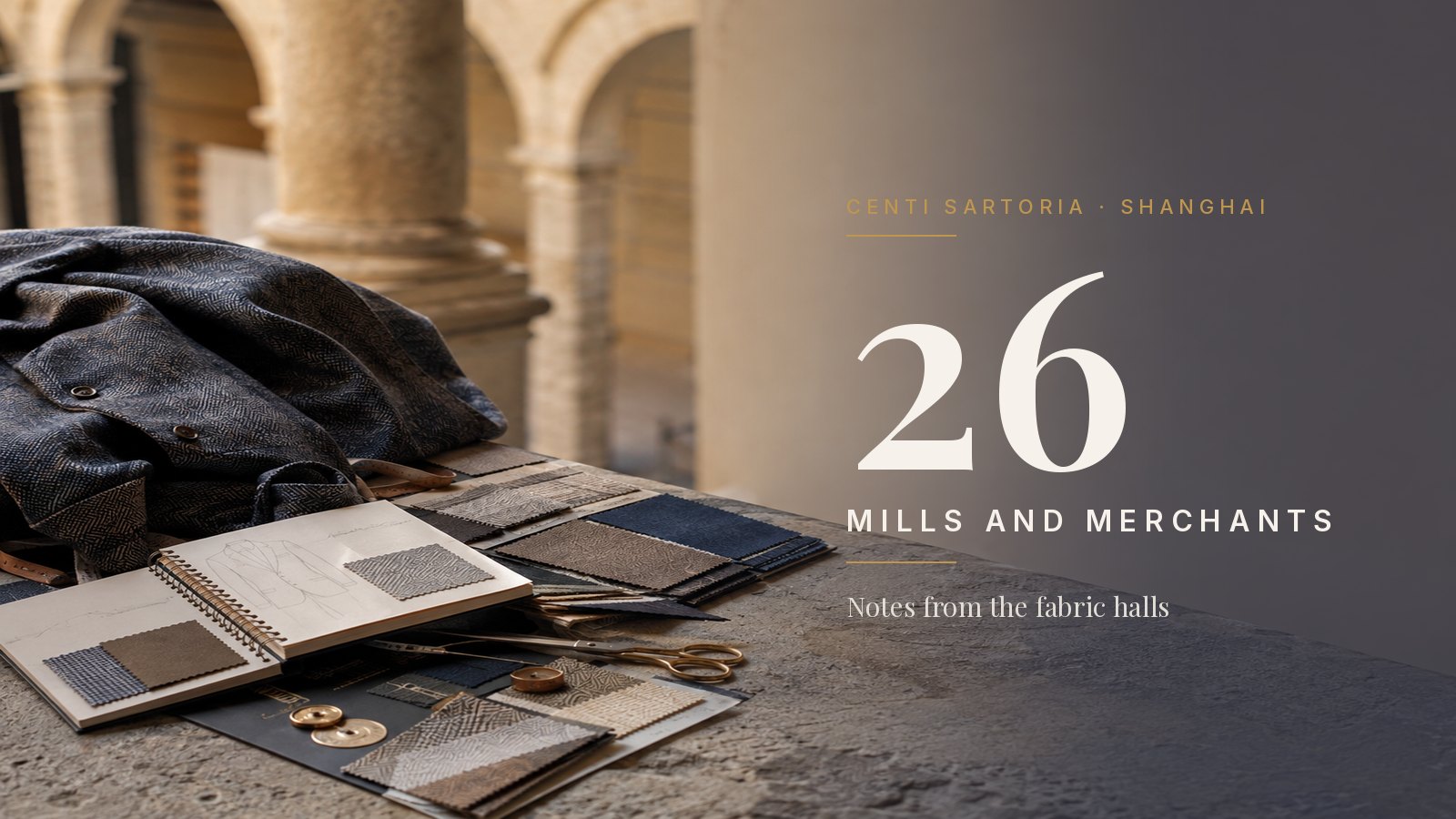
The brand angle here is that your cloth story can be as serious as anyone's on the floor. We work premium European cloth from 33 mills and merchants. In our experience the fabric is rarely what separates a new label from an established one; execution and consistency are.
Colour and pattern
Against the season's pool-side theme, expect more colour confidence, greens, browns, soft blues, texture and check, rather than another wall of navy and charcoal. Tailoring is loosening up without losing its tailoring. Whether it survives past one season is another matter. The direction is clear enough.
If you are building a label, a tight, opinionated colour-and-cloth edit gets you noticed faster than trying to offer everything. New labels win on a clear point of view rather than on breadth.
Low-inventory business models
Walk the younger end of the floor and the pattern is clear: made-to-order, pre-order, capsule drops, "no warehouse" brands. Holding stock is the expensive, risky part of fashion, and it is the part new founders are designing out. Made-to-measure and to-order tailoring is the purest version of that, because you make the suit after it is sold.
For a brand, this means you can launch a credible tailoring label without buying inventory at all. Made-to-measure factory-direct means production starts when the order comes in: a one-piece minimum, roughly a 14 to 20 working-day cycle, reorder by the piece.
"Made in Italy" feel, sourced globally
Up close, a lot of the floor's value is European cloth plus high-skill construction, and the construction increasingly happens in large, capable ateliers wherever the skill and capacity are. Anyone who sources already knows this. It just rarely gets said out loud.
For a new label, you do not need to own a Florentine workshop to ship Florentine-grade tailoring. You need European fabric and an atelier that can build it, which is the model we run: a Shanghai atelier of 200 house tailors, factory-direct, working the same European mills the show runs on.
What this means for founders
Pitti is inspiring, and it can also be intimidating, because it looks like a world you need a heritage and a factory to enter. From inside manufacturing the read is the opposite. The barriers to launching a tailoring brand are lower now than they have ever been: European cloth is accessible, construction is accessible, and inventory risk is optional. What is scarce, and what Pitti is really selling, is a point of view.
If 110 gave you one, the unglamorous next step is to turn it into a single sample. We wrote the founder's version of that here, from a Pitti idea to your own suit brand, and the sourcing version here, a manufacturer to create your own clothing brand.
When you want to make the first piece, tell us what you saw and we'll quote a sample.
Centi Sartoria is a factory-direct made-to-measure suit manufacturer in Shanghai, working premium European cloth from a one-piece minimum.