The Three-Minute Price Check: What a Tailor Shop Gets Back, and What Happens Next
A walkthrough of the free three-minute check at b2b.centisartoria.com/start: seven quick choices, the wholesale price sheet, your margin per suit, and what follows.
VOL. I · EST. 1996
Craft perspectives from the Shanghai atelier.
A walkthrough of the free three-minute check at b2b.centisartoria.com/start: seven quick choices, the wholesale price sheet, your margin per suit, and what follows.
Atelier Munro runs 90+ made-to-measure locations worldwide. An independent tailor shop competes on pattern control, client depth and a factory-direct supply line. A side-by-side for shop owners weighing their position.
Ten questions a tailor shop should ask any made-to-measure factory before placing the first order, with what a good answer looks like for each one.
Hardy Minnis is a Scottish cloth merchant inside a merged English catalogue. What the name means for a tailor shop ordering through a made-to-measure factory, and how to read a bunch reference that says HFW on the cover.
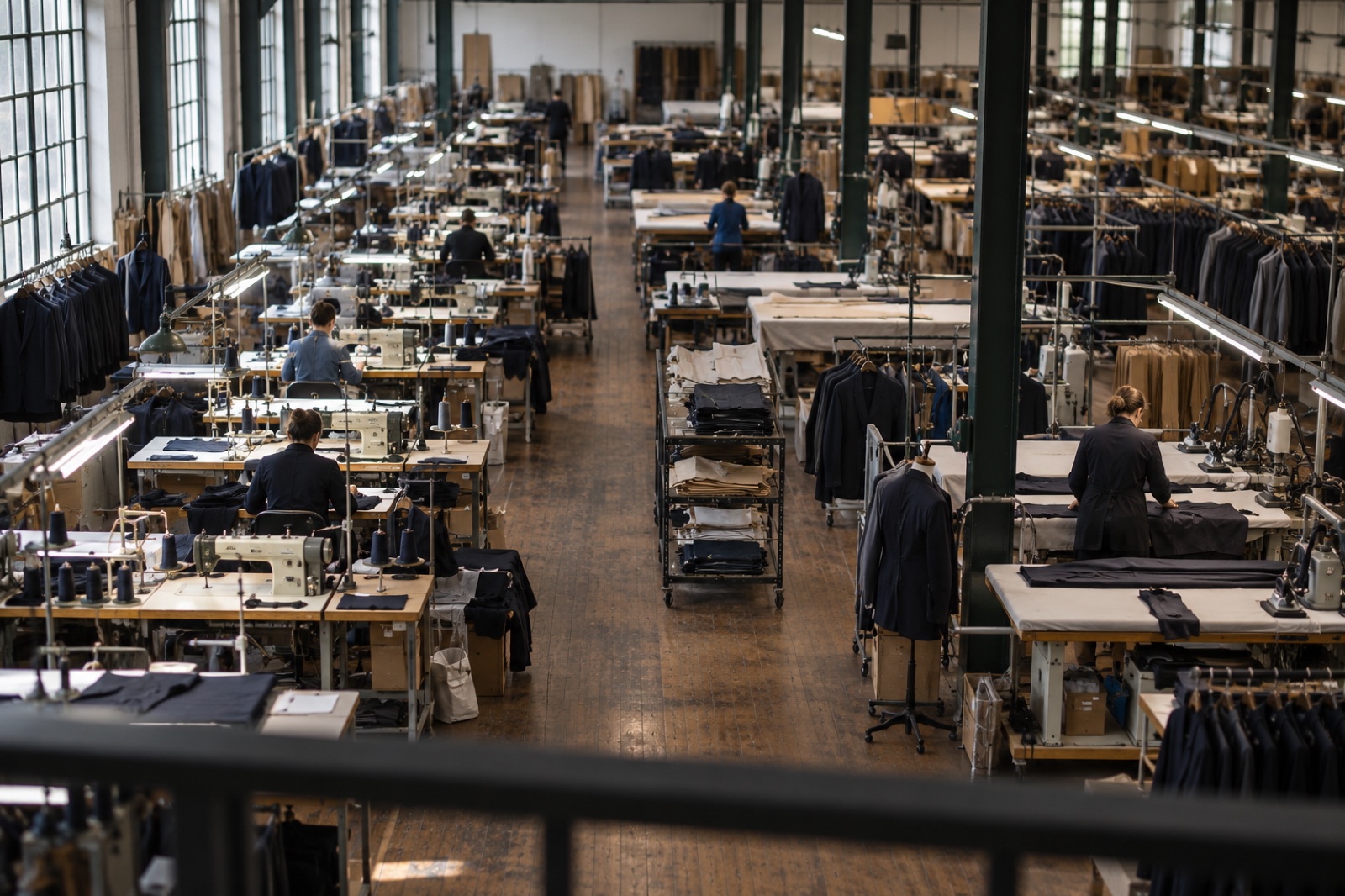
A map of the Chinese factories that make made-to-measure suits for tailor shops and brands, listed by city, with what each publishes about minimum orders, lead times and prices.
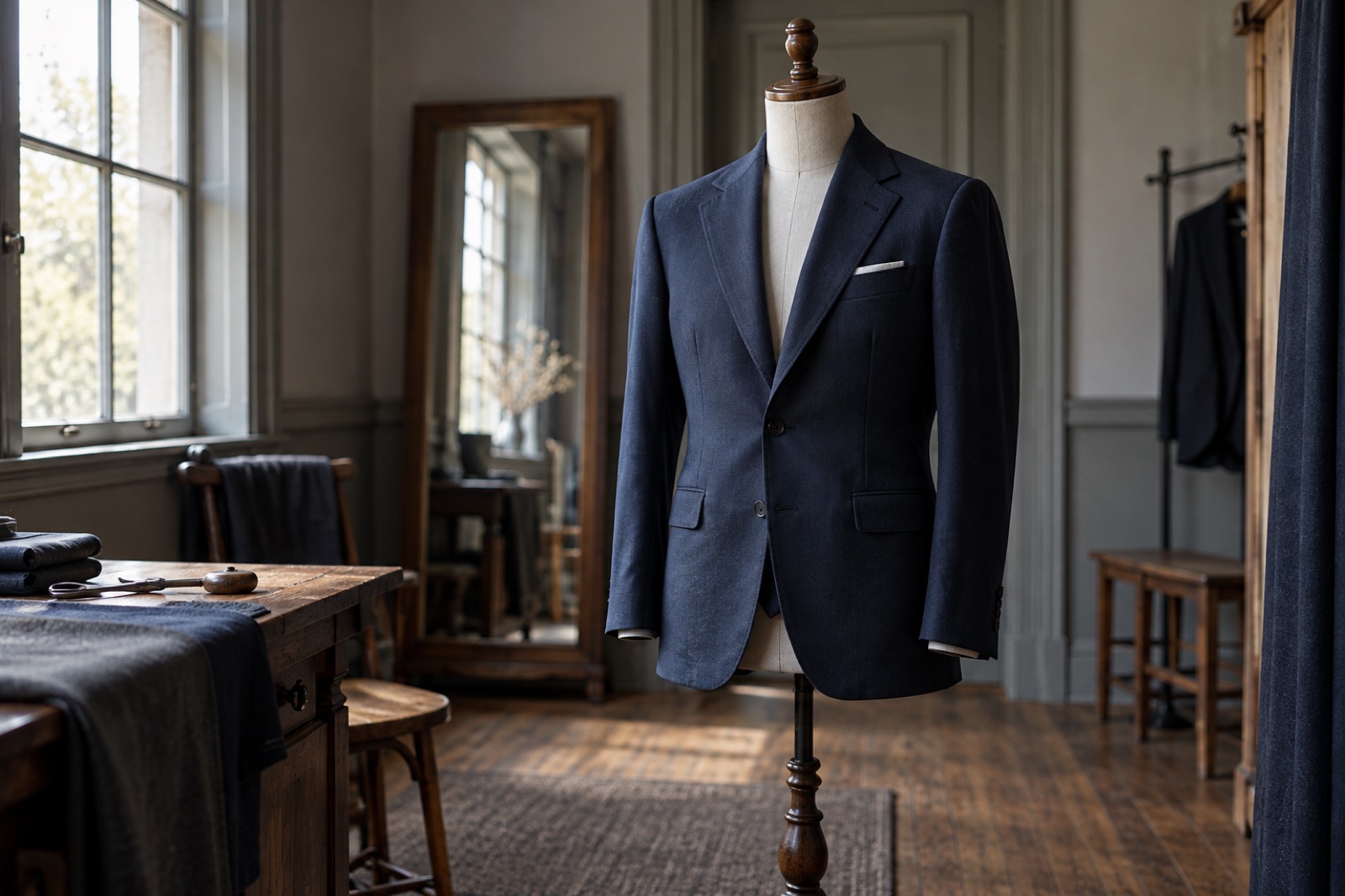
Most made-to-measure factories accept a one-piece trial order. A comparison of published minimums, and a checklist of what that single suit should prove before you reorder.
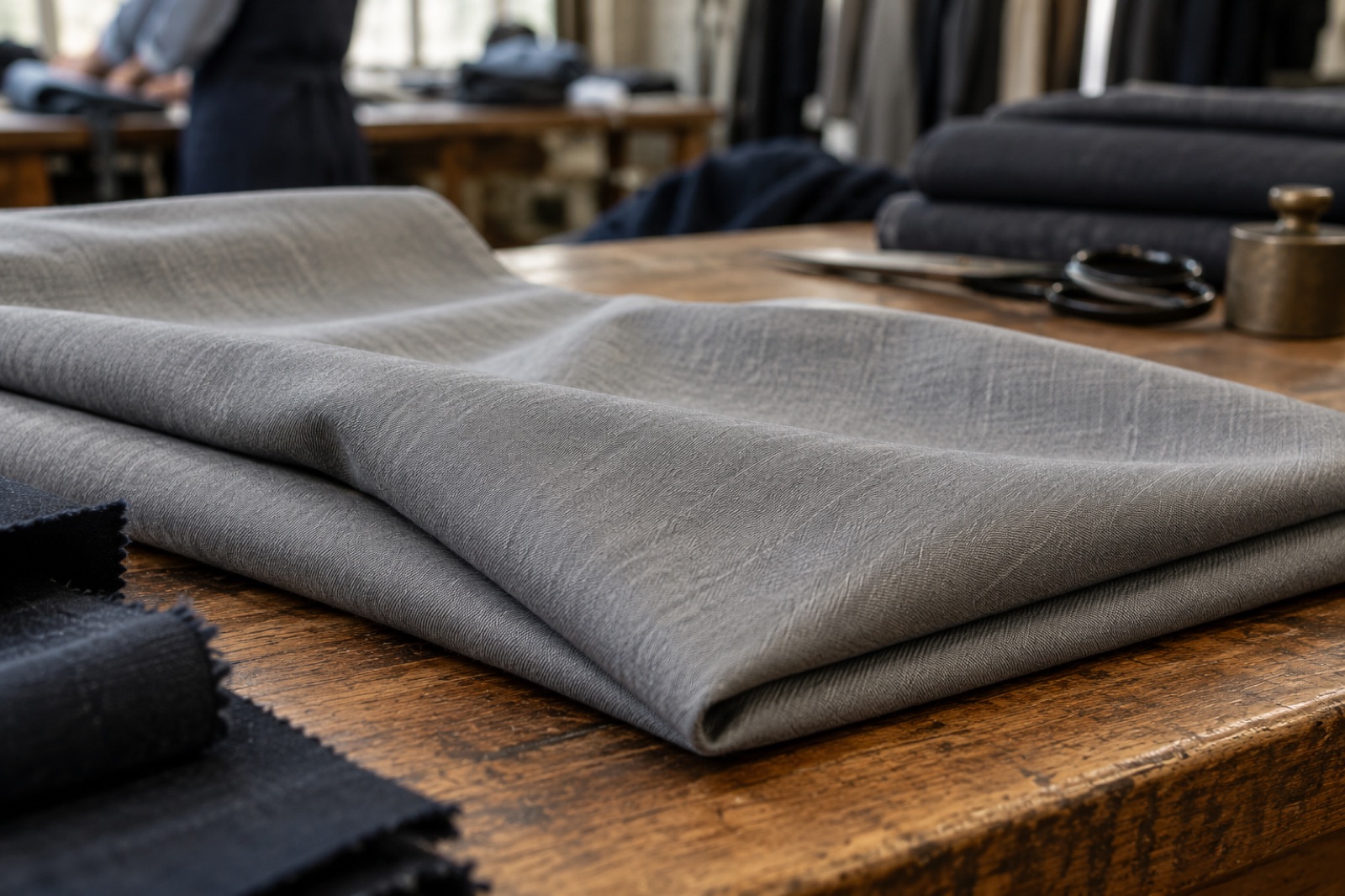
Tallia di Delfino, Guabello and Cerruti share a Biella postcode but not an owner. A plain map of which holding group sits behind which bunch card, and why it matters when your client asks.
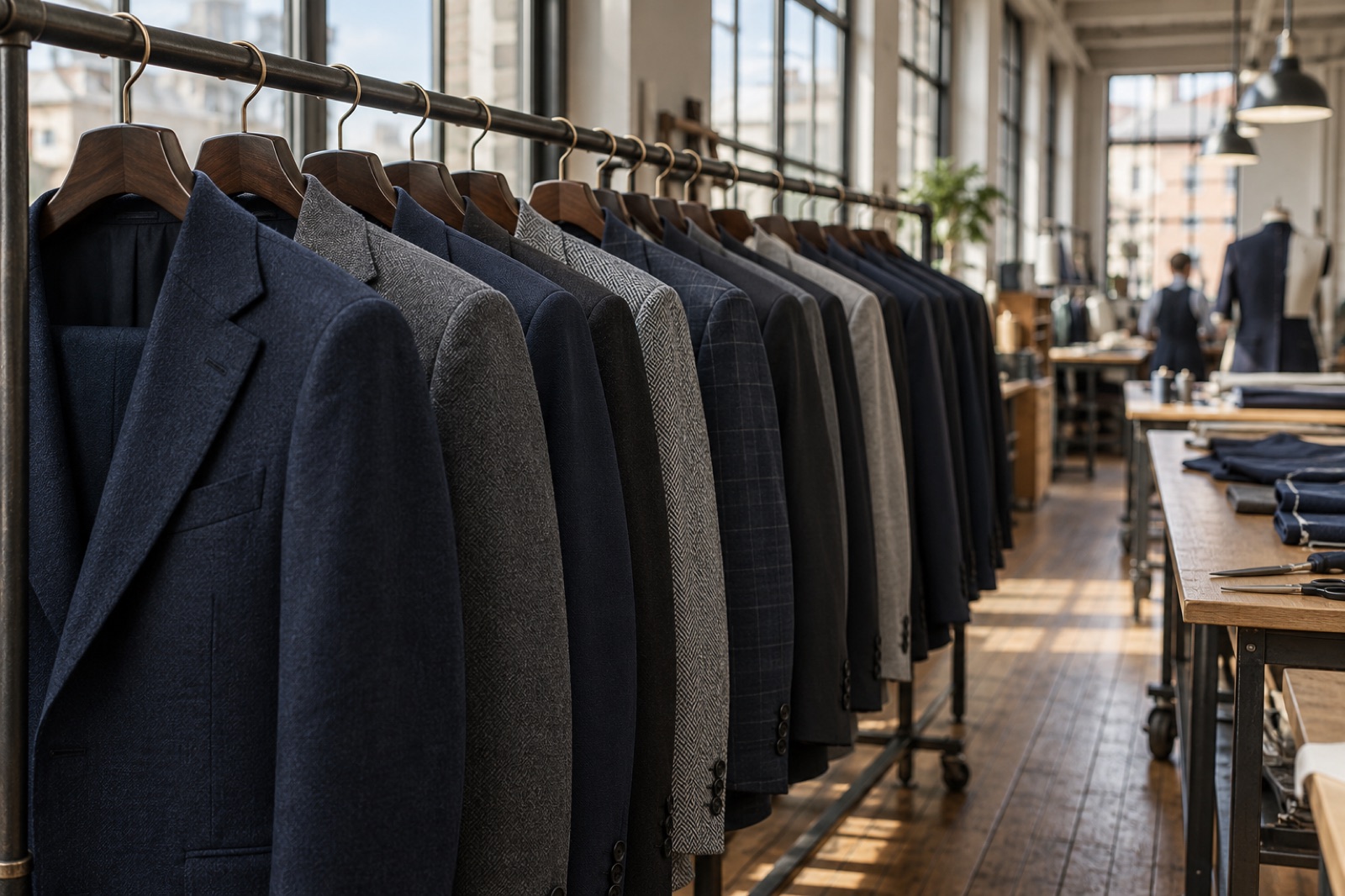
Three production countries, three cost structures, three sets of trade-offs. A side-by-side look at what Formens in Romania, Davion in Portugal and Centi Sartoria in Shanghai each publish, so a European tailor shop can compare before it calls.
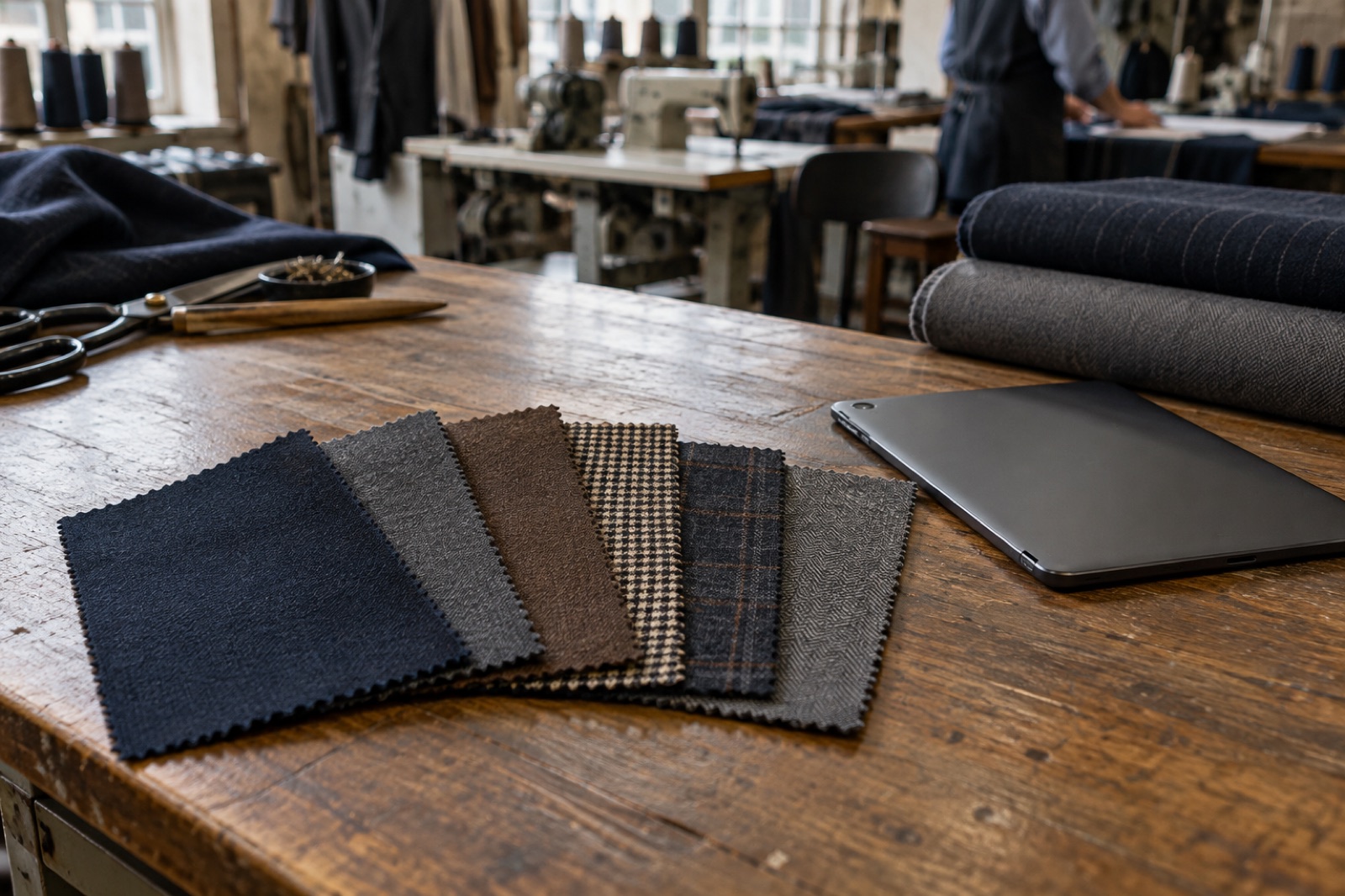
Most made-to-measure factories do not send full bunch books. A guide for tailor shops on using a digital fabric book, requesting swatches and narrowing 822 options to the six that matter for each client.
A side-by-side look at which trade MTM suppliers publish a starting price and which leave it behind a form, plus the four questions a shop should ask before shortlisting either kind.
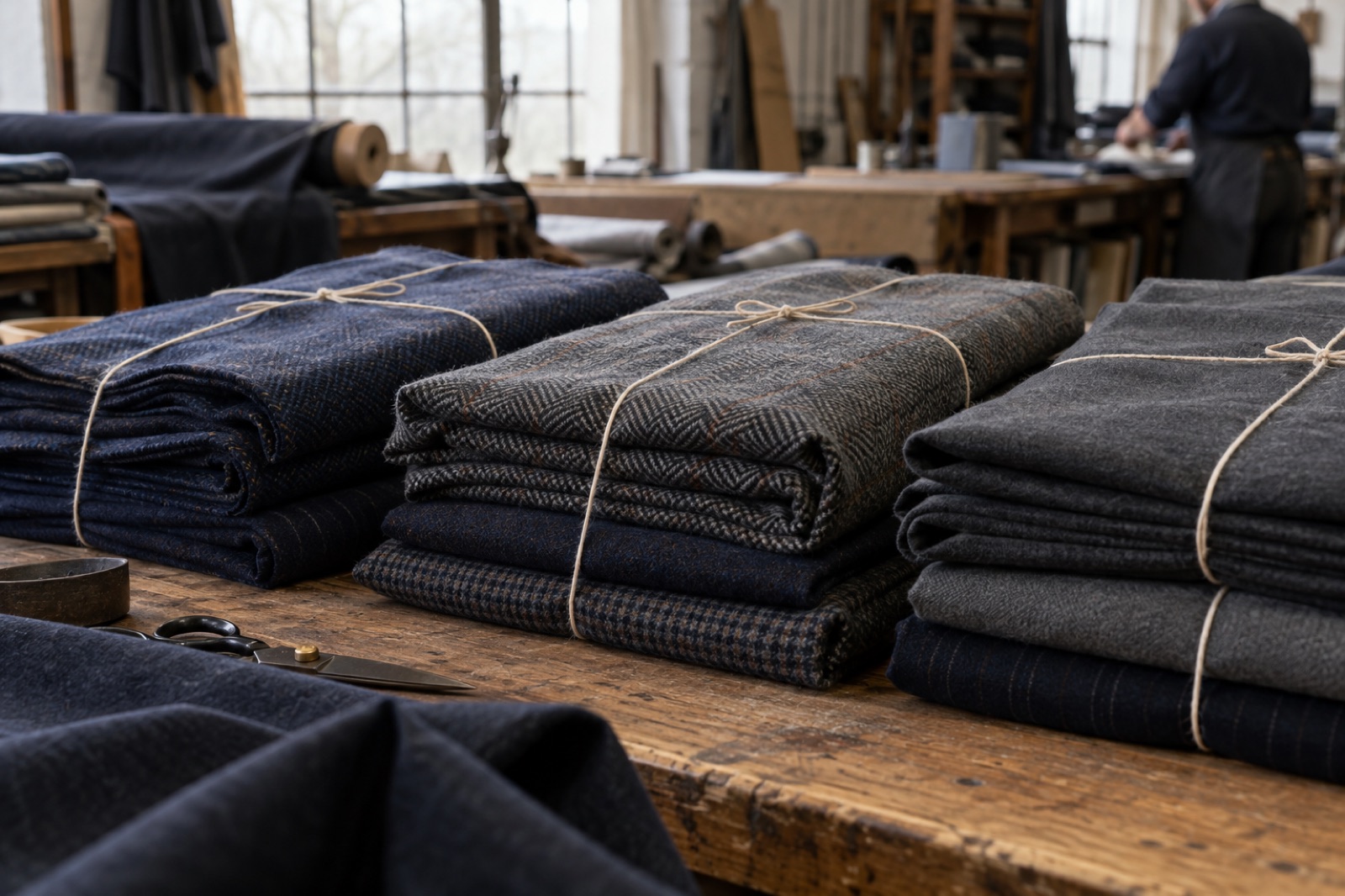
A tailor shop does not need to abandon cloth it already owns just because the factory does not stock that house. CMT starts from USD 100 per two-piece suit, and the only question is how much to ship.
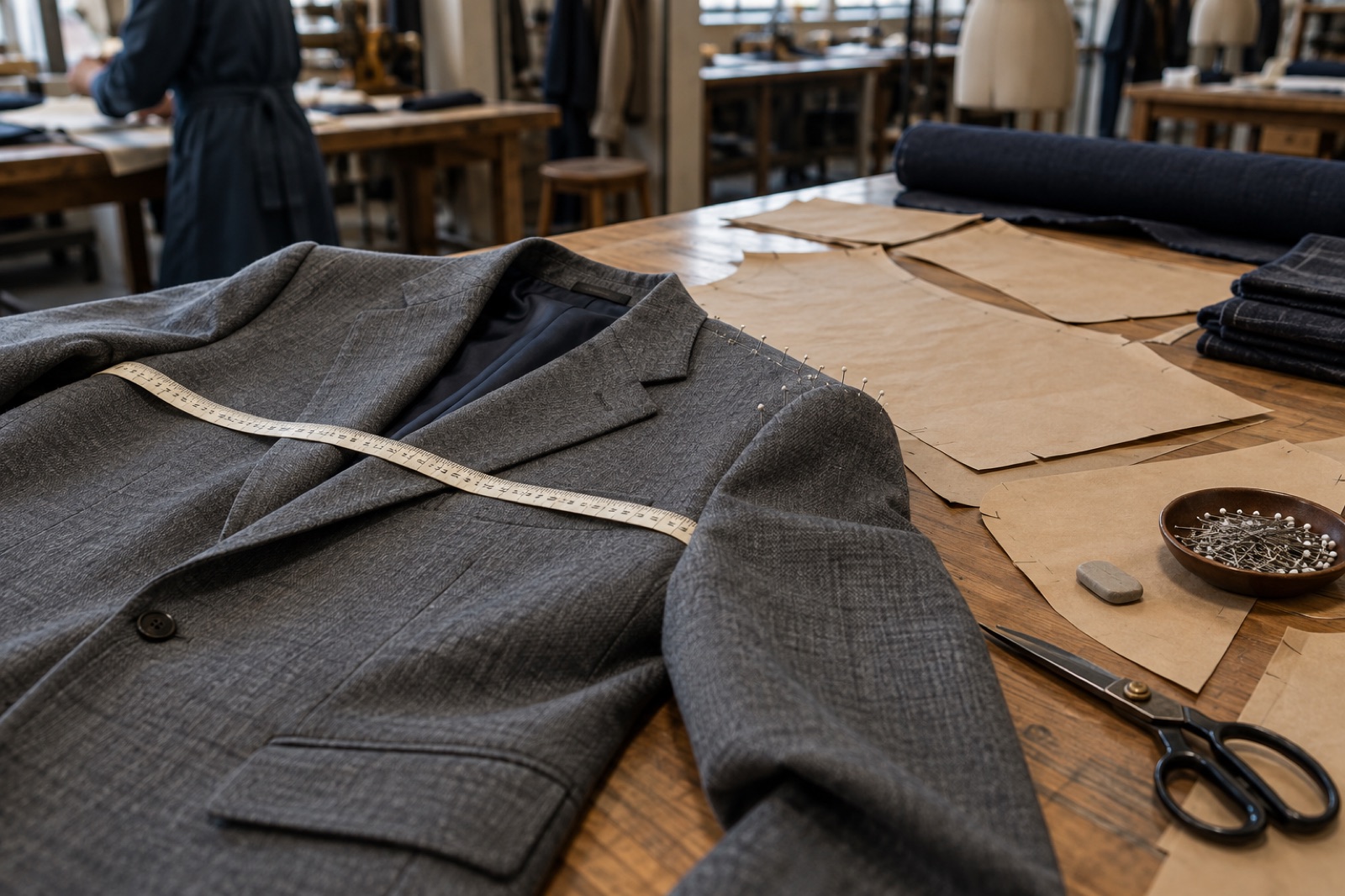
A measurement sheet tells a new factory what you measured. A reference garment tells it what those numbers were supposed to produce. How to pick, mark and send the right one.
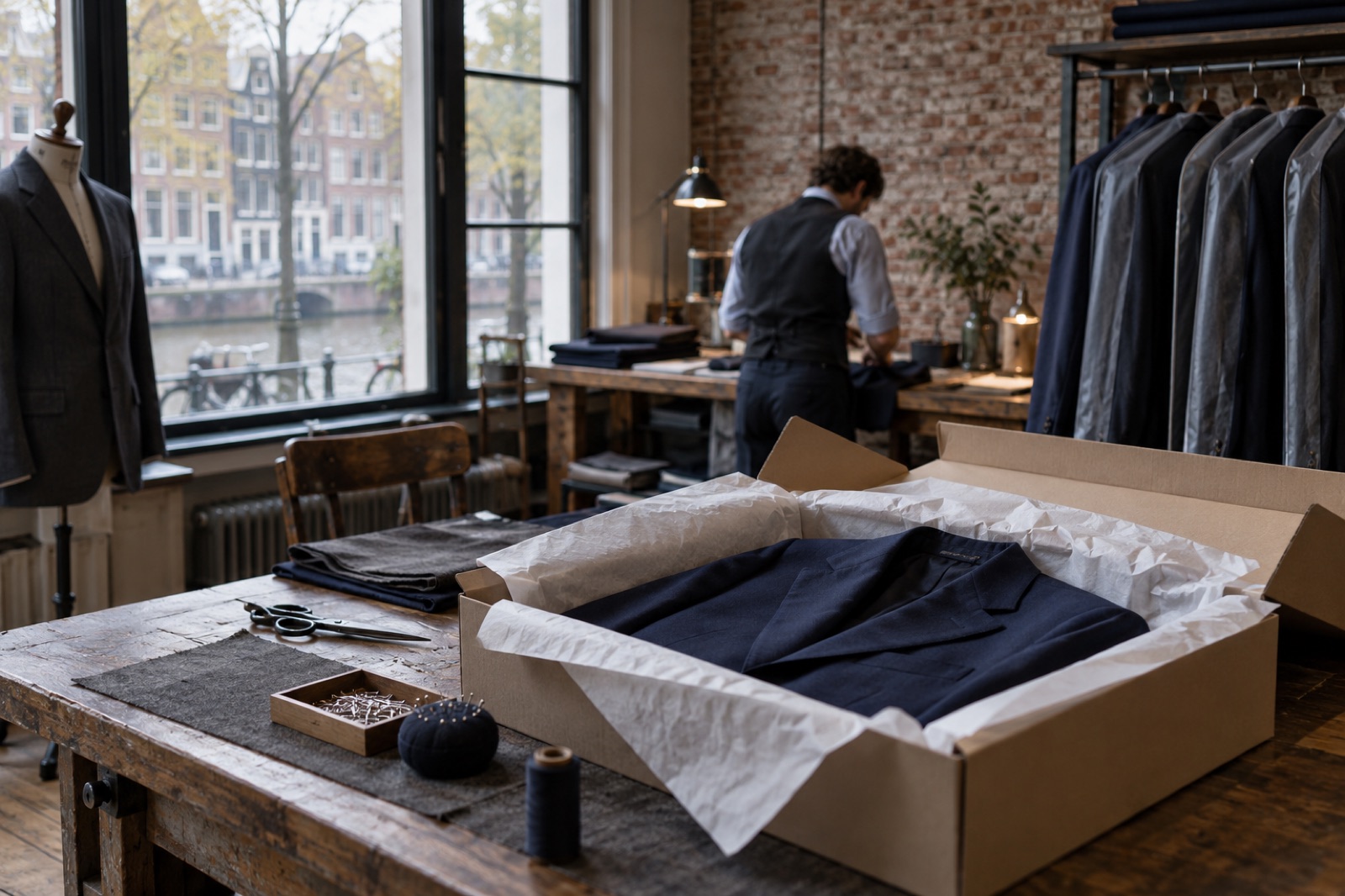
A Dutch or Belgian tailor shop ordering made-to-measure suits from a Shanghai factory faces shipping, customs and currency questions that a European supplier does not raise. Everything else, from one-piece minimums to public pricing, stays the same.
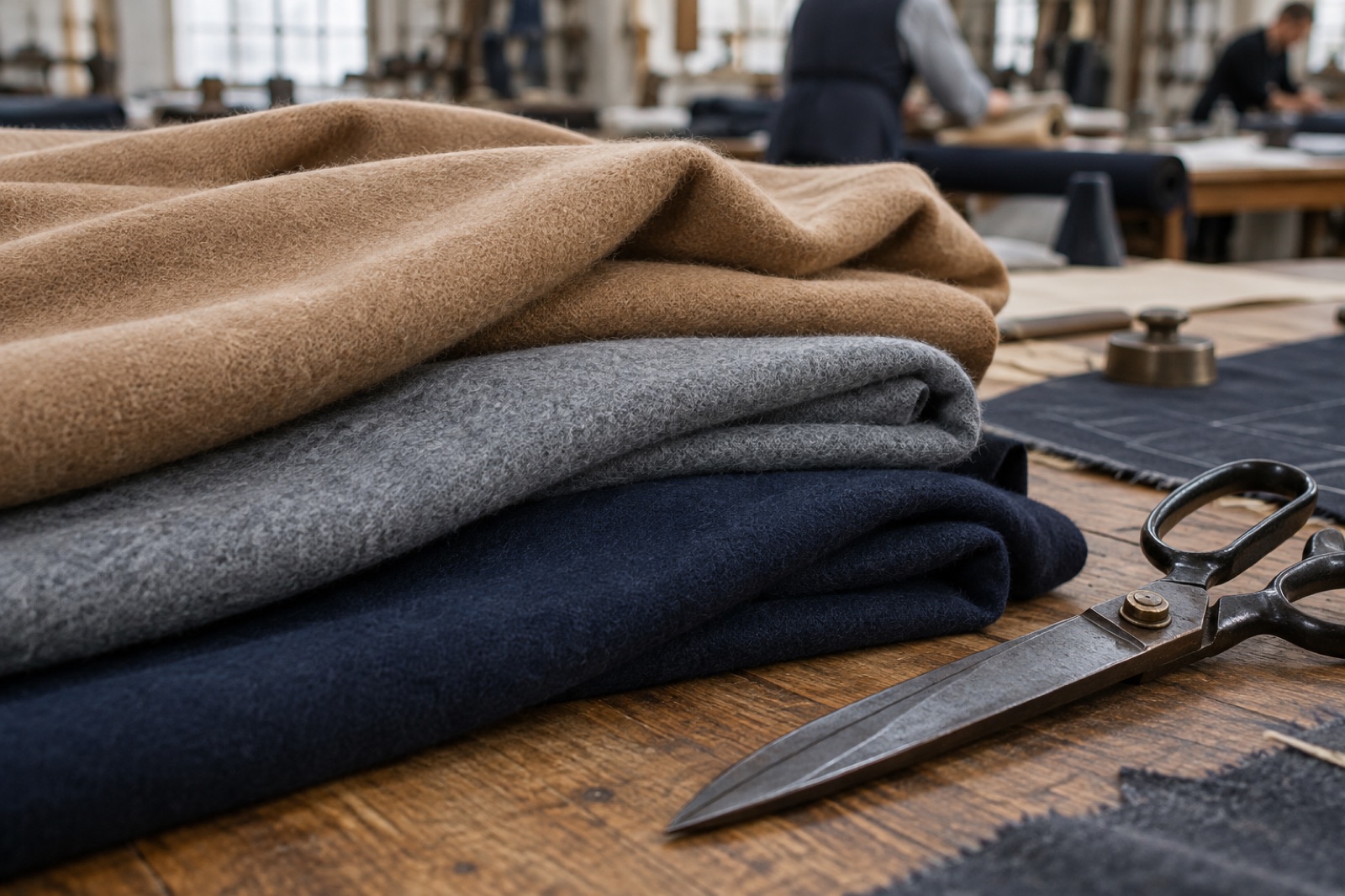
A tailor shop can order Loro Piana cloth through a made-to-measure factory, but there is no stock to pull from and no public bunch book to browse. Here is what to settle before you quote a client.
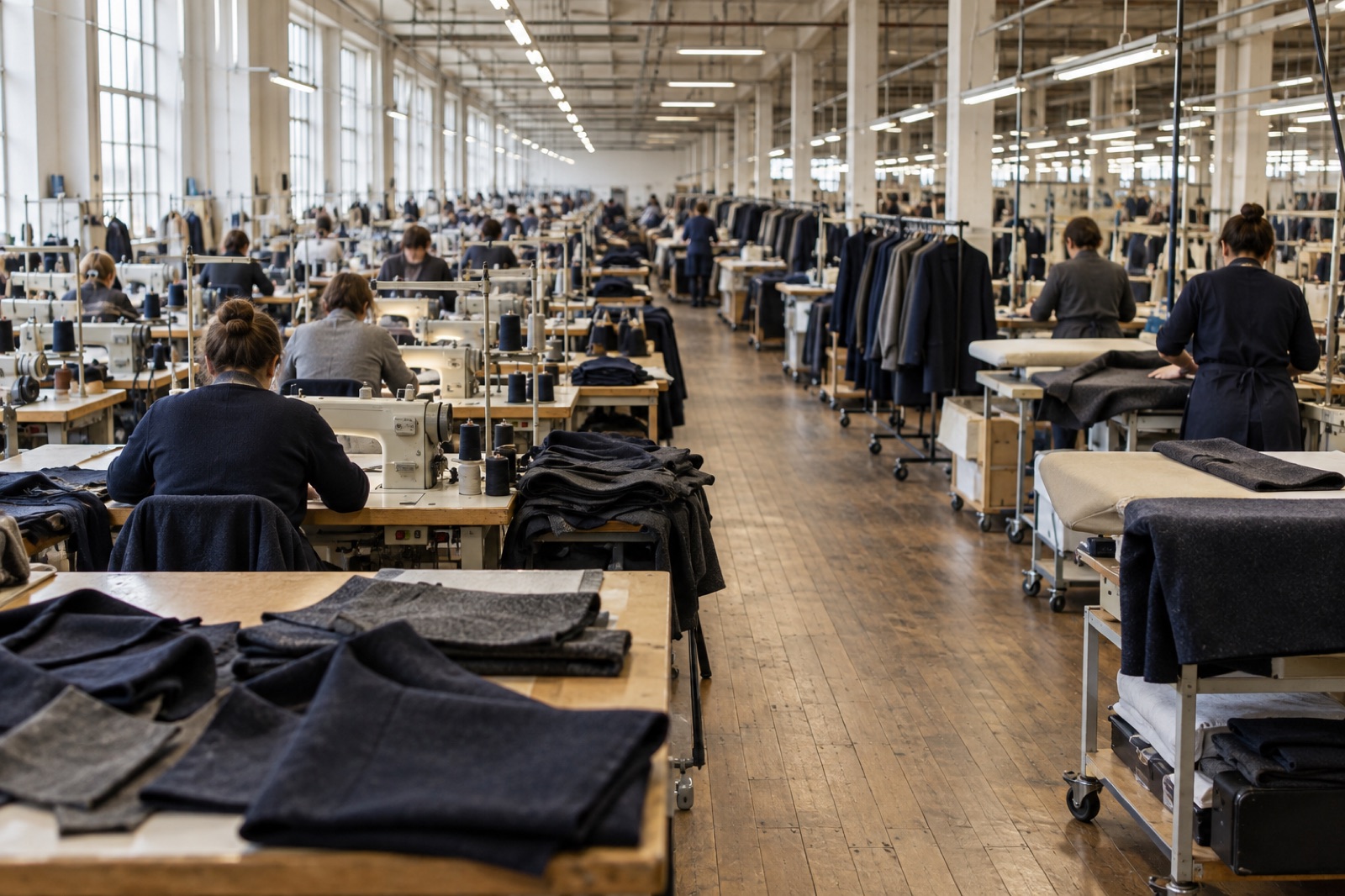
Bosinno and Baoxiniao are the same group in Wenzhou, but their two websites publish different lead times, different buyer categories and different product pages. A guide for tailor shops comparing China suit factories that take one-piece orders.
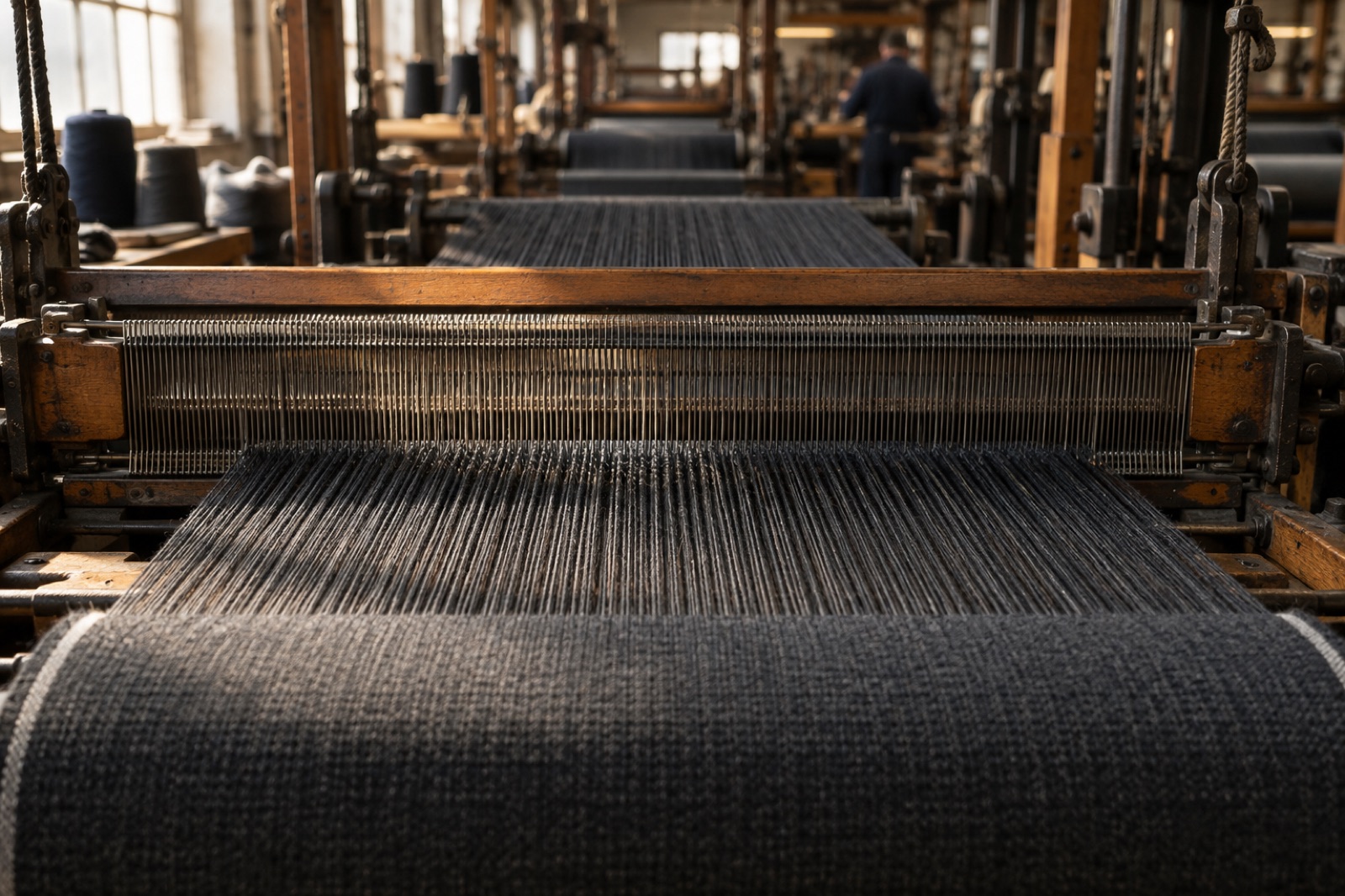
Half the names on a tailor shop's fabric shelf belong to cloth merchants, not mills. A guide to which of our 33 suppliers weave their own cloth and which commission it, and what the difference means for lead times, bunch overlap and pricing.
Published lead times from seven made-to-measure suit suppliers, what each number counts, and three questions a shop should ask before promising a fitting date.
A preparation checklist for tailor shops before the first call with a made-to-measure factory: what to bring, what to ask, and what you walk away with.
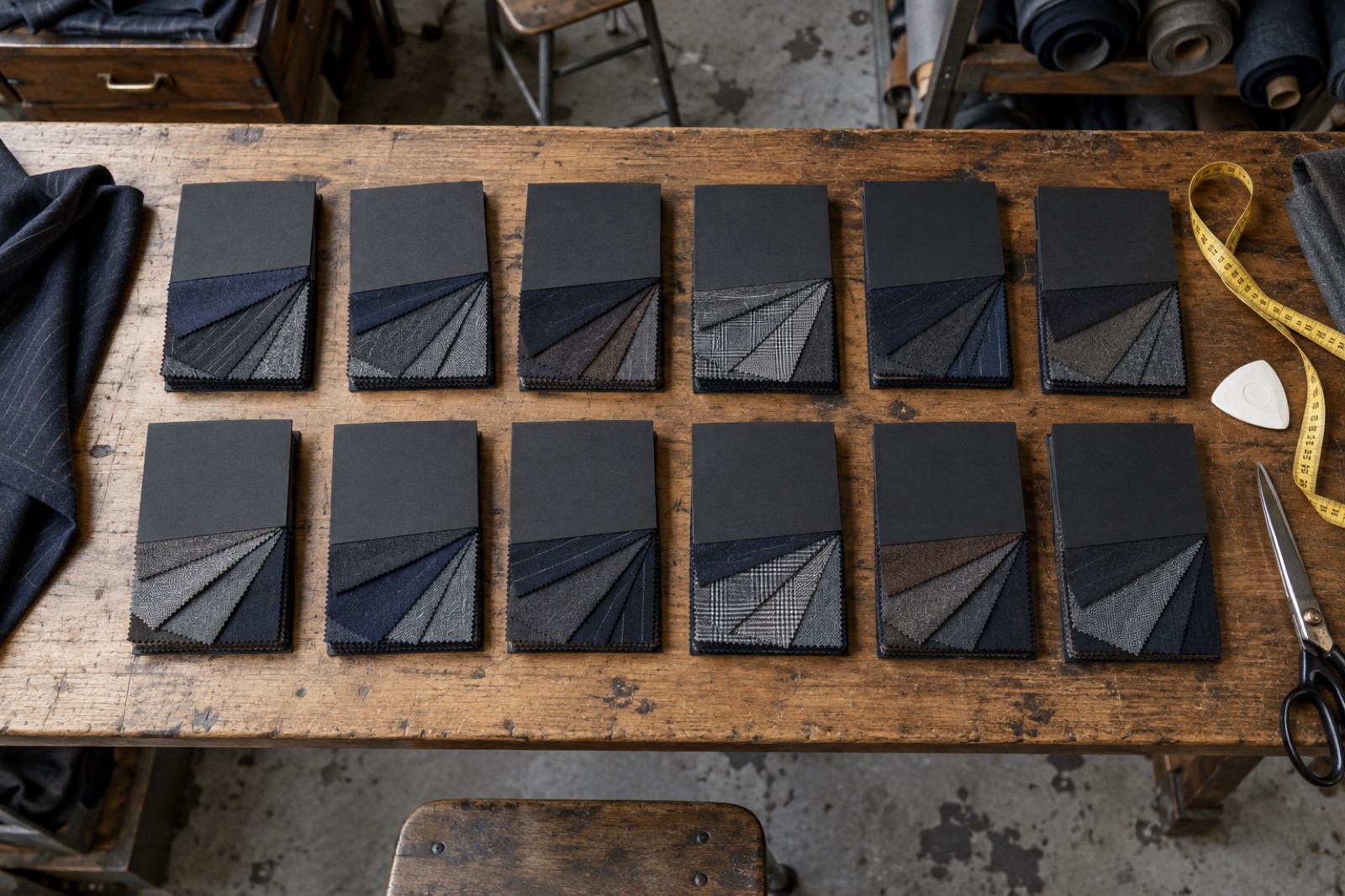
A working table of the 20 suit fabric brands your clients are most likely to name, sorted by what each one actually is: a mill or a merchant, held or ordered in, and which customers it fits.

A client walked in last week asking for Fox Brothers flannel by name. That question lands on more shop counters every October than most owners expect, and the answer has less to do with one mill than with how flannel works as a category. What a shop should stock, what weight, what construction, and what to tell the client who arrives already knowing what he wants.
A remake clause that says nothing more than 'we will fix it' leaves every real question unanswered. What to write into the agreement before the first order ships, so that both sides know what 'wrong' means, who measures it, who pays, and how long either party has to act.
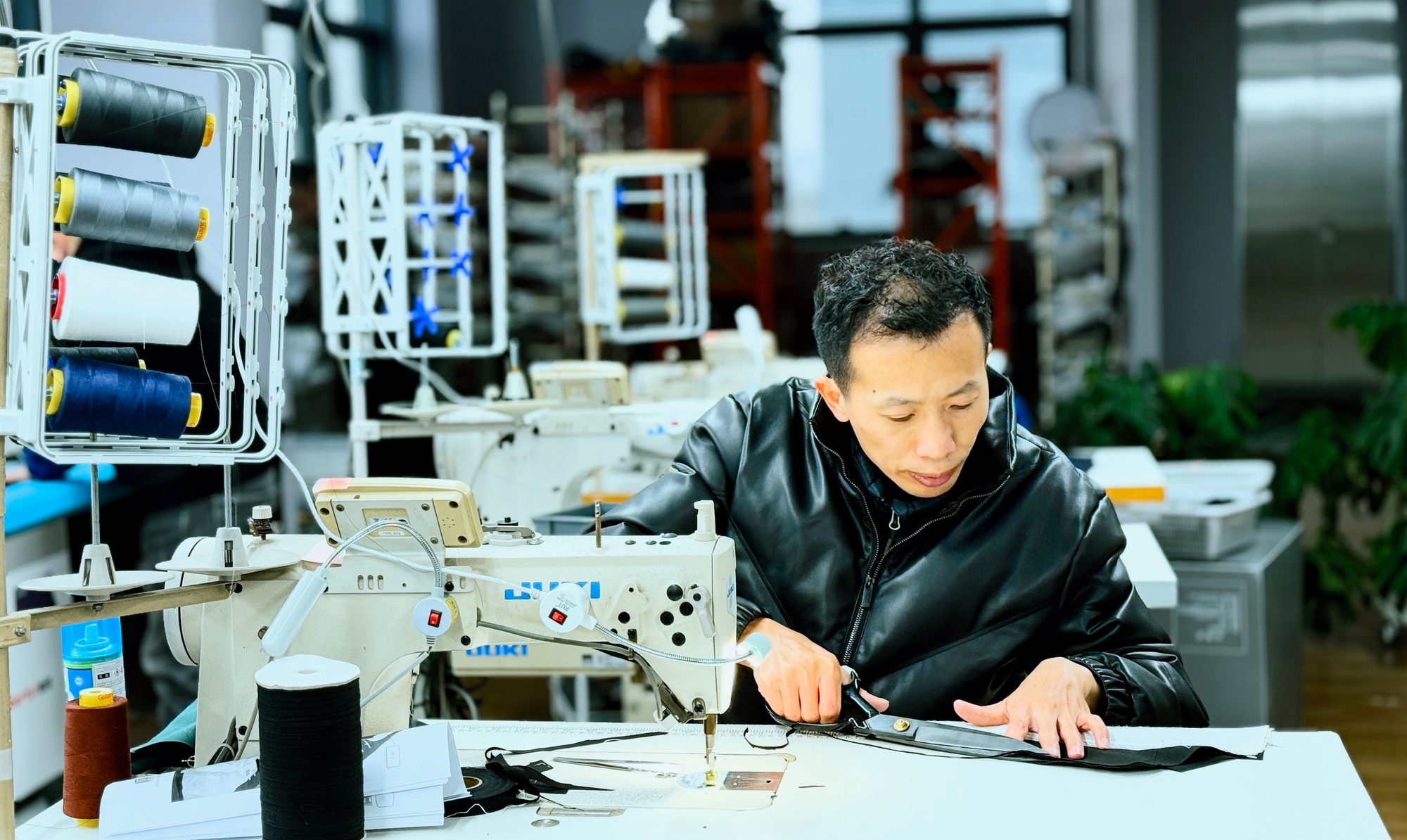
Tailoring software handles the ordering pipeline, from cloth selection to tracking. The fitter handles what no algorithm sees: posture, asymmetry, and the translation of a customer's words into numbers. What changes when a shop adds an AI-assisted ordering system, and what stays in the fitter's hands.
A trunk show lives or dies in the order book, not on the fitting-room floor. How much deposit to collect, when to call it a confirmed order, and what to do with the customers who tried on but did not buy on the day.
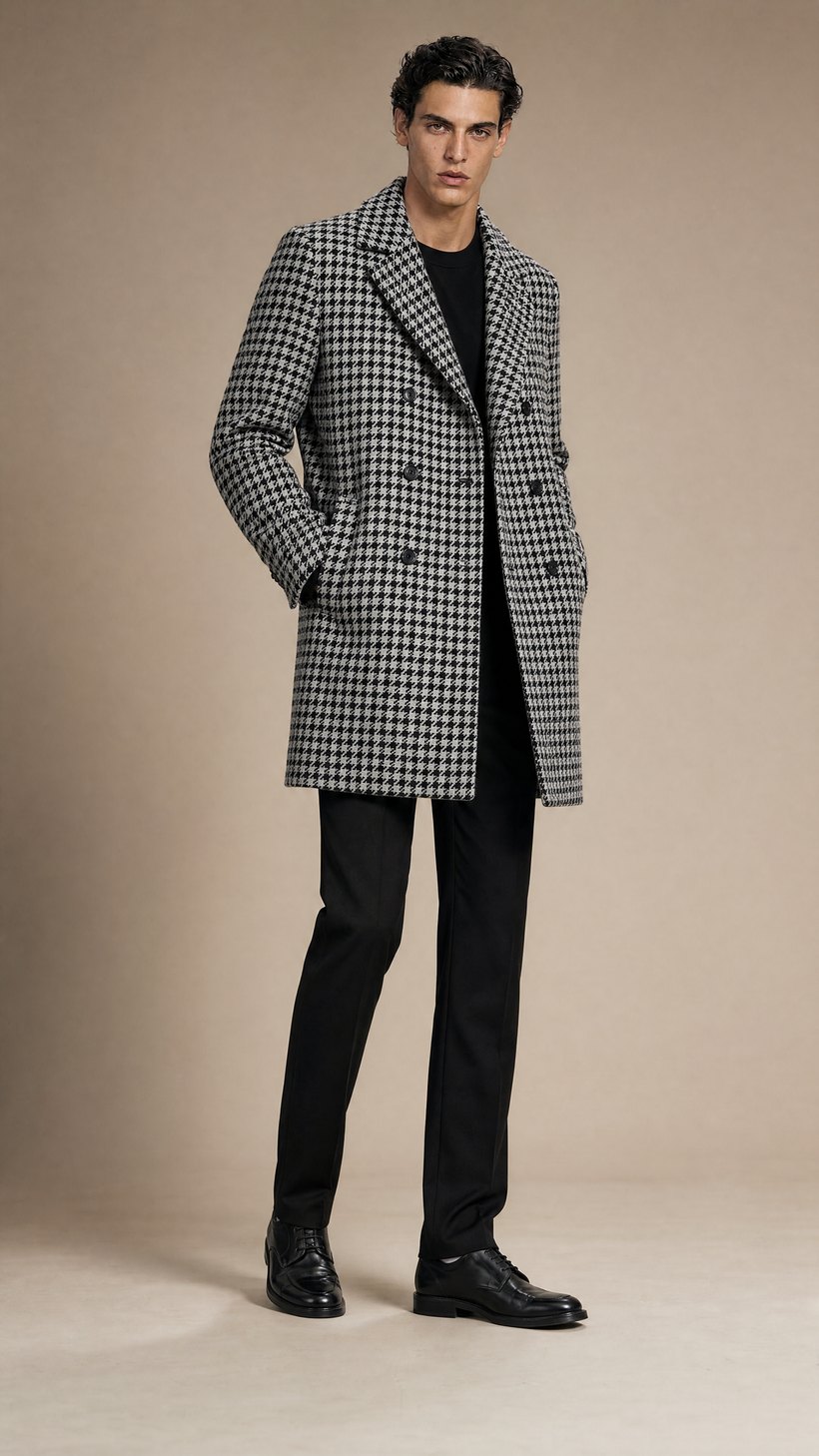
A buyer laid two swatches on our table, one from Huddersfield and one from Biella, and asked which her clients would prefer. The answer depends on what the client touches first, and what the shop says about what he is feeling. A side-by-side of what English cloth and Italian cloth actually do differently in the hand, on the body and on the hanger.
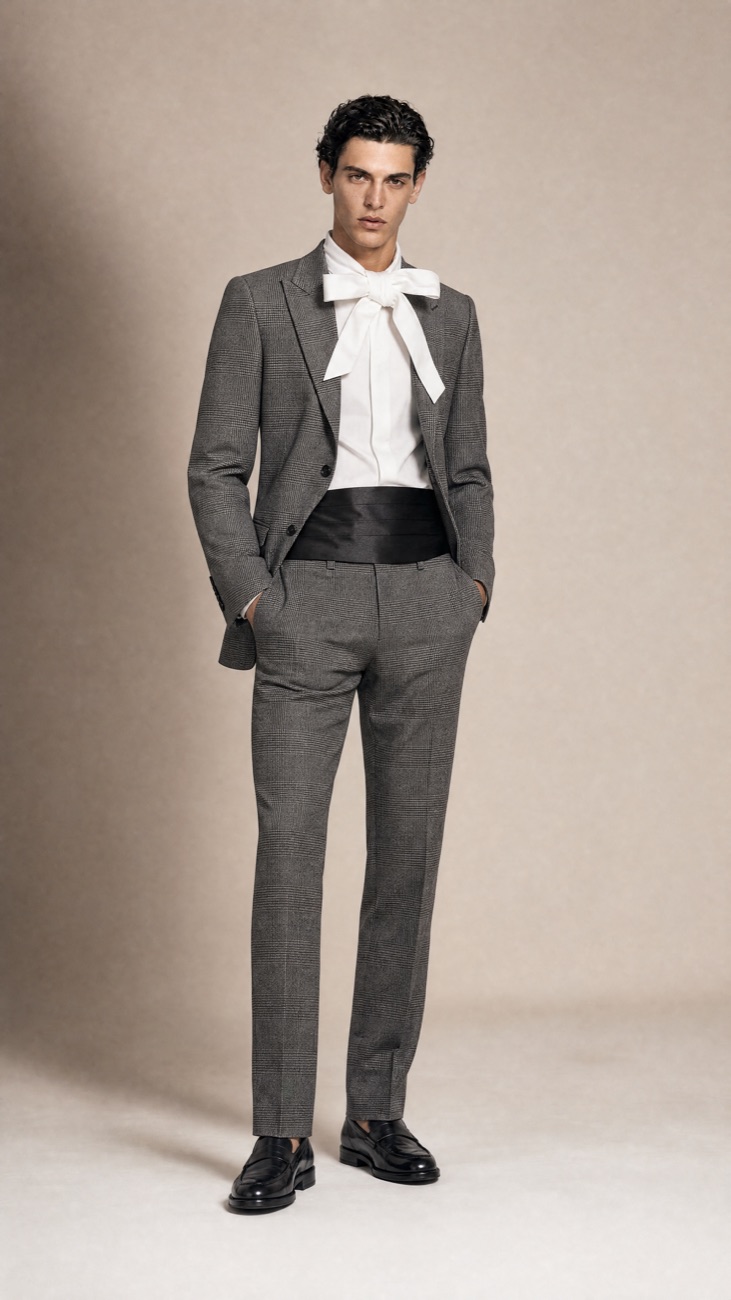
A spreadsheet of 300 customer records does not move your fit to a new factory. What actually travels, what gets lost, and the sequence that keeps your customers in their suits while you change who makes them.
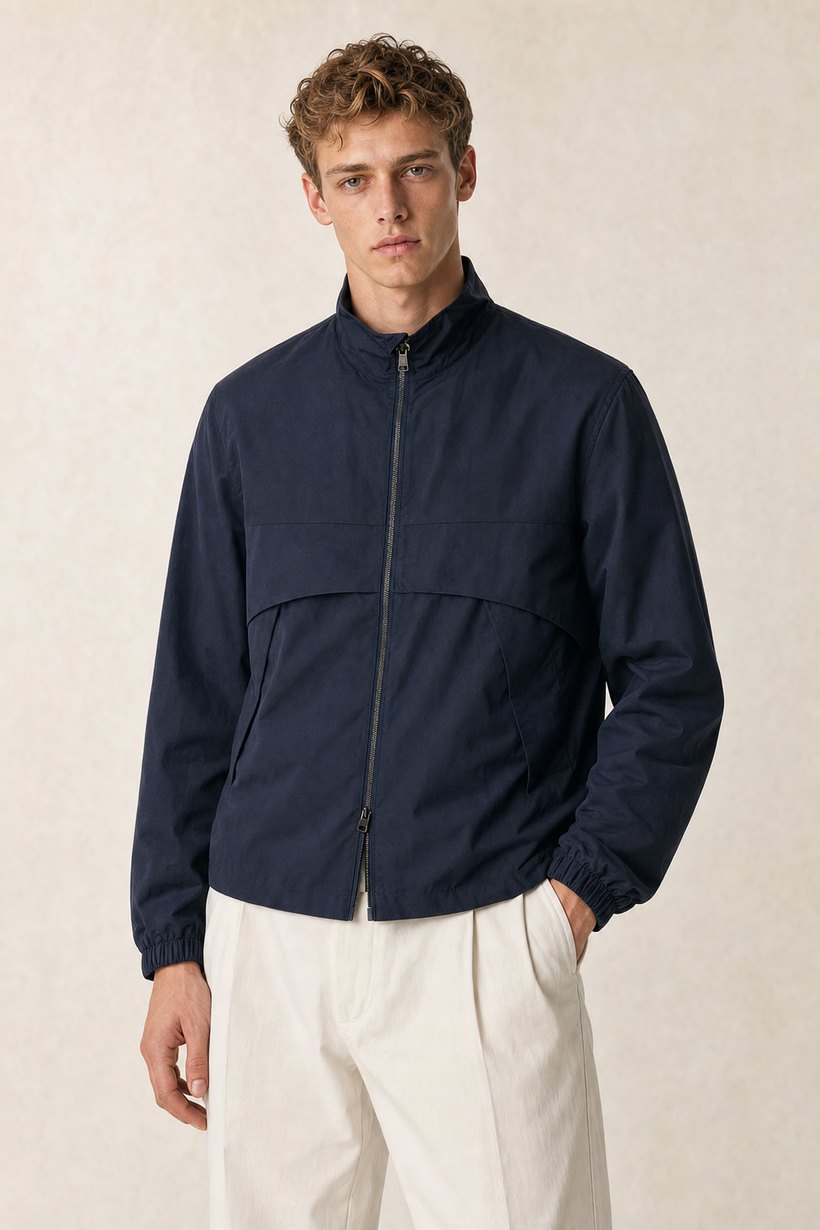
A suit shop that wants to sell standalone jackets does not need more sizes on a rail. It needs the right cloth. Which fabrics make a sport coat read as intentional, what construction goes under each, and a checklist for placing the first jacket order.
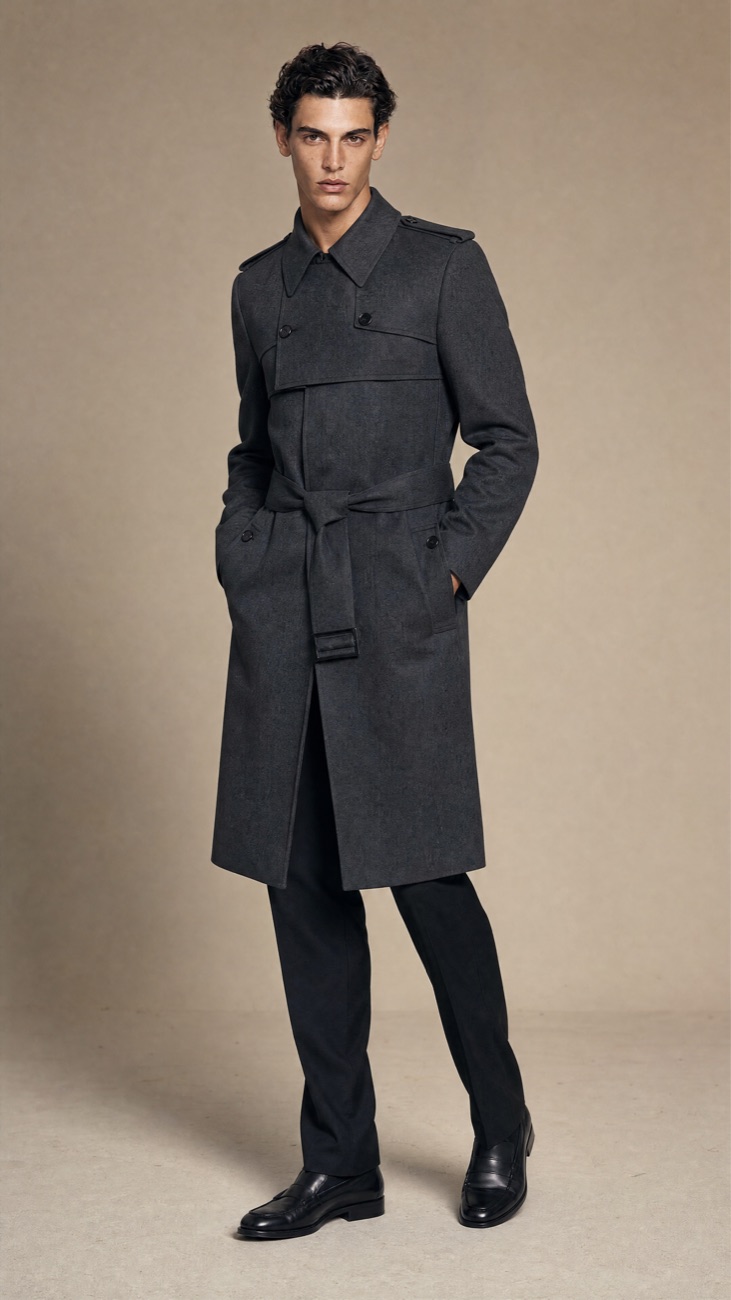
A suit shop already knows how to measure a man. But overcoat measurements are not suit measurements. What changes on the spec sheet when you add outerwear, which cloth weights work, and why October is the ordering deadline.

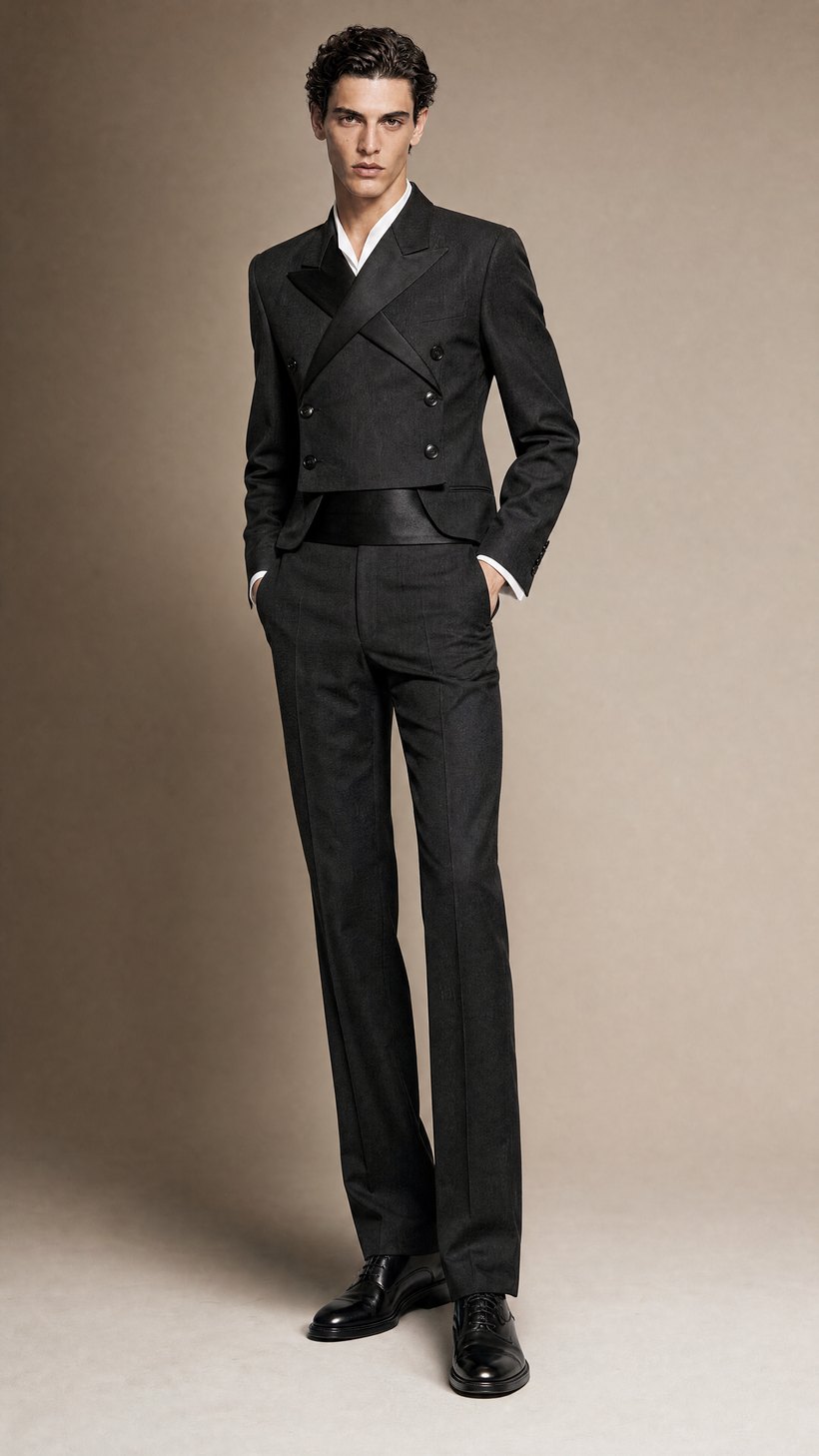
A jacquard blazer fills the gap no shop can fill from stock. How to offer dinner jackets and evening jackets to measure, one piece at a time, without buying a size run.
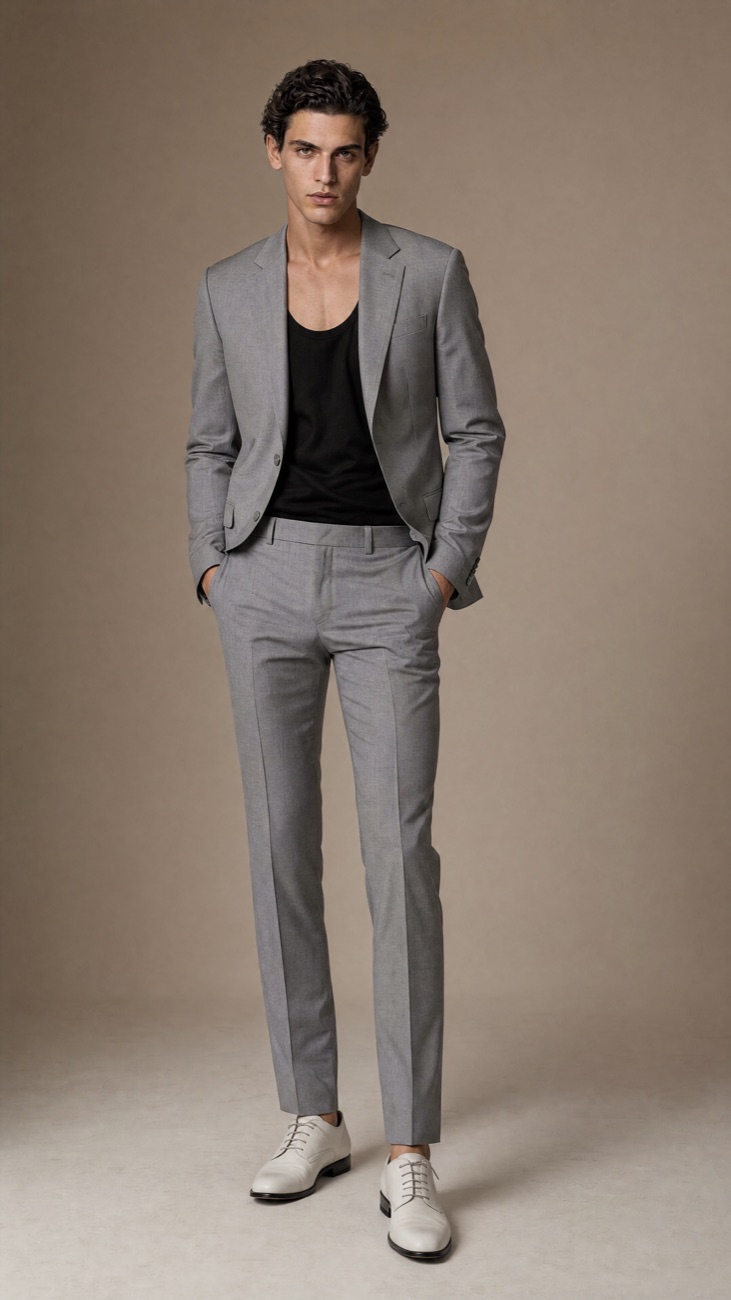
A customer asks why your suits cost more than the polyester one they saw online. Here is what to say, what to show, and what to leave out, from the factory side of the question.
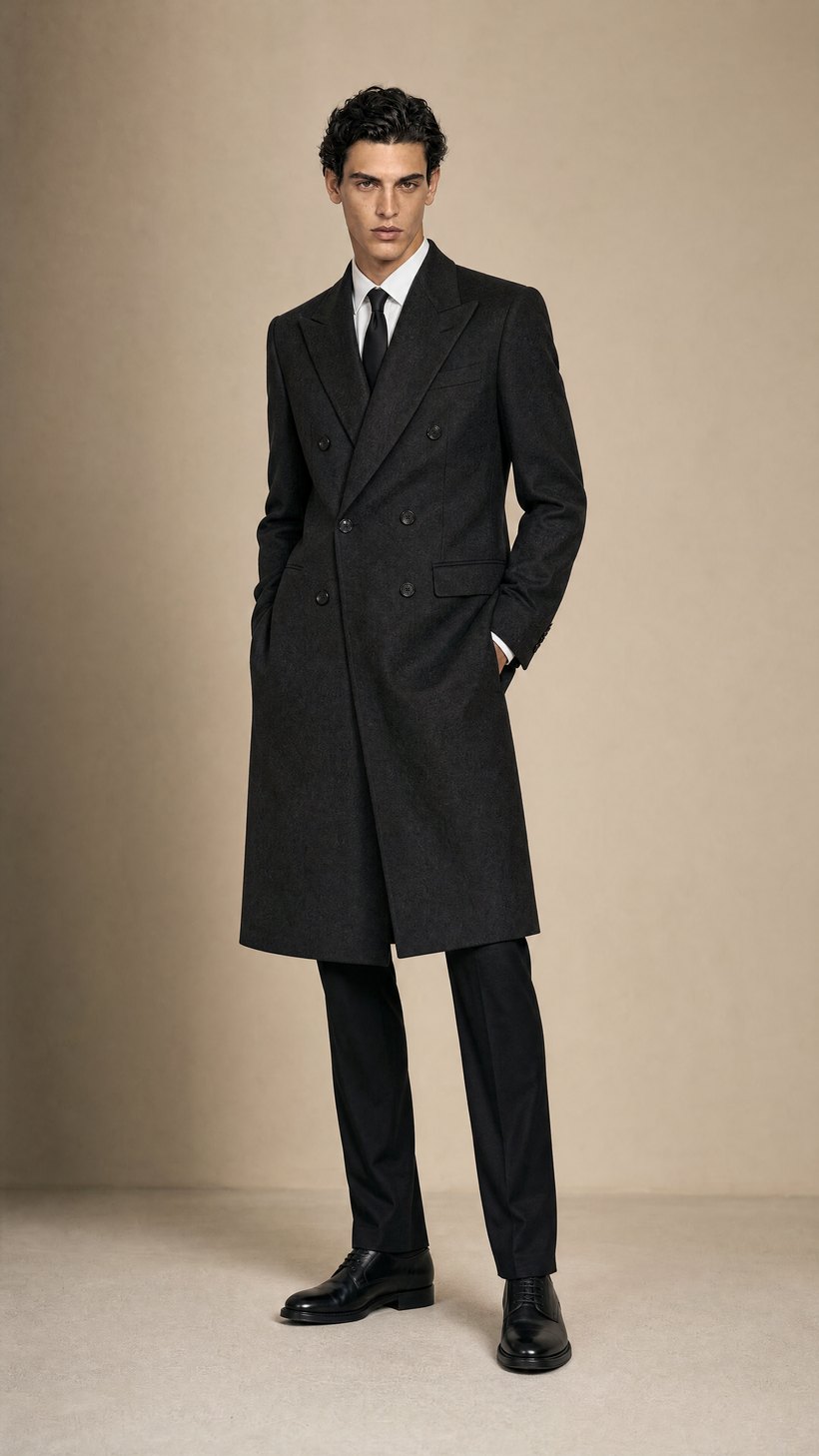
The production window is 14 days. The delivery date is not. A shop owner's calendar for quoting a customer the date that holds, counting cloth confirmation, production, freight, customs and the buffer nobody remembers to add.
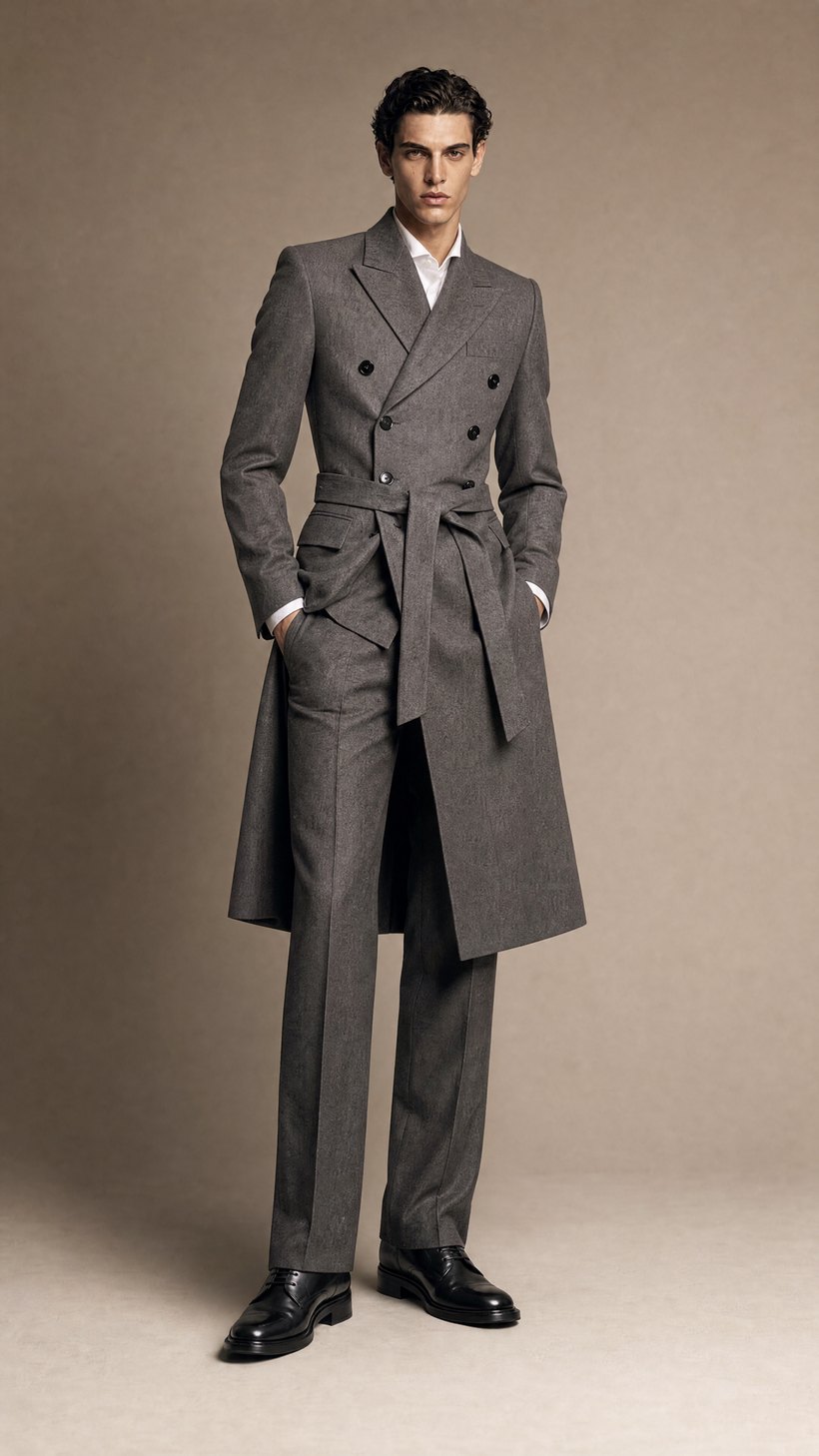
A shop asked whether to show the VBC name to clients or keep it behind the label. The answer depends on what the client is buying and what story a 1663 mill tells better than any shop's own brand can. What the name is worth on the floor, what Four Seasons puts on a rail, and when to lead with the mill instead of the label.

Trofeo and Traveller sit on the same rack in our Shanghai atelier, 162 styles between them, and they solve different problems for different clients. A side-by-side of what each book does, which client gets which, and what to pair each one with.
A side-by-side of what three made-to-measure suit manufacturers publish on their own websites. MOQ, lead time, pricing, onboarding fees, mills, constructions: what is on the page, what is not, and how to use the gaps.
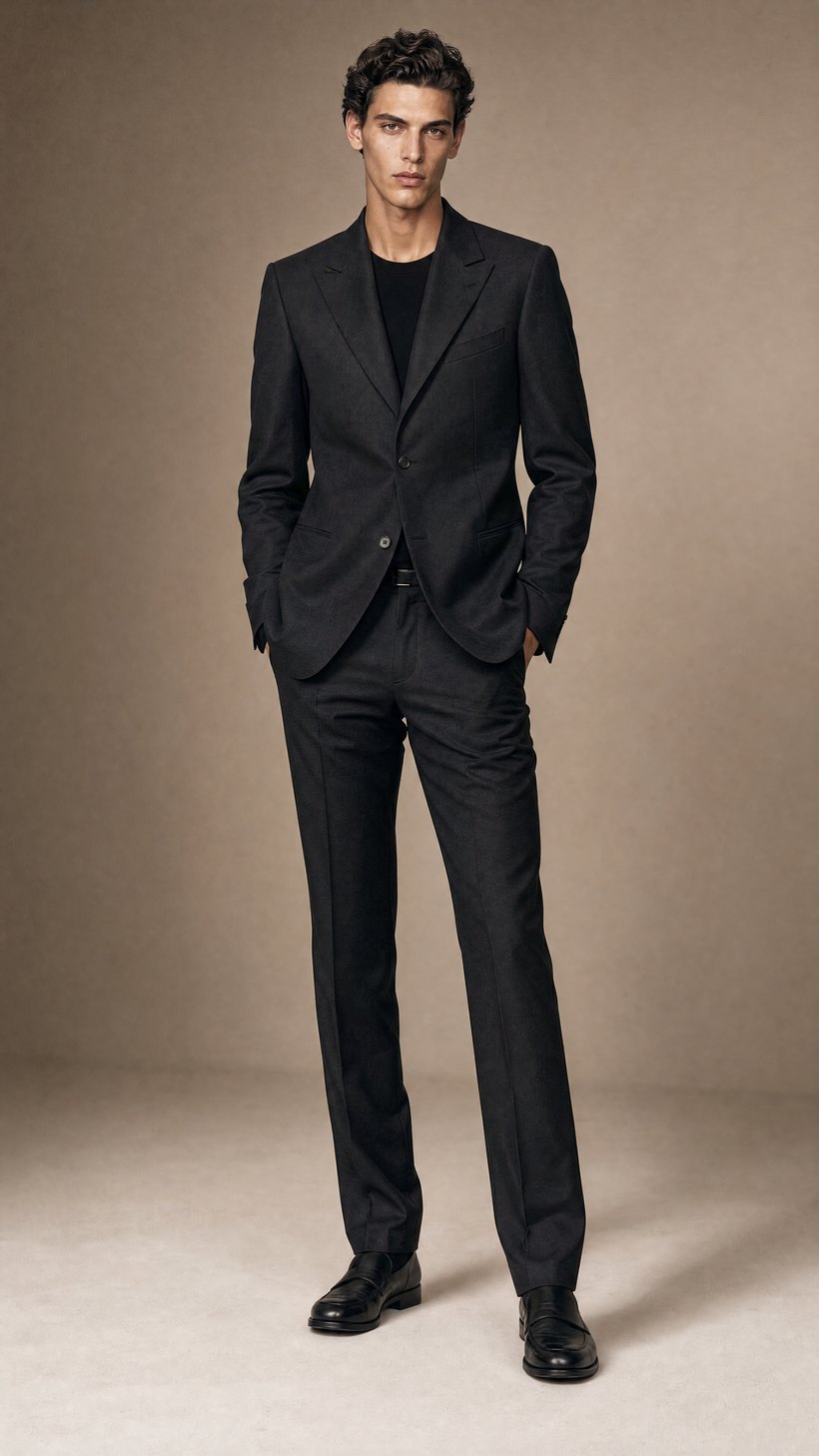
A team of twenty needs suits. The shop that measures each person once, locks one specification and keeps every pattern on file turns a single order into years of reorders. What the measurement day looks like from the factory side, and what to decide before anyone picks up a tape.
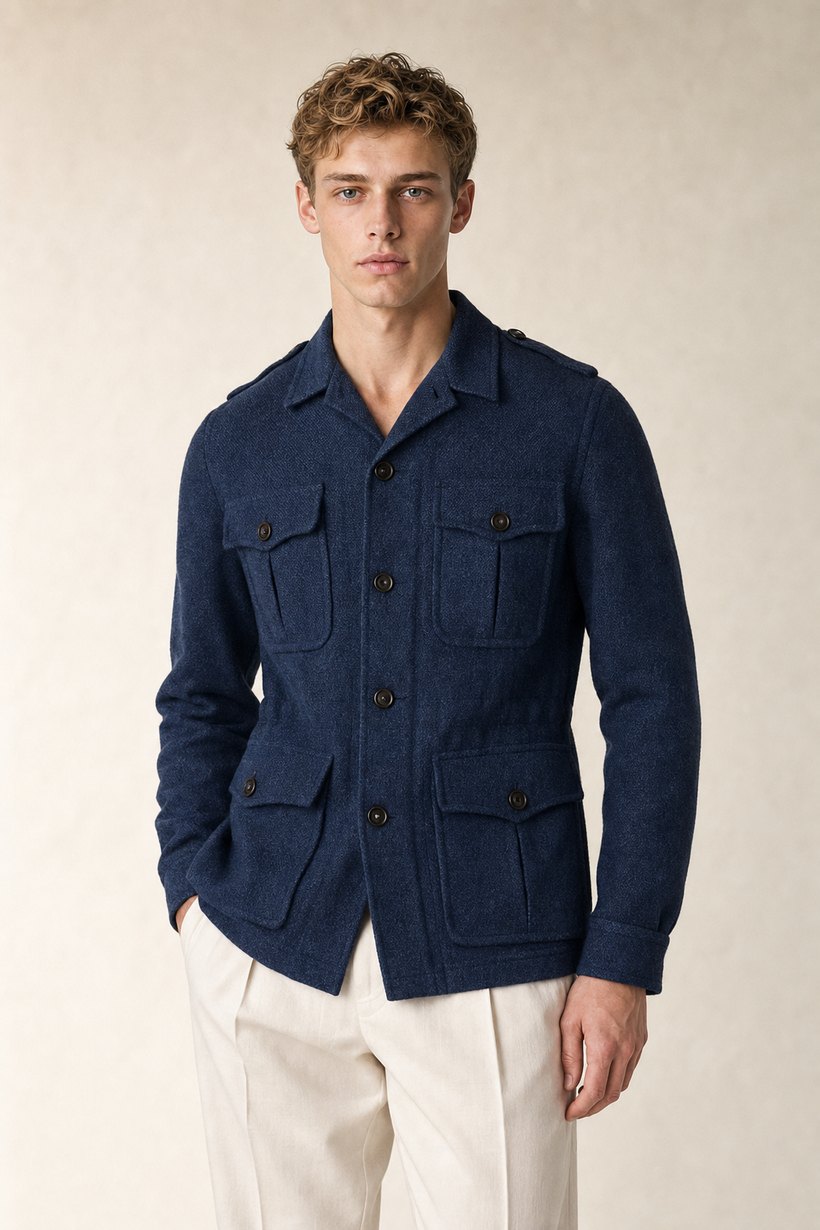
Corporate uniform orders are the steadiest work a tailor shop can land, yet most shops lose the pitch to catalogue suppliers. What to bring to the first meeting, how to price the account, and what locks the reorder.
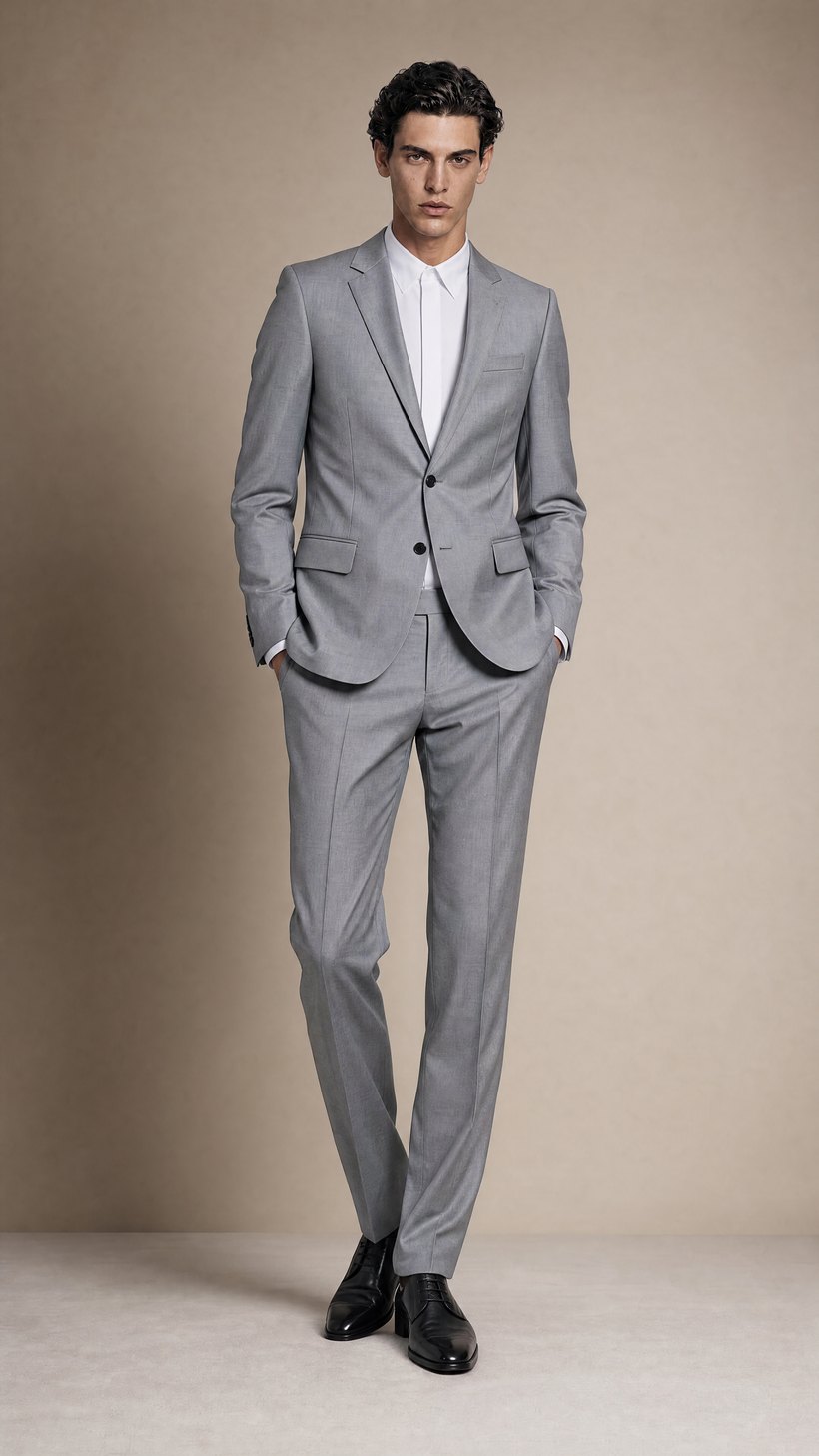
A tailor shop filling a groomsmen order has to choose a colour before anything else, and the colour decides the cloth. Grey, navy blue and brown compared from the fabric rack, with the weights and weaves that work, the seasons each colour belongs to, and how to keep six men in the same shade.
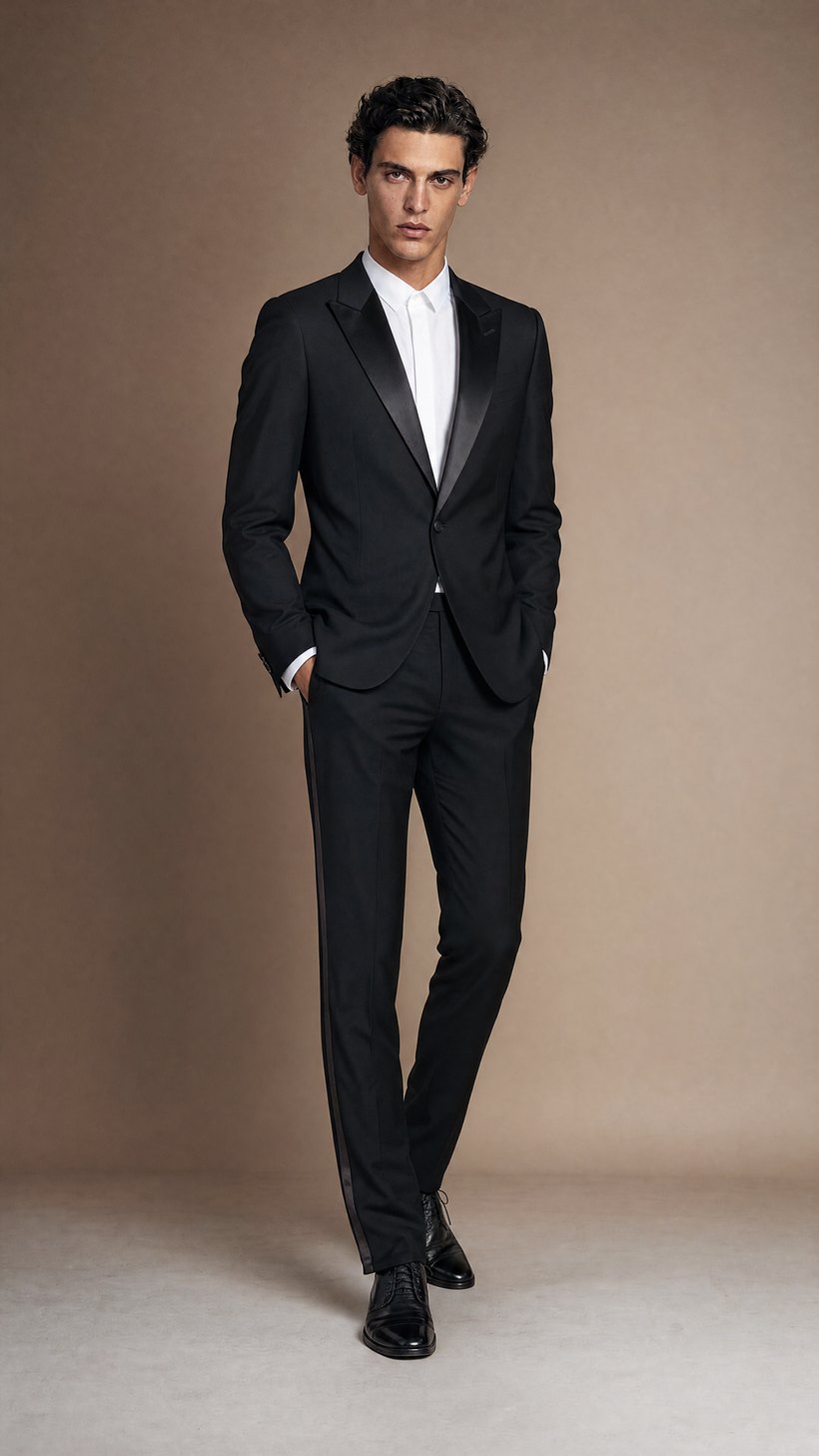
The most common mixed wedding party request a factory sees: groom in a tuxedo, groomsmen in suits. What a shop needs to decide before the spec sheet goes in, from lapel facing and cloth to the measurement deadline that actually matters.
A buyer sourcing suits sends the same four questions to factories in the United States and in China. The replies arrive in five different shapes. Here is the table that makes them comparable, and what each side fills in.
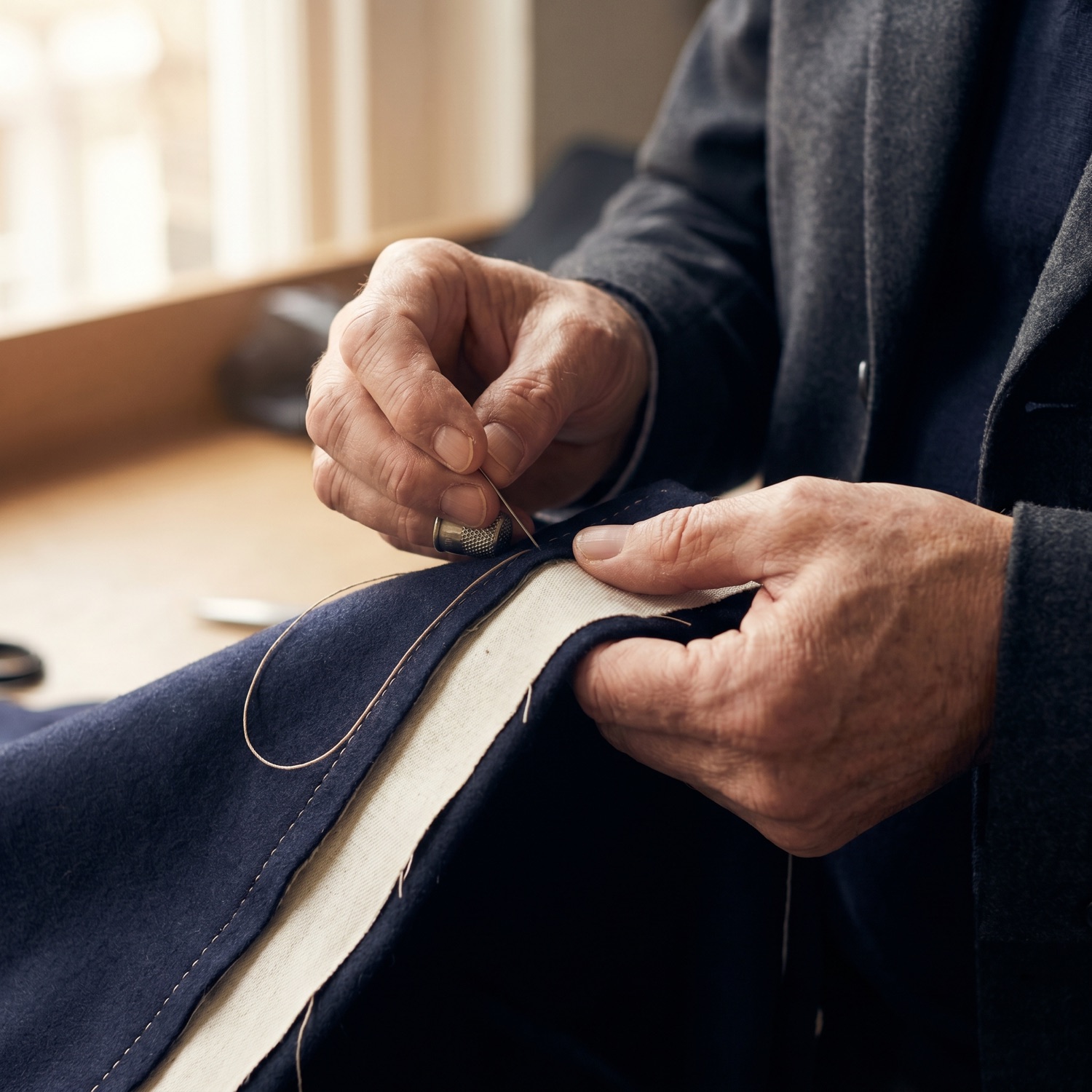
Every second factory listing says bespoke. Most of them mean made to measure. A buyer's checklist for what a bespoke manufacturer actually does, what made to measure does instead, and three questions that separate the two before you place an order.
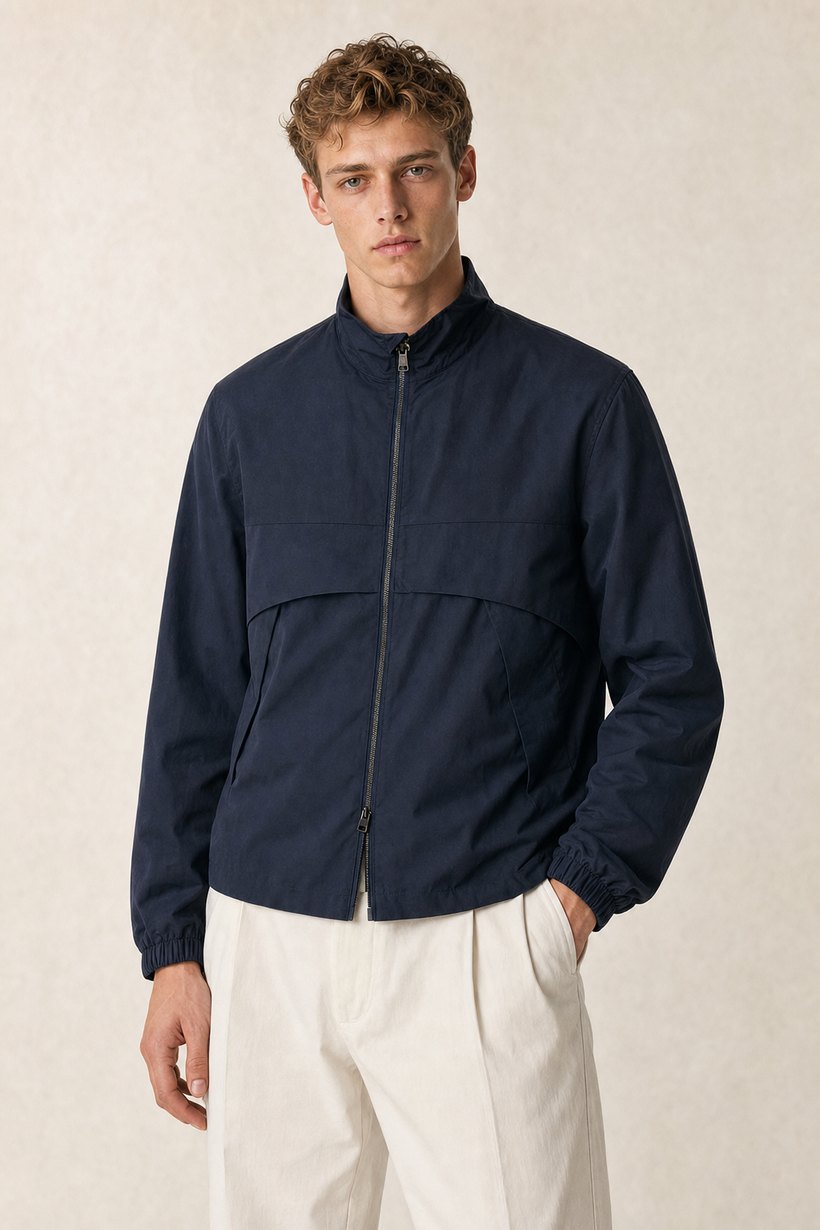
A shop asked us to move its whole core range up to Super 150s because a client had asked for the number by name. The Super scale measures fineness, not quality, and past a point it trades durability for a softer hand. What actually belongs on a standing rail and what belongs on special order.
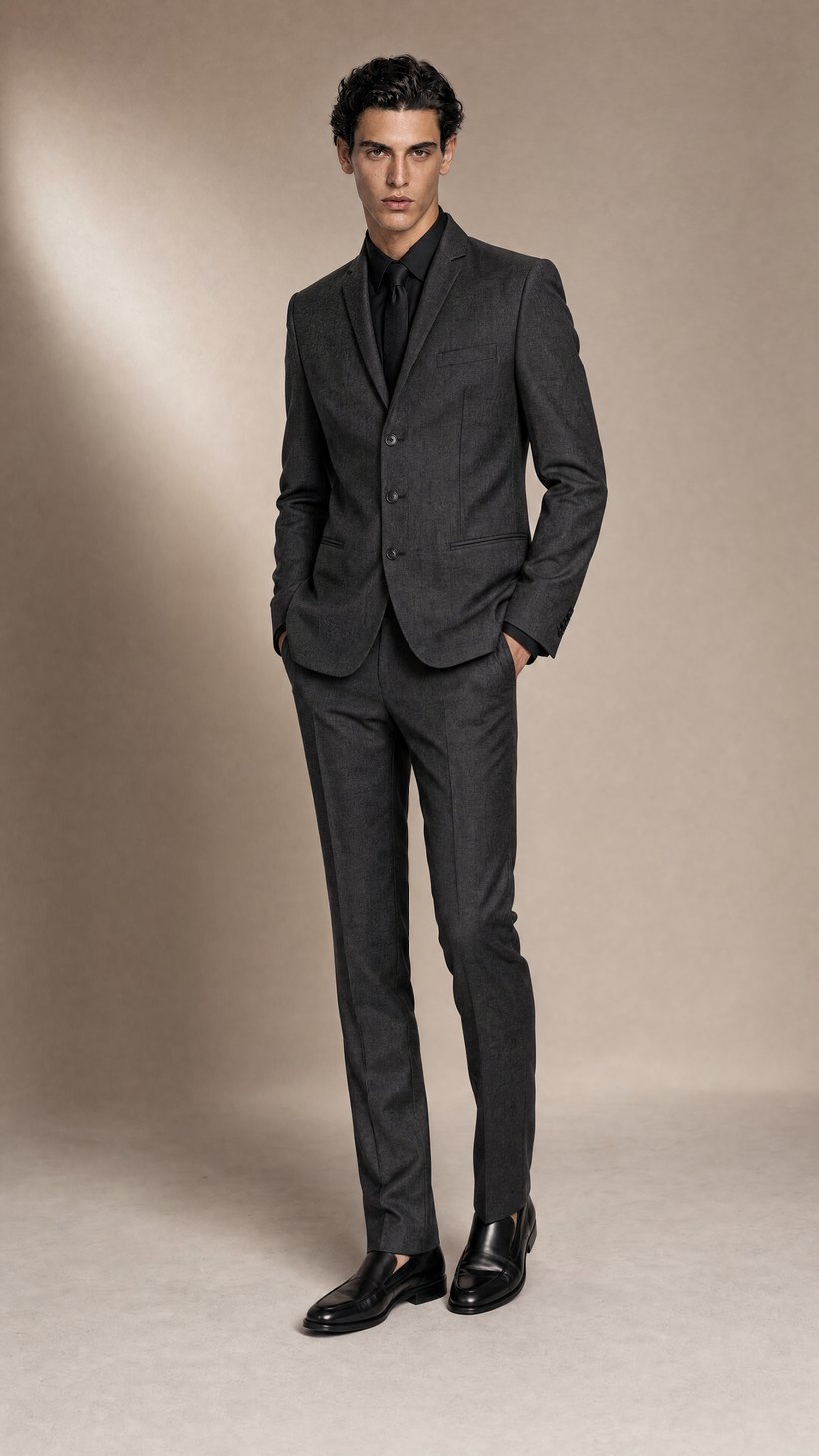
A groom and seven groomsmen is a normal wedding party now, not a large one, and a shop that quotes it suit by suit runs into trouble by the third name. How to set one price basis for the whole party and schedule eight measurement sessions backward from the date.
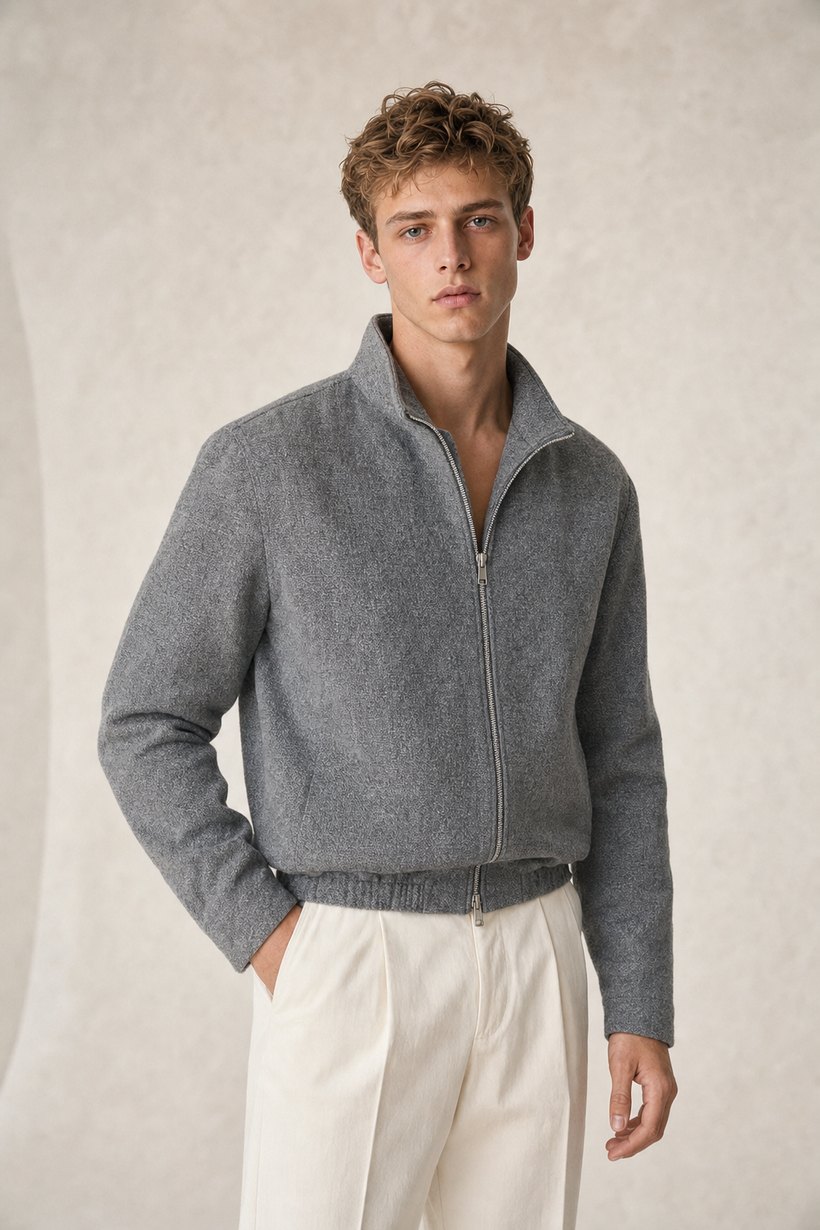
A shop asked us to help relabel its whole premium wall as "Italian wool," one banner for three different mills. Vitale Barberis Canonico, Reda and Drago are all genuinely Italian and genuinely different in what they weave, own and ship. What each one actually offers a shop's core range, weight by weight.
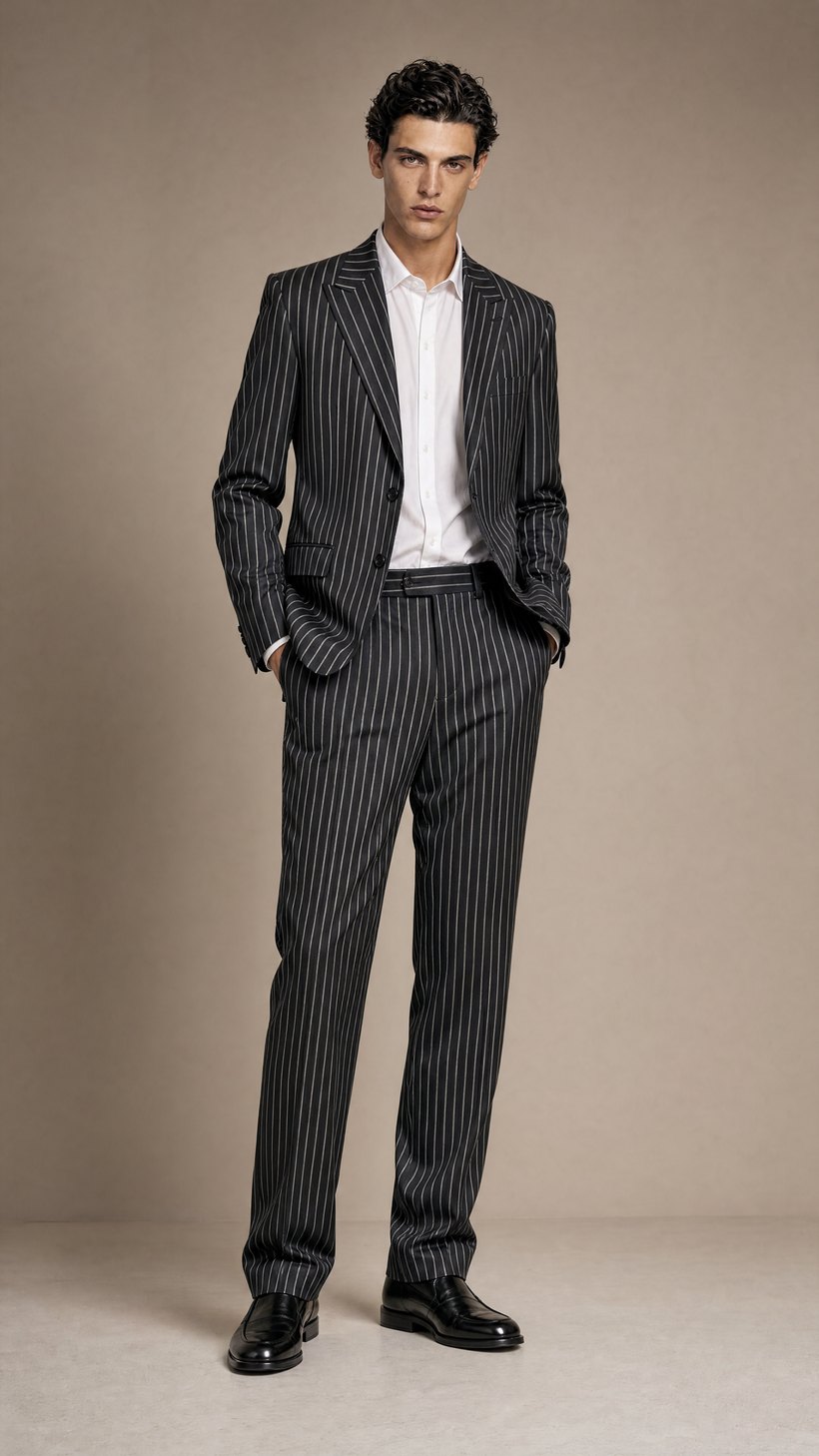
None of these three names sit on our rack in Shanghai. What a shop is actually buying when it specs Holland & Sherry, Dormeuil or Scabal, what each one is built on, and how to plan the extra lead time an order against any of them adds.
The groom's side is the same wedding, the same date and often the same appointment calendar. How a bridal boutique adds made-to-measure groom and groomsmen suits from a one-piece minimum, what to measure, how the margin works and what to ask a factory.
Four stages of a growing suit brand, first sample, capsule, steady monthly volume and scale, and what the factory behind it has to be able to do at each one, from a one-piece minimum to sizing customers who never meet a tailor.
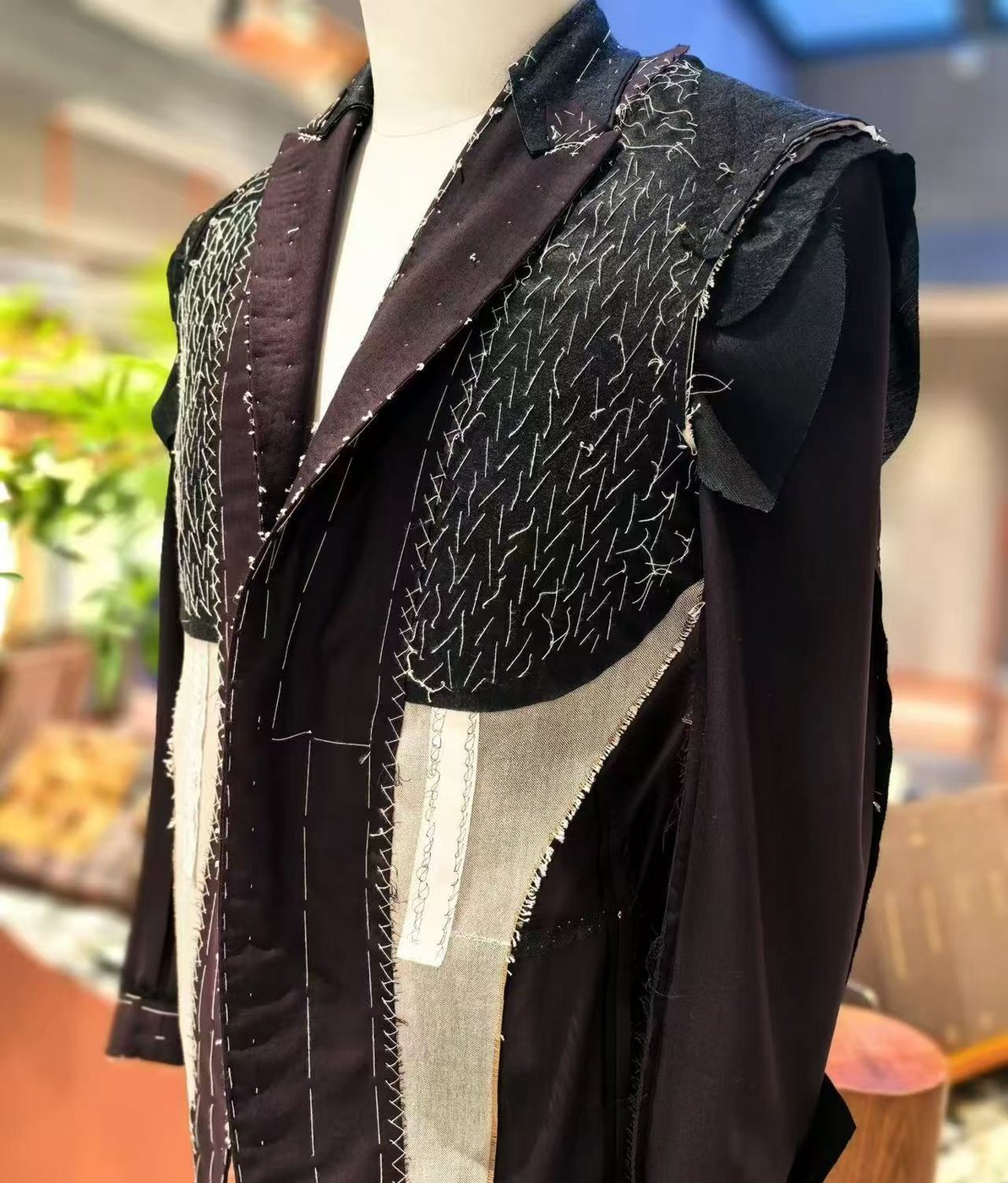
Pitti Uomo 111 runs January 12 to 15, 2027, under the theme WILD. From the factory side, the decisions worth locking in before you fly are about construction, cloth weight and a sample in hand, not a mood board you finish on the plane.
The calculator version of made-to-measure margin for a one-location shop: our public starting prices, two retail points, the gross difference per suit and per month at 3, 10 and 25 suits, and the costs you still have to take off.
When a bridal or formalwear shop searches for wholesale tuxedos, it usually means a stocked size run. The honest trade-off between buying stock and ordering tuxedos made to measure from a one-piece minimum, and the details a shop specifies on each order.
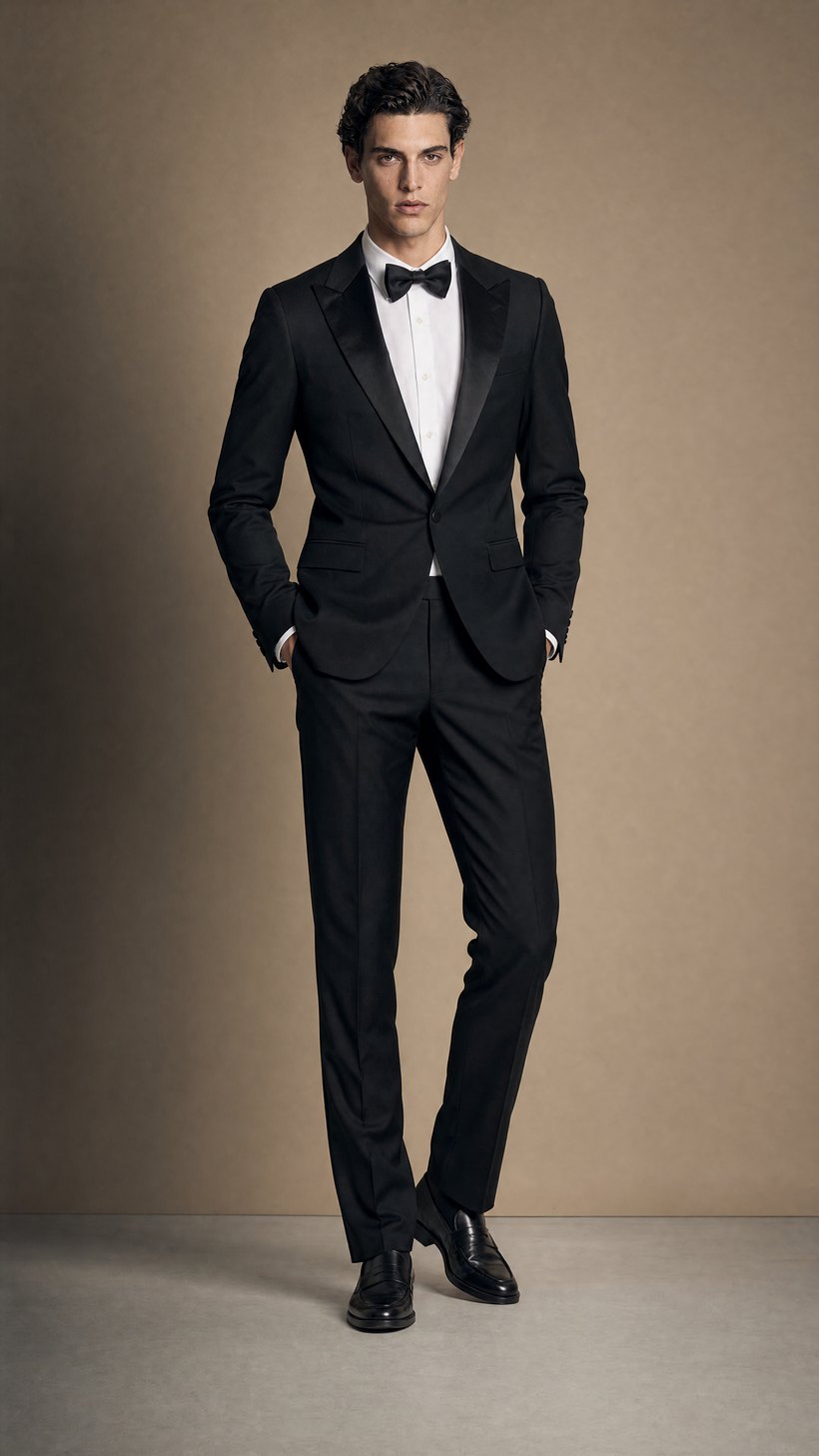
Black tie orders for a platform or a chain cluster into the same six weeks every year, and the panic that follows is almost always the same mistake: reading a production window as a delivery date. What the math actually says, and the cutoff calendar to set before November starts.
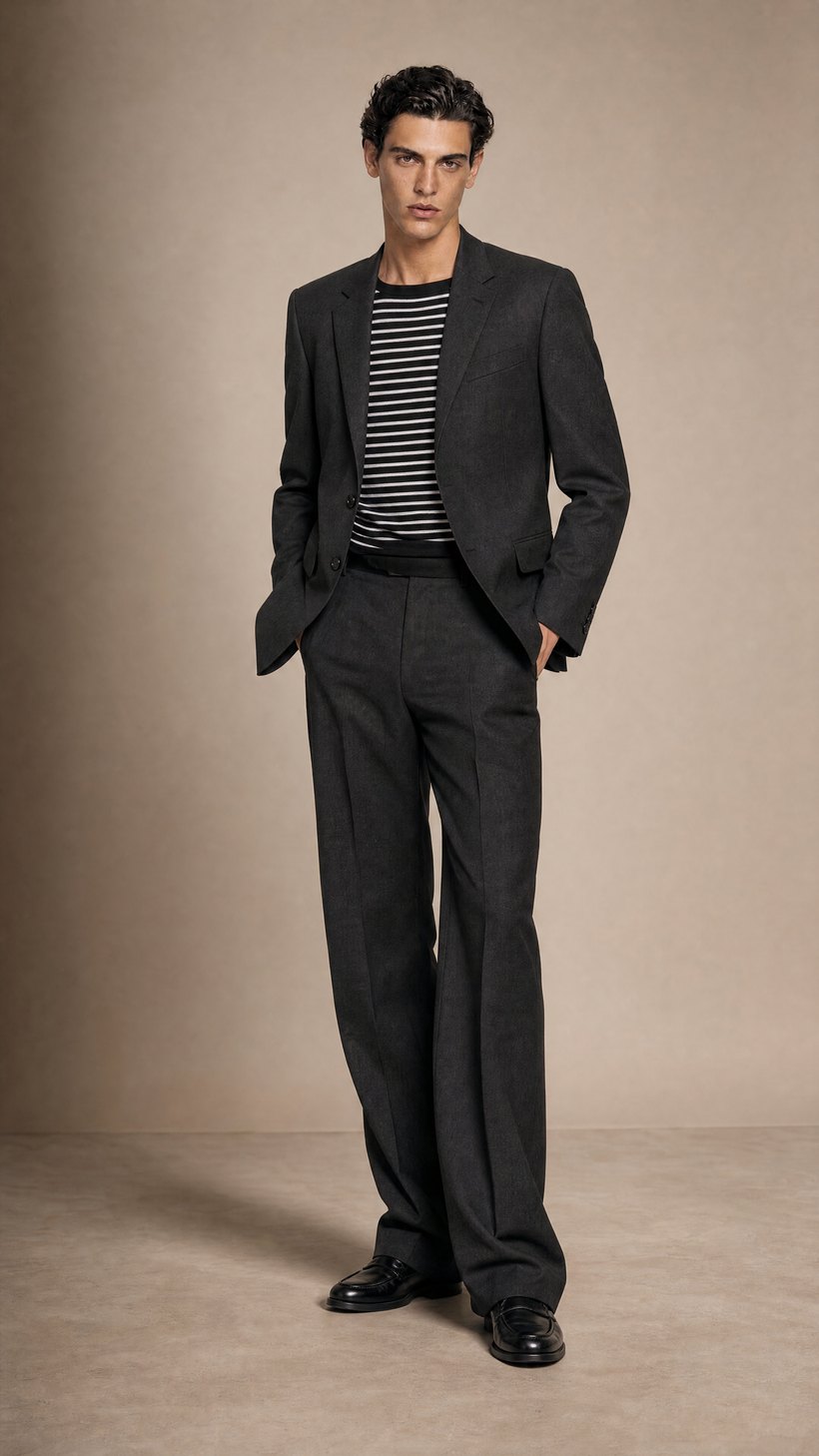
A thirty-piece year-end order for a multi-store chain rarely ships as one parcel. It ships in batches, weeks apart, and the risk is not the tailoring. It is the second batch quietly drifting from the first. What to lock before batch one is cut.
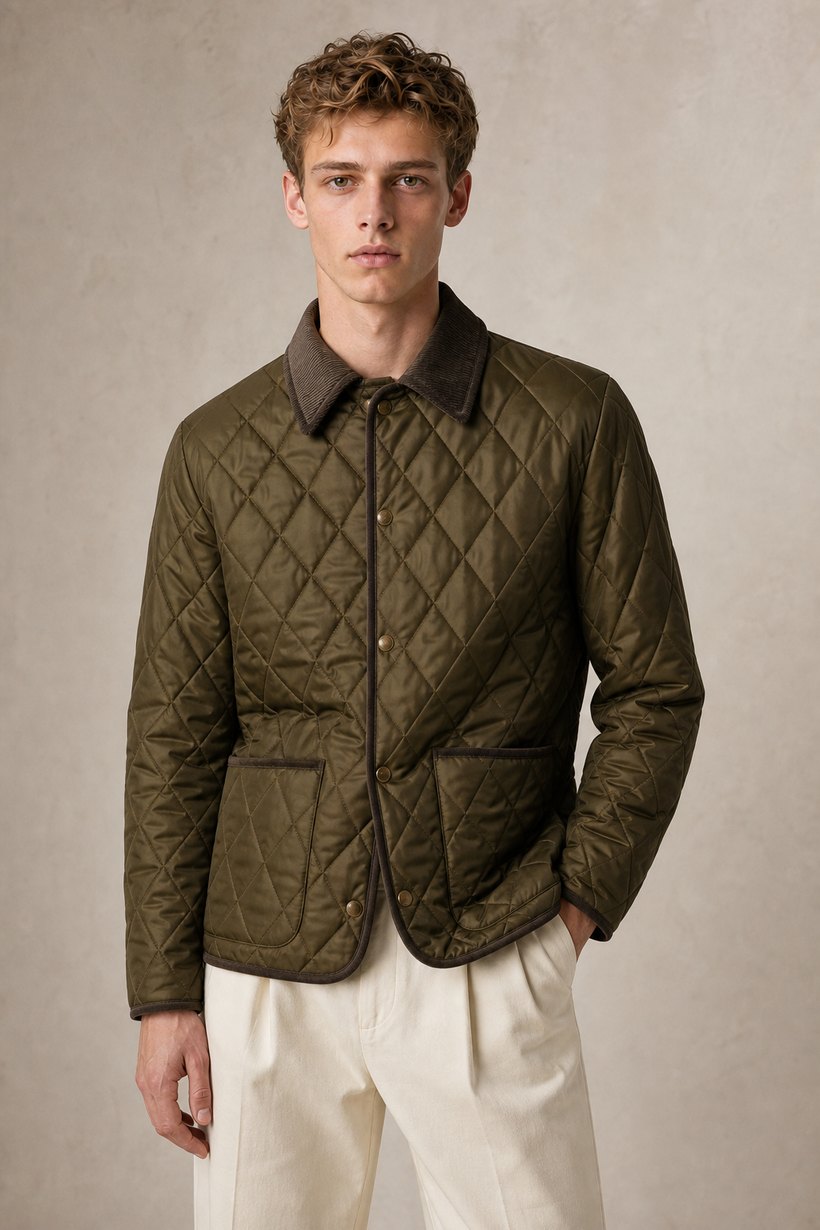
Adding a bold colour to an MTM line feels like a stock bet, because for most apparel it is one. It stops being one the moment the minimum order is a single garment cut from cloth that already exists on the shelf. What actually still carries risk, and what does not.
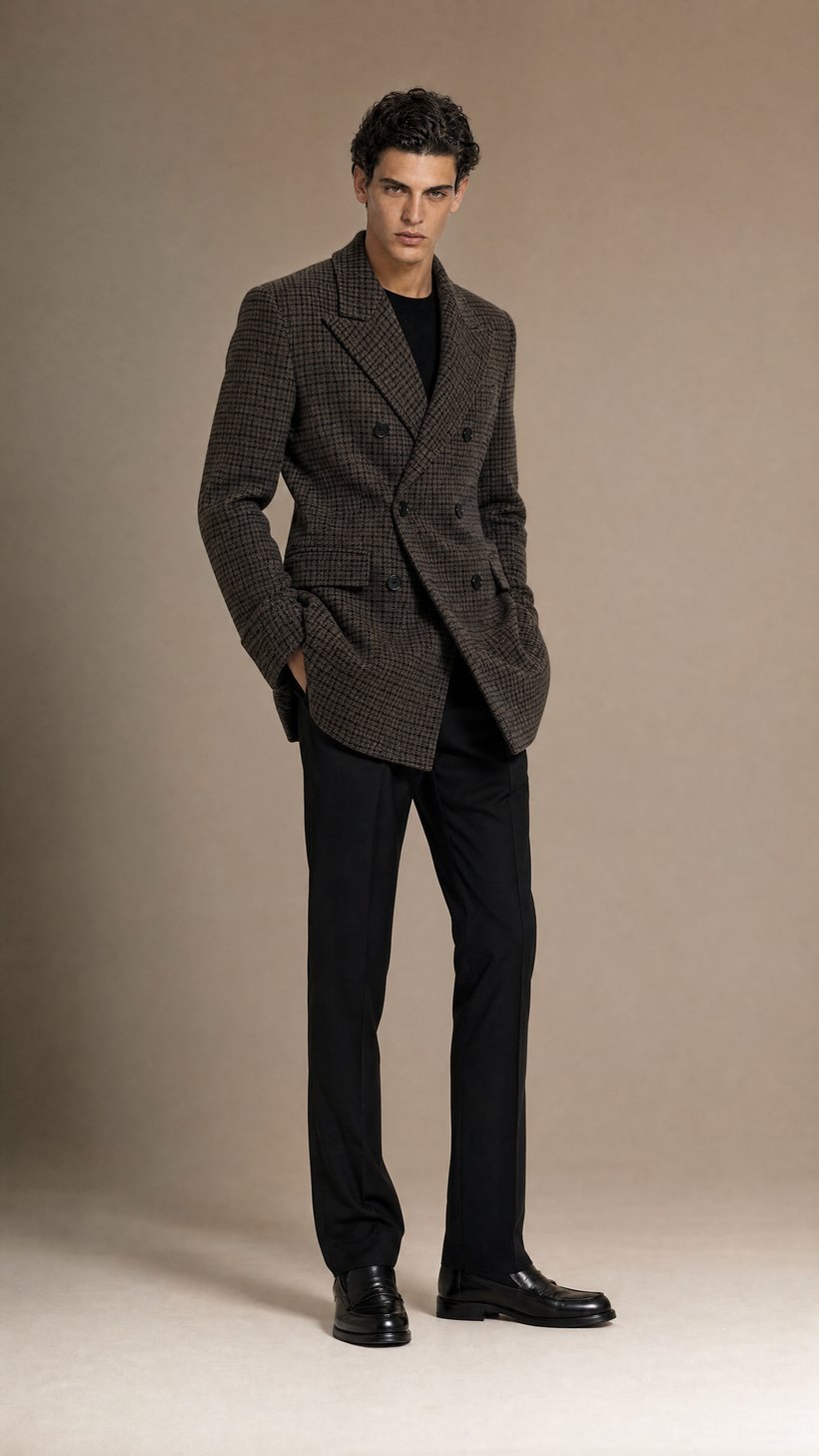
Not the cost of one suit. The cost of getting from an idea to a first order: sample access, fabric access, a measurement process that works without a fitting room, and the order that follows. What we see founders under-budget for, and what they over-budget for.
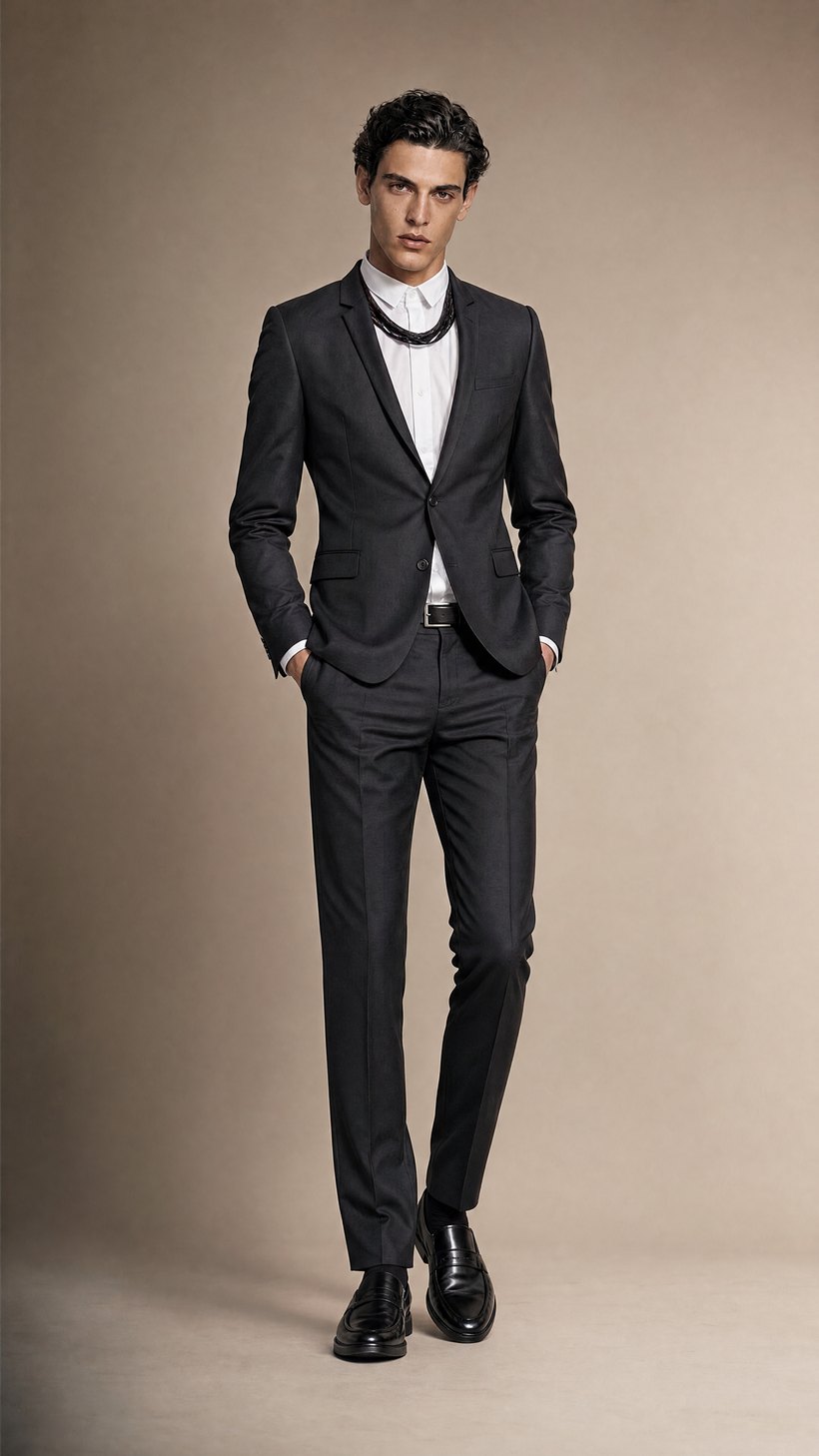
Not a business plan and not a boutique's floor arithmetic. Just the yes-or-no question, answered from the invoice we issue: what an ex-works price actually is, what typically gets added on top of it, and where that structure stops working.
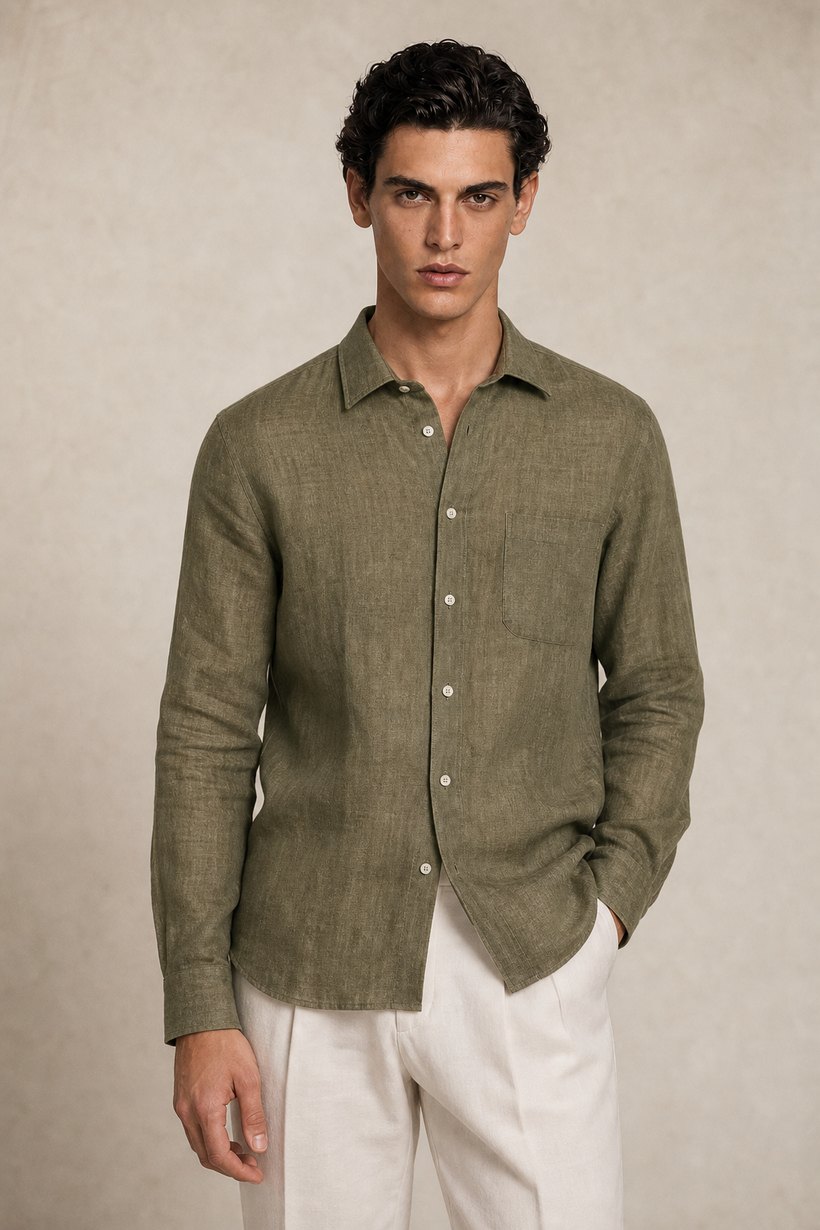
A suit shop that only sells suits is leaving its easiest reorder on the table. What changes, and what does not, when a boutique already running made-to-measure adds the shirt: a shorter measurement sheet, the same minimum order, and no new supplier to manage.
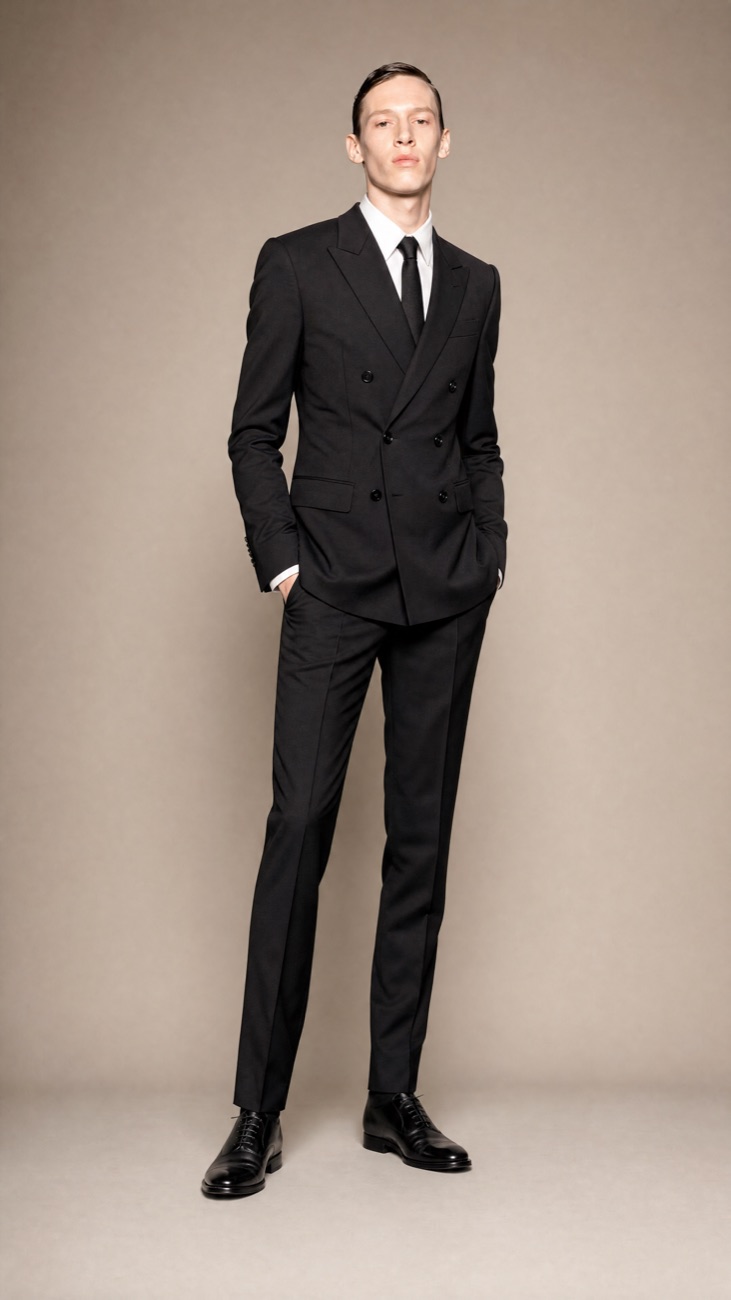
A private-label order is not finished when the jacket is finished. A label has to say four specific things, in specific places, and one of them cannot be dressed up no matter how European the cloth is. What goes on the tag, from the factory side.
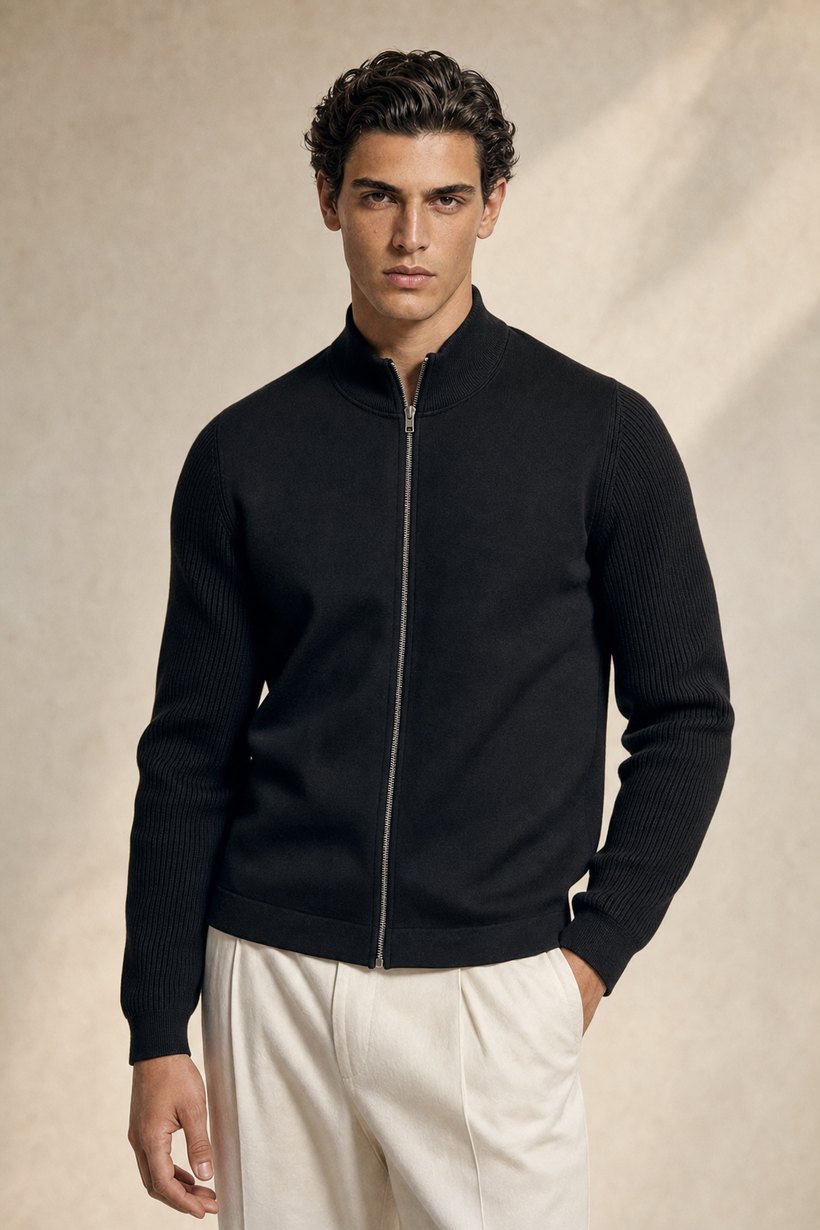
A tech pack built for a bomber jacket or a hoodie does not carry over to a blazer. The four things that change when the garment is tailored rather than cut-and-sew, and what we ask for before we cut against a pack that is missing them.
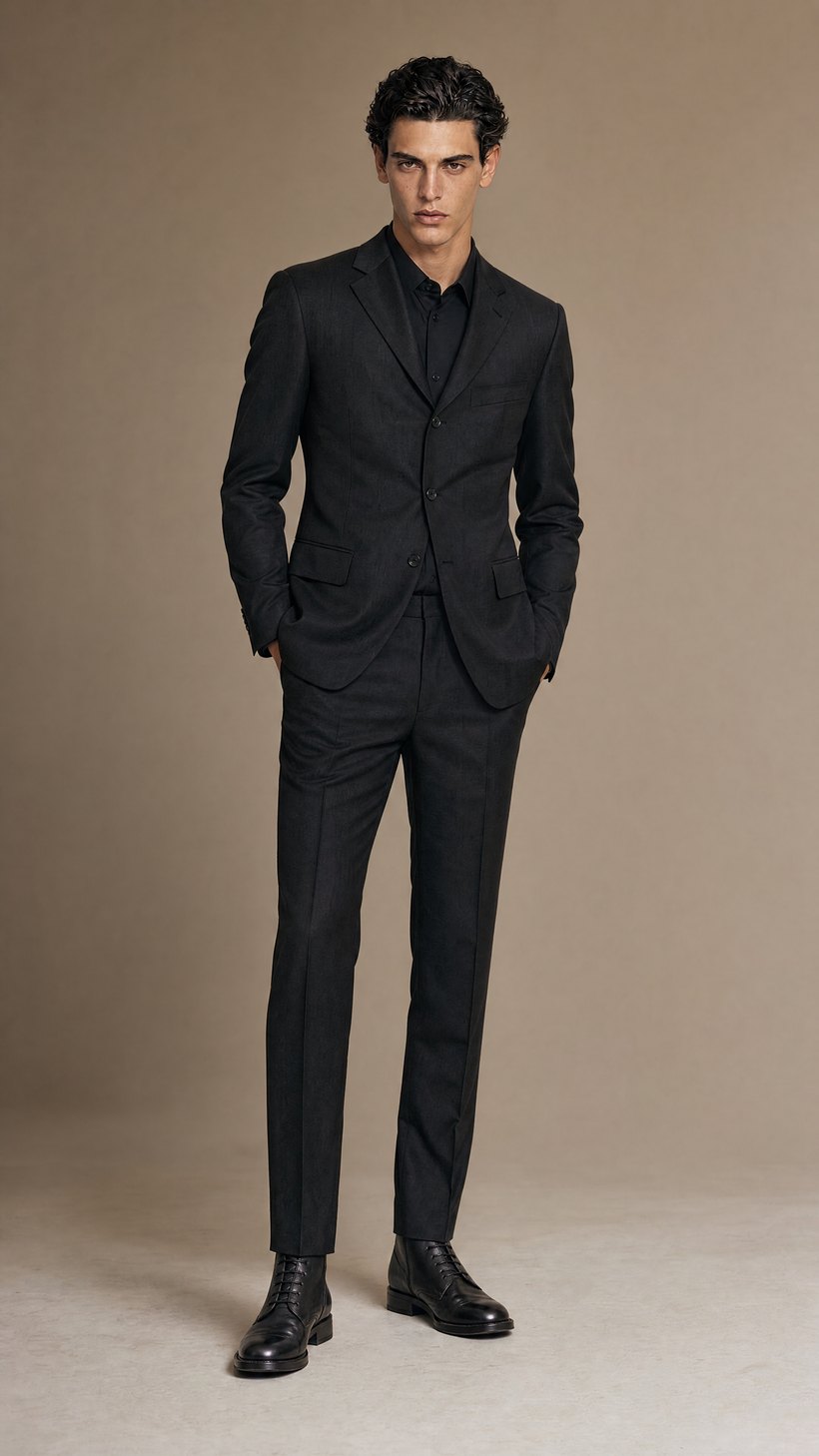
Our site promises 14 days in production, plus shipping, on every order, but that window starts at a different moment depending on the mill. Two mills are cut and sitting on our shelves in Shanghai. The other thirty-one are not, and the difference changes what a platform or a chain buyer should promise their own customer.
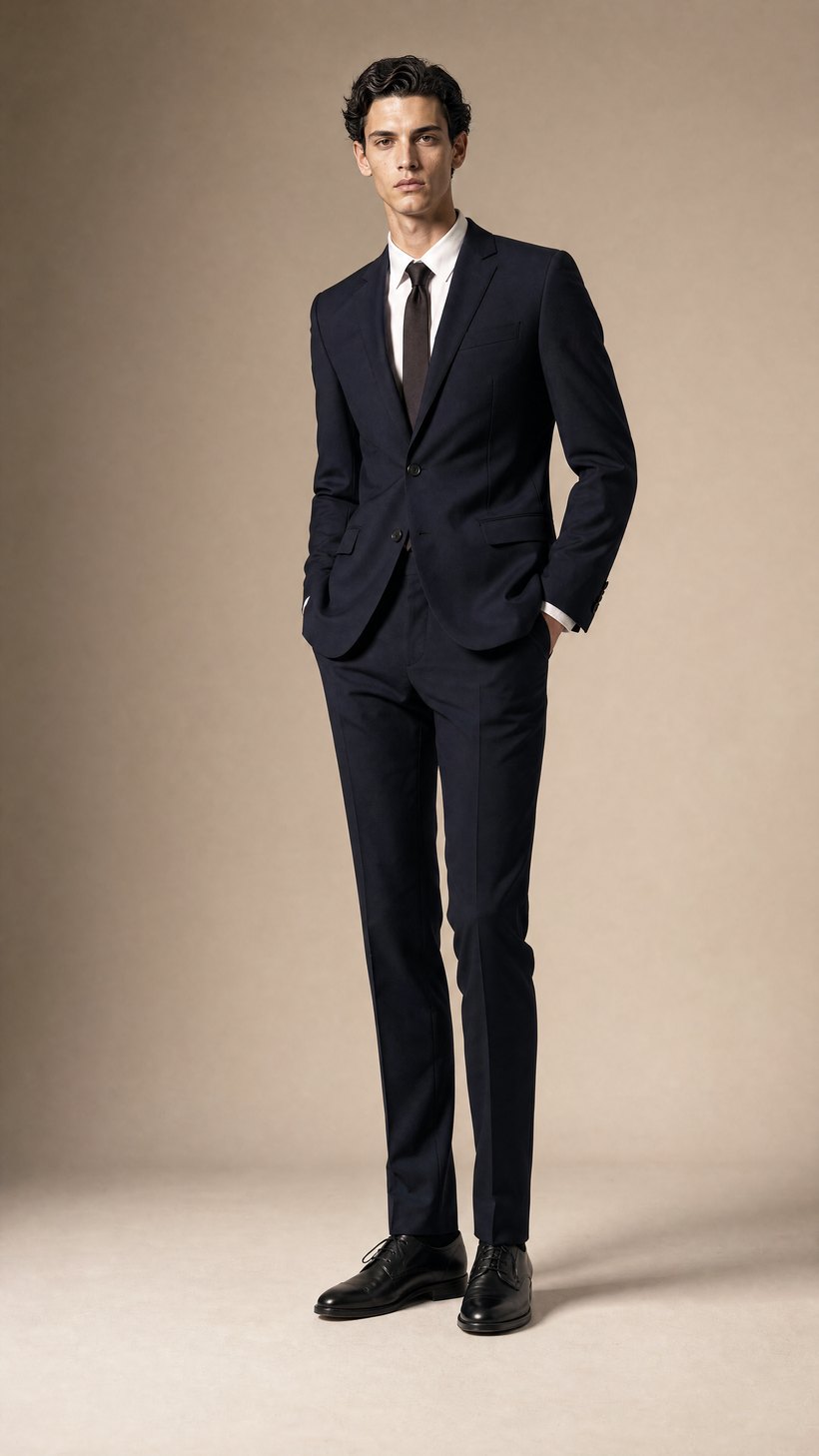
A shop owner asked us to compare a wholesale price list against a made-to-measure quote as if they were two versions of the same purchase. They are not. What each model actually buys a boutique, where the risk sits, and a checklist for deciding between them.
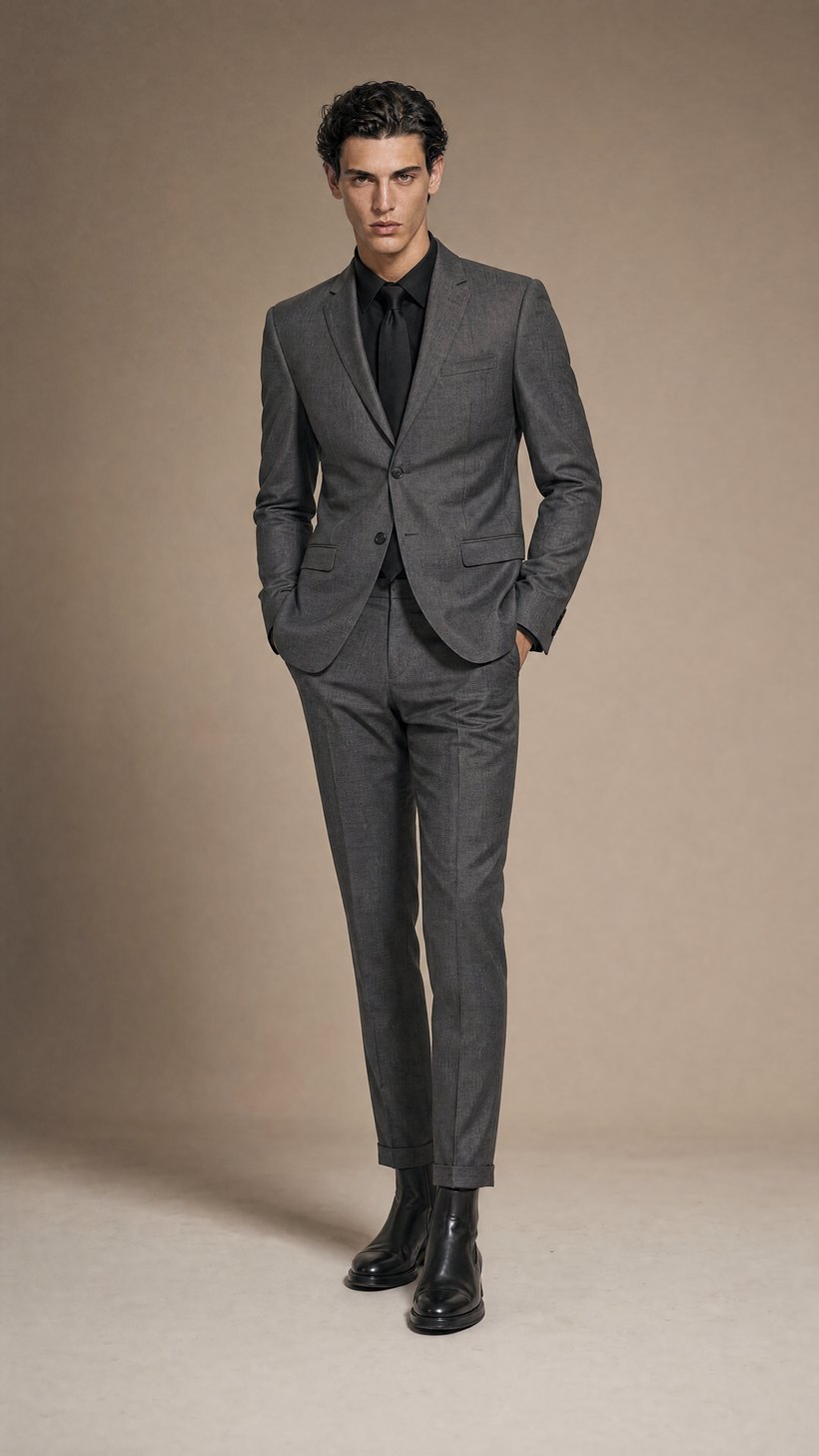
A founder ranked three factory quotes by the number at the bottom of the page and asked us to beat the lowest one. None of the three numbers meant the same thing. What actually sits between an ex-works quote and the cost of a garment on your own shelf, and how to build a worksheet that compares them properly.
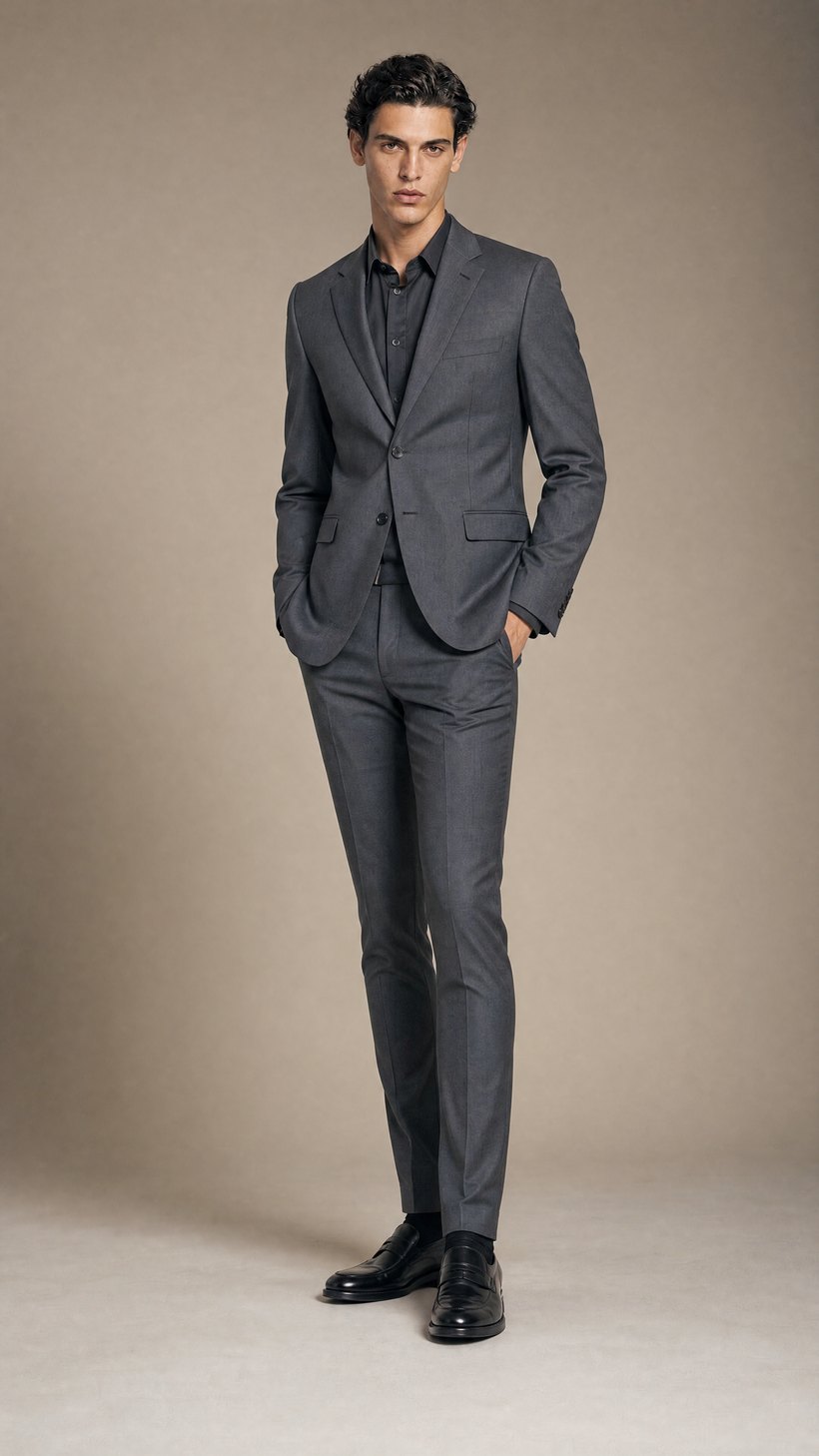
The quote in your inbox does not say factory or trading company at the top. Both will call themselves a manufacturer. A working list of what to ask before you send a spec sheet, and what only a factory can answer.

A sample garment is priced like any other order here, with no separate sample fee on top. What that buys you, what it does not, and how to decide whether a second piece is worth ordering before you place a real one.
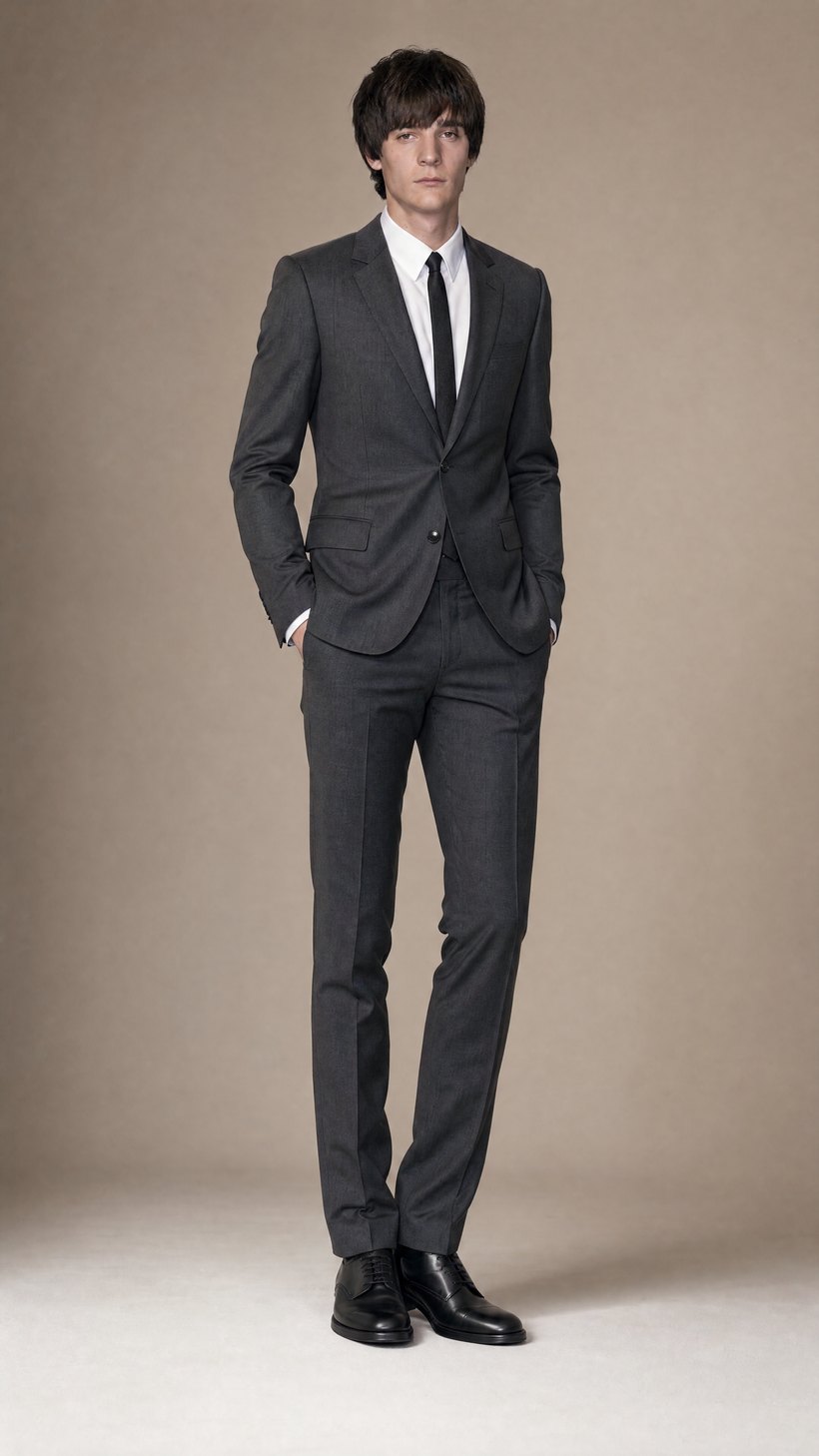
The request used to be simple: one cloth, five sizes. Now shops are asked to coordinate a wedding party without matching it. What that actually changes on a spec sheet, and where a five-suit order breaks if nobody tracks it.
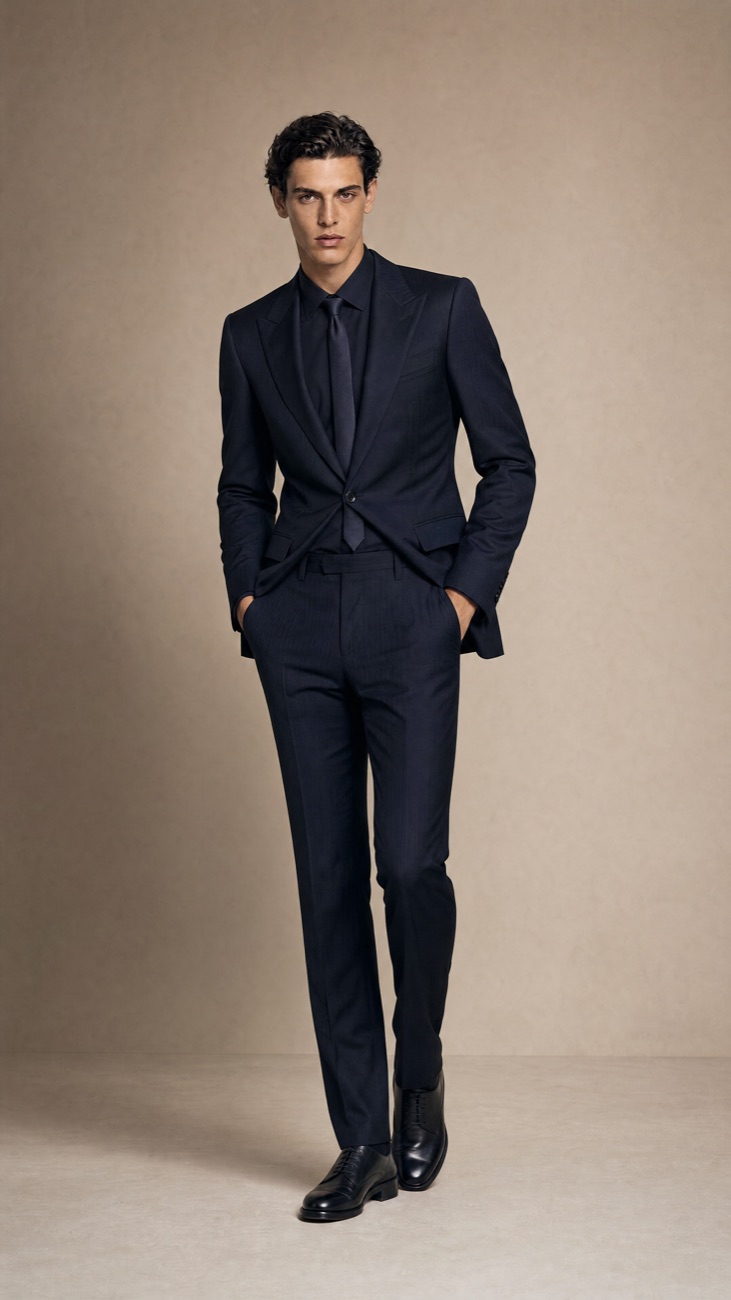
A spring wedding date lands on a shop's calendar as a countdown, and the countdown starts sooner than most first-time grooms expect. What the factory side of that timeline looks like, and where a shop's own schedule has to sit ahead of ours.
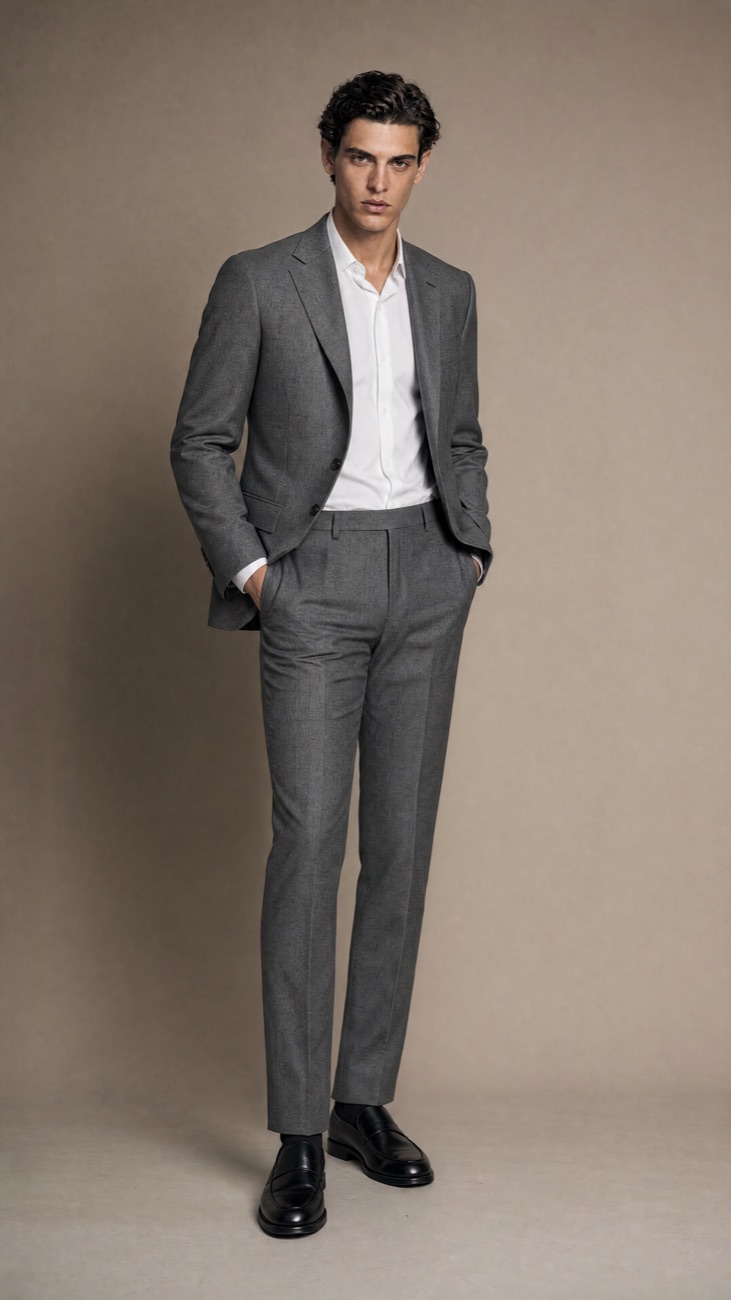
A chain buyer sent back the same order form from June with one line changed: cloth. The block that sold through in a light summer wool is not automatically the same order in a heavier autumn cloth. What actually needs re-checking before a reorder ships, and what genuinely carries over.
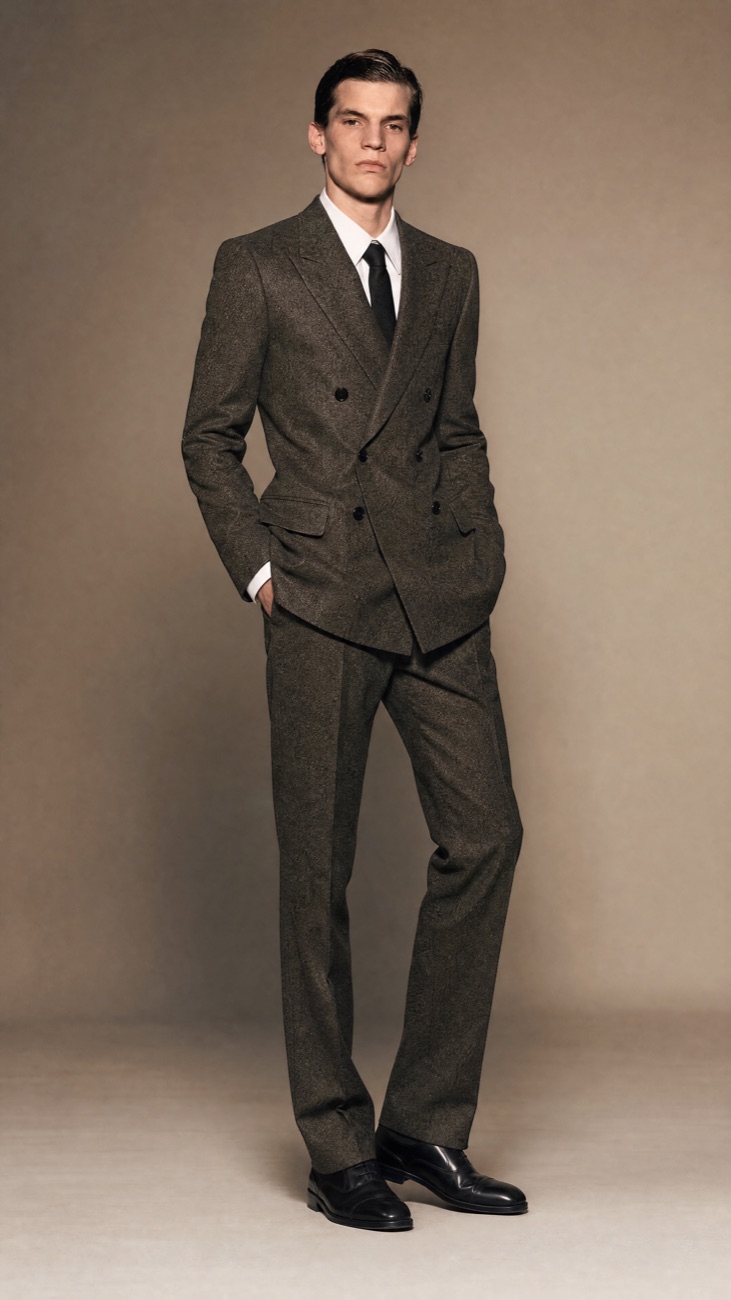
A buyer asking for something heavier for winter is asking for a number, not a season. What 320 gram cloth changes at the cutting table, in the canvas, and in the finished drape, from a factory that carries 98 to 440 grams.
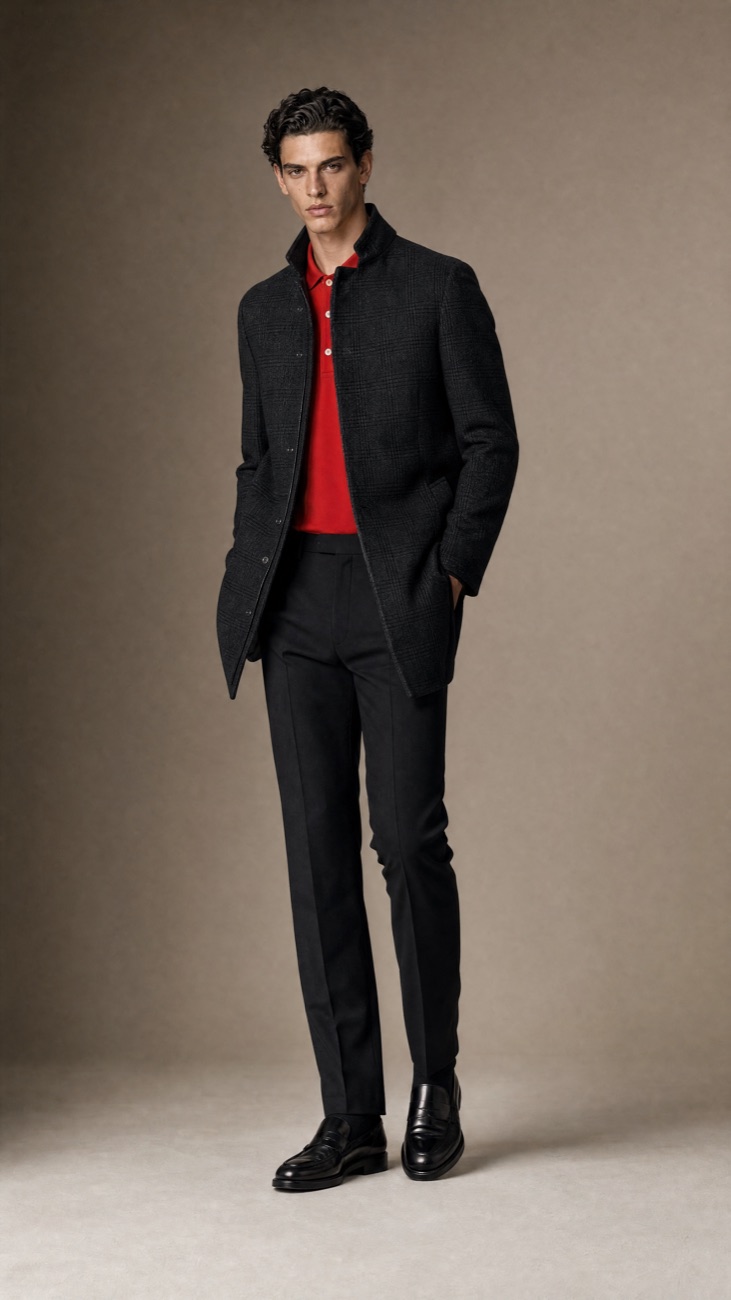
Since relaxed tailoring took over the spec sheets coming into our atelier, 'natural shoulder' has become the most common phrase we get with the least agreement on what it means. Three questions we ask before we cut anything, and what the term actually changes.
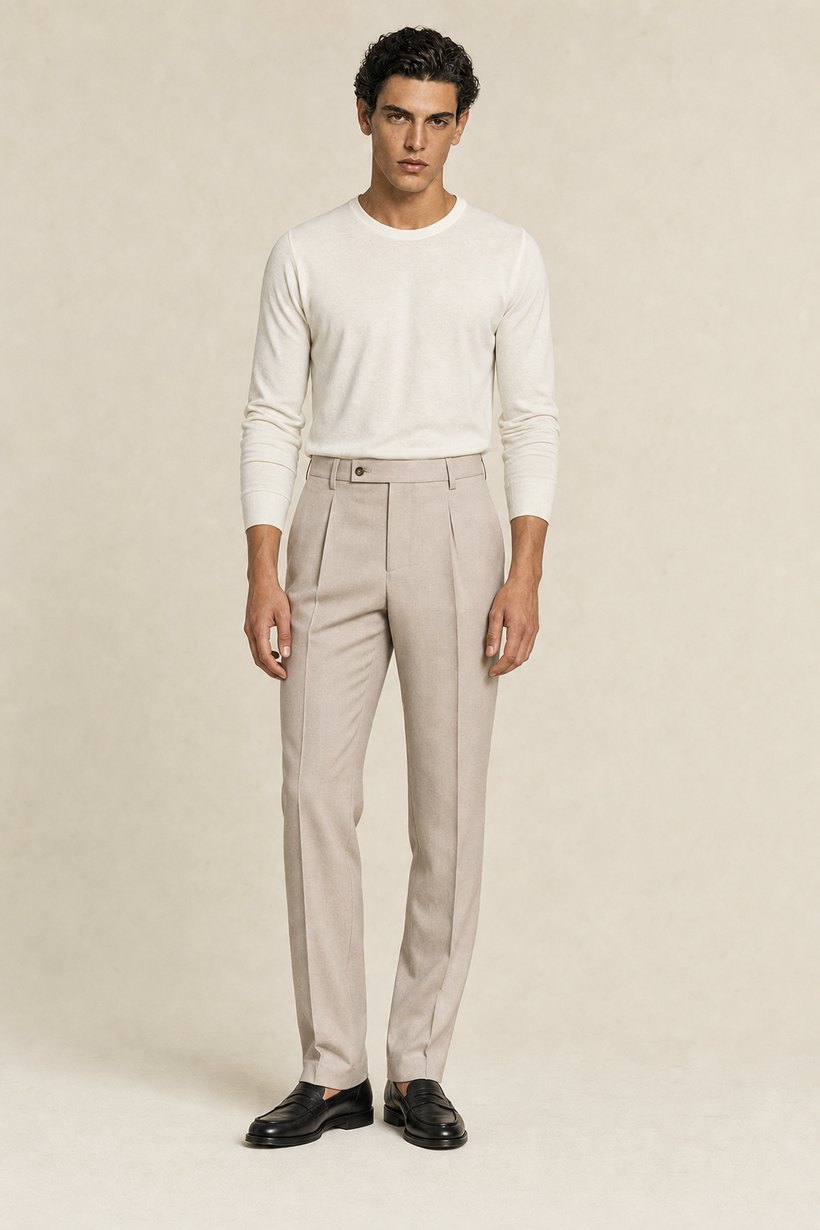
Wide-leg trousers are back on the order sheets, and most buyers spec the change as a bigger leg opening. On our cutting table it is a rise decision first. What the pattern actually needs, and the field online forms leave out.
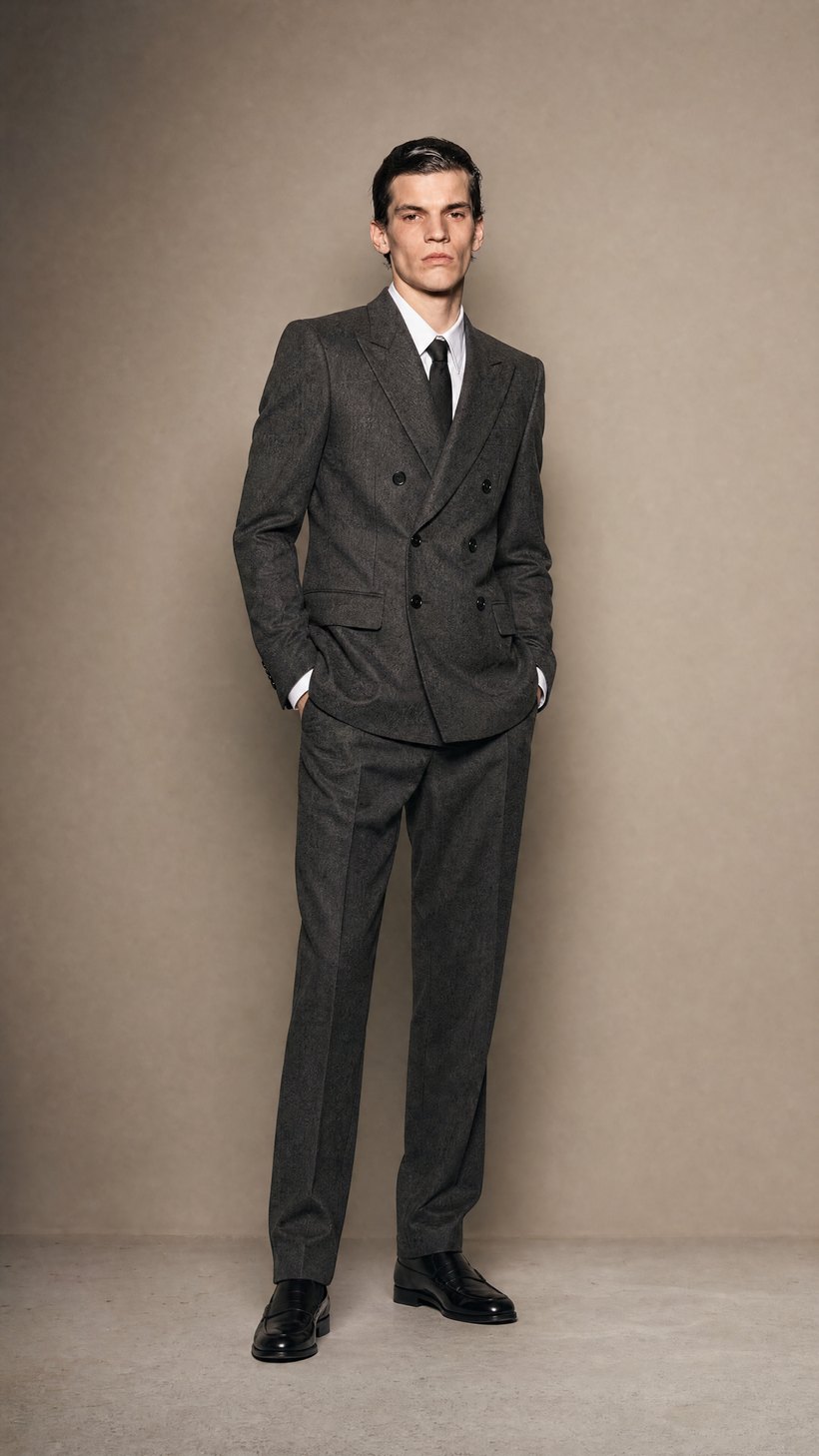
A shop's first double-breasted order usually arrives on a single-breasted spec sheet with the front style typed over. Four numbers do not transfer: lapel width, the buttons that actually fasten, the cloth carried across the chest, and the canvas underneath it.
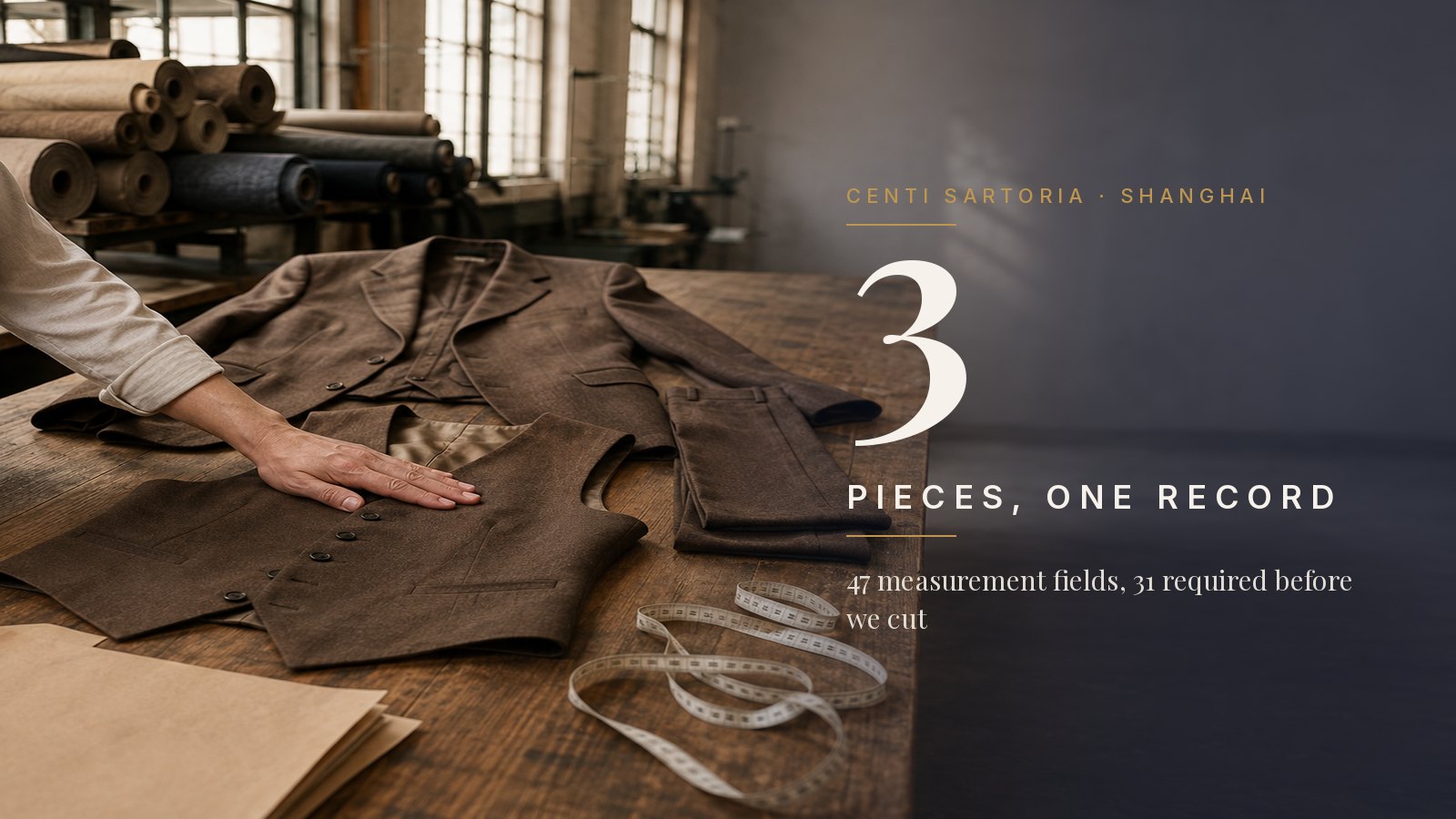
Three-piece orders are arriving with a fully specified jacket, a fully specified trouser, and a waistcoat carrying almost no information at all. The third piece is cut from measurements collected for the other two, and it is the one garment that cannot hide the gap.
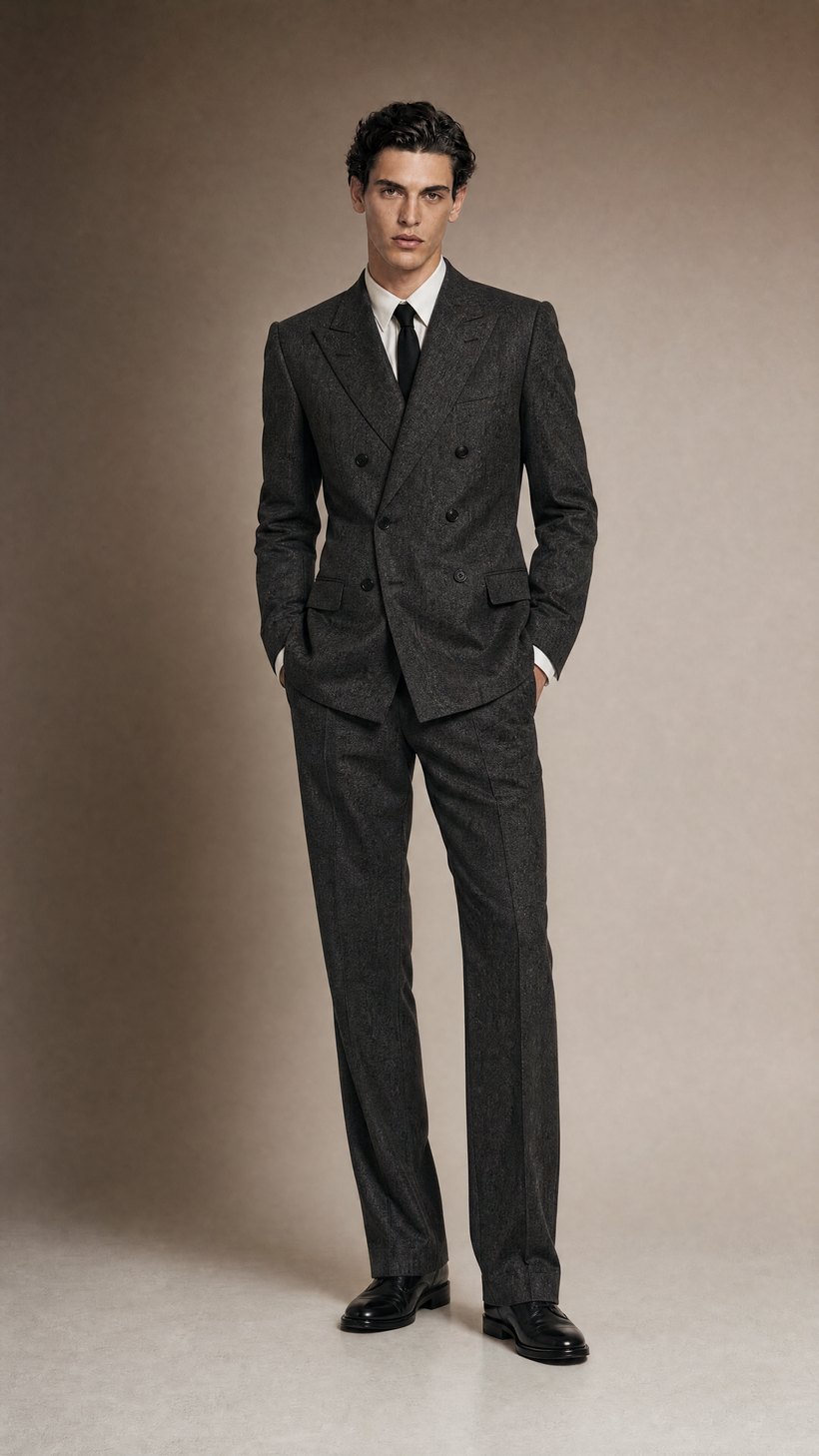
Tweed, bouclé and flannel are replacing flat worsted as the AW26 story, and shops are ordering them into a lean block unchanged. A textured weave changes matching, cloth consumption and construction, not just the surface. What to put on the spec sheet before you cut.
Searches for relaxed tailoring are up more than fivefold on last year, and the easy fit is the look of autumn 2026. The mistake shops make is ordering it one size up. What relaxed actually means on a pattern, and what to put on the spec sheet.
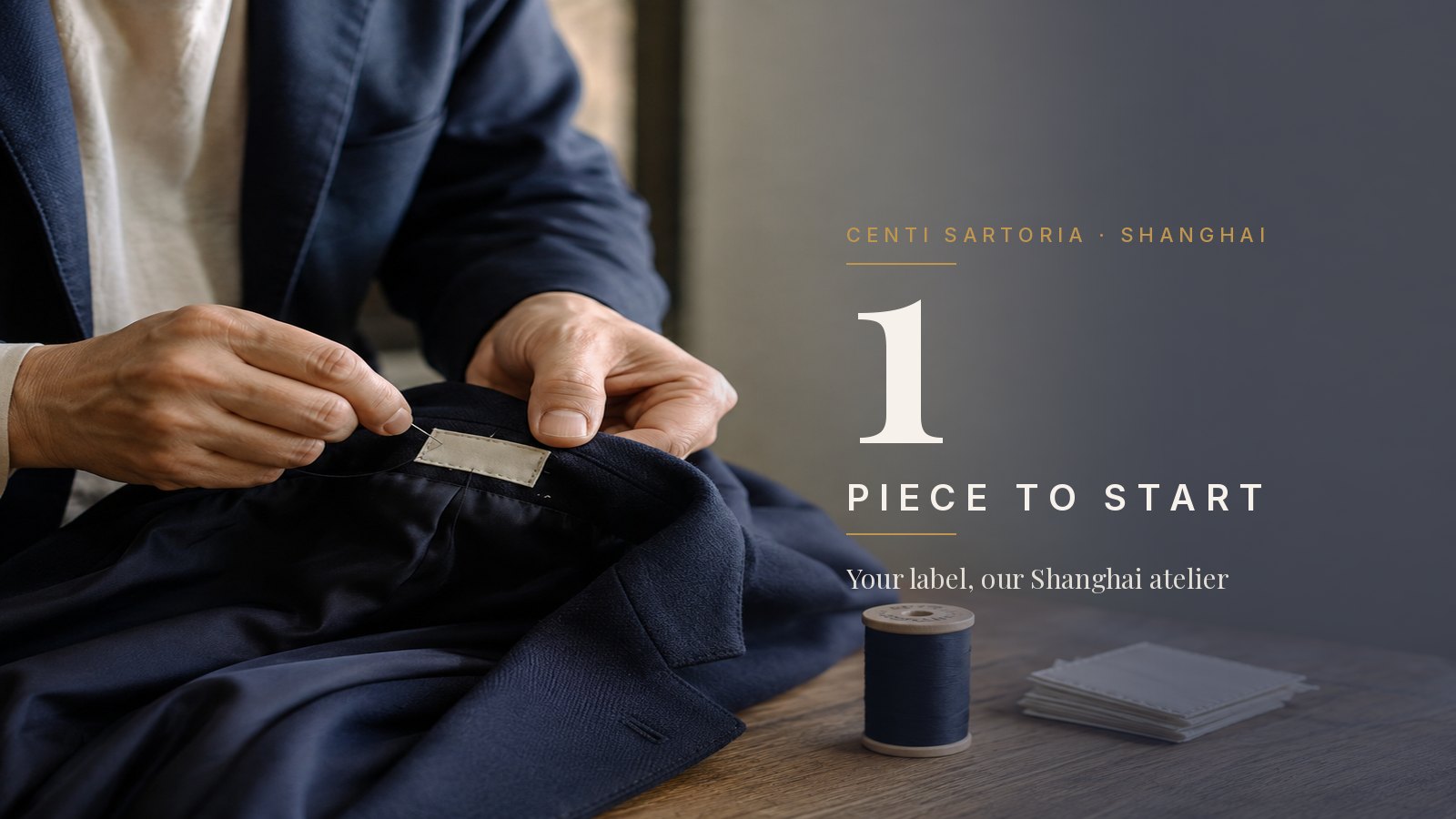
Generic apparel guides assume sized goods a returns label can fix. A suit brand sells fit itself, measured by the customer alone with a tape measure. What that changes, and who should walk away from the category.
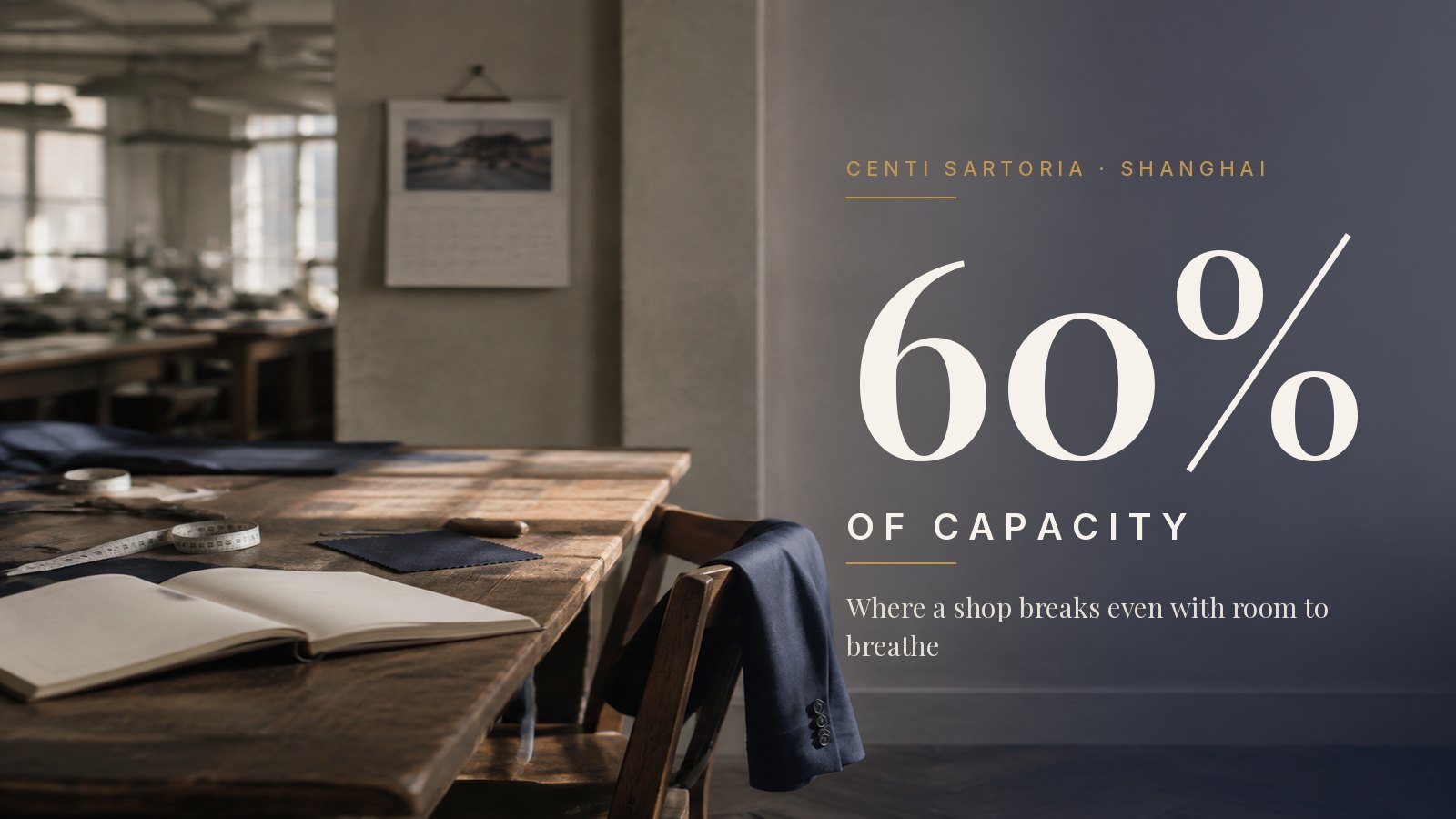
Most tailoring business plans are written for a bank and never opened again. Here is the version that runs a shop: the break-even count, and what to do the month you run out of time rather than money.
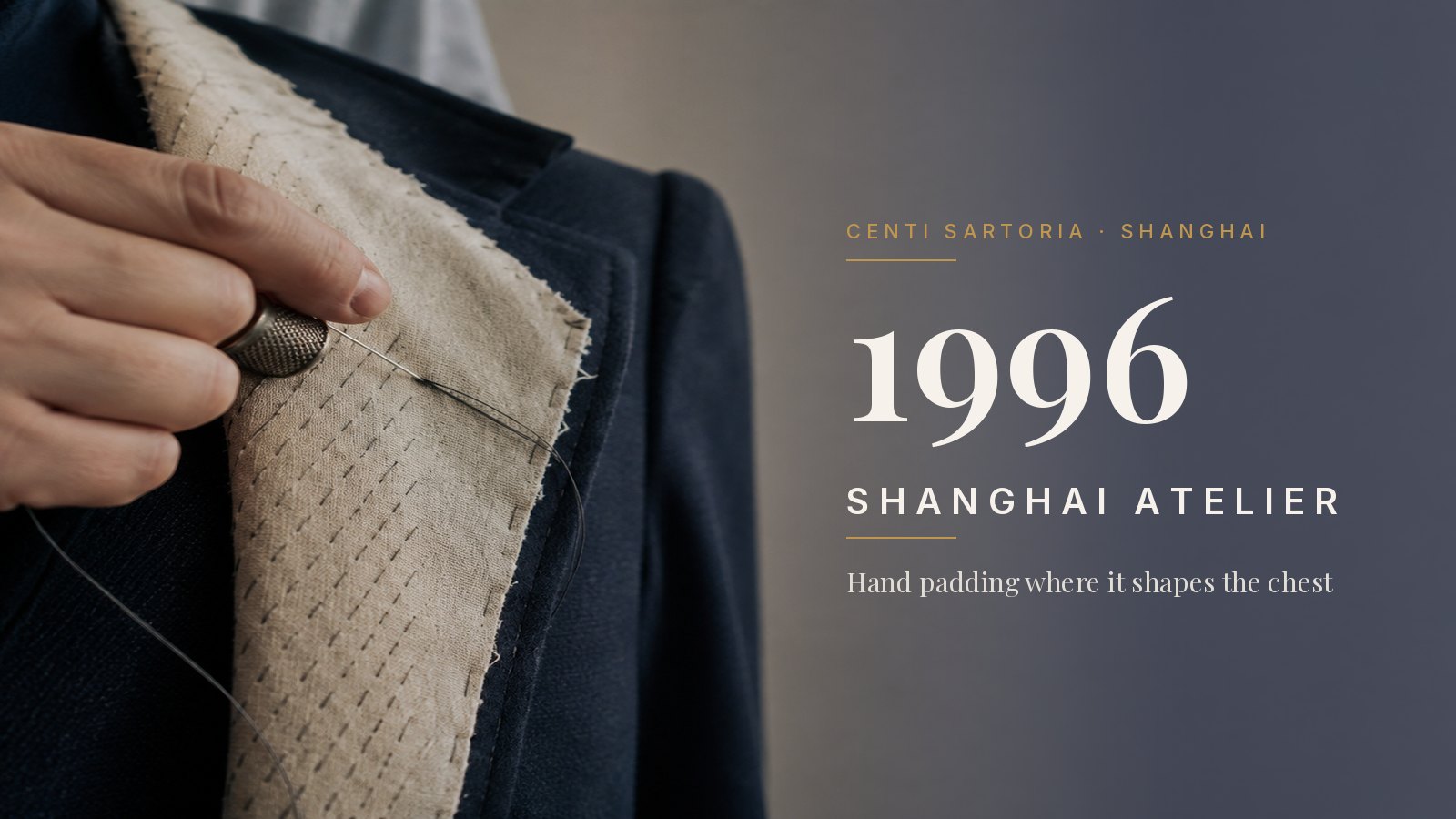
Hand padding changes the tension in a canvas panel, not its quality. A guide to where that difference actually shows in a jacket, and the much larger part of it where paying for a hand doesn't buy anything a customer will ever feel.
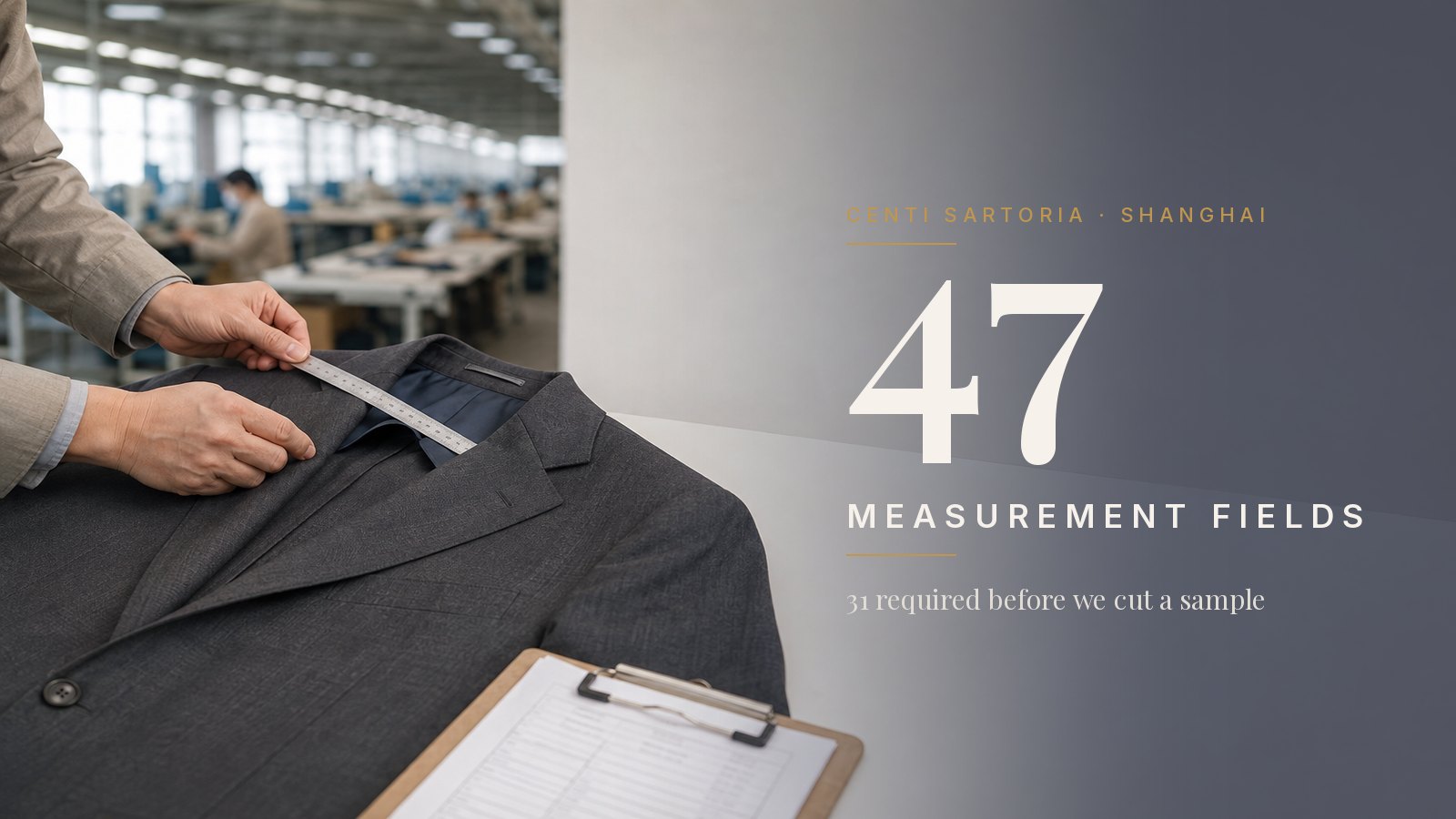
A first sample proves whether what a factory told you matches what they made. A working checklist for what to verify before you place a larger order, and an honest list of what one sample can never prove.
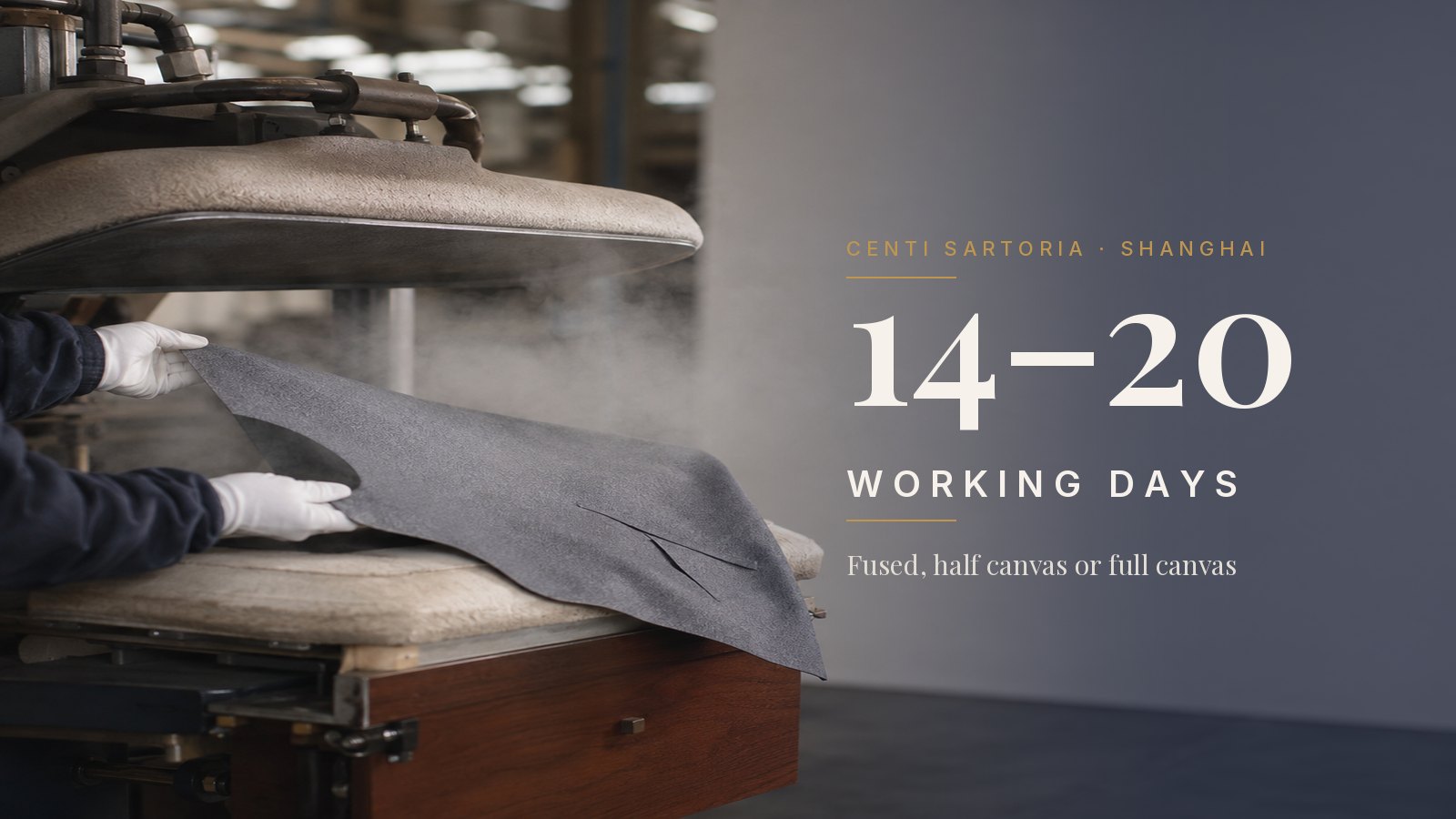
Fused construction earned its bad name honestly, but the defect behind it was a mismatch of glue, press and cloth, not a flaw in the category itself. Where fused is the correct choice, where it still is not, and what the difference actually costs.
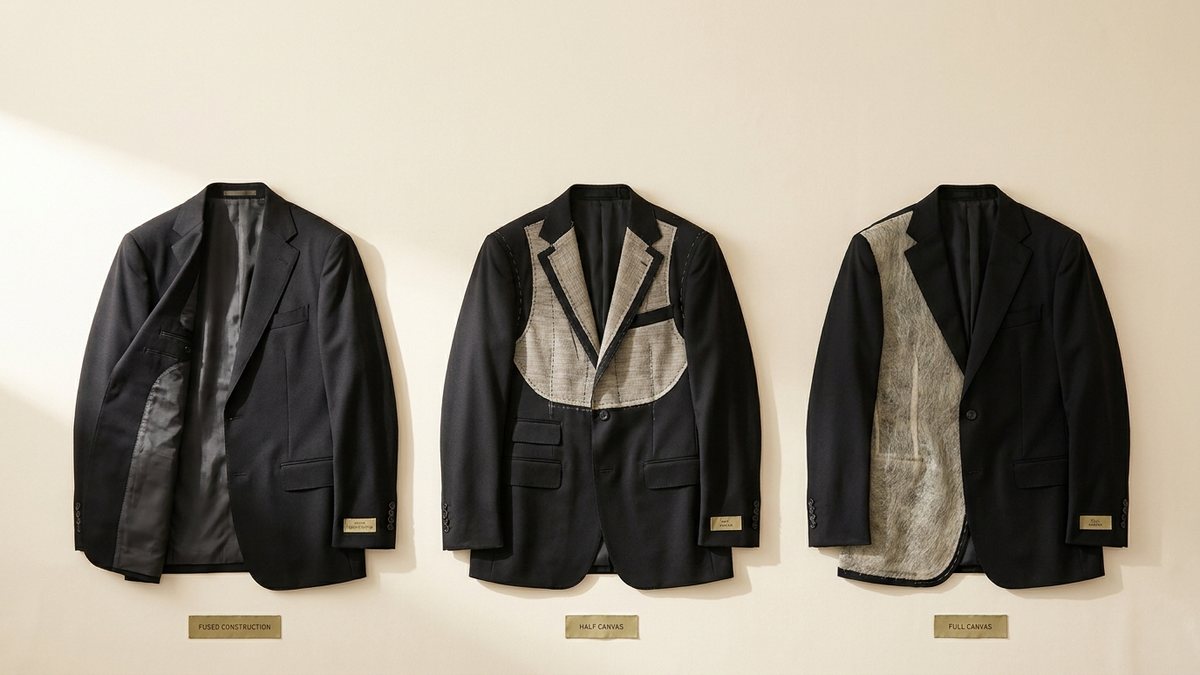
Fused, half canvas and full canvas describe what is inside a jacket, not whether a hand touched it. A retailer's guide to the second question almost nobody asks before pricing a construction ladder.
Referring a client to a tailor costs you nothing if the suit disappoints. Selling it yourself changes what you are risking, and it is not the margin. The honest version, including who should not do this.
Every guide to choosing a made-to-measure suit manufacturer is written by someone who wants to be chosen, including this one. Here is the test to run on any supplier, the four supplier types compared honestly, and where we are not the right fit.
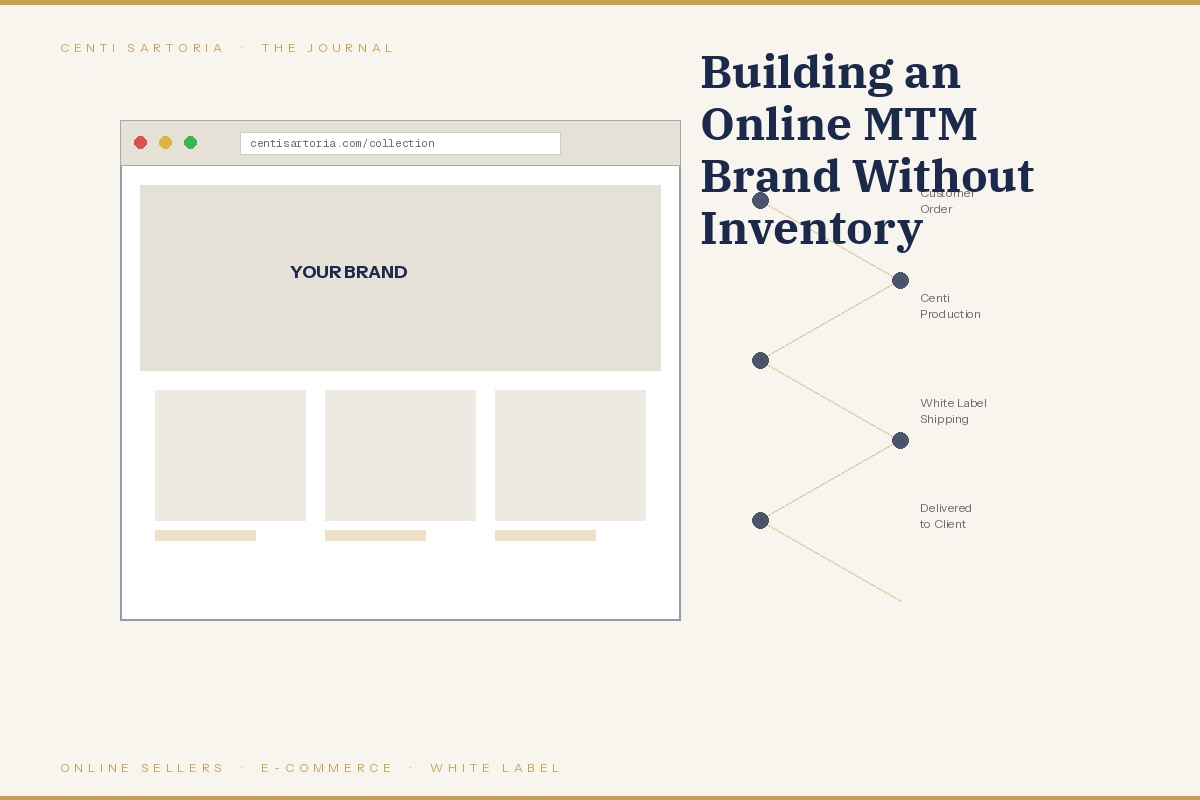
Every no-stock suit brand pitch already solves the inventory question. Whether one survives its first year comes down to three other things: measurement, the landed cost of a suit once freight and duty are in, and whether you should start yet.
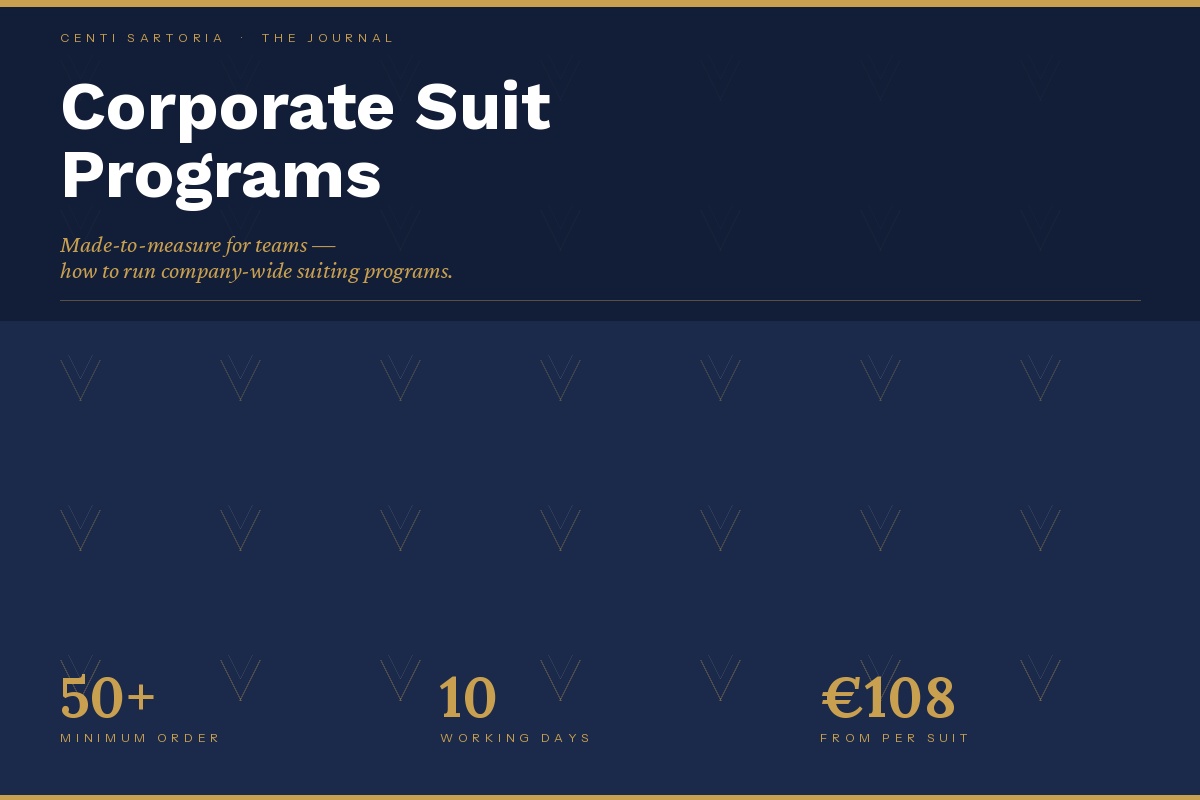
Dressing twenty people for one day is a deadline problem before it is a tailoring one. What actually breaks a corporate made-to-measure programme, and how to plan around it.
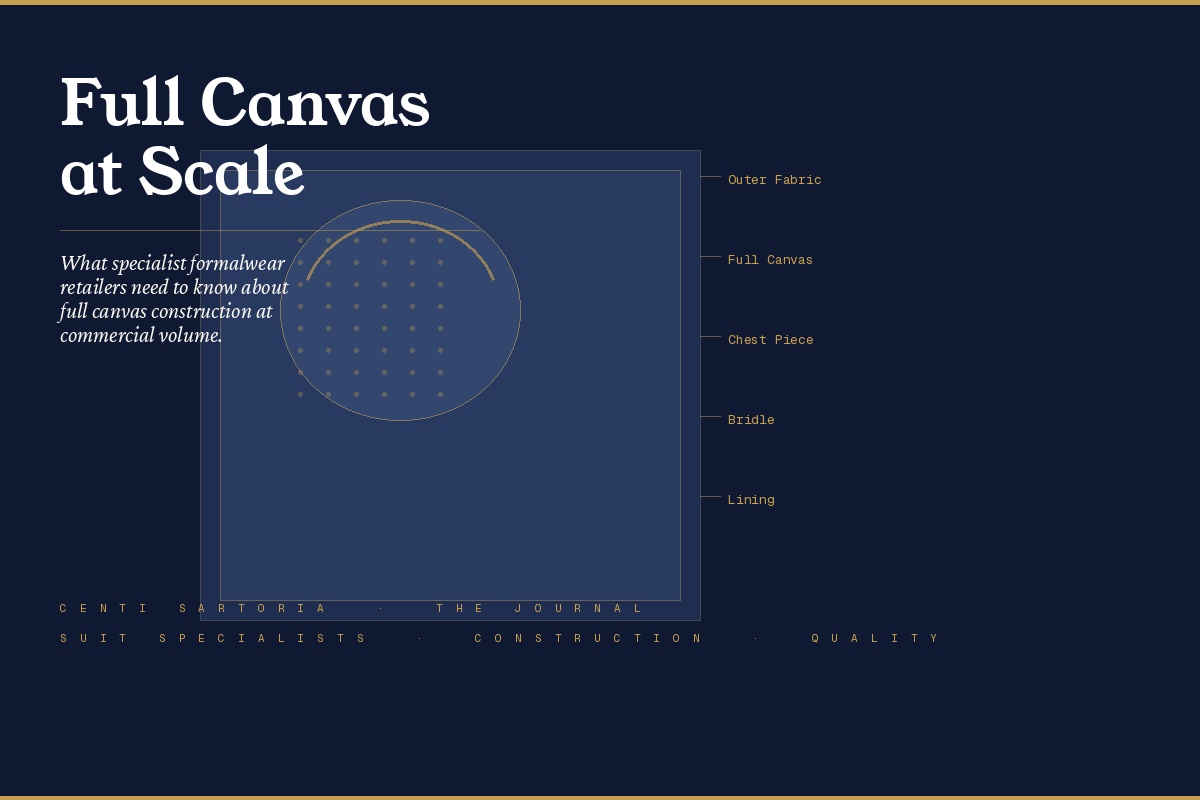
Full canvas earns its price on cloth with enough body to hold a shape, not on the name of the construction. A cutting-room case for when it is worth paying for, when it is not, and what actually breaks when you try to scale the hand work behind it.
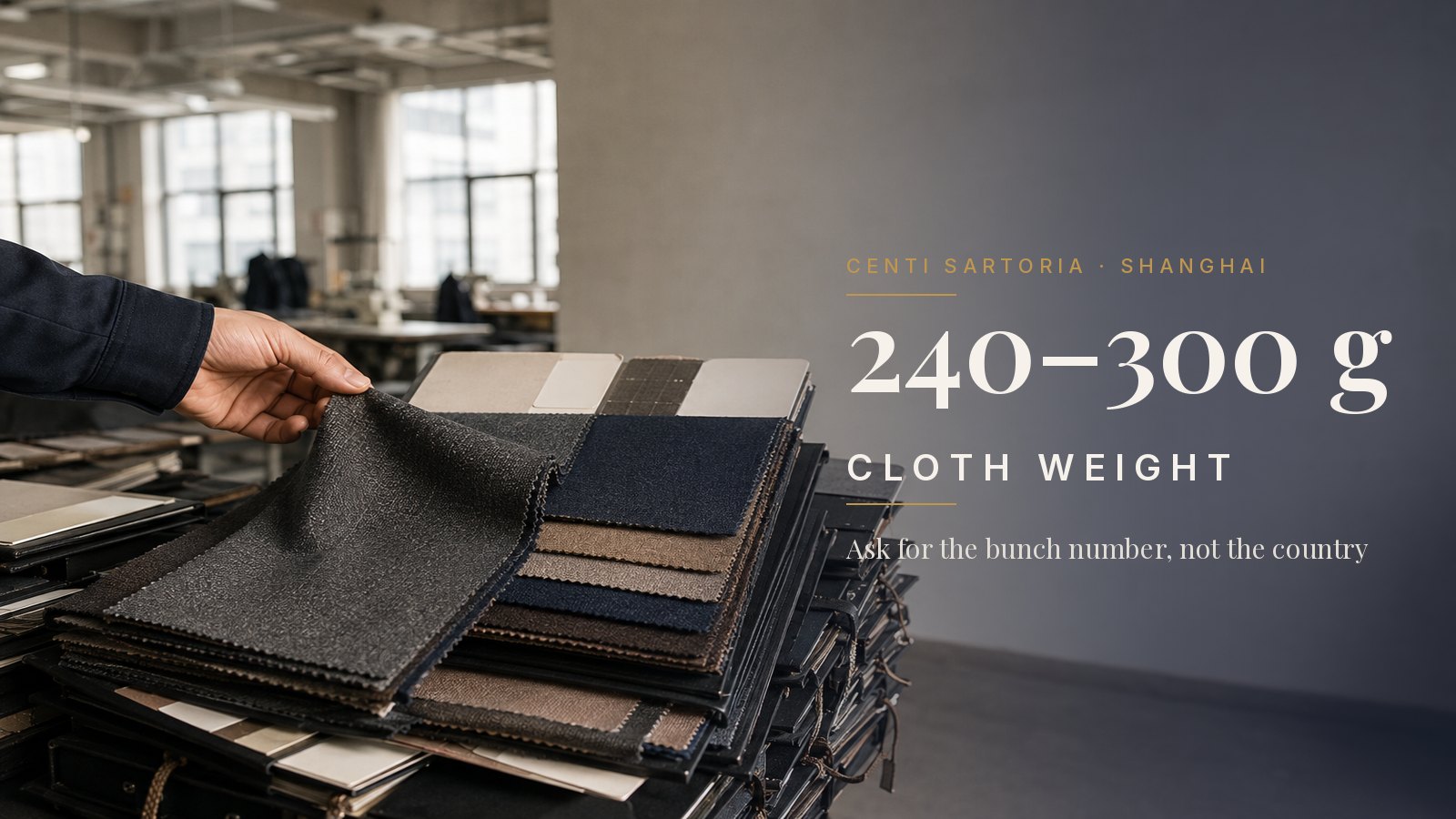
Ask for three things in writing before you order: the bunch reference, the weight in grams per metre, and the mill reference on your paperwork. A check any buyer can run in one email, including on us.
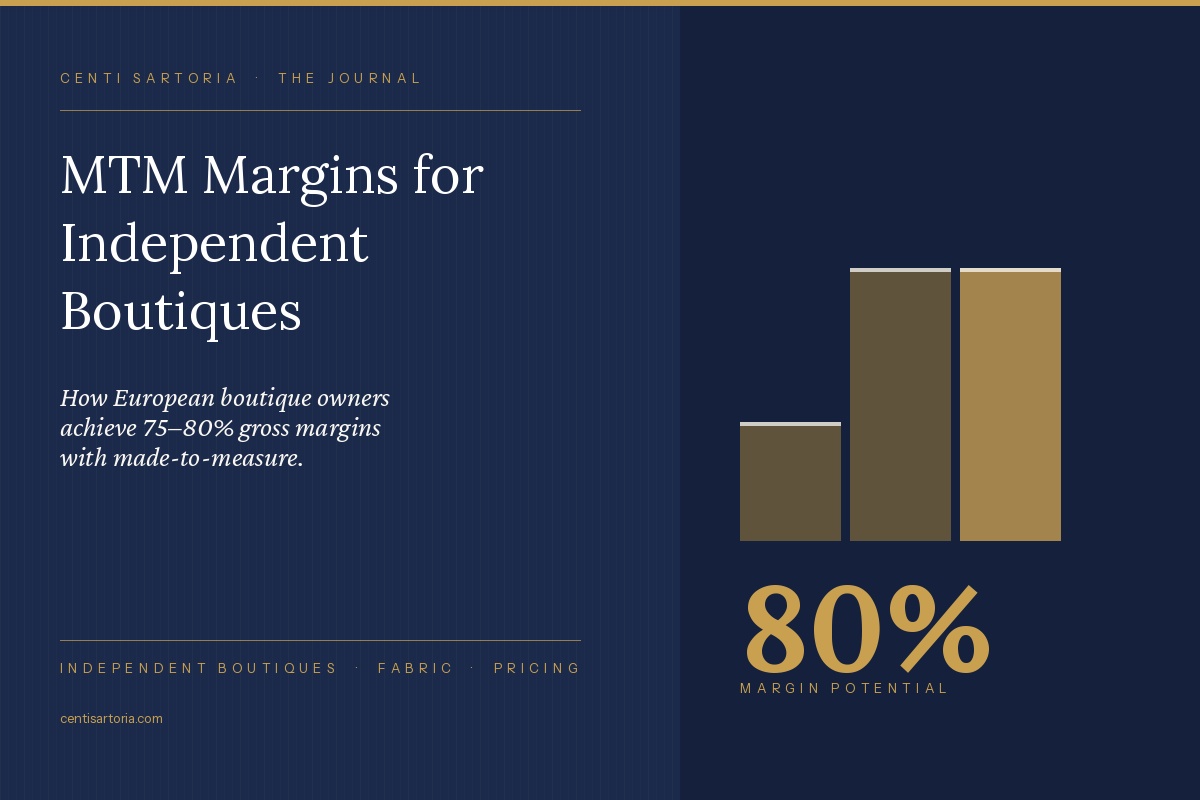
Margin is the easy part and it is not what kills these programmes. The real arithmetic is velocity, dead capital in samples, and who on your floor can take a measurement.
A single-piece minimum does not remove the risk of starting a label. It shifts the risk from cash tied up in stock to the attention each order takes when you run them one at a time.
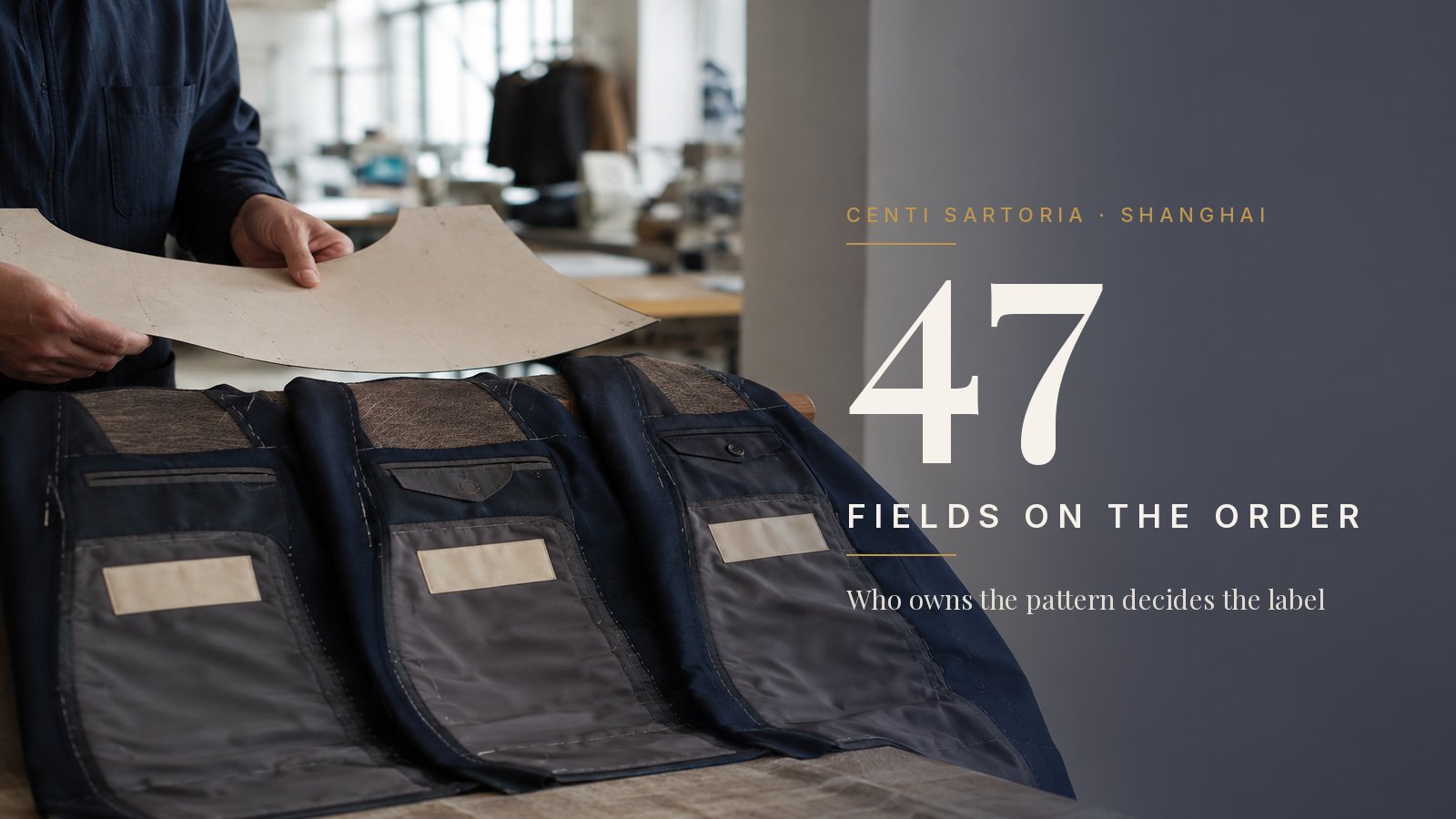
Private label, white label, OEM and CMT get used loosely enough to mean whatever a factory needs them to mean that day. Here is what each one actually implies, and the one question about who owns your pattern that decides more than any of the four words do.
Multi-door quality problems get blamed on the factory almost every time, and that is rarely where the problem starts. Ten stores means ten pairs of hands taking a measurement, not one method. What to fix before you add a ninth or tenth door.
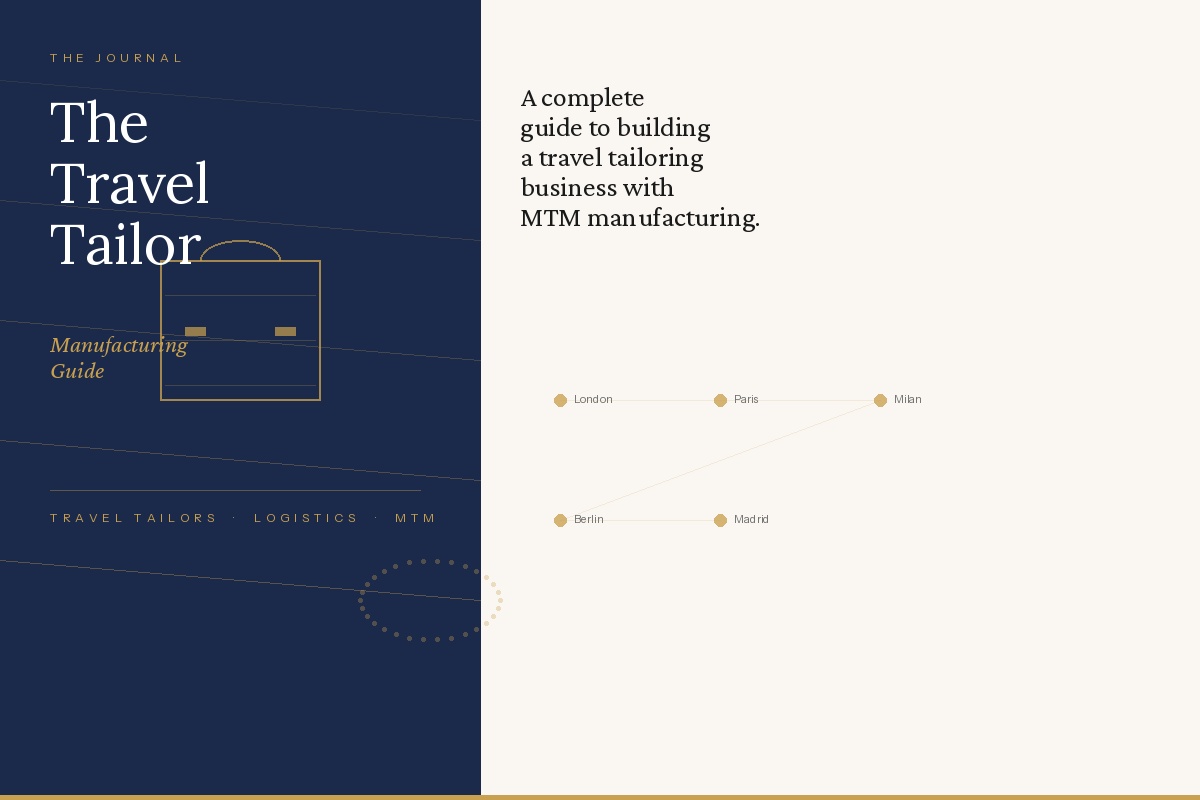
Your flights and hotels are not marketing spend. They are a cost carried by every garment you write on that trip, and most travel tailors never put them in the model.
What actually happens when you order your first made-to-measure suit: why it will not fit perfectly on the first try, and what to get right on fabric weight, construction, and timing before you order.
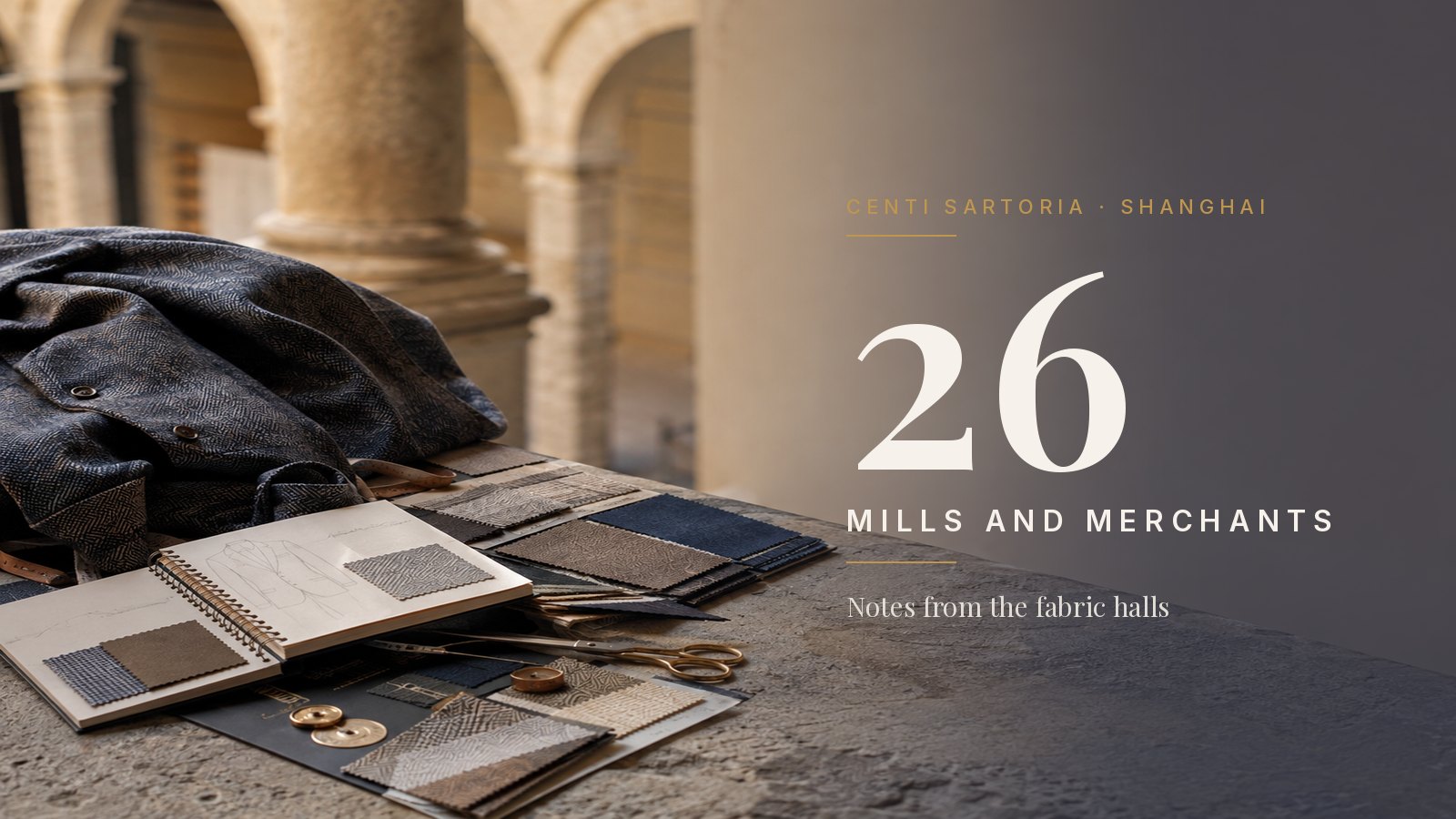
A made-to-measure suit factory's read on Pitti Uomo 110, soft tailoring, high-twist summer cloth, colour, low-inventory models and made-to-order, and what each trend means for anyone launching a tailoring brand.
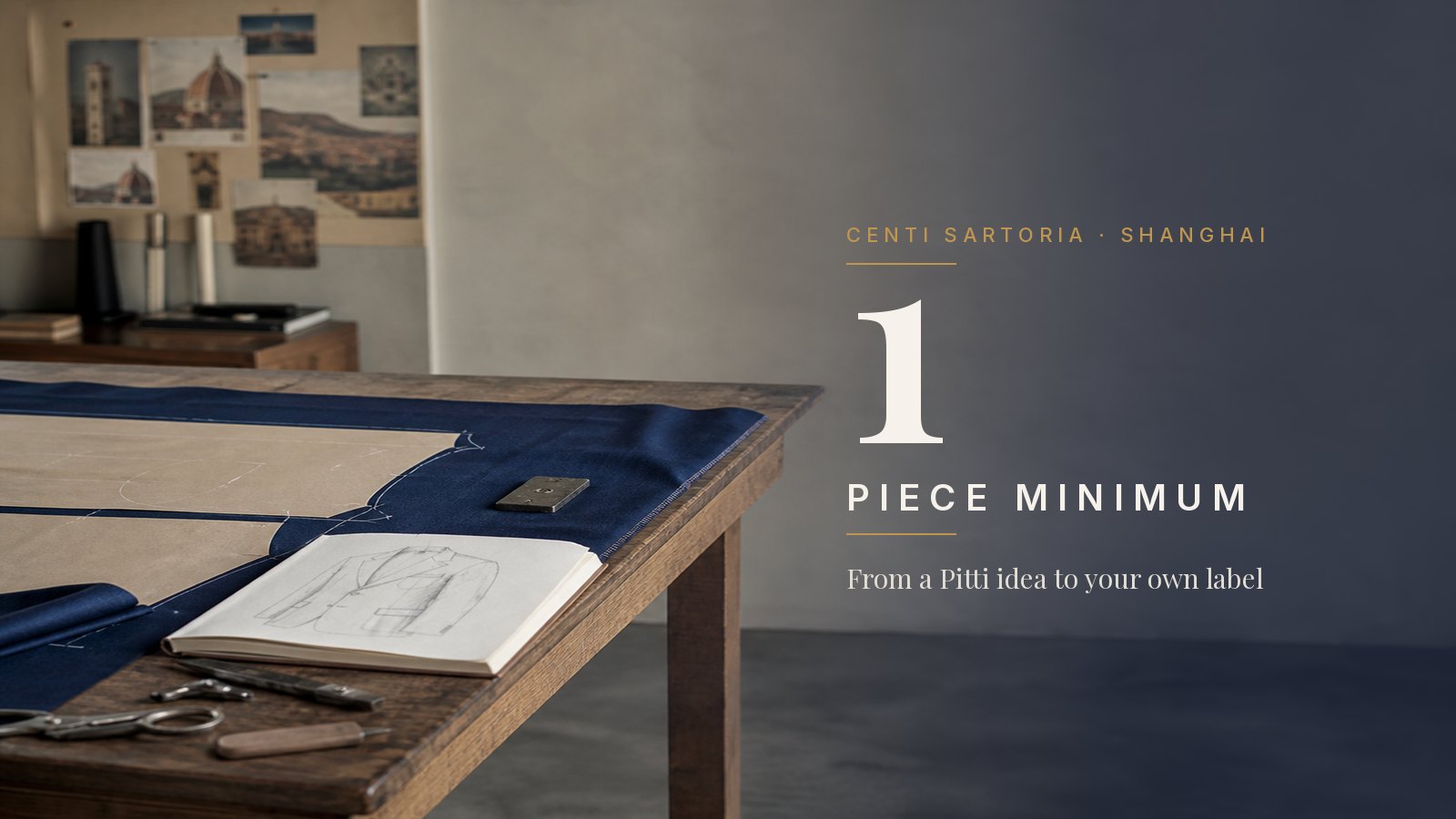
Walked Pitti Uomo 110 and left wanting to build your own tailoring label? Here is the realistic path from a stand you loved to a launched made-to-measure suit line. Fabric, minimums, sampling and cost.
Want to contribute? Have a question about our collections or process?
Get in Touch