Journal Entry
Wholesale Tuxedos for Bridal and Formalwear Shops: Stock or Made to Measure?
When a bridal or formalwear shop searches for wholesale tuxedos, it usually means a stocked size run. The honest trade-off between buying stock and ordering tuxedos made to measure from a one-piece minimum, and the details a shop specifies on each order.
When a bridal or formalwear shop searches for wholesale tuxedos, it usually means a size run of finished tuxedos, bought up front and kept on the rail. That is not what we sell. We are a factory that makes tuxedos to measure from a one-piece minimum, in 14 days in production from a confirmed order, shipping extra, from USD 155 per two-piece full make, ex works Shanghai. For planned weddings that is usually the better model. For a customer who needs a tuxedo this Saturday, it is not, and this piece is about telling those two situations apart honestly.
We make every tuxedo to order. Everything below is written from the factory side of made to measure, for the shops that buy from factories like ours.
What "wholesale tuxedos" usually means
A stocked wholesale tuxedo programme works like any ready-to-wear buy. The shop picks a few models, orders a spread of sizes, pays for them, and sells or rents from the rail. The appeal is obvious: the garment is there when the customer is.
The cost is also obvious once you have run one for a season. The shop funds the size run before anyone has asked for it. The sizes at the edges of the run sell out while the middle sizes sit. A lapel style that was right last year stays on the rail this year. And every tuxedo is fitted by alteration, because it was cut for a size chart rather than for the man wearing it.
The honest trade-off
| Stocked wholesale tuxedos | Made to measure from a factory | |
|---|---|---|
| Money out before a sale | The whole size run | Samples only, one piece each |
| Sizes | What you guessed to buy | Every order cut for one man |
| Unsold stock | Yours to carry or mark down | None, the order follows the sale |
| Fit | Off a size chart, then altered | From his measurements |
| Speed | Same day, if the size is there | 14 days in production from a confirmed order, shipping extra |
| Lapel, facing, colour choice | What you stocked | Specified per order |
| Best for | Walk-ins, dates days away, rental | Planned weddings and events |
Neither column is wrong. They serve different customers. The mistake is running a planned-wedding business on a walk-in model, or promising a walk-in a date the made-to-measure calendar cannot keep.
When stock is the right answer
If a large part of your formalwear trade is last-minute, the groomsman who calls on Tuesday for a Saturday wedding, or a customer who wants to rent rather than own, you need garments on the rail. Made to measure cannot serve that, and we would rather say so than lose your trust on the first order.
When made to measure is the right answer
A bridal shop's wedding calendar is the opposite of a walk-in business. The date is known months ahead, the couple has already chosen you, and the groom and his party can be measured long before the day. That is exactly where made to measure works: nothing is bought until a couple commits, the groom gets a tuxedo cut for him rather than altered from a size 40, and the shop can offer every lapel and facing without stocking any of them.
The discipline is timing. Our 14 days in production start from a confirmed order, and shipping comes on top, so the order has to sit ahead of the wedding with room for a fitting. The full timeline for adding the groom's side to a bridal shop is in adding groom suits to a bridal shop.
What a shop specifies on a tuxedo
A tuxedo is a suit with a small number of decisions that define it. These are the ones a shop puts on the order.
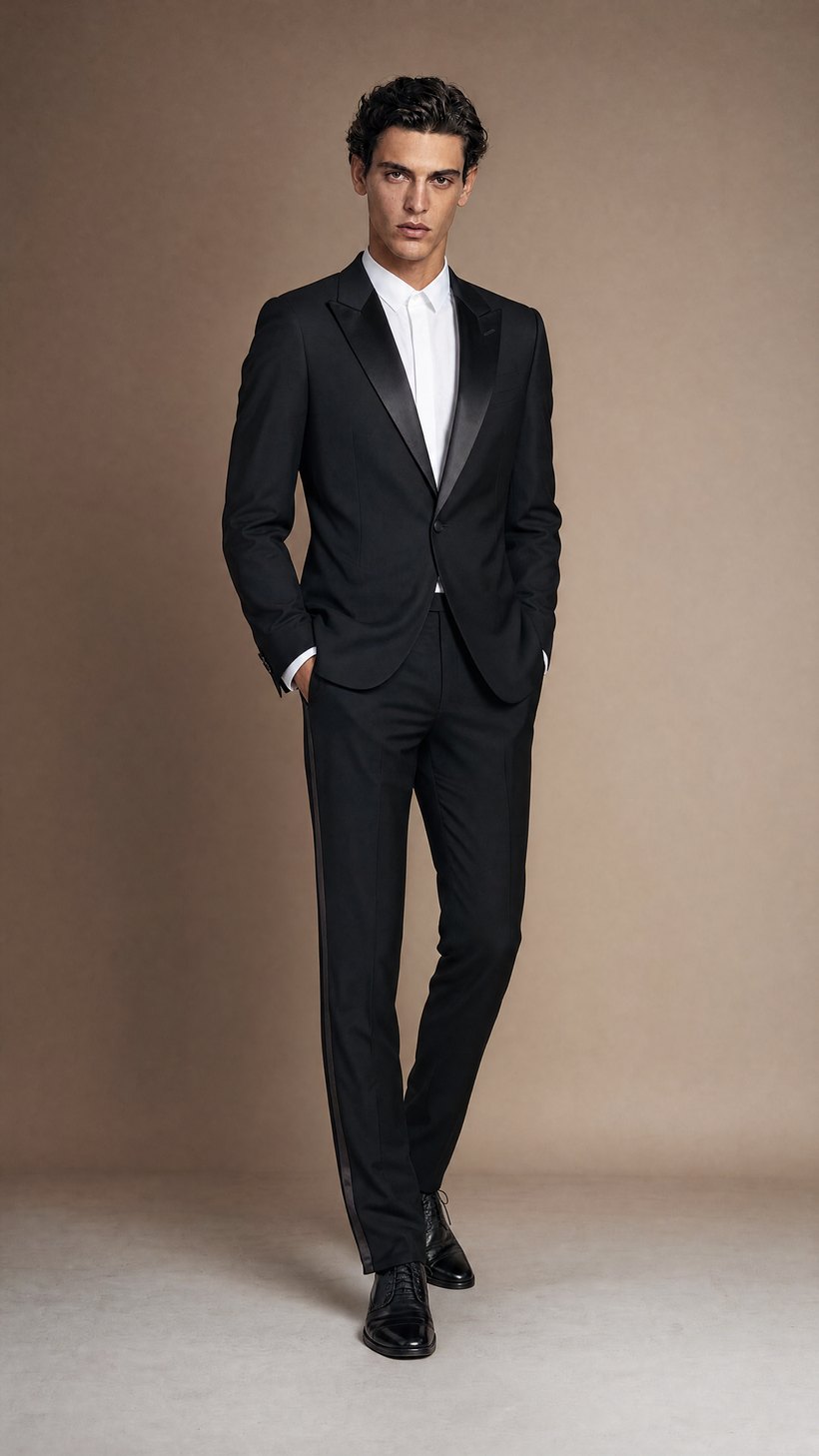
Lapel: peak, shawl or notch. Peak and shawl are the traditional black tie lapels. Peak is sharper and more formal. Shawl is a continuous rounded collar with a softer dinner jacket feel. Notch is the everyday suit lapel; it is common on tuxedos sold off the rail but reads as the least formal of the three.
Facing: satin or grosgrain. The facing is the silk on the lapels. Satin is smooth with a visible sheen and is the classic evening choice. Grosgrain is finely ribbed and matte, quieter in photographs. The same facing normally covers the buttons and runs down the trouser as braid, so it is chosen once for the whole garment. Ask to see the facing sample against the cloth before you confirm.
Single or double breasted. A single-breasted tuxedo with one button is the standard. A double-breasted tuxedo, usually with peak lapels, is more formal and more structured, and it changes the fitting: the fronts overlap, so the chest and waist measurements carry more weight.
Trouser braid. A single stripe of the facing material down the outside seam of each leg is the black tie convention. A tuxedo trouser traditionally has no belt loops, so specify side adjusters or brace buttons on the order.
Cloth and construction. Black and midnight navy are the usual cloths, and our cloth comes from 33 mills and cloth merchants, 26 of them in Europe. For winter and evening weddings, the velvet dinner jacket covered on our wedding suit manufacturer page is a natural addition. Construction is fused, half canvas or full canvas, the same choice as on any suit; the differences are in full canvas vs half canvas vs fused.
Price and margin
Our prices are ex works Shanghai, per two-piece, with shipping extra and import duty paid by the buyer: full make from USD 155, CMT from USD 100 if you supply the cloth, and half canvas full make from USD 185. A tuxedo is quoted against its spec.
As a worked example computed from those public prices, and not a customer's figures: a full-make two-piece from USD 155 retailed at USD 600 leaves about USD 445, and a half-canvas two-piece from USD 185 retailed at USD 1,150 leaves about USD 965. Both are the gap between ex works price and retail, before freight, import duty and your own costs.
Running both
Many formalwear shops will keep some stock for the walk-in trade and move planned weddings to made to measure. A one-piece minimum makes that easy to test: order a sample tuxedo in the lapel and facing you want to lead with, put it on the floor, and let the next wedding couple order from it. Our custom tuxedo manufacturer page covers the black tie range in more detail.
Our aftercare promise is one sentence. We stand behind every piece: if something isn't right, we make it right.
See the numbers for your own shop
The questionnaire at b2b.centisartoria.com/start takes about 3 minutes and 7 questions. It is free, and it returns our wholesale price sheet, the margin per suit at your own retail price, a direct line to a partner manager and an account on our AI ordering system.
Frequently asked questions
Does Centi Sartoria sell wholesale tuxedos from stock?
No. We make tuxedos to order rather than selling from a stocked range. We are a factory in Shanghai that makes tuxedos to measure for shops and brands, from a one-piece minimum, in 14 days in production from a confirmed order, shipping extra. A shop that needs a tuxedo on the rail for a walk-in customer this week needs a stock supplier, not us.
How much does a made-to-measure tuxedo cost wholesale?
Our full-make starting point is from USD 155 per two-piece, ex works Shanghai, with shipping extra and import duty paid by the buyer. CMT, where the shop supplies the cloth, starts from USD 100, and a half-canvas full make from USD 185. A tuxedo is quoted against its spec, because the facing, braid and construction a shop chooses are part of the order.
Is made to measure or stock better for a bridal shop's tuxedos?
It depends on when the customer needs the garment. Stock suits walk-ins and dates a few days away, at the cost of buying a size run up front and carrying what does not sell. Made to measure suits planned weddings, where the date is known months ahead: nothing is bought until a couple commits, and every tuxedo fits the man who ordered it.
What is the difference between satin and grosgrain facing on a tuxedo?
Satin is smooth with a clear sheen, and reads as the classic, more formal choice under evening light. Grosgrain is a fine ribbed silk with a matte surface, quieter in photographs and less prone to showing wear. Whichever a shop chooses, the same facing normally carries through to the covered buttons and the braid down the trouser leg, so it is specified once for the whole garment.
Which tuxedo lapel should a shop offer: peak, shawl or notch?
Peak and shawl are the two traditional black tie lapels. Peak is sharper and more formal, and it is the natural lapel for a double-breasted tuxedo. Shawl is a continuous rounded collar with a softer, dinner jacket character. Notch is the everyday suit lapel; it is widely sold on tuxedos but reads as the least formal of the three. Made to measure, a shop can offer all three without stocking any.