Journal Entry
What a Remake Clause Should Say Between a Shop and Its Factory
A remake clause that says nothing more than 'we will fix it' leaves every real question unanswered. What to write into the agreement before the first order ships, so that both sides know what 'wrong' means, who measures it, who pays, and how long either party has to act.
A jacket came back last month with a yellow Post-it note stuck to the breast pocket. It said one word: wrong. No measurements, no photographs, no reference to a spec sheet. The shop wanted a remake. We wanted to know what exactly was wrong, because the jacket matched the measurements the shop had sent within two millimetres on every field. The customer had tried it on and decided the shoulders looked too square. That is not a measurement fault. That is a fit preference, and the difference between those two things is the difference between a remake the factory absorbs and a new order the shop pays for. If nobody wrote that distinction into an agreement before the first piece shipped, both sides are now arguing about a yellow Post-it note.
Most remake clauses in made-to-measure supply work the same way: they sound reassuring until the first real problem arrives, and then they say nothing useful. This is a guide to writing one that works after the problem, not just before it.
A clause that says "we will fix it" says nothing useful
Most made-to-measure factories, ours included, start with a short promise. Ours is one sentence: we stand behind every piece; if something is not right, we make it right. That sentence communicates intent, and it does that well. What it does not communicate is any of the detail that a dispute actually turns on: what counts as wrong, who decides, what the remedy costs, and who ships what where. A shop that signs an agreement where the only quality language is a sentence like that is signing something that works perfectly until the first problem arrives, and then not at all.
The reason most remake clauses stay vague is that both sides prefer not to think about failure before production starts. The shop wants to trust the factory. The factory wants to earn that trust. Neither wants to negotiate the terms of a remake before the first suit has been cut. That reluctance is understandable and it is exactly the wrong instinct, because the time to agree on what "wrong" means is when nobody is angry, not after a customer has sent a jacket back and both sides are paying for a clock that is still running.
Five questions a remake clause should answer
This is the minimum. A clause that covers fewer than five is missing something that will come up.
1. What counts as a defect, and what counts as a preference?
A defect is a departure from the agreed spec that exceeds an agreed tolerance. A preference is anything that falls within tolerance but the customer does not like. The distinction matters because the remedy is different. A defect that the factory caused is the factory's problem. A preference that the customer discovered at the fitting is the shop's problem, because the shop is the one who took the measurements and chose the specification.
Write the line. A jacket that measures 104 cm at the chest when the spec said 102 and the tolerance is plus or minus one centimetre is a defect. A jacket that measures 102 and the customer says it feels tight is a preference. Both need resolving. Only one of them is the factory's cost.
2. Who measures the fault, and against what?
This is skipped more often than any other question. Both parties need to agree in advance on the measurement method: garment laid flat, on a table, front side up, tape at the points named on the same spec sheet the factory cut from. If the factory measures flat and the shop measures on a body, the numbers will not agree and neither side is lying.
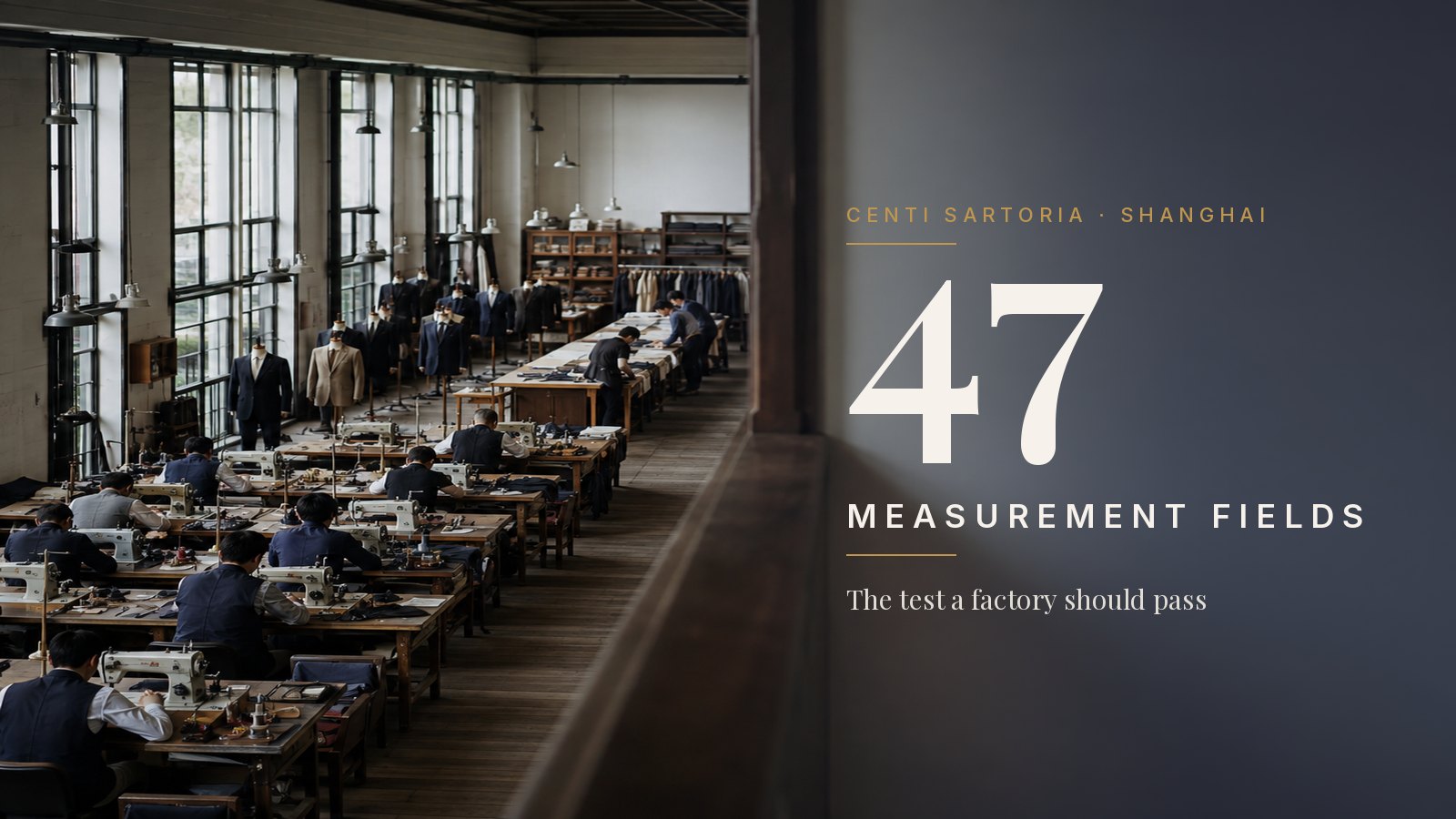
Our own size system runs to 47 measurement fields, 31 of them required, and every order ships with a measurement sheet the shop can check flat, field by field, before the customer ever tries it on. A clause should name the measurement set, the method, and the number of fields that must be checked.
3. Who pays for what?
Split it by cause. Factory fault: the factory pays production, return freight, and reship freight. Shop fault, meaning a wrong measurement, a changed spec after confirmation, or a customer preference: the shop pays production at the agreed rate and both legs of freight. Cloth that was correct when shipped but damaged in transit: that is a freight claim, not a remake, and the clause should say so rather than leaving both sides to argue about it.
International shipping on a remake is expensive enough that the clause itself changes behaviour. When a shop knows it pays freight on a measurement error, it checks the measurement twice. When a factory knows it pays freight on a construction fault, it checks the garment before it ships.
4. How many days does each side have?
The shop needs a window to inspect, try the garment on the customer, and report. Common practice in made-to-measure supply is 14 to 30 days from delivery. The factory needs a response window after a claim: 5 to 10 business days to review photographs and measurements and confirm or dispute the claim. Write both numbers into the clause.
Add one more line: the garment must be retained in its delivered condition, with photographs taken before any alteration is attempted. A jacket that has already been let out by a local tailor is not evidence of a factory fault. It is evidence that somebody tried to fix the problem before reporting it, and the original spec is gone.
5. What is the remedy?
A remake is not the only option. Sometimes a price reduction makes more sense: the jacket is wearable but the lapel width is half a centimetre outside spec, and the customer will not notice. Sometimes a credit against the next order is faster than a return shipment. The clause should name the options and who proposes the first offer. In most agreements the factory proposes and the shop accepts or escalates.
Tolerances are the line between taste and fault
A remake clause without a tolerance table is a clause without a definition of wrong. And tolerances are specific to made-to-measure work in a way they are not for ready-to-wear, because the whole point of the garment is that it was cut to a specific set of numbers for a specific person.
Ready-to-wear tolerances run wide: plus or minus two centimetres on a chest is normal, because the garment was designed for a range of bodies. Made-to-measure tolerances should be narrower, because the buyer is paying for precision. Write the tolerance field by field. A common starting point for MTM work:
| Field | Tolerance |
|---|---|
| Chest, waist, seat | plus or minus 1 cm |
| Shoulder width | plus or minus 0.5 cm |
| Sleeve length, jacket length | plus or minus 1 cm |
| Trouser outseam, inseam | plus or minus 1 cm |
| Collar, lapel width | plus or minus 0.3 cm |
Any measurement outside that table is a defect without further argument. Any measurement inside it is not a defect, regardless of how the garment feels on the wearer. That table is worth more than a page of legal prose, because it turns "wrong" from an opinion into a number.
What prevents remakes matters more than what the clause says
The best remake clause is the one that never gets used. And the things that prevent remakes are all upstream of the clause itself.
A complete spec sheet, filled against a known set of fields, catches the measurement errors that cause most remakes before they reach the cutting table. Our own 47 fields, 31 required, exist for this reason: they force the fitter to answer questions that a shorter form leaves blank, and every blank is a guess the factory has to make on its own.
A reference garment that the factory has already matched tells both sides what the numbers are supposed to produce. When a shop moves its customers to a new factory, the reference garment is the single most valuable thing it can send, because a set of measurements without a garment to compare them against is a set of numbers without a standard.
A first-sample check before volume catches the systematic errors that a remake clause would otherwise have to handle order after order. If the first jacket is wrong, the clause applies to one piece. If volume ships without a sample check, the clause applies to fifty, and the cost to both sides is fifty times higher.
And a confirmation process that locks the spec before production starts, so that neither side is arguing after the fact about what was agreed. Our production runs 14 days from a confirmed order, and "confirmed" means measurements, cloth, construction, and style details are all locked. A change made after confirmation is not a factory fault, and the clause should say so.
Write it before the first order, not after the first complaint
A remake clause is not a weapon. It is a shared document that tells both sides what the word "wrong" means before either side needs to use it. Name the tolerances, the method, the timeline, the cost split, and the remedy. And spend at least as much time on the spec sheet and the reference garment that prevent remakes as you do on the clause that handles them.
We stand behind every piece: if something is not right, we make it right. That sentence sits on top of 200 house tailors cutting and sewing every order in our own workshop in Shanghai, 47 measurement fields, a reference-garment matching process, and a one-piece minimum that lets a shop test the fit before committing volume. The clause is the last line of defence. Everything upstream of it is where the real work happens.
See prices and your margin, 3 min, or tell us what you are making now and we will set up a trial.
Frequently asked questions
What should a remake clause in a tailoring supplier agreement cover?
Five things, at minimum: what counts as a defect and what counts as a preference, who measures the fault and against which spec, who pays for shipping in each direction, how many days each party has to report and respond, and whether the remedy is a remake, a credit, or a price reduction. A clause that covers fewer than five is missing something both sides will argue about later.
Who should pay for shipping on a remake from a made-to-measure factory?
That depends on who caused the problem. Most written agreements split it: the factory pays return and reship freight when the garment departs from the agreed spec beyond tolerance, and the shop pays when the issue is a fit preference or a measurement the shop itself submitted. The split only works if the clause defines tolerance first, because without a number there is no line between the two.
How do you define a measurement fault versus a fit preference on a custom suit?
A measurement fault is a departure from the spec sheet that exceeds the agreed tolerance, measured flat against the same points both parties use. A fit preference is a complaint about how the garment looks or feels on the wearer that falls within tolerance. A jacket with a chest two centimetres wider than the spec is a fault. A jacket that hits every number but the customer wants it slimmer is a preference. The clause needs to name which one triggers a remake and which one triggers a new order at the shop's cost.
How long should a tailor shop have to report a defect to its factory?
Common practice in made-to-measure supply is 14 to 30 days from delivery, with the original garment retained as evidence and photographs taken before any alteration is attempted. The window needs to be long enough for the shop to receive the garment, inspect it, and try it on the customer, but short enough that the factory can still trace the production batch and the cloth lot.
Can a good remake clause prevent disputes with a made-to-measure supplier?
Not entirely. What prevents most remakes is getting the order right before it goes into production: complete measurements against a known set of fields, a reference garment the factory has already matched, and a confirmed cloth and construction spec. A remake clause handles the disputes that still happen after all of that, but the best clause in the world will not rescue a measurement that was wrong at the tape.