Journal Entry
Texture Over Pattern: What a Textured Cloth Asks of the Construction
Tweed, bouclé and flannel are replacing flat worsted as the AW26 story, and shops are ordering them into a lean block unchanged. A textured weave changes matching, cloth consumption and construction, not just the surface. What to put on the spec sheet before you cut.
The photo came in over WeChat with one line under it: same pattern, just this cloth instead. The jacket in the reference shot was a heavy houndstooth, and the block the shop wanted it cut on was a lean single-breasted line we had already made them a dozen times in a flat worsted. Nothing about the request seemed unreasonable on their end. A pattern is a pattern, and a heavier cloth is still just cloth. But the houndstooth in that photo ran up one front and down the other, meeting dead centre at the back seam in a shape that could not have been an accident of the loom. Cut it the way we cut a flat worsted, pieces nested wherever they saved the most cloth, and that same houndstooth would run four different directions across one jacket. The shop had specified a pattern. Nobody had specified a weave.
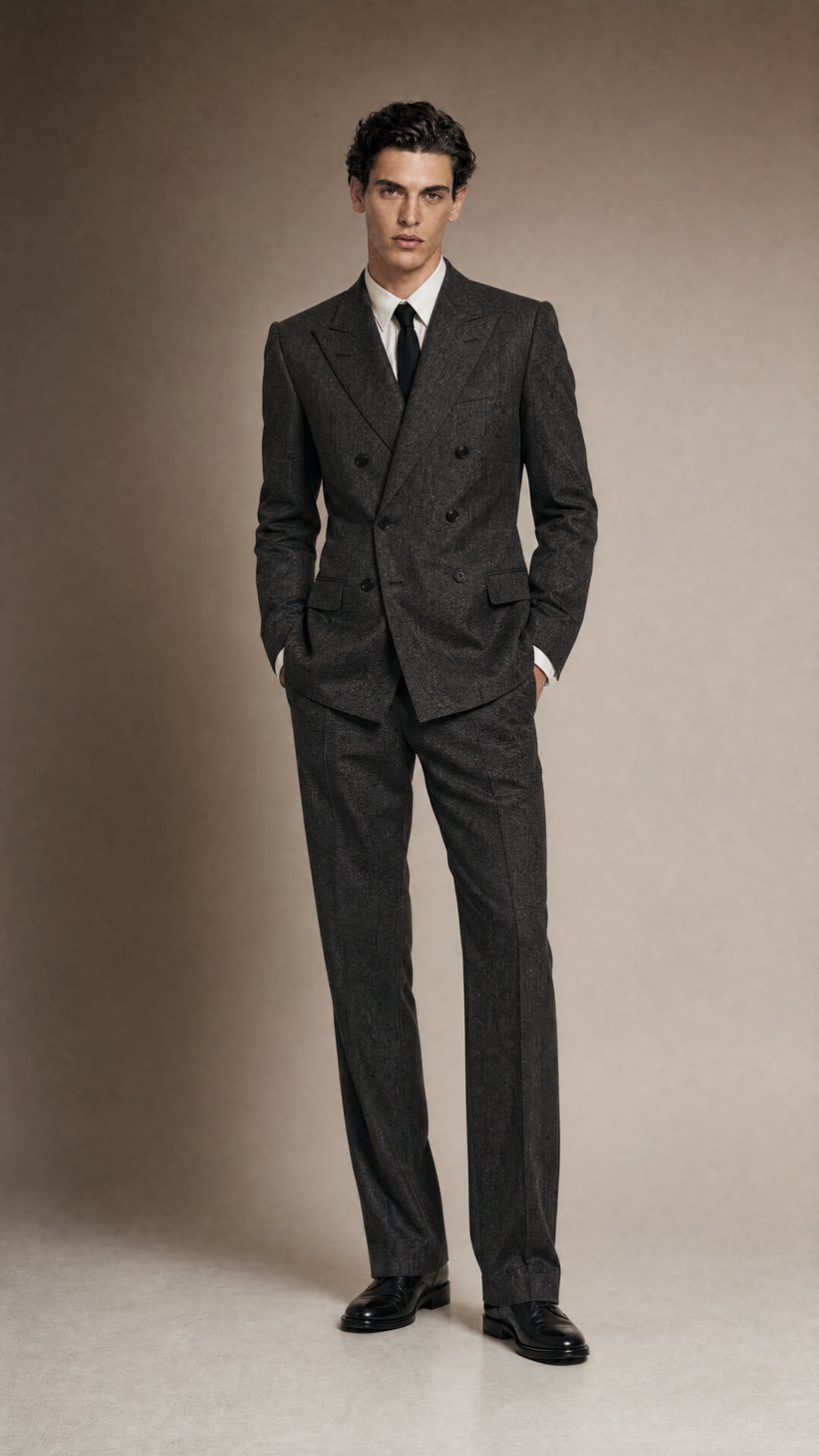
Texture has come back into tailoring faster than most shops have updated the paperwork that goes with it. Menswear coverage of the AW26 season keeps landing on the same word: not novelty, texture, structured shoulders paired with fuzzy, texture-rich fabrics at the shows, tweed and heavier wool set against smooth flannel trousers rather than against each other. A flat worsted suit reads as a safe, known quantity to spec. A textured one is a different set of instructions, and most of what changes has nothing to do with the pattern at all.
A flat cloth lets you skip a step that texture does not
Worsted wool, the cloth behind most business suiting, is spun from long combed fibres into a smooth, even yarn with a weave that reads as flat from a metre away. Flannel and tweed come from the other branch of the same family, woollen rather than worsted, spun looser and finished with more surface. That difference is not decoration. A flat worsted has no visible direction across its face, so a cutter can nest pattern pieces wherever they use the least cloth, and nobody standing in front of the finished jacket will ever notice which way the fibres ran. A herringbone, a houndstooth, a check or a slubbed tweed has a direction and, in the case of a check, a repeat, and both survive into the finished garment whether anyone asked for them to or not.
That is the step a lean-block reorder skips by habit rather than intent. Nobody tells the cutter to match the weave because a flat worsted never required it, and the instruction that mattered most on this order was the one that went unsaid.
Matching costs cloth before it costs anything else
Once a weave has to line up, the marker changes. A herringbone matched at the centre back seam and across the lapel needs pieces positioned to the repeat rather than packed for minimum waste, and a bold check across a chest pocket needs more allowance again than a fine one. That shows up first as more cloth consumed for the same jacket, before it shows up anywhere else, and it is worth saying to a client before the invoice does rather than after. A bunch number and a weight tell you what the cloth is. They do not tell you what matching it will cost in yardage, and that number only comes from the mill's repeat and the pattern together.
What to specify on a textured order
- Matching, stated explicitly. Say whether the weave must align at the centre back seam, the lapel roll and the pockets, or whether a busier weave makes that unnecessary. Silence gets read as no.
- Cloth weight in grams, with the bunch number. A textured cloth can sit anywhere across our full range, from a light bouclé up near the low end to a heavy flannel well past 300 grams. Of the 822 fabrics we hold with a stated weight, 597 sit in the 240 to 300 gram band, and a textured cloth is not exempt from being checked against that number rather than assumed from a swatch photo.
- Construction named, not left to the pattern. Half-canvas with a natural shoulder is where most textured orders belong. A fully padded, fully canvassed build stacked on top of a cloth that already has surface and body tends to read stiff rather than sharp, the opposite of what the texture was chosen for.
- Held or order-in, confirmed before the quote. Our own signature range carries tweed and a small run of flannel, cut and ready. Most other textured cloth, mohair and mohair blends included, is ordered in against a confirmed order rather than kept on a shelf here, and we say so rather than imply otherwise.
- A second sample, before a matched run. Matching adds a step a cutter can get wrong the first time on an unfamiliar weave. Check it on one piece before fifty, the same way we would ask on any first sample.
Construction: why texture usually asks for less, not more
The instinct in a lot of shops is that a heavier, textured cloth wants a heavier build underneath it, more canvas, more padding, a fuller shoulder to match the fuller cloth. In practice it is closer to the opposite. A tweed or a bouclé already carries visual weight and a body of its own; stack a fully canvassed, heavily padded construction on top of that and the two kinds of structure compete rather than add up, and the jacket reads boxy instead of sharp. We wrote about this from the other direction a few weeks ago, when the request was a softer shoulder rather than a heavier cloth, and the same logic runs both ways: construction is what gives cloth permission to fall a certain way, and a textured weave is already doing some of that work before the canvas gets involved. Half-canvas with a natural shoulder is the build we point most textured orders toward, and the differences between that, a full canvas and a fused front are laid out with our own photographs, not diagrams, on our full canvas vs half canvas vs fused guide. For the fuller expression, little or no padding at all, the same logic taken further, our unstructured, half-lined and unlined guide sets out what that construction asks for and where it stops being forgiving of a rushed cut.
What we hold and what we order in
We should be direct about this rather than let a swatch card imply more than it can promise. Our signature range carries tweed and a small run of flannel, held in Shanghai and ready to cut against a one-piece minimum. Beyond that range, the textured cloth having its moment this season, including mohair and mohair blends, is not something we keep on a shelf. We order it in against a confirmed order, the same way we would order in Vitale Barberis Canonico or the other mills we work with when a client wants a specific bunch. Mills such as Tallia di Delfino, whose range runs to mohair among other fibres, work the same way on our end: named, sourced, and ordered against a real order rather than promised as stock we do not carry. A supplier who tells you everything is on hand is usually skipping the part of the sentence that says where it actually sits.
The part texture does not change
None of this moves our production window. A matched herringbone runs through the same 14 days in production from a confirmed order to shipment as a flat worsted, plus shipping, because cutting and sewing take the time they take once the cloth is in the building. What can add time sits earlier, in sourcing a cloth we do not already hold, and that is a sourcing conversation to have before the order is placed, not a reason to expect the making itself to slow down once it starts.
Send us the reference photo before you send the reorder. If a weave in it clearly runs a certain way, that is a construction note, not a styling detail, and it belongs on the spec sheet next to the chest and shoulder measurements rather than left for the cutter to guess at. Tell us the cloth and the reference and we will tell you what matching it will actually cost in yardage before you commit a client to the jacket in the photo.
Frequently asked questions
Can I cut a textured cloth like tweed on the same pattern as a flat worsted suit?
The pattern shapes can stay close, but the marker cannot. A flat worsted has no visible direction, so pieces get nested to save cloth. A herringbone, houndstooth or check has a direction and a repeat, and the marker has to respect it so the weave matches at the centre back seam, the lapel and the pockets. Skip that step and a heavier order looks like four different cloths sewn together.
Does a textured cloth need more fabric than a plain worsted for the same suit?
Usually yes, once matching is specified. A weave with a visible repeat needs pieces aligned to that repeat rather than packed edge to edge, and a bold check needs more allowance than a fine herringbone. Ask for a matched cut and expect the yardage to move, not just the price of the cloth itself.
Does a textured suit need a heavier canvas or more padding than a smooth worsted?
Often less, not more. A tweed or bouclé already carries surface interest and a certain body of its own, so a heavily padded, fully canvassed build on top of it tends to read stiff rather than sharp. Half canvas with a natural shoulder is where we point most textured orders, letting the weave do the visual work the padding would otherwise be doing.
Do you hold tweed and flannel in stock, or is every textured order made to wait?
Our signature range carries tweed and a small run of flannel, held and ready to cut. Beyond that, most textured cloth, including mohair and mohair blends, is ordered in against a confirmed order rather than kept on the rack. We say so plainly rather than implying a bolt is on hand when it is on a mill's shelf in Europe.
Does ordering a textured cloth add to the 14 day production time?
No, not on its own. Our production still runs 14 days from a confirmed order to shipment whether the cloth is a flat worsted or a matched herringbone. What can add time sits earlier, in sourcing a cloth we do not hold, which is a separate step from cutting and sewing it once it arrives.