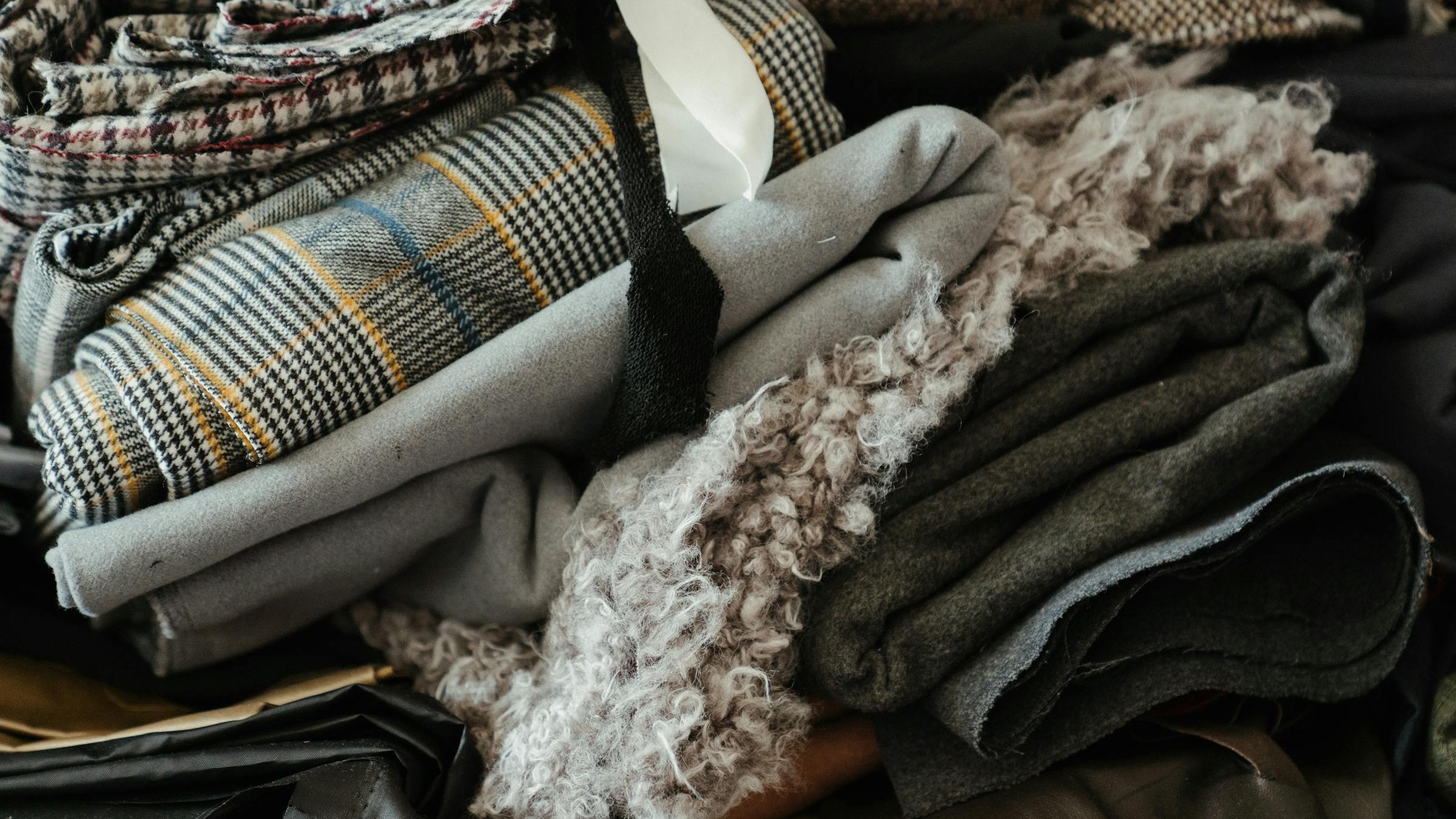
Vitale Barberis Canonico has woven at Pratrivero, in the Biella district of Piedmont, since 1663. The earliest record is a five-page list called the quinternetto delle taglie, documenting one Ajmo Barbero's sale of a coarse wool cloth, a saia grisa, to the Duke of Savoy. That makes it the world's oldest continuously operating wool mill, still owned and run by the same family, now in its thirteenth generation. Mechanical looms arrived at the mill in 1868, and by the end of that century the works already ran roughly 800 spindles and 73 looms, with weaving, dyeing and finishing concentrated on one site rather than spread across contractors. Giuseppe Barberis Canonico consolidated the operation into a full-cycle factory at Pratrivero in 1910, the same shape the mill keeps today. None of that explains why makers keep reaching for it. The reason is duller and more useful: a bunch ordered twice a year apart behaves the same way both times. Piacenza, another Biella house on our list, works a level above VBC's standard wool range, in noble fibres such as cashmere and vicuña rather than merino.
A mill that breeds its own wool
Most mills buy wool on the open market. VBC does that too, but it has also held Merino sheep country near Mudgee, in New South Wales, since the early 1980s, after Alberto Barberis Canonico travelled to Australia in the 1970s looking for better fibre than the market was offering. The holding runs across three separate properties in the Mudgee district, not one large station, and VBC has expanded it over the decades rather than treating it as a one-off purchase. The farms run Saxon Merino, a strain the mill has spent decades studying and breeding for fineness alongside local growers, and in 2014 VBC founded its own Wool Excellence Award to recognise the growers who supply it.
I mention the farms because they explain something buyers actually ask about: why a VBC bunch bought this season handles like the one bought three years ago. Owning the flock removes one entire source of variation before the wool ever reaches Pratrivero. That consistency is the whole sale. It will never be the rarest cloth in a swatch book, and VBC has never tried to make it one.
What Four Seasons actually is, and what it is not
Four Seasons is the book we hold: 40 styles in the Shanghai atelier, cut to order in 14 to 20 working days from a one-piece minimum. The name describes the job. It is a year-round weight, sitting in the same general band our own glossary defines as business suiting, roughly 240 to 280 grams, the territory sibling VBC books like Perennial and Montecarlo occupy rather than the lighter cloths a mill this size keeps in a separate summer-only book.
That is also the honest limit of it. Push Four Seasons into a genuinely hot climate, a Gulf posting or a real Singapore summer, and it will not do the job a dedicated tropical weight does. A client wears it once, feels overdressed by ten in the morning, and it goes to the back of the wardrobe. I do not sell Four Seasons as a summer cloth. I sell it as the suit that covers the other three seasons and most of the fourth, which is a different and more honest claim.
What "Super" tells you and what it does not
The Super number measures fibre fineness alone. Super 100s is roughly 18.75 microns; each step of ten is about half a micron finer. Higher is softer and takes light better. It is also more delicate, and it says nothing about weave, weight or how long a garment survives being worn. The Four Seasons book we hold runs Super 100s to 130s, which is not a compromise position. It is the range a client reaches for when he will wear the suit weekly rather than twice a year. We define the full Super number and weight scale, with the mills behind each range, in the suit fabric guide; for what Super 130s specifically buys and costs in durability, see the VBC Super 130 fabric guide.
I do not sell a Super 150s or higher as a first suit to a client who wears his jacket five days a week. He will love it in the fitting room and be disappointed by the elbows a year later, and he will not necessarily connect the disappointment to the number he asked for by name. The middle of VBC's range, in a sensible Four Seasons weight, will usually outlast and outperform the higher number bought for what is printed on the ticket. For the fuller picture of how a boutique can buy VBC cloth beyond our own rack, see how to buy Vitale Barberis Canonico cloth.
Merchants sometimes rebind VBC cloth into their own bunch books rather than sell it under the mill's name. Gladson in New York is one example: it sells a collection it calls Best of Vitale Barberis Canonico, VBC's weave bound into a Gladson volume number.
What to specify it with
Four Seasons takes canvas construction cleanly and holds a pressed edge well, which makes it a forgiving cloth to learn a new client's fit on. Order the first garment here, see what the fitting reveals about his shoulders and posture, then spend his money on a rarer cloth for the second order once the pattern is already correct. We go through the practical differences between full canvas, half canvas and fused construction, including what each looks like from the inside, in the guide on which suit construction to sell.
Ordering it under your own label
VBC is one of only two mills we hold cut and ready in Shanghai; the other is Zegna, whose Trofeo and Traveller books sit in a similar year-round weight range. We cut Four Seasons in our own Shanghai atelier and make to measure under your label, from a one-piece minimum, in about 14 to 20 working days. I buy this cloth as a customer of the mill, the same standing any tailoring house has. We are not an authorised dealer or a representative of Vitale Barberis Canonico, and nothing on this page should be read that way.
Before you commit a client's order to a new cloth, it is worth knowing what a first sample can and cannot prove on its own, which we cover in what to check on your first sample. If your shop wants swatches from what we actually hold, get in touch; for the wider list of mills we work with, the supplier directory is the honest version of that list.