Ask most Biella mills how long they have been weaving and the answer lands somewhere between eighty and a hundred and fifty years. Piacenza answers 1733. I checked that number twice the first time I heard a mill rep say it out loud, because it reads more like a typo than a founding date.
Pollone, and a family that never left
Piacenza was founded in 1733 in Pollone, a village in the Biella valley, by Pietro Francesco Piacenza. The mill has never left the valley and the family has never sold it. Press profiles put the current generation at either the thirteenth or the fourteenth, depending which one you read, with Carlo Piacenza at the head of the business today. I am not going to pretend that discrepancy does not exist. But on any count it clears the bar set by Les Hénokiens, the society that only admits family businesses with two hundred continuous years of ownership behind them, by close to a century.
I bring this up because it changes how a mill behaves, not just how it markets itself. A mill owned by a private equity fund answers to a five-year exit plan. A mill run by the same family across three centuries answers to the next generation, and that shows up in small, practical ways: which bunches survive a slow season, how long a fibre line stays in the range, whether a small buyer's account still gets a reply after a quiet year.
Piacenza shares that Biella address with other mills on our own list, among them Drago, founded in Lessona in 1973, and Reda, founded in Valle Mosso in 1865. Both are younger houses working the same valley's wool trade, and neither competes directly with Piacenza's noble fibre range.
Noble fibres are a different sale than wool
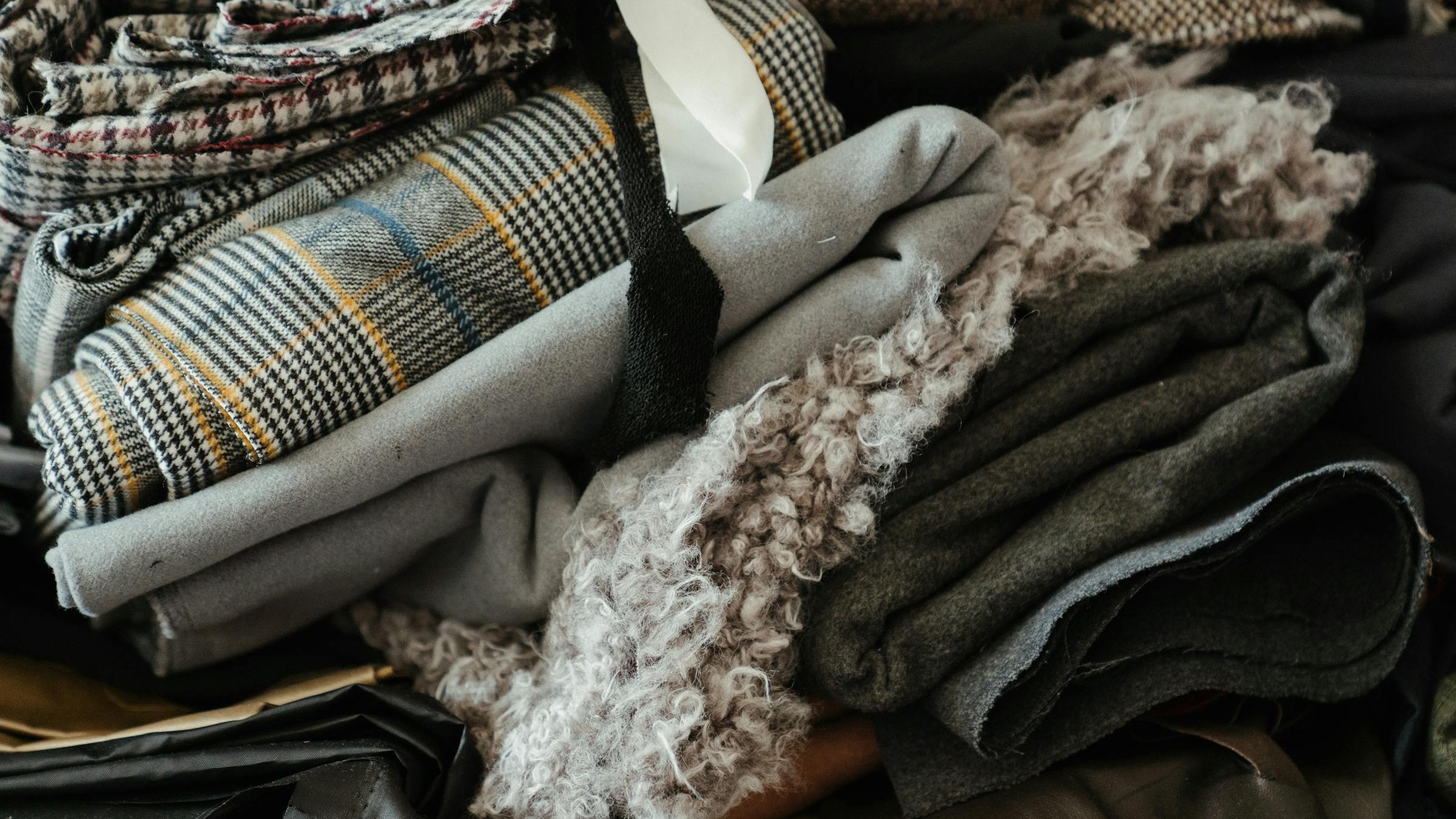
Most Biella houses sell you a Super number and a weight. Piacenza's real specialty sits a level above that. It works in noble fibres: cashmere and camel hair at the everyday end, then vicuña, alpaca and mohair above that, the fibres that come off an animal's undercoat rather than a sheep's fleece.
Vicuña is the extreme case, and it is worth understanding why it costs what it does before you quote it to anyone. A vicuña can only be shorn once every two to three years, under a government-supervised program in Peru, and yields roughly 200 to 300 grams of usable fibre each time. A sheep gives several kilograms a year. Nobody in this trade is marking vicuña up for fun. The animal itself sets the ceiling on supply, long before any mill or maker sets a price against it.
That is exactly why I do not sell a cashmere or vicuña bunch the way I sell a Super 130s wool. A wool suit forgives a first-time made-to-measure client: it presses back, it survives an average dry cleaner, it does not show a light wrinkle across a room. A noble fibre jacket is less patient with all three. Skip the care conversation and the first disappointment lands on the shop, not on the client's own handling. If a boutique wants to hang a cashmere or camel hair bunch on the rail next to a standard wool line with no explanation of why the price jumps, I tell them not to. It just makes the noble fibre look overpriced instead of rare. And if a rep ever tells you vicuña wears like a heavier wool and needs no different care, walk away from that claim specifically. It does not, and a client who learns the hard way blames the shop, not the fibre.
We order it, we do not hold it
We do not keep Piacenza in stock in Shanghai. Every metre we cut against a Piacenza bunch is ordered in against a confirmed client order, on top of our own production time, and the mill sets its own minimum on noble fibre orders separately from anything we control. I would rather say that plainly than let a buyer assume a vicuña bunch sits on a shelf waiting to be cut the same week. It does not, not from us and not from anyone honest about how these fibres move through the supply chain. Our suit fabric guide covers what sits closer to a shorter timeline if that is what a client actually needs.
The Cerruti connection, and how to check it yourself
In November 2022, Gruppo Piacenza bought Lanificio F.lli Cerruti outright, the Biella wool mill behind our Cerruti 1881 bunches. That deal put two of the mills on this site under one Biella ownership group. It does not make the cloth interchangeable. Cerruti's strength is worsted suiting; Piacenza's is the noble fibre range sitting above it. But it does mean a buyer sourcing from both of our supplier pages is, since that acquisition, dealing with one family group rather than two unrelated companies, and it is not something you have to take our word for. The sale was reported across the Italian trade press that November. Our guide to verifying mill cloth walks through how to check a claim like this yourself instead of trusting a swatch card.
What I would ask before I ordered
If I were sourcing a noble fibre bunch for the first time, I would ask for the composition and weight in writing, ask whether the fibre is cashmere, camel hair, vicuña or a blend, and ask what the mill's own minimum looks like before I quoted a client a delivery date. Piacenza answers all three without difficulty. A supplier reselling unbranded noble fibre cloth under someone else's story usually cannot, or answers with adjectives instead of numbers. If you want a bunch reference and a real quote against a specific garment, contact us and we will get it from the mill rather than guess at it.