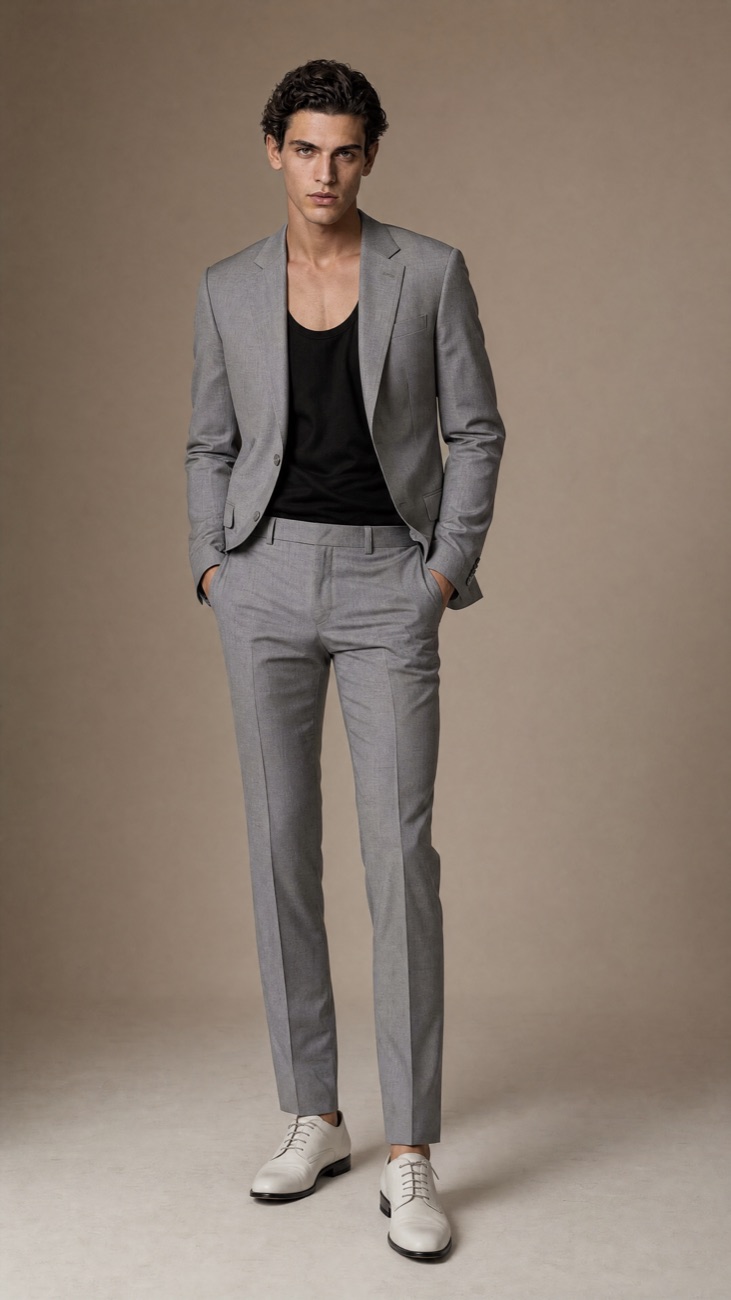
Journal Entry
Adding Groom Suits to a Bridal Shop: Made to Measure Without Holding Stock
The groom's side is the same wedding, the same date and often the same appointment calendar. How a bridal boutique adds made-to-measure groom and groomsmen suits from a one-piece minimum, what to measure, how the margin works and what to ask a factory.
A bridal shop adds the groom's side by selling made-to-measure suits from a factory that produces from one piece, so there is no rail of suits or tuxedos to buy before the first sale. The couple is already in your appointment book and the wedding date is already known. The groom's order only has to sit on that same calendar ahead of the date: we need 14 days in production from a confirmed order, shipping extra, and your own measuring and fitting time sits around that.
We are a suit factory in Shanghai. We do not sell to grooms; we make for the shops that measure them. This piece is for a bridal boutique owner who dresses the bride today and wants to dress the other half of the aisle.
The groom is already in your appointment book
A bridal shop already runs the hardest part of a wedding business: a calendar of fixed dates, booked months ahead, with a couple who trusts you with the most photographed outfit of the day. When the shop dresses only the bride, the groom's side of that same wedding walks out of the door and books somewhere else.
Adding the groom does not need a new customer. It needs a second appointment for a couple you have already won, and a supplier whose production sits comfortably inside the timeline you already manage for the dress.
What you need to start, and what you do not
You do not need stock. A made-to-measure suit is cut after the client has committed, and our minimum order is one piece. There is no size run to guess at and nothing to mark down in January.
You do need samples. A small set of garments you order yourself, one piece each, in the colours you expect couples to choose and in the construction you intend to lead with. The samples are the only inventory in the model, so buy the navy and the mid grey that most grooms will actually wear before you buy the statement cloth. The most useful sample is often one the owner or a staff member wears on the floor.
You need somebody who measures the same way every time. Consistency matters more than tailoring experience. A repeatable habit can be corrected once. An improvised one cannot be corrected at all.
You need a way to size. Our AI made-to-measure system produces a size from a client's height and weight, and orders go directly into the factory. A shop uses that as the starting point, then confirms it on a sample in the nearest size before the order is placed.
What to measure
Measure the groom the way you would fit a dress: in the clothes and shoes he will actually wear on the day, standing naturally rather than posed. The core body measurements are chest, waist, seat, shoulder width, sleeve length, jacket length, trouser waist and trouser length, taken over a dress shirt rather than a T-shirt.
Then note what a tape measure does not capture: a dropped shoulder, a forward or upright stance, how he likes his trouser to break on the shoe, whether he wants room to move on the dance floor. Try him in the nearest sample, pin what changes, and write the changes down on the order.
Groomsmen get the same process, one by one. They are rarely as motivated as the groom, which is why their measuring is where a shop's discipline is tested.
Timing: every order sits ahead of the date
Work backward from the wedding, never forward from today. Take the date, subtract a buffer for the fitting and any alteration, subtract shipping, subtract our 14 days in production, and subtract the time it will realistically take to get every man in the party into your fitting room. What is left is the date the last order must be confirmed.
In practice the bottleneck is almost never production. It is the groomsman who lives in another city and keeps postponing. Set a last measurement date for the whole party and put it on the couple's calendar at the same appointment where you confirm the dress timeline. We wrote up the full backward count, from first consultation to final fitting, in Spring 2027 weddings are booked in October.
The pricing math, as a worked example
Our prices are ex works Shanghai, per two-piece suit, with shipping extra and import duty paid by the buyer: CMT (you supply the cloth) from USD 100, full make (our cloth) from USD 155, and a half-canvas full make from USD 185. We do not publish the complete price sheet here.
Here is a worked example computed from those public prices. It is an example, not a customer's figures:
| Suit | Factory price from | Retail price | Left per suit |
|---|---|---|---|
| Groom, half canvas | USD 185 | USD 1,150 | about USD 965 |
| Groomsman, full make | USD 155 | USD 600 | about USD 445 |
For a party of a groom and four groomsmen at those prices, that is about USD 965 plus four times USD 445, roughly USD 2,745 across the wedding. Every number above is the gap between ex works price and retail, before freight, import duty and your own shop costs, so work those in for your market before you set a price. For context, our partners' suggested retail sits at €900 to 1,500 per suit.
Construction is how you set the tiers. We make fused, half canvas and full canvas in our own Shanghai factory, with full canvas available machine made, partly hand made or fully hand made. The differences, and which one to lead with, are in full canvas vs half canvas vs fused.
Matching the wedding party
A matched party is a spec discipline more than a styling one. Order the party in one cloth reference and one spec sheet, with only the measurements changing from man to man, and place the orders together so every suit is cut from the same cloth and moves on the same timeline.
Then let the groom differ in one deliberate way: a waistcoat, a different lapel, a more structured construction, or a cloth one shade apart. The trends and cloths couples are asking for this season are already on our wedding suit manufacturer page, and the finer detail of a tonal party is in how to spec five suits that match without being identical. Our cloth comes from 33 mills and cloth merchants, 26 of them in Europe, so the choice for a party is wide enough that it rarely needs to be settled by what is on a rail.
If the wedding is black tie, the same logic applies to tuxedos, with a few more details to specify. We cover those in wholesale tuxedos for bridal and formalwear shops.
What to ask a factory
Before you promise a couple anything, get written answers to these, from us or anyone else:
- What is the minimum order? Ours is one piece.
- What is the lead time, from what point, and does it include shipping? Ours is 14 days in production from a confirmed order, shipping extra.
- What is the price basis, and who pays import duty? Ours is ex works Shanghai, duty paid by the buyer.
- Which constructions do you make? Ours are fused, half canvas and full canvas.
- Where does the cloth come from? Ours: 33 mills and cloth merchants, 26 of them in Europe.
- Am I talking to the factory or a trading company? Trading companies commonly add 30 to 60 percent to the factory price. We make in our own factory. Here is how to tell the difference.
- What happens if a piece is not right? Our answer: we stand behind every piece. If something isn't right, we make it right.
See the numbers for your own shop
If you want the margin per suit at your own retail price, the questionnaire at b2b.centisartoria.com/start takes about 3 minutes and 7 questions. It is free, and it returns our wholesale price sheet, the margin per suit for your shop, a direct line to a partner manager and an account on our AI ordering system, so the first groom you measure can go straight into production.
Frequently asked questions
Can a bridal shop sell groom suits without buying stock?
Yes, if the suits are made to measure by a factory with a one-piece minimum. The shop measures the groom, sends the order, and the suit is made after the couple has committed. The only inventory is a small set of samples the shop chooses to order for try-on, one piece each, so there is no size run of suits or tuxedos to fund before the first sale.
How far ahead of the wedding does a made-to-measure groom suit need to be ordered?
Our side is 14 days in production from a confirmed order, shipping extra. The shop's side sits around that: measuring the groom and every groomsman before the order goes in, and a fitting with time for any alteration after the suits arrive. Work backward from the wedding date and set a last measurement date for the whole party, well ahead of the day.
What margin can a bridal shop make on a groom suit?
As a worked example computed from our public prices, not from a customer: a half-canvas suit from USD 185 retailed at USD 1,150 leaves about USD 965 per suit, and a full-make suit from USD 155 retailed at USD 600 leaves about USD 445. Both figures are the gap between ex works price and retail, before freight, import duty and the shop's own costs.
What should a bridal shop ask a suit factory before adding groom suits?
Ask for the minimum order, the lead time from a confirmed order and whether shipping is included, the price basis and who pays import duty, which constructions are offered, where the cloth comes from, and whether you are talking to the factory or a trading company. Ask what happens if a piece is not right. Clear written answers to these tell you more than any brochure.
How do you match a groom and groomsmen made to measure?
Order the whole party in one cloth reference and one spec, with only the measurements changing from man to man, and let the groom differ in one deliberate way: a waistcoat, a different lapel or a more structured construction. Placing the party's orders together keeps the cloth consistent and puts every man on the same production timeline.