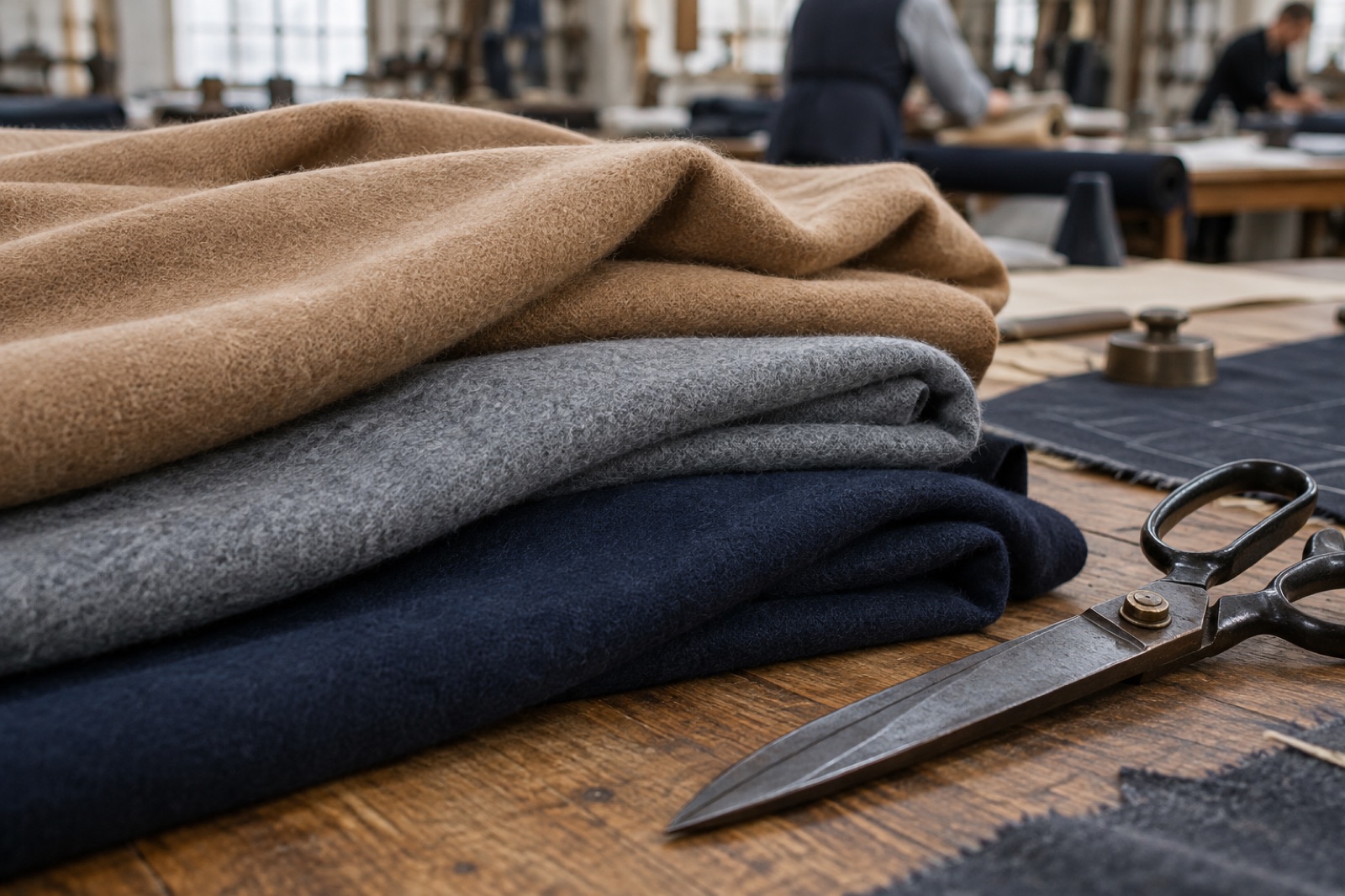
Journal Entry
Loro Piana Cloth Through a Made-to-Measure Factory: What a Shop Settles Before It Quotes
A tailor shop can order Loro Piana cloth through a made-to-measure factory, but there is no stock to pull from and no public bunch book to browse. Here is what to settle before you quote a client.
A shop owner rang last autumn to say a client had walked in holding a swatch card and asking for a Loro Piana suit. He could see the name, he could feel the cloth, and his first question was not about the fabric. It was about the timeline. He had never ordered it before and he did not know what sat between the name on that swatch and a finished jacket on a hanger. That gap is what this post covers.
Can a tailor shop order Loro Piana cloth through a made-to-measure factory? Yes. A shop names a specific bunch and reference on a confirmed order, the factory sources that cloth and cuts it to measure. We do this from our Shanghai workshop. But the name alone does not settle the quote, because Loro Piana cloth does not sit on a shelf the way held stock does, and the timeline, the construction and the conversation with the client all change once you understand that.
What a shop is actually ordering
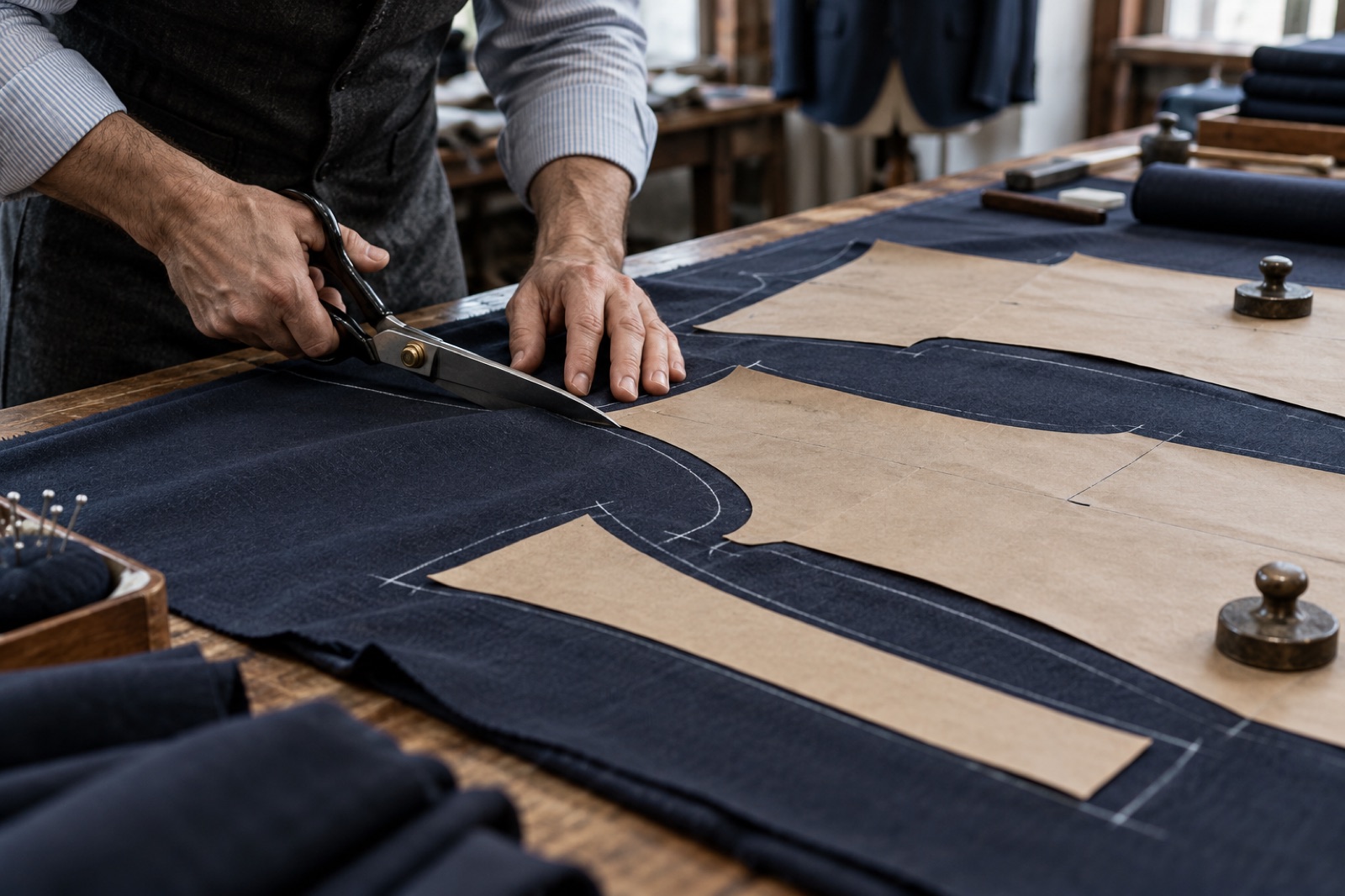
A pattern laid on fine suiting before the shears go in. Every cut from ordered-in cloth starts with a confirmed sale, not a guess.
Loro Piana was founded in 1924 in Quarona, in the Valsesia valley of Piedmont. The family had traded wool around the Biella district for roughly a century before that. The house built its name on fibre most mills would not bother sourcing: cashmere, vicuna and fine merino bought at the top of the market. As of the end of 2025, LVMH owns 94 percent of the company, up from an 80 percent stake taken in 2013. Each of those numbers is LVMH consolidating a business it already controls, not opening it wider to outside buyers.
That matters to a shop because of what it means for access. Go to loropiana.com today and what loads is a retail site selling finished coats and accessories to consumers. The group runs a separate textile trade portal, but it sits behind a login. There is no public bunch book to browse, the way there is for a mill like Vitale Barberis Canonico or Zegna. If a supplier tells you they can source Loro Piana, the question worth asking is which bunch and which reference number, not whether you can check it yourself online, because you cannot.
We hold zero pieces of Loro Piana cloth in our Shanghai warehouse. When a shop confirms an order and names a specific bunch and reference, we source that reference and cut it to measure. We are not an authorised dealer, a licensee or a representative of Loro Piana. We buy fabric as a customer, the same as any other maker who orders it. The full picture of what we hold, what we order in and why that distinction shapes your lead time is on our Loro Piana supplier page.
The timeline is not 14 days
Our production runs 14 days from a confirmed order. That number holds for cloth we already have on the shelf in Shanghai: Zegna with 162 styles and VBC Four Seasons with 40 styles. For Loro Piana, the mill's own release time sits on top of those 14 days, because we are ordering the cloth in, not pulling it off a rack. Shipping from Shanghai to your shop is extra on top of that.
A shop needs to know this before quoting a client, not after the client has already been promised a date. The conversation at the fitting goes differently when you can say "this cloth is sourced to order, here is the window" than when a timeline falls apart three weeks in because nobody mentioned the sourcing step.

A charcoal wool and cashmere overcoat from our range. Fine fibre like this rewards half canvas or full canvas construction and a lighter lining.
What to tell the client
Here is a checklist for the fitting room conversation when a client asks for Loro Piana by name:
- The cloth is sourced to order. It is not sitting in a warehouse. Name the bunch and reference before you quote anything else.
- The total lead time is longer than held stock. Mill release time plus 14 days in production plus shipping. Do not promise a date until your factory confirms the cloth is available.
- The cloth cost is separate from the making cost. A shop's ex-works price for the garment and the cloth price are two different lines. We quote garment making; the cloth price depends on which bunch the client picks.
- One piece is enough. Our minimum order is one piece. A shop does not need to commit to a run to offer Loro Piana to a single client.
- There is no public price list for the cloth. If a client asks what Loro Piana fabric costs per metre, nobody outside the mill's own trade portal can give a public figure. Quote the finished garment, not the cloth separately.
Construction for fine fibre
Loro Piana suiting runs to very low micron counts. The handle is the first thing anyone notices: soft, cool and slightly fluid rather than crisp. It drapes instead of holding a shape on its own. That changes what a maker does with it.
We specify half canvas or full canvas for cashmere suit fabric and fine merino of this grade, with a lighter lining or none through the back, because the whole reason to buy this fibre is movement. A heavily fused chest fights the cloth instead of letting it move. Put this cloth in a stiff, fused interlining and you have paid for something the construction then cancels out.

Sleeve and pocket detail on a charcoal wool and cashmere overcoat. The nap and drape of fine fibre show through the construction, not under it.
The same logic applies to lining. A full lining adds body and warmth, which is the opposite of what fine cashmere suiting is for. A half lining or an unlined back lets the cloth move and breathe, and the client feels the difference the first time they put the jacket on. Construction choices that work well for a 280-gram worsted are not always right for cloth that sits well below that weight. The general weight and construction trade-offs across suiting cloth apply here the same way they apply to something far less expensive.
A construction checklist for Loro Piana orders
| Question | What to settle |
|---|---|
| Canvas type | Half canvas or full canvas. Not fused. |
| Lining | Half lined or unlined back. Full lining only if the client specifically wants warmth. |
| Shoulder | Soft or natural. A padded shoulder fights the drape. |
| Cloth weight | Check the bunch. Low-micron cashmere and fine merino vary widely. |
| Wearing rotation | Advise the client this cloth rewards being rested between wears. |
The honest part about wear
Very fine cloth is not durable cloth, and a shop should say that before the sale, not after. Low-micron wool and cashmere crease more readily, scuff more visibly at the cuff and seat, and reward being rested between wears. This is not a suit for a client who needs one jacket to survive five days a week on a commuter train. A cloth this soft shows that kind of week within a month.
The right client already owns three or four jackets and rotates them. For the client who needs durability first, a firmer worsted from one of the mills we hold in stock will serve better, ship faster and cost less. A shop that can say that honestly keeps the client and earns the Loro Piana order when the right occasion comes around.
What a shop settles before it quotes
Ordering Loro Piana through a factory is not complicated, but it is different from ordering cloth that sits in stock. Here is the sequence:
- Client names the cloth. Get the bunch and reference number, not just the name. Without it, nobody can confirm availability or timeline.
- Factory confirms sourcing. We check whether that specific bunch is available from the mill and confirm the release time. Only then can you quote a delivery date.
- Shop confirms the order. One piece is enough. Our minimum is one piece per style. The client does not need to commit to a run.
- Mill releases the cloth. This is the step that adds time. The cloth travels from the mill to our Shanghai workshop before cutting starts.
- 14 days in production. From confirmed order and cloth in hand, our production runs 14 days. Shipping from Shanghai to the shop is extra.
- Shop checks the garment. The same checklist as any first piece: open the jacket, check the canvas, match the cloth to the bunch number. Our guide to what to check on a first sample covers the full list.
A client who asks for Loro Piana by name is usually not in a rush. They are buying the name and the hand, not a fast turnaround. A shop that sets expectations honestly at the fitting keeps the sale and avoids the phone call three weeks later asking where the suit is.
The name is not the whole story
Loro Piana is a name that sells itself in a fitting room. But a name on a swatch card is not a finished garment, and the distance between the two is where a shop either earns the margin or loses the client. Settle the bunch number, confirm the timeline, choose the right construction and tell the client what to expect. Everything else follows from those four decisions.
A full-make two-piece suit in our cloth starts from USD 167 ex works Shanghai, half canvas from USD 197. Loro Piana cloth is priced separately and depends on the bunch. Our minimum order is one piece. Production runs 14 days from a confirmed order, and shipping is extra.
See prices and your margin, 3 min or send us your current spec sheet and we will tell you what a Loro Piana order through our workshop looks like.
Frequently asked questions
Can a tailor shop order Loro Piana cloth through an MTM factory?
Yes. A shop names a specific Loro Piana bunch and reference on a confirmed order, and the factory sources that cloth and cuts it to measure. We do exactly this from our Shanghai workshop. We hold zero Loro Piana stock, so the mill's own release time sits on top of our usual 14 days in production, plus shipping.
Does Centi Sartoria stock Loro Piana fabric?
No. We hold zero pieces of Loro Piana cloth in our Shanghai warehouse. When a shop confirms an order and names a bunch and reference, we source it against that order. Two mills we do hold in Shanghai are Zegna with 162 styles and Vitale Barberis Canonico Four Seasons with 40 styles. Everything else, Loro Piana included, is ordered in.
How long does a Loro Piana suit take through a made-to-measure factory?
Our production runs 14 days from a confirmed order. Because Loro Piana cloth is not held in our Shanghai stock, the mill's own release time is added before those 14 days start. Shipping is extra. The total is longer than a suit cut from cloth we already hold, and a shop should quote accordingly.
Is Centi Sartoria an authorised Loro Piana dealer?
No. We buy fabric as a customer, the same as any other maker who orders it. We are not a licensee, a representative or an authorised dealer of Loro Piana. The right question to ask any factory is which bunch and reference they are quoting, not whether they claim a partnership.
What construction should a shop use with Loro Piana cashmere suiting?
Half canvas or full canvas, with a lighter lining or none through the back. The whole point of this fibre is movement and drape. A heavily fused chest fights the cloth instead of letting it move. If a client is paying for Loro Piana, they are paying for what the hand feels, and the construction should not cancel that out.