Journal Entry
Suit Fabric Swatches: What a Shop Shows the Client When There Is No Full Book on the Shelf
Most made-to-measure factories do not send full bunch books. A guide for tailor shops on using a digital fabric book, requesting swatches and narrowing 822 options to the six that matter for each client.
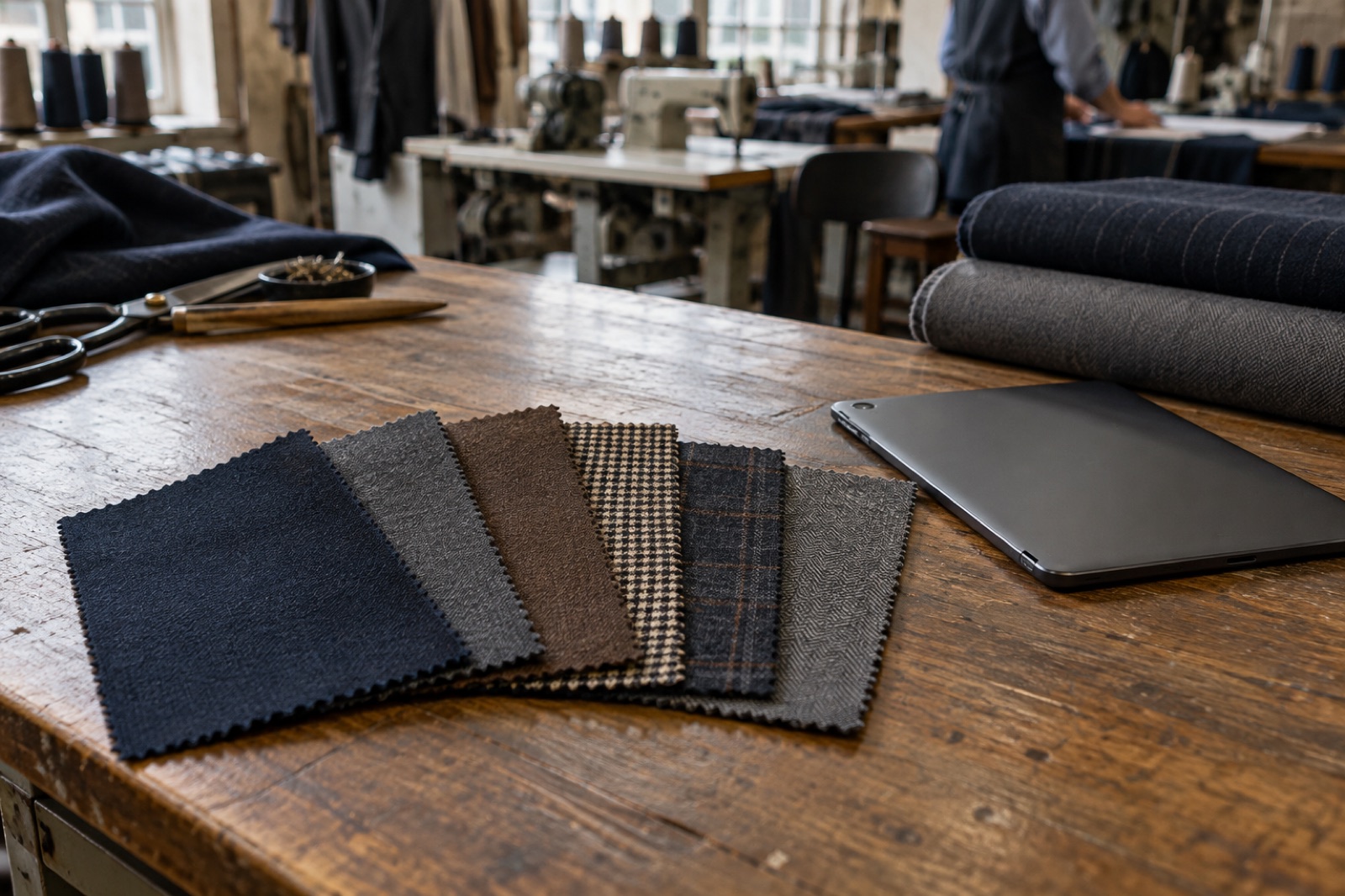
A shop owner asked us to send him a complete set of bunch books for every mill we carry. He wanted all 822 options on his shelf, the way his old supplier used to do it twenty years ago. We sent him six suit fabric swatches instead, picked after a short call about the kind of clients walking through his door. He sold three of those six within the month. The other 816 options stayed in the digital catalogue, and he never mentioned the full books again.
That result is not unusual. Most of the shops we work with sell from a handful of swatches rather than a wall of books, and the ones who close the most orders tend to show the fewest options at any one fitting. The question is not how many fabrics your factory carries. It is how many your client needs to see before they say yes.
Why there is no full book on the shelf
Bunch books are expensive to produce and expensive to ship. A single season from one mill can run to dozens of bound booklets, each one cut from the same cloth your factory will eventually use for a suit. Multiply that by 33 mills and cloth merchants and the cost of keeping a complete physical library current becomes a line item most independent shops would rather spend elsewhere.
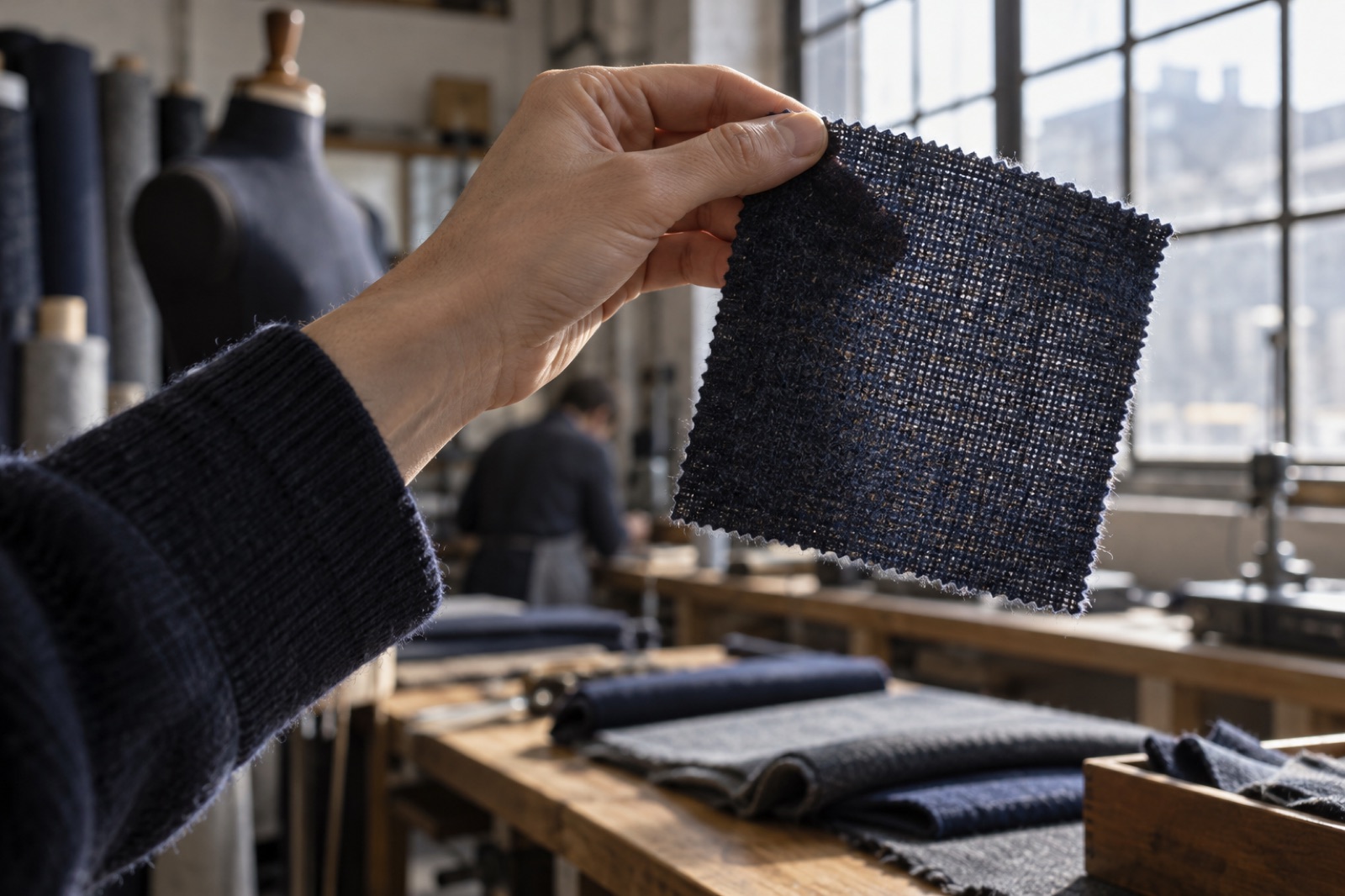
A single swatch held against the light tells a shop owner more about the weave than an entire booklet viewed on a screen.
We supply a digital fabric book plus physical swatches on request, and we do not send full bunch books. That is not a cost saving dressed up as a feature. It is the result of watching shops use those books for years and seeing most of the pages go untouched. Across the 822 fabrics we carry with a recorded weight, 597 sit in a 240 to 300 gram band. That is where business suiting lives, and it is the range most shops sell into most of the time. A full book buries those 597 options inside another 225 that only matter for occasional orders, and a client standing at a counter does not need to flip past overcoat cloth to find a navy worsted.
Start with the client, not the catalogue
The mistake most shops make with fabric is showing too much too soon. A client who sees thirty swatches makes a slower decision than a client who sees six, and often a worse one, because the comparison is no longer between good options but between overwhelming ones.
Before you open the digital catalogue or reach for a swatch, ask four questions:
- What is this for? A daily business suit, a wedding, a sport coat for weekends, a second suit to rotate with the first.
- What season? A cloth that works in July does not work in January. Weight narrows the field faster than colour does.
- What budget? Not the retail price you will charge, but the bracket. That sets the mill range before anyone touches a swatch.
- Has the client worn custom suit fabric before? First-time buyers need to feel the difference between a 240 gram worsted and a 280 gram flannel. Repeat buyers already know what they want and will tell you.
Those four answers take two minutes and cut 822 fabrics down to 30 or 40. From there you pick six to ten swatches and lay them on the counter. That is the fitting. Everything before it is sorting.
The digital book on the counter
Our digital fabric book shows every fabric we carry, sorted by mill, weight, colour and composition, with a photograph of the cloth and the bunch number attached. A shop uses it the way a restaurant uses a menu: the client browses, the shop advises, and the physical swatches come out only for the short list.
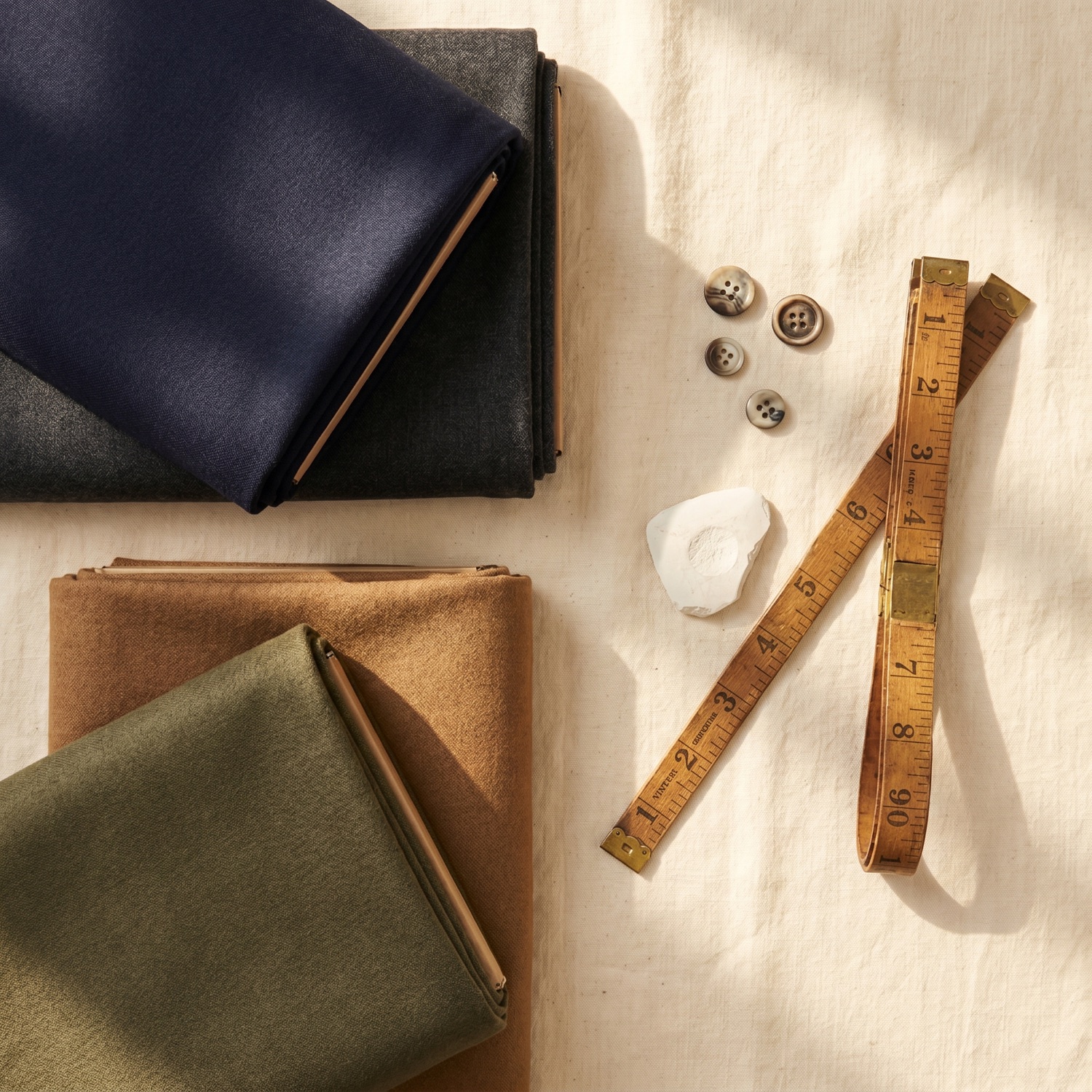
A curated set of core colours covers more fittings than a wall of books ever did.
Practically, that means a tablet on the counter or a laptop at the fitting table. The client scrolls through options you have already filtered, sees the weave and the weight, and points at three or four. You pull those swatches from the drawer, hold them against the client's shirt or under the shop light, and the decision happens with cloth in hand rather than on a screen. The digital book gets you to the short list. The swatch closes it.
If you are running trunk shows rather than a fixed shop, the same method works with even fewer swatches. A travel tailor carrying six to ten physical samples and a tablet with the full range can show a client everything without checking a suitcase full of books. We cover the logistics of that setup in our guide to running a made-to-measure trunk show.
When the client asks for a name
Clients walk into shops asking for fabric brands. They have read a magazine or a forum and they want Zegna, or Loro Piana, or Vitale Barberis Canonico. That is not a problem. It is a starting point.
We carry cloth from 33 mills and cloth merchants, 26 of them in Europe. Two of those are held as stock in our Shanghai warehouse: Zegna with 162 styles across Trofeo and Traveller, and VBC with 40 styles of Four Seasons. Everything else is ordered in from the mill once the order is confirmed, which adds the mill's own lead time on top of our 14 days in production.

A houndstooth check overcoat from our range. When a client points at a pattern, having the swatch in hand settles the conversation faster than any photograph.
What matters for the shop is knowing the answer when the client asks. If a client wants Zegna Trofeo, you can tell them it ships from stock and the suit is ready in 14 days from a confirmed order, shipping extra. If they want Loro Piana, you can tell them it is ordered in and the total time is longer. Both answers build trust. Neither requires a full book on the shelf, only a swatch of the cloth in question and an honest timeline.
Our guide to the 20 fabric brands a shop's clients ask for covers each name, what the mill makes, and whether we hold it or order it in. That page was built as a reference for exactly this conversation.
A checklist for requesting suit fabric swatches
If you are setting up a swatch drawer for the first time, or refreshing one for a new season, this is the order that works:
- Decide your core weight range. For most shops, 240 to 300 grams covers the year. Add a 320 gram flannel for winter and a lighter option if you sell summer separately.
- Pick your core colours. Navy, mid grey, charcoal. Those three account for most of the volume in every shop we supply. Add a tan or a brown if your clients ask for them.
- Add two or three patterns. A pinstripe, a windowpane, a check. Patterns sell slowly but they start conversations, and a client who comes in for a navy suit and sees a glen check on the counter sometimes leaves with both.
- Request swatches by bunch number. Not by colour name, not by a description on a screen. The bunch number ties the swatch to the bolt, and it is the only reference that survives a reorder six months later. We go into this on our suit fabric guide.
- Keep six to ten per fitting. Cut swatches you are not using. A drawer with fifty swatches is not a resource, it is a delay.

A textured check like this earns its place in a swatch drawer because clients notice it on the counter, even when they came in for plain navy.
What a swatch proves and what it does not
A swatch lets a client feel the weight, see the weave and hold the colour against their skin. It does not show drape, because a five centimetre square does not drape. It does not show how the finished garment falls, because that depends on cut and construction, not cloth alone. And it does not prove fibre content, because nobody can feel the difference between a Super 110s and a Super 130s by touch.
What a swatch does prove, reliably, is whether the client will say yes. That is enough. The rest is answered by the garment itself, and by the checks you run when it arrives.
Our production runs 14 days from a confirmed order, shipping extra. A full-make two-piece suit in our cloth starts from USD 167 ex works Shanghai, or from USD 100 CMT if the shop sends its own fabric. We source from 33 mills and cloth merchants, 26 of them in Europe, and every fabric is identified by bunch number and weight. A swatch request comes back with those numbers attached, not just a square of cloth in an envelope.
See prices and your margin, 3 min, or send us what you are selling today and we will tell you which six swatches to start with.
Frequently asked questions
Do I need a full fabric swatch book to sell made-to-measure suits?
No. Most independent shops sell from a curated set of six to ten swatches per fitting, backed by a digital fabric catalogue that shows the full range. A full fabric swatch book from every mill you carry is expensive to maintain and rarely used in full. What sells suits is the right six swatches on the counter, chosen after you know what the client needs.
How many suit fabric swatches should I show a client at a fitting?
Six to ten. More than that slows the decision and rarely improves it. Start by asking what the suit is for, what season, and what budget, then pull swatches that match those answers. A client choosing between six options picks faster and more confidently than a client choosing between thirty.
Can I request physical swatches from a made-to-measure factory?
Yes. We supply a digital fabric book showing every fabric we carry, and physical swatches on request. We do not send full bunch books. Request swatches by bunch number so the swatch ties directly to the bolt your client's suit will be cut from, and keep your swatch drawer to the weight range and colours your clients actually buy.
What is the most important thing to check on a fabric swatch before showing it to a client?
Weight. Most business suiting sits in a 240 to 300 gram range, and that number tells you more about how the finished suit will feel and drape than the brand name on the bunch cover. A swatch from a 260 gram worsted and one from a 300 gram flannel feel like different garments in the hand, and a client who touches both will have a stronger opinion than a client who only saw them on screen.
How do I choose the right custom suit fabric for a client who has never ordered before?
Start with navy or mid grey in a 260 to 280 gram worsted. That combination works across seasons, holds its shape well, and gives a first-time buyer a result they can wear to almost anything. Save patterns, lighter weights and luxury mills for the second order, after the client knows what made-to-measure feels like and has a reference point for the next choice.