Journal Entry
The First Call With a Made-to-Measure Factory: What Happens and What to Have Ready
A preparation checklist for tailor shops before the first call with a made-to-measure factory: what to bring, what to ask, and what you walk away with.
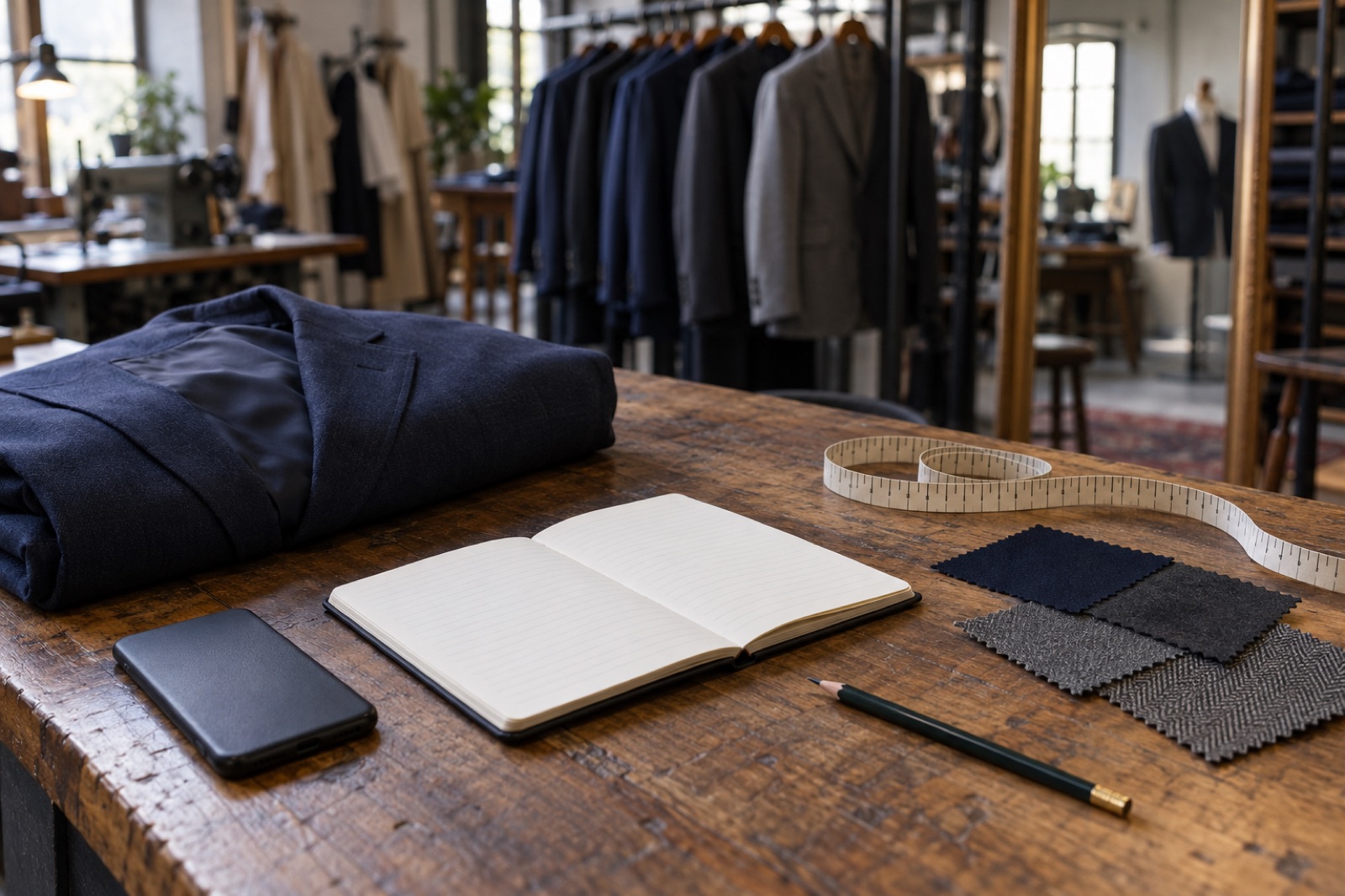
Last month a shop owner in Lyon joined a video call with a notebook, a pencil and nothing else. No garment to show, no measurement sheet to share, no idea what he was paying his current supplier per unit. Forty minutes later we had talked about canvas types, fabric weight, production timelines and half a dozen other things that matter, but neither side could say whether working together made sense, because the one piece of information that would have settled it, what his shop actually sells today, was sitting on a rail four metres behind him and never came up.
That call was not wasted. It was just longer and vaguer than it needed to be, and a second call had to cover the ground the first one should have covered in fifteen minutes. Nearly every first call with a factory follows the same arc: the factory explains what it builds, the shop explains what it needs, and the useful part, whether the two overlap, gets squeezed into the last five minutes or pushed to a follow-up. The fix is not a better agenda. It is having five things within arm's reach before the call starts.
What to have on the table
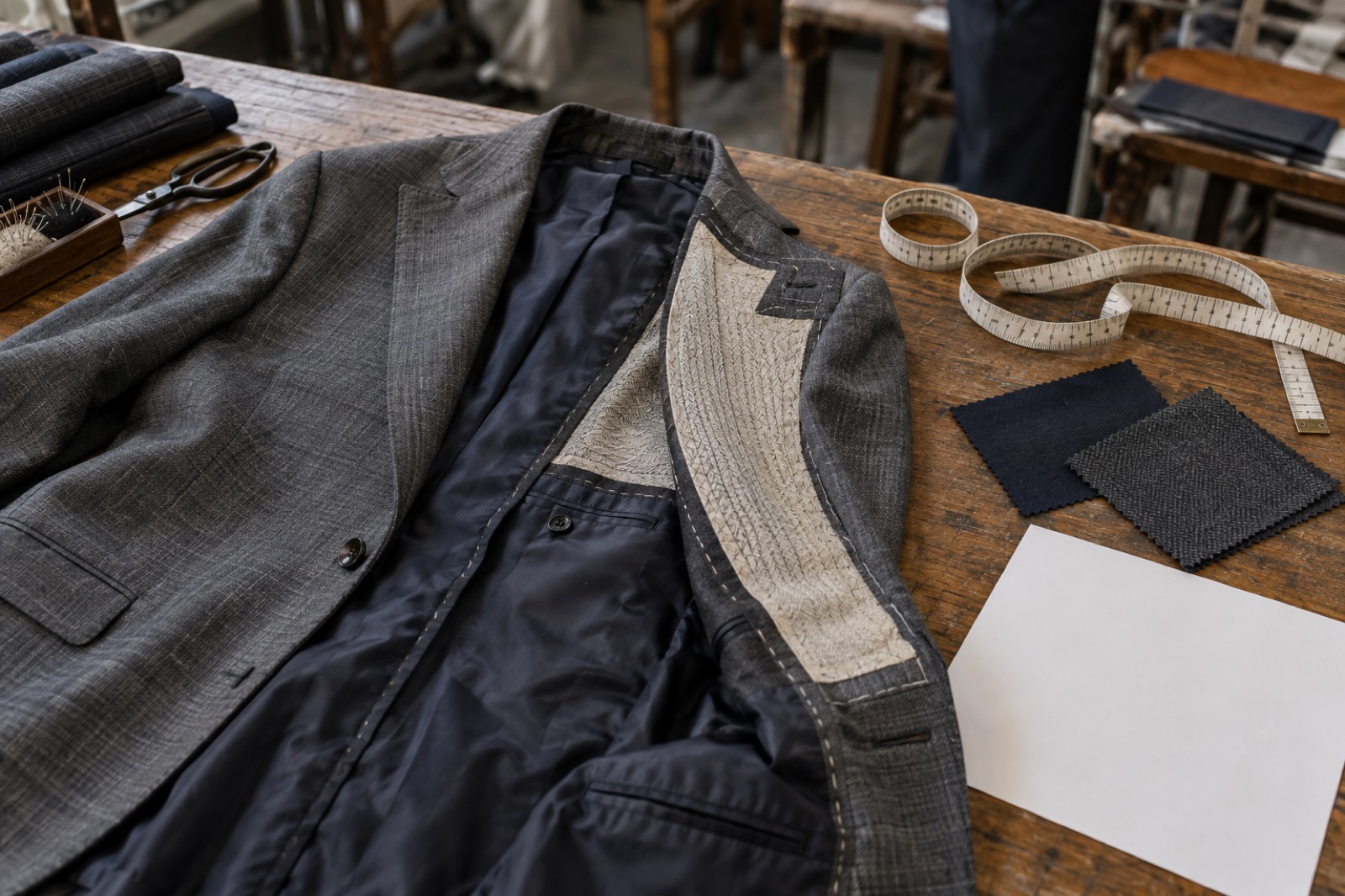
A reference garment laid open beside a tape measure and swatches: the starting point for a factory conversation.
A first call with a made-to-measure factory is not a sales pitch you sit through. It is a sizing exercise: does what this factory builds fit what your shop sells? The faster both sides can answer that, the less time gets spent on generalities. Five things make that happen.
A garment you currently sell. Not a photo, the actual jacket or suit. Pick the one you sell most, not the most difficult or the most expensive. Hold it up to the camera, open the front, show the construction. A factory that can see your current product does not need to guess your quality level, your price tier or your construction preference. It already knows, and the conversation moves to whether it can match that standard rather than whether you know what canvas means.
Your last two or three measurement sheets. These show the factory how your shop measures. Every factory has its own measurement system, and the first question is whether yours translates. Ours runs to 47 measurement fields, 31 of them required. If your sheets use different landmarks or skip fields the factory needs, that surfaces on the first call rather than on the first order. Bring the sheets, not a description of how you measure.
The fabrics and price points you carry. Not every swatch in the shop, just the short answer: which mills or merchants, what weight range, and what retail price you charge the end customer. This tells the factory whether you are a half canvas shop selling at EUR 900 or a fused shop selling at EUR 400, and that single fact shapes everything it says next about construction, cloth and pricing. If you already hold cloth from a mill the factory does not buy from, say so: a CMT route (cut, make and trim, starting from USD 100 per two-piece suit ex works Shanghai) means your own cloth goes through the same production line.
A rough monthly volume. Not a commitment, just a number: how many suits does the shop make or sell in a typical month? Three, fifteen, fifty? This is not about hitting a minimum order quantity. Our minimum is one piece. It is about the factory understanding your rhythm, because a shop doing three suits a month has different reorder timing, stock needs and cash flow questions than one doing fifty.
The one thing that made you start looking. Every shop owner who books a call with a new factory has a reason, and most of them do not say it until the third email. Late deliveries, inconsistent construction, unclear pricing, a supplier that stopped answering the phone. Say it on the first call. A good factory will tell you whether it can fix that specific problem or whether the same thing will happen again for a different reason. A factory that only wants to talk about itself is not listening to the answer that matters most.
Five questions to ask a clothing manufacturer on the first call

Our Shanghai workshop: where the answers to lead time and construction questions get tested every day.
These are not trick questions. They are the five that separate a factory giving you real operating numbers from one giving you a brochure.
-
From which day does the lead time count? Some factories count from the day you place the order. Some count from the day the cloth arrives. Some count from the day they confirm the order internally. Ask, and write the answer down, because the gap between those three definitions can be two weeks.
-
Does the lead time include shipping? A factory that says "14 days" and means production only is telling you something different from one that says "14 days" and means door to door. Our production runs 14 days from a confirmed order, and shipping is extra, quoted separately. That is a single number, not a range, and it does not include transit time. If a factory gives you a range, ask what causes the variation.
-
Calendar days or working days? A 14 day lead time in working days is nearly three calendar weeks. In calendar days it is two weeks. The difference matters when you are promising a customer a delivery date. Ask which one.
-
Can I send a reference garment for you to match? A shop that already sells suits has a product its customers know. Sending one to the factory means the trial piece gets measured against something real, not against a spec sheet written from memory. We ask shops to send the suit they sell most, mark the spots customers usually ask them to alter, and attach the measurement sheet for that garment. The factory matches it, then makes one trial piece so you can compare the two side by side before committing to anything else. The full checklist for that trial piece is worth reading before the garment arrives, not after.
-
Will I get a written price sheet before I commit? Some factories quote only after a sample order. Some quote only after an NDA. Some do not quote at all until you have paid a setup fee. Ask on the first call. If the answer is no, you are negotiating blind.
What you walk away with
After a first call with us, or after the 3 minute check on our site, a shop gets four things: the wholesale price sheet, the margin per suit at the shop's own retail price, a direct line to a partner manager and an account on the AI ordering system. That is not gated behind an order or a deposit.
The price sheet is where the five things you brought to the call start earning their keep. You already know your retail price. You already know your current cost. Now you can compare, line by line, and see whether the margin moves enough to justify a switch.
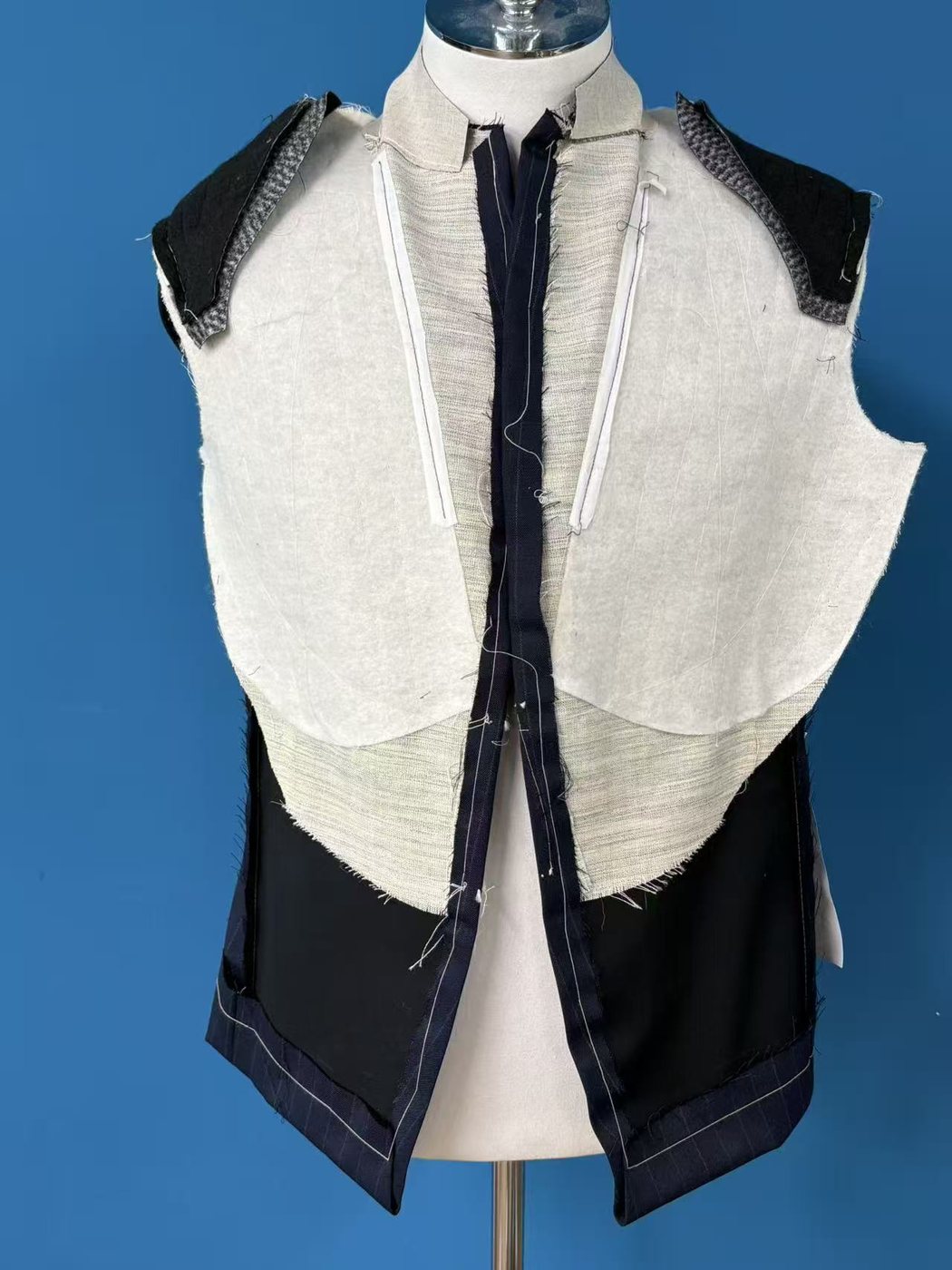
Half canvas construction: the kind of detail a reference garment settles faster than a phone call.
A two-piece suit in our cloth, fused, starts from USD 167 ex works Shanghai. Half canvas starts from USD 197. If you send your own cloth, CMT starts from USD 100. These are starting prices for a single piece, not volume thresholds. The full price sheet has the detail, and you get it before you spend anything.
What happens in the first two weeks after the call
The call is not the decision. The trial piece is. Here is the order things happen in, so nothing catches you off guard.
-
You choose a trial garment. One suit, one jacket, one pair of trousers. Pick the product you sell most, the one your customers know, so the comparison is fair.
-
You pick a cloth route. If you want to use cloth from our range, Zegna (162 styles) and Vitale Barberis Canonico Four Seasons (40 styles) are held in Shanghai and ship with the standard 14 day production window. All other mills are ordered in, adding the mill's own delivery time before production starts. If you want to send your own cloth, the CMT route starts from USD 100 per two-piece.
-
You send a reference garment (optional but worth it). The suit you sell most, with the measurement sheet for that garment attached and the common alteration points marked. We match the construction, fit and finishing to what your shop already delivers. The full process for sending a reference garment and what to expect back is covered separately, so it does not need to slow the call down.
-
You confirm the order. Measurements, fabric, construction, all locked. Production is 14 days from that confirmation, shipping extra.
-
The trial piece arrives. Check it against the first sample checklist: open the jacket before you try it on, match the cloth to a bunch number, measure the garment flat against your spec sheet, turn out the pockets. If something is not right, we stand behind every piece: if something is not right, we make it right.
That whole sequence, from call to trial piece in hand, runs roughly three to four weeks depending on the cloth route and shipping destination. Nothing in it requires a deposit, a minimum run or a long-term commitment. The minimum order is one piece, and the point of that one piece is to prove whether the factory delivers what the call promised.
The call nobody books twice
The shops that get the most from a first call are the ones that treat it as a working meeting, not an introduction. A factory that has seen your garment, read your measurement sheet and heard what went wrong with your last supplier can skip the first twenty minutes of every call script ever written and go straight to the question that matters: can we build what you sell, at a price that works, on a timeline you can promise your customers?
A notebook and a pencil are fine. But the jacket on the rail behind you is worth more than anything you write in that notebook, and the measurement sheet in your drawer is worth more than any question you rehearse. Bring both, and the call answers itself.
Frequently asked questions
What should a tailor shop prepare before a call with an MTM factory?
Five things: a garment you currently sell (as a reference for the factory to match), your last two or three measurement sheets, a short list of the fabrics and retail price points you carry, a rough monthly volume, and the one thing about your current supplier that made you start looking. A factory that sees what you already sell can skip the introductory guesswork and talk about your actual product.
What questions should I ask a clothing manufacturer on a first call?
Ask five things as separate questions: from which day does the lead time count, does it include shipping, is the lead time in calendar days or working days, can you send a reference garment for the factory to match, and will you get a written price sheet before you commit to anything. A factory that answers all five without hedging is telling you how it actually operates, not how it markets.
What does a tailor shop get after the first call with Centi Sartoria?
After the 3 minute check or a first call you get the wholesale price sheet, your margin per suit at your own retail price, a direct line to a partner manager and an account on the AI ordering system. The next step is a single trial piece, either from your own cloth or ours, produced in 14 days from a confirmed order, shipping extra.
Can I send a suit I already sell to a new factory as a reference?
Yes, and you should. Pick the suit you sell most, not the most complex one. Mark the spots your customers usually ask you to alter, attach the measurement sheet for that garment, and send it. The factory matches the construction, fit and finishing to what your shop already delivers, then makes one trial piece so you can compare side by side before committing.
How many suits do I need to order for a first trial with a made-to-measure factory?
One. Our minimum order is a single piece, which means a trial costs you the price of one suit, not a production run. A two-piece suit in our cloth starts from USD 167 ex works Shanghai, or from USD 100 if you send your own cloth. Production takes 14 days from a confirmed order, shipping extra.