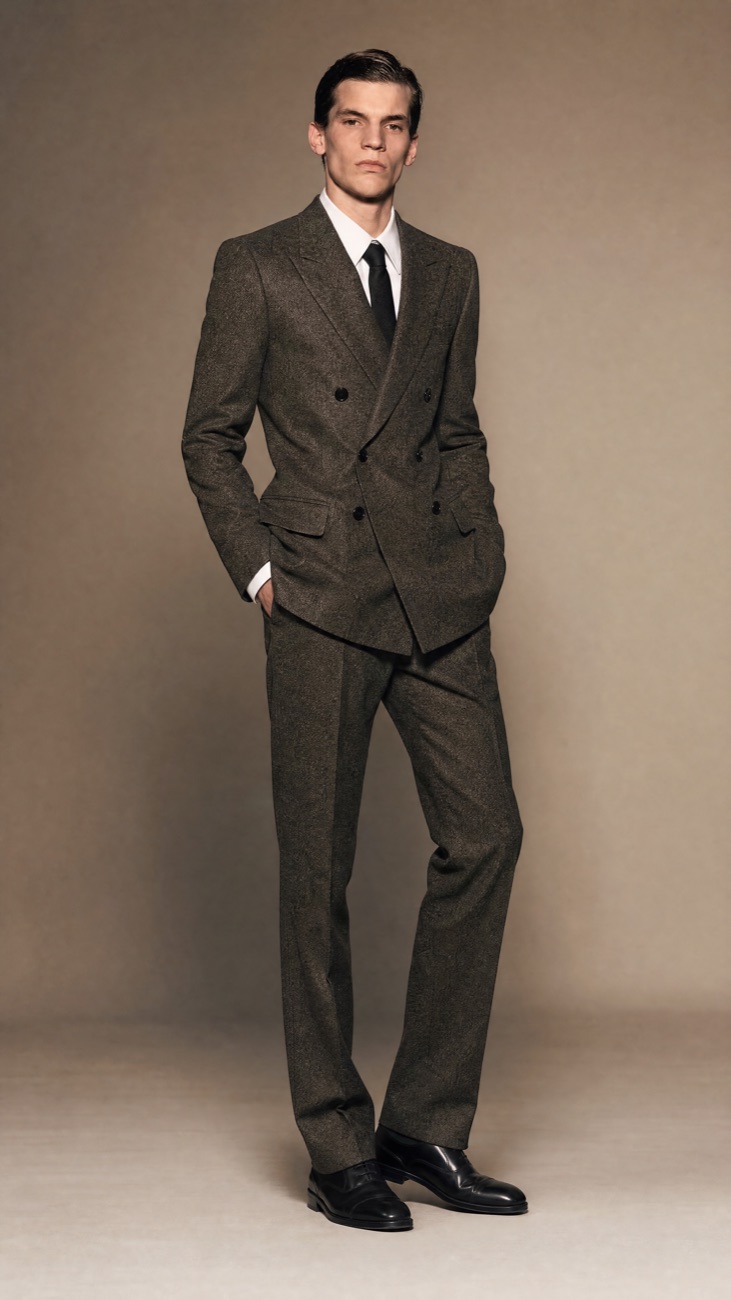
Journal Entry
Heavier Cloth for Winter: What 320 Grams Changes on the Cutting Table
A buyer asking for something heavier for winter is asking for a number, not a season. What 320 gram cloth changes at the cutting table, in the canvas, and in the finished drape, from a factory that carries 98 to 440 grams.
The message came in with one word doing all the work: heavier. A chain buyer wanted the winter version of a block we had already cut for her twice that year, and that was the entire brief. We asked for a gram figure and she sent back a photo of a coat someone was wearing on a sidewalk in another city. We cut the piece at 340 grams because that was our best read of the photo, and it came back for a rework. Not because it fit wrong. Because the canvas underneath a cloth that heavy needs to be a different weight too, and nobody had said the word canvas at all.
That exchange happens every autumn, in some version, and it is not really about taste. It is about what a number does once it leaves a swatch card and reaches a cutting table, where "heavier" has to become grams, and grams have to become a decision about canvas, seam allowance and press before a single piece of cloth gets cut.
What the number actually measures
Weight in suiting cloth is grams per linear metre off the roll, and it is the single easiest spec on a cloth to verify, because a scale settles it in under a minute where colour and hand require a trained eye. Across the 822 fabrics we carry with a weight recorded, 597 sit in a 240 to 300 gram band, which is the year-round range most shops never have to think twice about. The full spread we hold runs from 98 grams, at the lightest tropical end, up to 440 at the heaviest. A cloth at 320 sits above that everyday band on purpose, and it is worth being precise about where, because a buyer who says "heavier" without a number could mean anything from 300 to 400, and those two cloths do not behave the same way under a needle.
The two fabrics we hold cut and ready in Shanghai sit either side of that everyday line rather than above it. Zegna's Trofeo comes in at 240 grams and its Traveller line at 250, across 162 styles between them, and Vitale Barberis Canonico's Four Seasons book sits at 280 grams across 40 styles. All three are single fibre, no blends, which is part of why we can hold them on the rack rather than order them in against a confirmed piece. None of the three is what most buyers mean when they ask for something heavier for winter. That request usually points past our held cloth and into the wider mill range we order in against your order, where the true winter weights live.
What changes at 320 grams and up
The first thing that changes is not visible until the cloth is on the table. A worsted at 280 grams presses to a crease and mostly stays there through a normal day. Above 320, the same crease holds through more movement and more hours, which is exactly why a heavier cloth reads as more formal by evening, but it also means the fabric fights back harder against a seam that was pressed for a lighter weight. Seam allowances that work cleanly at 260 grams start to show bulk at 340, particularly at the collar join and the sleeve head, and a pattern that was never adjusted for the extra thickness produces a visibly stiffer roll at the lapel than the same pattern in lighter cloth.
The second change is in the canvas. A heavier shell cloth needs a canvas built to carry its own weight, not the canvas a lighter block was designed around. Send us a 340 gram order built to the same construction spec as a 260 gram summer block and the front will hang differently within a season, because the interior structure was never asked to hold that much cloth. This is the piece that gets skipped most often, because canvas weight lives inside the garment and nobody checks it until the jacket already looks wrong on a hanger. We wrote through how to check canvas depth and construction on a sample before a full run in our first sample checklist, and the same check matters more, not less, once the shell cloth gets heavier.
The third change is ease. A heavier cloth folds less easily around a curve, so a sleeve head or a collar roll built for a lighter fabric can look pinched rather than soft once the weight goes up. This is the same principle behind cutting for texture generally, which we set out in more detail in what a textured cloth asks of the construction: a cloth's physical properties change what the pattern has to give it, and weight is the most basic of those properties, ahead of any weave or finish.
The canvas conversation nobody starts
Ask most shops what construction they want under a winter cloth and the answer is whatever we ran last season, which is a reasonable default at 280 grams and a worse one above 320. Half canvas holds a heavier shell cleanly enough for most winter suiting, and it is where we would put a first order in a new weight, the same way we would put a first relaxed order into half canvas before trying unstructured. Full canvas earns its cost back more clearly here than it does in a lighter summer cloth, because a heavier shell has more weight for the canvas to actually control, and the difference between a stitched full canvas front and a fused one shows up faster in cloth this substantial. Our full canvas vs half canvas vs fused guide sets the three constructions out side by side with our own front panels photographed open, which is the only reliable way to see the difference rather than take a quote's word for it.
Fused construction is not disqualified at 320 grams, and it is worth saying so plainly rather than implying every heavier order needs the more expensive build. A fused front in a heavier cloth still costs less and still ships inside the same production window. What it will not do is drape the way a canvassed front drapes once the shell cloth has real weight to move, and a shop that wants the visual softness a heavier cloth can give needs to pair it with a construction that lets that softness show.
What to put on a winter cloth order
This is the list we ask for before we cut anything above the everyday band, in the order it matters.
- A gram figure, not a season word. "Heavier" and "winter" are directions, not specs. Give us 320, 340 or whatever the number actually is.
- Bunch number. Same rule as any cloth order: a bunch number is checkable against a swatch, a country or a season is not.
- Construction named directly. Half canvas, full canvas or fused, chosen for the weight rather than carried over from a lighter block.
- Canvas weight, if you know it or want to specify it. If you do not, tell us the shell weight and let us match a canvas to it rather than defaulting to last season's spec.
- Confirmation of held versus ordered in. Fabrics we hold, like Zegna's Trofeo and Traveller or Vitale Barberis Canonico's Four Seasons book, ship inside our normal 14 day production window. Anything above that band we typically order in against your confirmed piece, which adds the mill's own lead time before our clock starts. Ask before you promise a client a date.
Weight is a number, not a mood
The buyer who wanted "heavier" was not wrong to want it. Winter cloth genuinely is a different category, and a shop that runs the same weight all year is leaving something on the table with clients who notice the difference between a suit that holds a crease at a dinner and one that needs pressing by nine. What goes wrong is treating the request as a feeling rather than a spec. A gram figure, a bunch number and a construction call turn "something heavier" into an order we can cut once and get right, rather than a photograph from a sidewalk and a rework three weeks later.
The wider trend backs the request up, if it needs backing up at all. Première Vision's autumn/winter fabric decodings point toward more texture and more weight moving through the mills this season, and less interest in a perfectly uniform, flat-finished cloth. That is a demand signal worth acting on. It is not a reason to skip the number.
If you are quoting a winter block for the first time this year, our suit fabric guide sets out the full weight range and the Super number system it sits alongside, in more depth than fits in one post. Or send us the season and the client, and tell us what you are trying to solve, and we will come back with a gram figure and a construction call rather than another photograph of a coat on a sidewalk.
Frequently asked questions
What does 320 gram suit fabric actually mean?
It is a weight per linear metre of cloth off the roll, not a style or a season by itself. Of the 822 fabrics we hold with a stated weight, most sit between 240 and 300 grams, and the full range we carry runs from 98 up to 440. A cloth at 320 grams sits above that mid band, which is where a lot of the confusion starts: buyers say 'heavier' and mean anything from 300 to 400.
Is heavier suit fabric automatically warmer?
More directly than most buyers expect, yes, because weight in worsted wool tracks fibre density more than weave. But warmth is not the only thing that changes. A heavier cloth also holds a press better, drapes with less movement, and asks more of the canvas underneath it, which matters as much to how the jacket looks in March as how it feels in January.
Can I just ask a factory for something heavier for winter?
You can, and we will ask you back for a number, because 'heavier' is not a spec. Give a gram figure or a season band, and confirm whether you want a full canvas or half canvas build under it, since the two answers change how the cloth behaves under the needle, not just how the jacket photographs.
Does a heavier winter cloth take longer to produce?
Not on its own. Our production runs 14 days from a confirmed order regardless of weight, from a one-piece minimum. What can add time is whether the cloth is held or ordered in. Fabrics we hold cut and ready in Shanghai ship inside that window; anything we order in against your confirmation carries the mill's own lead time first.
What is the difference between a 280 gram and a 320 gram winter cloth?
Forty grams sounds small and is not. At 280 grams, cloth like Vitale Barberis Canonico's Four Seasons book, which we hold cut and ready in Shanghai, still behaves close to a year-round weight: normal ease allowances, normal canvas. At 320 and up, seam bulk increases, a fuller canvas earns its keep, and the garment wants slightly more room through the sleeve head to fold cleanly. Treat the two as different builds, not the same jacket in a thicker coat.