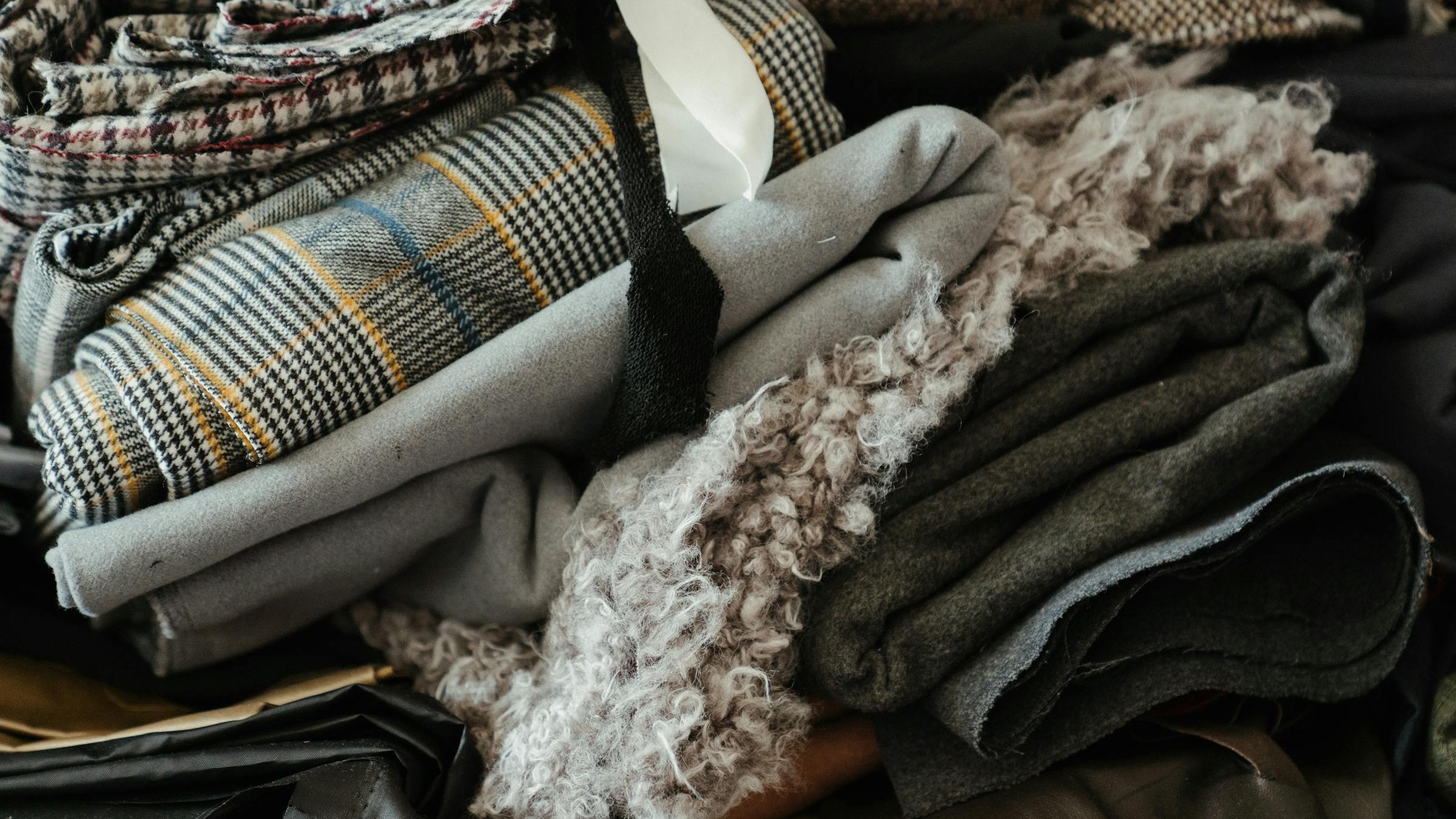
Guabello does not have much of a public story, and I would rather say that plainly than pad this page with adjectives. What is documented: Antonio Guabello and his brother founded the mill in 1815 in Mongrando, a small town in the Biella wool district of Piedmont. The mill passed out of family hands in the late twentieth century, and since 1991 it has operated as a division of the Marzotto Group, one of Italy's larger textile holding companies, under its own Lanificio Guabello name. Two hundred and ten years after it opened, the mill still runs its production at the original Mongrando site.
Guabello shares the Biella valley with other names on our list, among them Reda in nearby Valle Mosso and Stylbiella, whose own founding date is harder to pin down than Guabello's 1815.
What I can verify, and what I am not going to invent
I do not know whether a Guabello descendant still has any part in running the mill today, and I am not going to invent a family story to make this page read warmer than the facts support. What I can say with confidence: the mill has stayed on one site for over two centuries, which in an industry where production regularly gets scattered across subcontractors is not nothing. A buyer who wants to trace a bolt back to a single address, rather than a chain of them, has that with Guabello.
Five collections, not fifty
Some mills run enormous swatch libraries that take an afternoon to page through. Guabello runs five named collections: Onethirty, built from Super 130s wool; Royal Flannel, a cold-weather flannel line; Vault, which the mill positions as its most technical, performance-focused fabrics; Vesper, aimed at occasion and event dressing; and Connoisseur, a more formal, understated range. Guabello does not publish detailed composition and weight specs the way some merchant houses do, so I am not going to pretend I know more about each one than the mill itself states. What I will say: a five-collection range is a shorter conversation to have with a client than a fifty-bunch one, and shorter conversations close faster.
The number that actually matters: Super 130s versus Super 150s
This is the one place on this page where I will put real numbers down, because they are checkable and they change what I recommend. Super 130s wool runs at roughly 17 microns in fiber diameter. Super 150s is finer, closer to 16. That difference sounds small on paper. On the cutting table, and on a client's body eighteen months later, it is not.
Finer fiber takes dye and light differently, which is part of why Super 150s photographs and drapes with a quiet sheen that Super 130s does not quite have. But finer also means weaker at the single-fiber level, and a suit takes its wear at friction points: the seat, the elbows, the collar edge. I steer a client who wears the same suit two or three times a week toward Super 130s, not 150s. Super 150s is the fabric for a suit that comes out for board meetings and weddings, not the one riding a commuter train every morning. Sell 150s as an everyday suit to a client who does not already own a rotation of others, and you are setting up a return once the seat starts to shine.
What to pair it with
Guabello's worsted weight sits in the range most Italian suiting mills treat as standard: not a tropical-weight cloth built for heat, not a heavy flannel built for cold, though the Royal Flannel line covers that end separately. Half canvas or full canvas construction both suit the worsted lines well. I would not put this cloth into a fully fused jacket: a hand this fine is one of the reasons a client is paying for the fabric in the first place, and fusing flattens exactly what he is paying for. If you are unsure which construction to recommend for a given client, our guide to which suit construction to sell covers the trade-offs in more depth than fits here.
Ordering it under your own label
We do not hold Guabello cloth in the Shanghai warehouse. It is special-order: we place the order once your job is confirmed, the mill's own supply time runs first, and only then does our usual 14 to 20 working day cutting window start. Do not promise a client a Guabello suit inside a month; tell them the honest total instead.
We buy this cloth as a customer of the mill, the same as any other maker who orders from Guabello. We are not an authorised dealer, a partner, or a representative of the mill, and the ticket that ships with the finished garment is there so you, or your client, can check that for yourselves. For a wider sense of how this fabric fits against the rest of what we cut, see our fabric guide or browse the full supplier list.