Journal Entry
Double-Breasted for Shops That Have Only Sold Single: The Four Numbers That Change
A shop's first double-breasted order usually arrives on a single-breasted spec sheet with the front style typed over. Four numbers do not transfer: lapel width, the buttons that actually fasten, the cloth carried across the chest, and the canvas underneath it.
The order came through as a straight copy of a single-breasted spec sheet we had cut a dozen times before, with one field changed: front style, double-breasted, six-button, peak lapel. Everything else was left exactly where it sat for the jacket the shop already knew how to sell. Lapel width: 8 centimetres, the same number that had gone out on every notch-lapel order that shop had placed with us for two years. Canvas: fused, because that was what the price point called for on their single-breasted line. Chest allowance: blank, because there had never been a reason to touch that field before.
We flagged it before cutting, which is why this piece exists rather than a returned jacket. A single-breasted spec sheet is tuned to a single-breasted front, and four numbers on it do not carry over just because the checkbox says double-breasted now. Get any one of them wrong and the jacket that comes back is not badly made, it is made correctly to a set of numbers that were never asked for the right thing.
Why the old numbers do not transfer
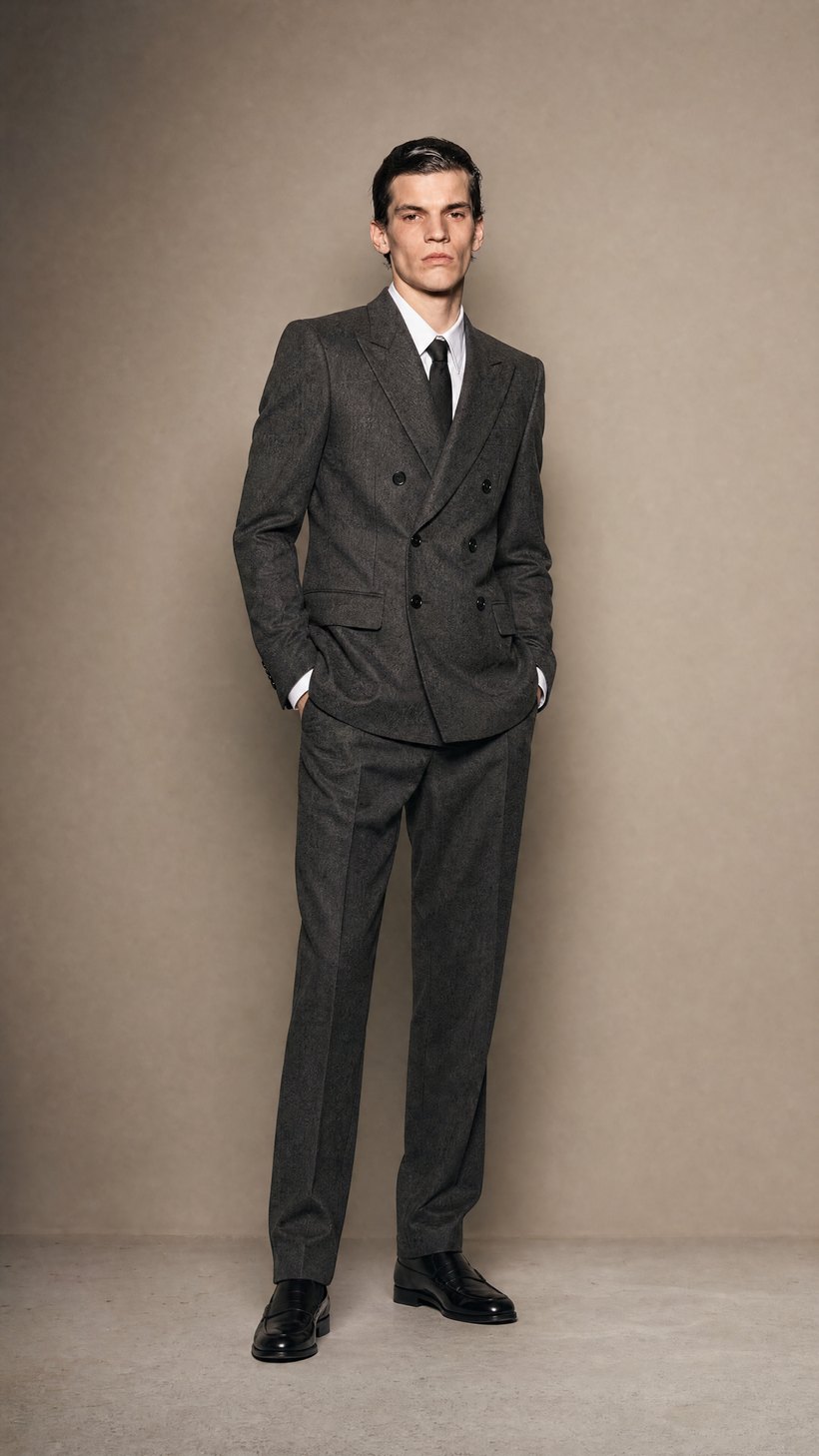
A double-breasted front is not a single-breasted front with an extra row of buttons sewn on. It carries more cloth across the chest to make the overlap, it is built to stay fastened rather than hang open, and the peak lapel that goes with it sits differently on the body than the notch most shops have been ordering for years. Every one of those differences shows up as a number on the sheet, and every one of those numbers was set, at some point, for a jacket that was not this one.
We cut both fronts every week, so the pattern of what goes wrong on a first double-breasted order is a short, repeating list. It is these four fields, in this order, because this is the order a buyer usually notices them going wrong: the lapel first, in the mirror, then the button line, then the fit across the chest, then the roll of the lapel itself once the jacket has been worn a few times.
The lapel width moves up the ladder
Every jacket we cut carries a lapel width chosen from the same ladder: 6, 7, 8, 9, 10, 11 and 12 centimetres, in one-centimetre steps. A notch lapel on a single-breasted business jacket tends to settle around 8 to 9, which is the safe middle for most men in most years, on our own suit lapels guide.
A peak lapel on a double-breasted front is a different proposition. The points rise up toward the shoulder rather than notching in, and they are doing that above a chest that is already carrying an extra row of cloth for the overlap. Order that peak at the same 8 to 9 centimetres that worked on the notch jacket and it tends to read narrow and slightly apologetic against all that front, rather than sharp. Most of the double-breasted orders we cut land a size or two higher on the same ladder than the shop's single-breasted number, not because wider is fashionable this season, but because the proportion of the front asks for it. This is a field to reset, not to copy down.
The button count is not the button count that fastens
A classic six-button double-breasted front looks, from across a shop floor, like a jacket with a great deal more fastening going on than a two-button single-breasted jacket. It is not. Two buttons actually close: the top outer button, and a hidden button on the inside called the jigger, which holds the underlap of cloth in place so the front sits flat rather than sagging on one side. The other four buttons on the visible front are there for proportion and symmetry, not for fastening.
We cover this properly on our suit button rules page, and the reason it matters here is specific to double-breasted work: a double-breasted jacket is the one garment in the whole rulebook that stays fastened when the wearer sits down, because that inner jigger button is what keeps it in balance. Open, the overlapping side sags and the front hangs crooked. A shop checking its first double-breasted sample should count buttonholes rather than buttons, and should check that the sample stays buttoned and sitting flat when the model sits, not just when he is standing for the photo.
The chest carries more cloth, and the number for that lives on the order
A double-breasted front carries more cloth across the chest than a single-breasted one, because the whole point of the front is that one side overlaps the other by several centimetres rather than meeting edge to edge. That extra cloth has to be accounted for on the order rather than assumed, and it is the field most likely to be left blank on a spec sheet copied from a single-breasted line, because a single-breasted front has never needed it specified.
Leave it blank and a pattern maker will default to a standard overlap, which is a reasonable jacket and not necessarily the jacket the buyer had in mind. A slimmer, more contemporary double-breasted cut and a fuller, classic six-button block both exist inside that same field, and the difference between them is exactly the kind of thing worth putting on paper before cutting rather than discovering on the sample.
The canvas has to do more work
The last number is not a measurement, it is a construction choice, and it matters more here than it does on a single-breasted order. Fused, half-canvas or full-canvas are all live choices for us on any order. Under a single-breasted front, fused construction can look perfectly clean, particularly at a lower price point. Under a double-breasted front, with that much more cloth crossing the chest and a peak lapel expected to roll rather than lie flat and pressed, a fused front tends to sit stiff and boxy, and a stiff, boxy double-breasted jacket is the fastest way to make a current cut look thirty years out of date. Half or full canvas gives the lapel and the overlap somewhere to move, which is most of what separates a double-breasted jacket that reads sharp from one that reads dated. Our full canvas vs half canvas vs fused guide photographs the difference from the inside, which is the only place it is honestly visible.
What to put on the spec sheet before the first double-breasted order
A shop moving from single- to double-breasted for the first time should reset these four fields deliberately rather than carry them over:
- Lapel width, specified in centimetres from the 6 to 12 ladder, chosen for the peak on this front rather than copied from the notch on the single-breasted line.
- Button count and fastening, stated as both: how many buttons show on the front, and which two actually close.
- Chest overlap, specified rather than left to a default, with a note on whether the cut should read slim and contemporary or fuller and classic.
- Canvas construction, chosen as half or full canvas unless there is a clear reason to fuse, because the front has more cloth to carry and less room to hide a stiff build.
Everything else on a double-breasted order, the cloth weight, the shoulder, the trouser that goes underneath it, follows the same numbers a shop already knows from its single-breasted line. It is these four fields that are specific to this front, and they are the four a buyer notices going wrong before anyone can say exactly why.
It does not cost you a full order to find out
Our production runs 14 days from a confirmed order to shipment, the same window whether the front is single- or double-breasted, and the minimum is still one piece. A shop testing its first double-breasted block does not need to commit to fifty jackets to find out whether these four numbers are right for its customers. Cut one, check the lapel against the ladder, count the buttonholes, look at how the front sits over the chest, and open it up to see how the canvas runs, before the number that matters most is the one on a much larger invoice.
If you are placing your first double-breasted order and want a second set of eyes on the sheet before it goes to the cutting table, send it to us and we will tell you where these four fields stand against what we cut every week.
Frequently asked questions
What is the biggest mistake a single-breasted shop makes on its first double-breasted order?
Reusing the single-breasted spec sheet and only changing the front style field. Lapel width, button count, chest allowance and canvas construction are all tuned to a notch, single-breasted front. A double-breasted order needs each of those four fields reconsidered on its own, not carried over because the rest of the form was already filled in.
Should the lapel width be the same on a double-breasted order as on a single-breasted line?
Rarely. Our lapel width runs 6 to 12 centimetres in one-centimetre steps, and a notch lapel on a single-breasted jacket usually settles around 8 to 9. A peak lapel on a double-breasted front is carrying more cloth and rising toward the shoulder, and at that same 8 to 9 it tends to look pinched rather than sharp. Most double-breasted orders we cut sit a size or two higher on the same ladder.
How many buttons on a double-breasted jacket actually fasten?
On a classic six-button front, two: the top outer button and a hidden inner button called the jigger, which holds the underlap in place. The other four buttons on the front are there for proportion. A shop specifying its first double-breasted order should count buttonholes, not buttons, when it checks a sample against the order.
Does a double-breasted jacket need heavier construction than a single-breasted one?
The cloth weight can stay the same. What we push toward is more canvas, not more weight. A double-breasted front carries more cloth across the chest than a single-breasted one, and a fused front under that much cloth tends to sit stiff and boxy rather than rolling. Half or full canvas gives the lapel and the overlap somewhere to fall.
Does a double-breasted order take longer to produce than a single-breasted one?
No. Our production runs 14 days from a confirmed order to shipment whether the front is single- or double-breasted, and the minimum is still one piece. A shop testing its first double-breasted block does not need to commit past a single sample to find out whether these four numbers are right.