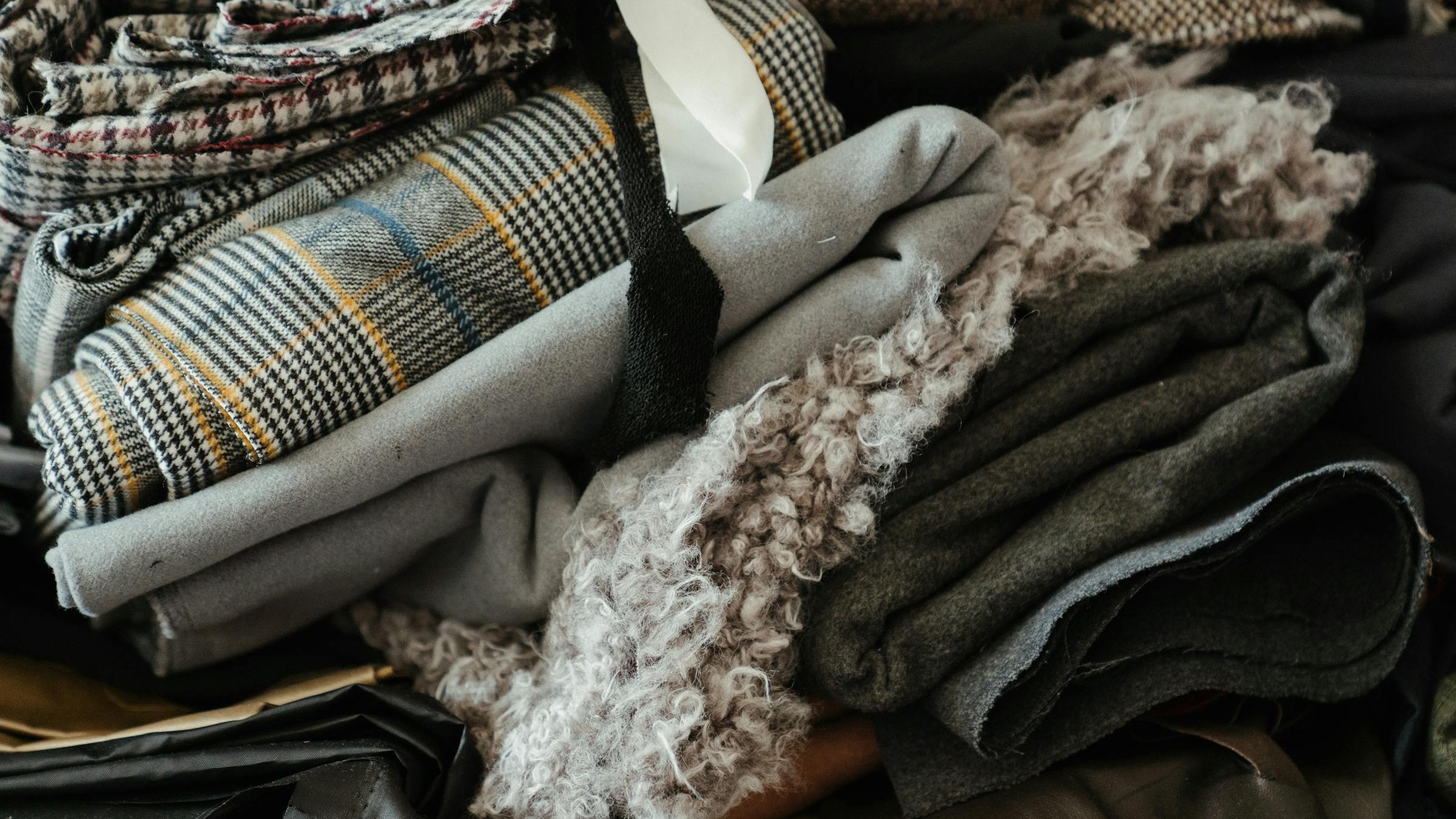
Ariston has been family-run since 1920, when Ferdinando Imparato began trading fabric in Naples at a time when the city ran on individual tailors, not clothing factories. Four generations later, the company still works out of Nola on the edge of Naples, and its range still does what that city has always been good at: linen, silk-linen blends, and prints with real colour in them. That is the point of this page. Ariston is not the house I recommend for a shop's core navy worsted. It is the house I recommend for the six weeks a year when a client wants to look put together in thirty-four degrees, and I want to be specific about what that trade actually costs him.
Linen creases. That is the fibre working, not failing.
Pure linen has almost no elastic recovery. Bend it, sit in it, lean on a table in it, and the fibre holds that shape until the next press. This is not a flaw specific to Ariston's cloth. It is true of linen from every mill in every country, and any merchant who tells a boutique otherwise is either uninformed or lying to make a sale. Solbiati, the other linen name on our list, makes the same point about its own Art du Lin collection: the finish can soften a crease, not remove it.
If a client tells you flatly that he cannot tolerate a wrinkle by lunchtime, do not sell him pure linen, full stop. Move him into a linen-silk blend at minimum, or out of linen altogether and into a lighter wool from a different supplier on this list. Selling a fibre against its own nature is how a shop earns a return, not a repeat client, and the client will blame the jacket rather than his own expectations.
The clients who do well in linen have already decided that a soft crease reads as ease rather than carelessness. That is a real, defensible aesthetic position, and it is exactly what a linen suit is for. It is not a position every client holds, and finding out which one is standing in front of you is your job before you cut, not after.
What the silk in Ariston's linen actually buys you
Ariston finishes part of its linen range with a measure of silk worked through it, which the house itself describes as giving the cloth a more precious hand. What silk changes is lustre and drape: the cloth catches light differently and moves with more fluidity than pure linen would. What it does not change is the underlying physics of a low-recovery fibre. A silk-linen jacket still creases. It creases with a softer, less angular fold than pure linen does, which reads better in a photograph and worse if a client was told the silk would solve the problem entirely.
I would not market this range as wrinkle-resistant, because it is not, and a client who hears that word and then sits through a two-hour lunch comes back angry rather than satisfied. Sell the drape and the colour. Do not sell an outcome the fibre cannot deliver.
Prints are where Naples shows up, and where Biella does not go
Travel roughly two hundred kilometres north to Biella and you are in worsted country: sober, tightly woven wool built for structure and longevity, the tradition behind names like Zegna, Vitale Barberis Canonico and Cerruti. We hold the first two in Shanghai and order the third in. Naples has always run a different trade, closer to the tailoring itself, and Ariston's pattern work is where that shows most clearly. It is a house built for colour: florals rendered as prints, bold geometrics, and printed silk-cotton cloth that a Biella mill would never put its name on. Caccioppoli, the other Naples merchant on our list, works the opposite end of that city's tailoring cloth: soft-handle cashmere blends and herringbone jacketings rather than Ariston's prints and linen.
The house puts out a new ARISTON collection twice a year, not four times. If your shop is chasing a fresh capsule every quarter, this is the wrong door to knock on. If you want a bunch a client can still reorder into eighteen months from now because the pattern was never a trend to begin with, the slower pace is the point rather than a limitation.
Prints earn their place on a rail that already has a settled classic offer behind it. Lead a window with them and you are asking a first-time client to trust a boutique he has never bought from on the boldest cloth available. Put them second, after a navy or a mid-grey has already sold, and they become the reason a client comes back for a second suit rather than the reason he walks past the window.
A merchant's name on the selvedge, not a weaver's
Ariston does not describe itself, on its own site, as operating its own looms, and neither will I claim that on its behalf. We file it as a merchant house in our own supplier list: a company that curates, finishes and puts its name on cloth rather than one that spins and weaves it start to finish. That distinction matters less for how the cloth performs and more for how you should read the marketing. A merchant's real skill is selection and finishing, not fibre-to-fabric engineering, and Ariston's actual skill, expressive pattern and colour work, sits exactly where you would expect a merchant's strength to sit.
None of this makes the cloth less real. It means the right question to ask a merchant is different from the right question to ask a mill. Ask a mill about its yarn. Ask a merchant which mills it is actually buying from, and whether it will tell you.
Ordering it through us
We buy Ariston fabric directly from the merchant, as a customer, the same as any other atelier does. There is no trading company standing between us and its bunch books, and there is also no exclusive arrangement, no authorised-dealer status and no representation of any kind. If Ariston sells the same bunch to five other makers next season, that is its business to run as it chooses.
We do not hold Ariston cloth as stock in Shanghai. If a client wants it, we place a special order against the confirmed job, and the cloth has to arrive in Shanghai before we cut, a different timeline from the mills we already hold on our own shelves. Our suit fabric guide covers how we think about weight and construction generally, and before you commit a client's deposit to a bunch you have only seen as a swatch, our notes on checking a first sample cover what a single garment actually proves and what it does not. I would not skip that step on a first order. If you would rather just ask, get in touch and we will tell you plainly whether a specific bunch is realistic for your timeline.