Journal Entry
Which Suit Construction to Sell: Canvas and Handwork Are Two Different Questions
Fused, half canvas and full canvas describe what is inside a jacket, not whether a hand touched it. A retailer's guide to the second question almost nobody asks before pricing a construction ladder.
A shop owner at a trade show this spring stood at his rail and told a customer the navy jacket was hand padded through the chest. That's why it moves like that, he said, running two fingers along the lapel edge. I was close enough to hear it, and close enough to know the jacket. It was full canvas, floated the whole length of the front, no glue anywhere in the panel, and padded by machine. He wasn't lying to the customer. Nobody had ever told him there were two separate questions hiding inside the word "canvas", so for three years he'd been answering only one of them with total confidence.
Suit construction usually gets taught as a single ladder: fused, half canvas, full canvas, cheap to expensive, in that order. That's not wrong, only half the story, and the missing half is exactly where the conversation at that rail went wrong.
Two separate axes
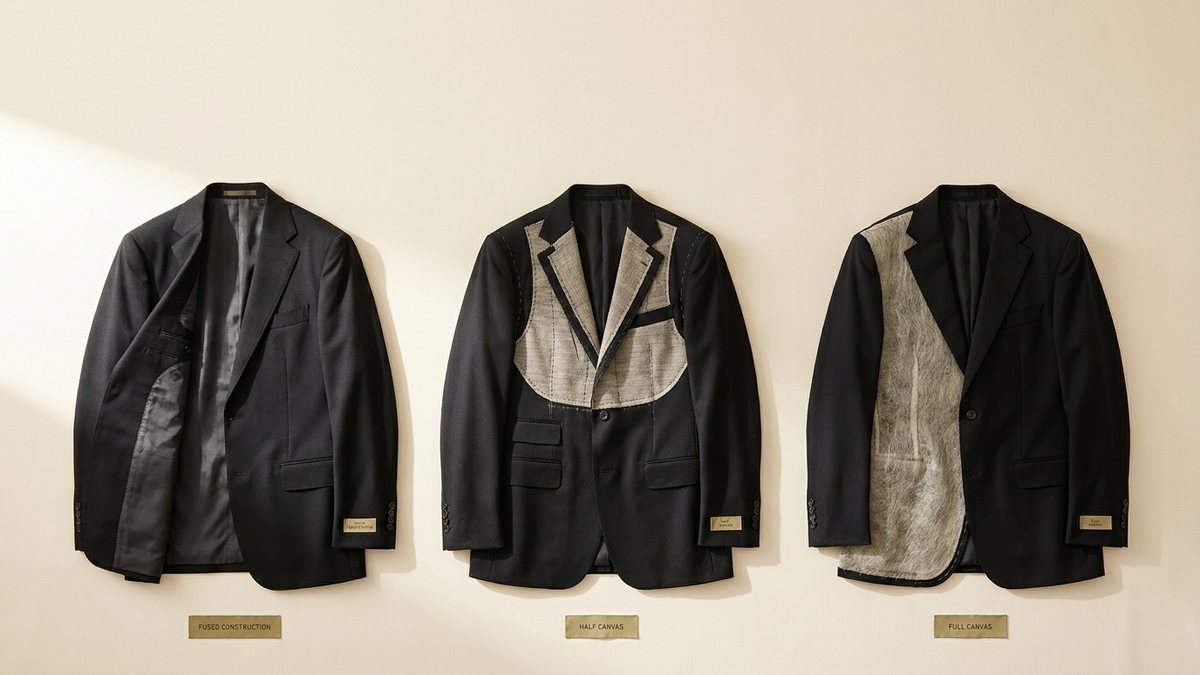
Axis one is canvas: what is stuffed inside the front of the jacket. Fused glues a layer of interlining straight to the wool. Half canvas floats a canvas panel through the chest and lapel, where the shape of a jacket shows, and fuses the lower front, where nobody is looking. Full canvas floats a canvas the entire length of the front, stitched in, with no glue anywhere on the panel.
Axis two is work: whether a hand touched that canvas, and how much. A canvas panel of any depth can be padded onto the wool by a machine running a fixed stitch, by a mix of machine and hand where the chest needs to move (part hand), or entirely by hand, needle and thread, one row at a time (hand padded).
The sentence that would have saved the conversation at that trade show is this one: full canvas tells you what is inside the jacket, and nothing about whether a hand touched it. Those are two different specifications, priced differently, and a supplier who only answers one of them has not answered your question, even when it sounds like they have.
Where to look for the tell
We did not want to just assert any of this, so we put a camera on it. What follows is our own front panels, opened before the lining went in, nothing borrowed and nothing staged. Look at them before you read the explanation, because the tell is something you can check yourself on any jacket a supplier ships you. The same set sits on our full canvas vs half canvas vs fused guide alongside the definitions, if you want them side by side with the terminology.
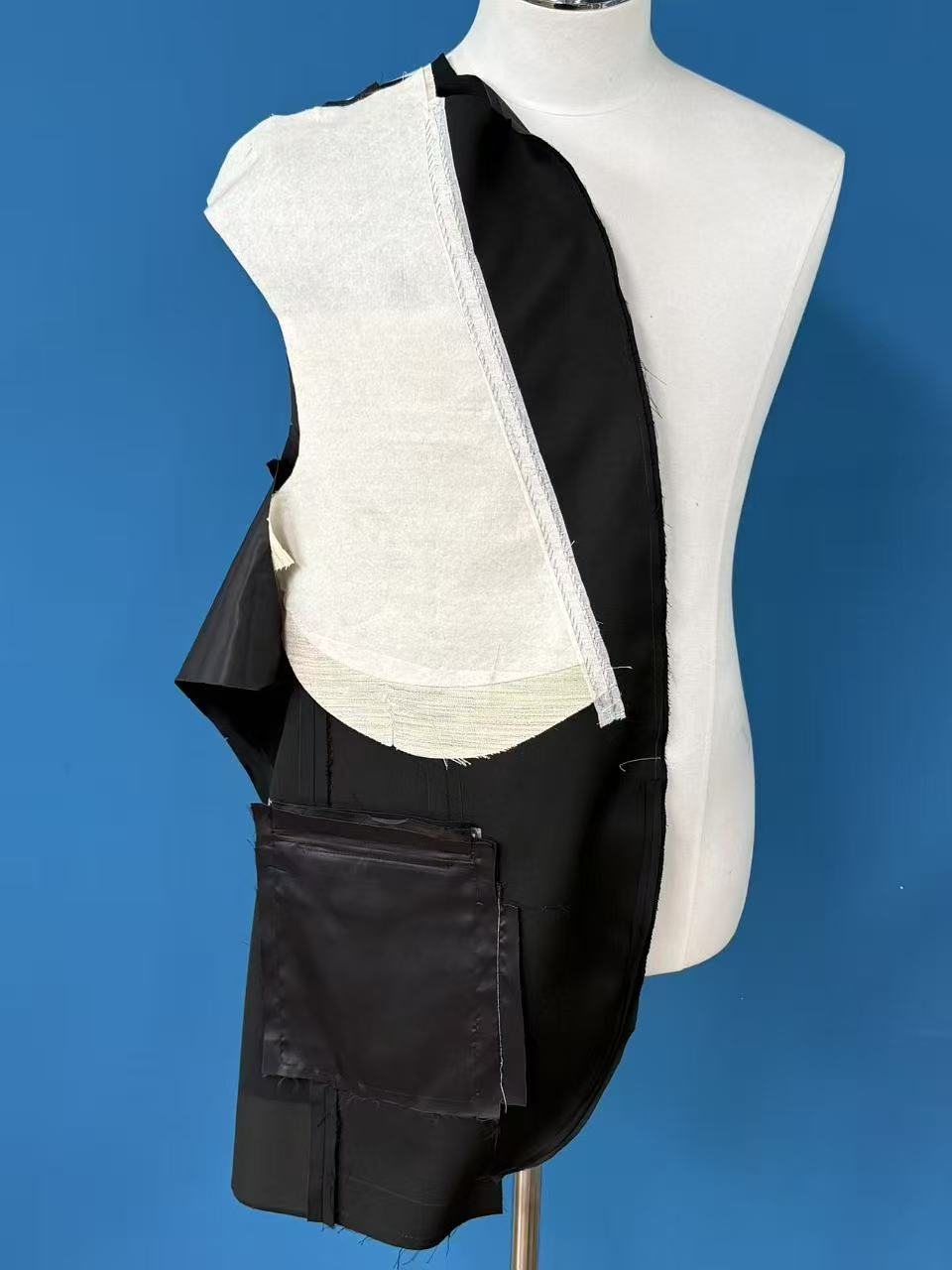
Fused, the white sheet bonded to the wool with heat. Nothing floats, so nothing settles.
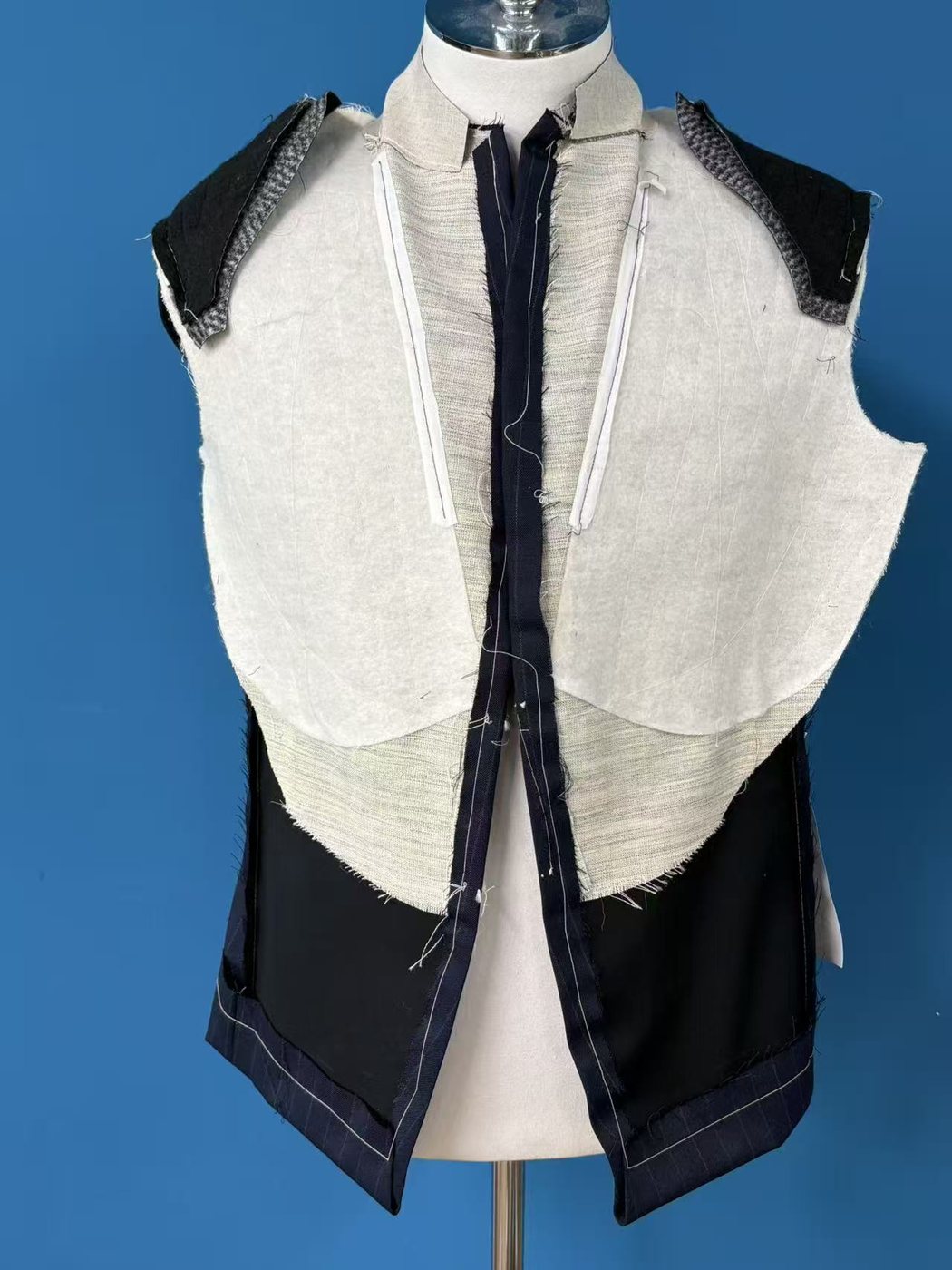
Half canvas, the canvas stopping in a curve above the waist. Below that line the front is fused.
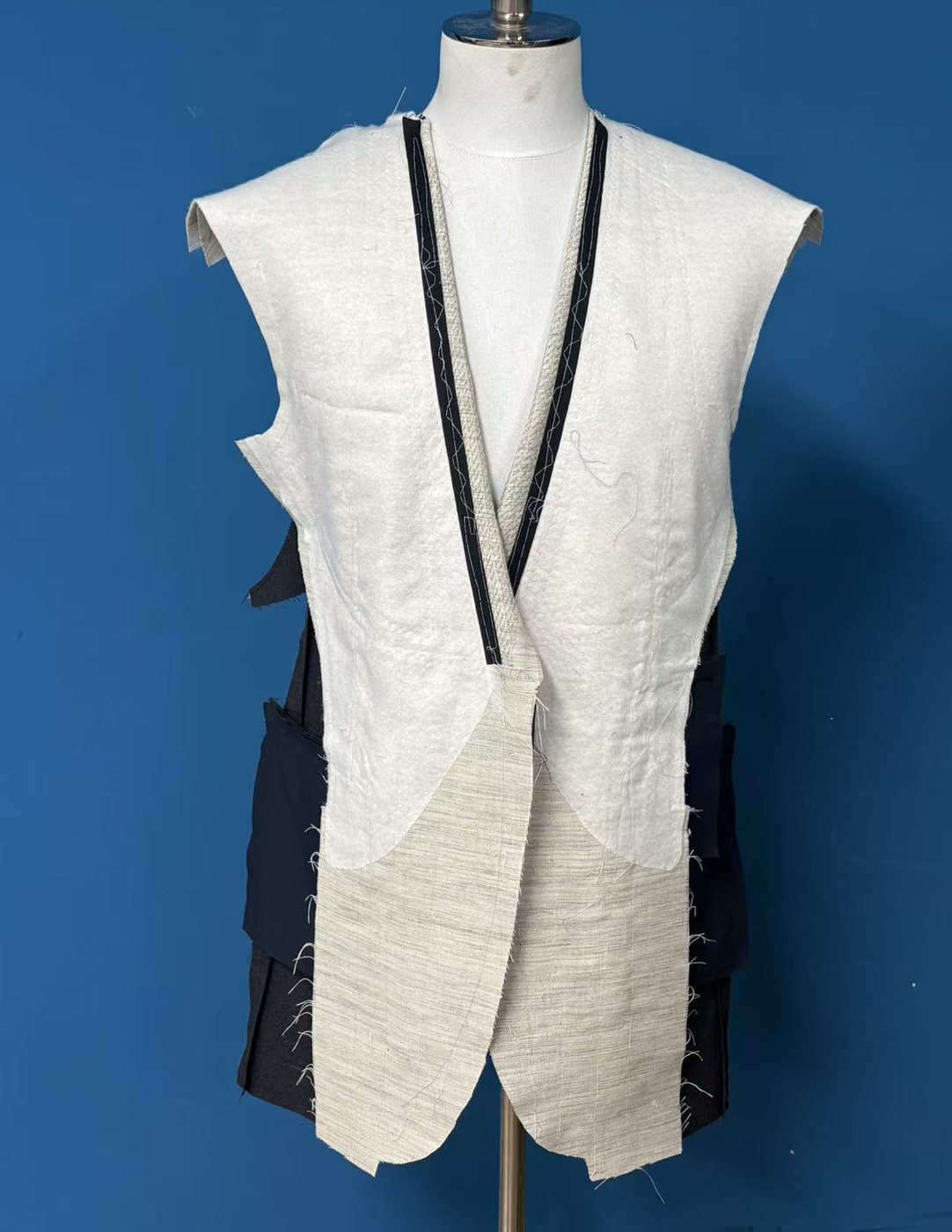
Full canvas, the same canvas carried past that curve to the hem. A longer canvas rather than a better one.
Now the second axis. All three of the panels below are full canvas. They differ only in who did the padding.
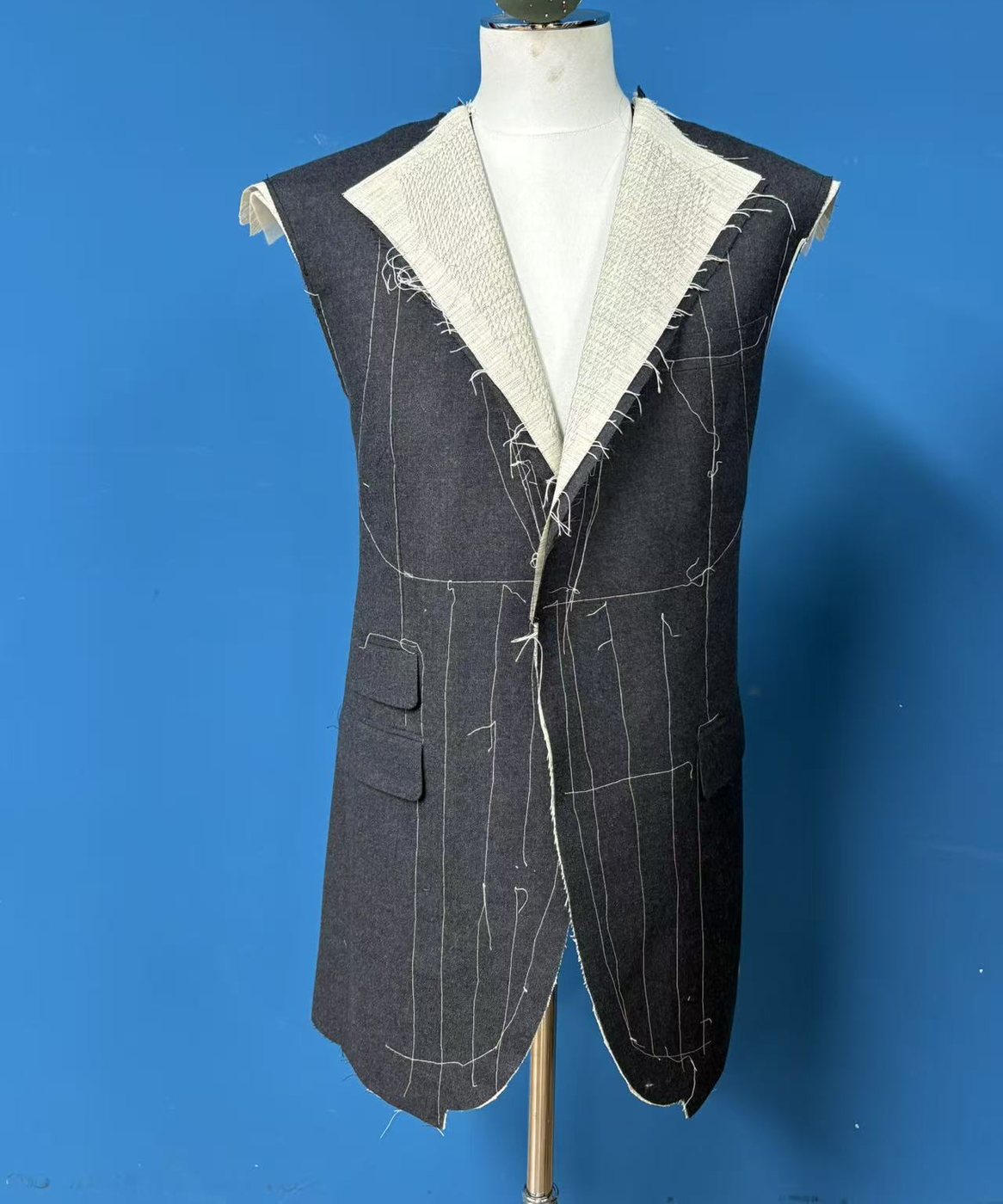
Machine padded: even, repeating, the same tension on every row.
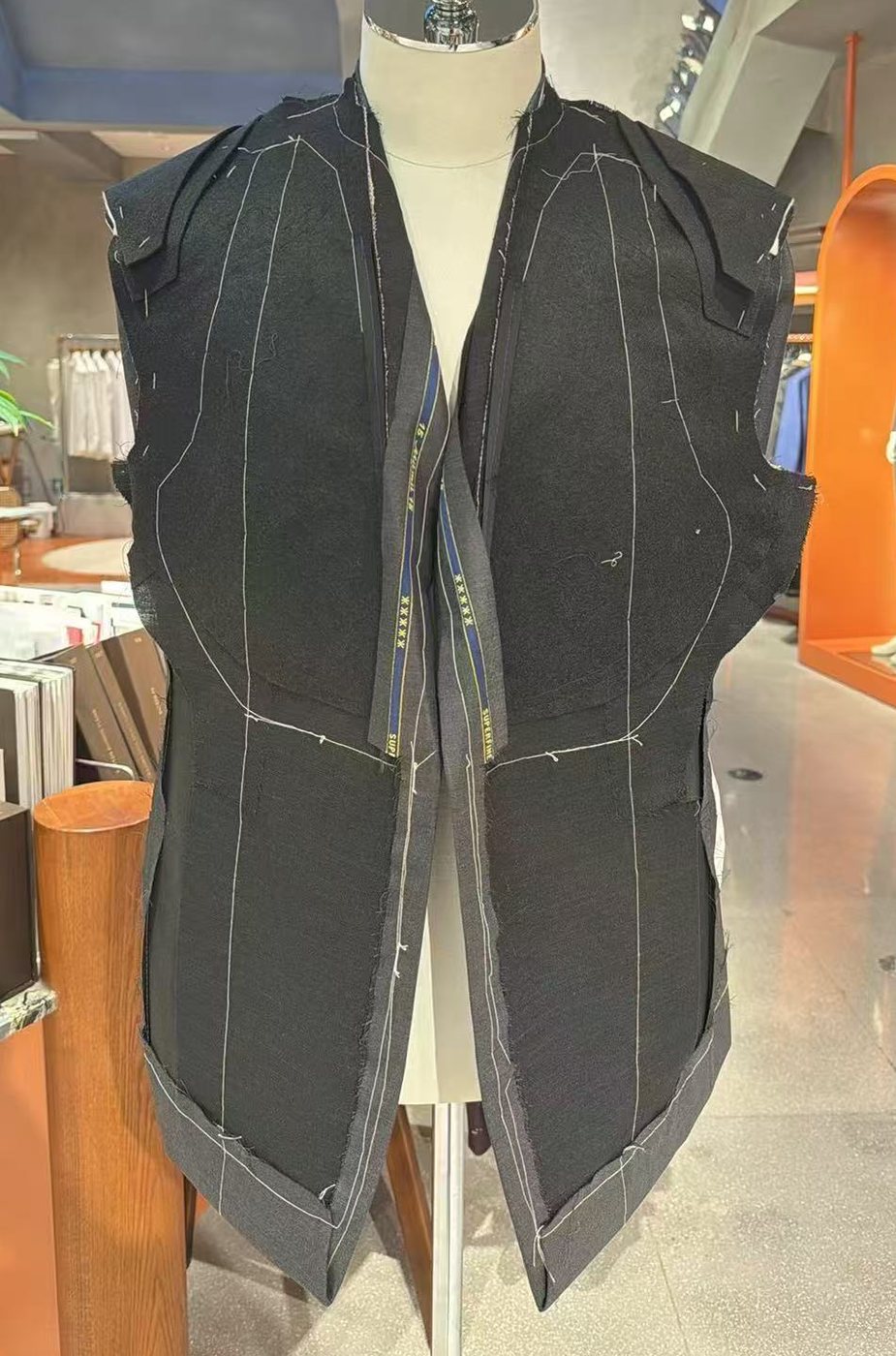
Part hand: machine through the body, hand where the shape has to be built.
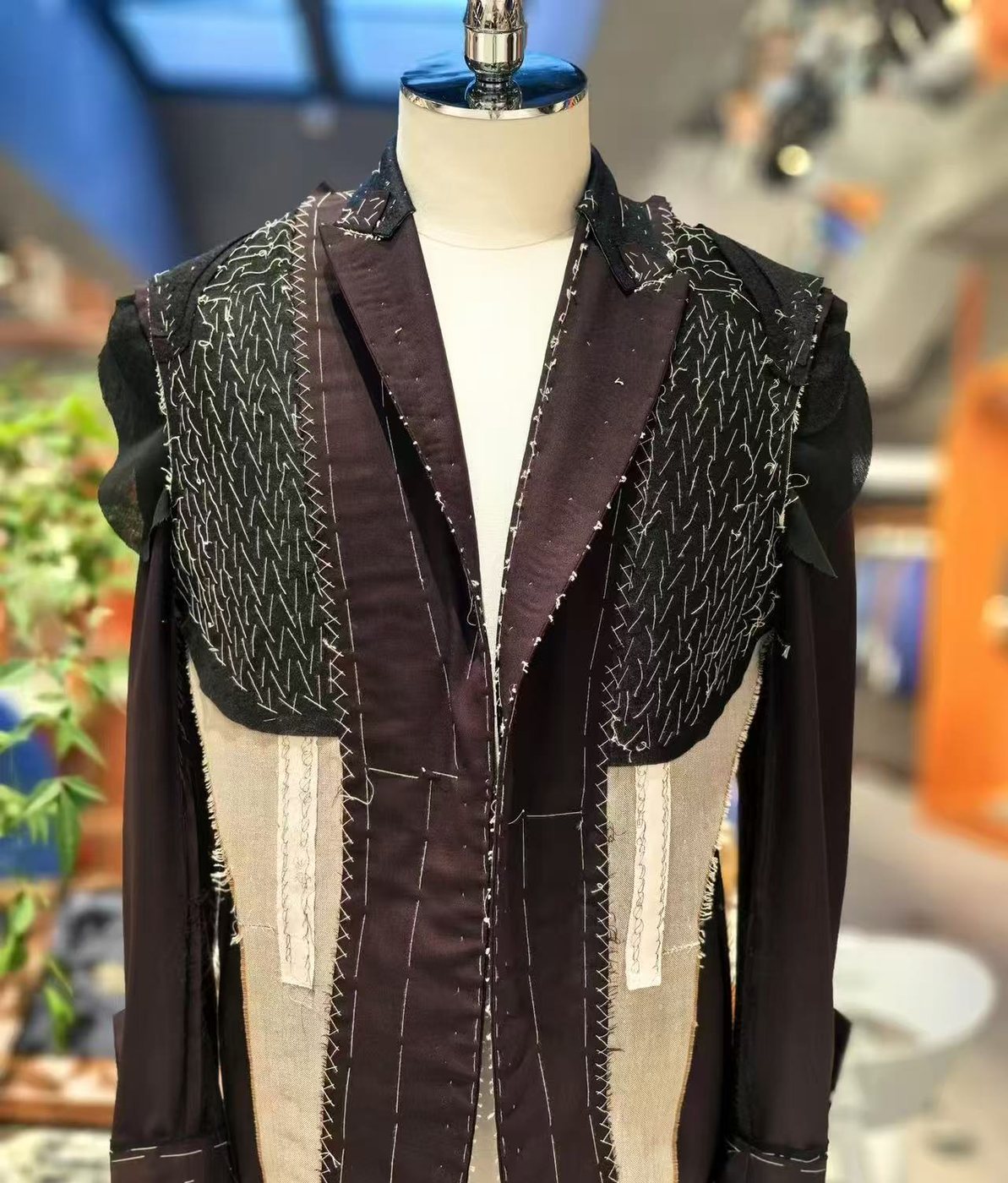
Hand padded: the rows wander because the pull is being varied on purpose.
A machine holds the same tension on every pass, so the padding stitches come out as a small, regular herringbone, evenly spaced the length of the panel, and a hand does not. The spacing drifts and the angle shifts row to row, because the tailor is deliberately varying how hard the thread pulls to shape the canvas around a chest rather than just anchoring it flat. Regular, repeating stitching is a machine. Stitching that wanders in a way that still looks deliberate is a hand. I have watched buyers run a thumb across a chest panel and still not be sure, right up until someone points at the direction the stitches drift. It takes about ten seconds once you know where to look, and it is the only reliable way to answer axis two, because nothing printed on a hang tag or a quote sheet will do it for you. We would rather a buyer learn to see it themselves than take our word for it, since an argument about who you can trust falls apart the moment the only evidence on offer is us asking you to trust us.
What the price buys
A full-make two-piece in our cloth, fused, starts from USD 155 ex works Shanghai. Full canvas is quoted by specification, and costs more. That gap is real, and most of it is labour, but do not make the mistake the trade show shop owner made: a full canvas price buys you the full canvas tier. It does not specify which of the three padding methods put it there. We build all three, and a quote that just says "full canvas" has only told you half of what you are paying for.
If you want the other half answered, it has to be its own line, a separate question at the supplier meeting rather than a detail you assume. It is the same instinct as asking a mill for a bunch number instead of settling for "Italian wool", something we push buyers to do in our guide on how to ask for the bunch, not the country. Applied to construction instead of cloth, the question is just as simple: which padding method, not just which canvas.
Handwork shows up on the calendar too, not only the invoice. Our production runs 14 days start to finish, and every hour of hand padding sits inside that window rather than stretching it, which means the schedule gets tighter, not longer, if something needs correcting. A machine-padded panel that comes out wrong gets re-run in minutes. A hand-padded panel that comes out wrong is a tailor doing the row again, by hand, inside a timeline that already assumed regular fused or half canvas work. Ask which tier you are ordering before you need a fast turnaround, not after you are already waiting on one.
Where this breaks your price list
Most price lists still run three rows: fused, half canvas, full canvas, rising in price. A customer reads that as a craftsmanship ladder, more money buying more hand skill. Sometimes it is, and often it is just buying a longer piece of canvas, machine-padded the whole way, fairly priced for the canvas but not for the story sitting next to it on the label.
That is fine right up until somebody checks. A competitor undercuts your "full canvas" price because theirs is also machine padded and simply costs less to make. A customer who has read a forum post asks to see the stitching. A buyer who already runs the kind of model we cover in the one number worth building your margin model on starts asking suppliers to itemise labour instead of accepting a single construction word. At that point you need an answer, and "full canvas" is not one, because you do not know which padding method is inside your own stock.
The fix costs nothing and takes one conversation: split canvas and work into two lines on your price list, and ask your supplier to do the same on the quote. You do not have to sell every combination, only to know which ones you are selling.
That shop owner at the trade show was not doing anything wrong once you see it from where he was standing. He had a jacket that felt substantial under a customer's fingers, a lapel with real life in it, and one true fact to reach for: it was full canvas. He filled in the rest with whatever sounded most convincing in the moment, because nobody had ever handed him the second question. Better sales training would not have fixed that. What fixes it is closing the gap before a customer, or a competitor, finds it for you.
Combinations I would not stock
Not every combination belongs in a small shop, and I would rather talk a retailer out of two of them than sell a range that never moves.
Full hand padding, top to bottom, is the one I would not put on the floor unless you already have the clientele for it. It is slow to build, it is the hardest of the three to explain to a first-time buyer in under a minute, and if you cannot keep a few pieces moving every month, the budget sits in stock that does not turn. Most of the independent shops we work with get more from deepening their half canvas range than from a handful of full hand pieces that rarely leave the rail.
Full canvas on a lightweight summer cloth is the other one. We have written the fabric side of this in full in full canvas at scale, but the short of it holds here too: canvas earns its keep on cloth heavy enough to need shaping, and most of what we cut, 597 of the 822 fabrics we have weight-tagged, sits in a 240 to 300 gram band, out of a wider range that runs anywhere from 98 to 440 grams. Do not sell full canvas, however it is padded, under a jacket lighter than that band. You are charging for structure the cloth will not hold on to, and it is money your customer feels wasted the first warm afternoon they wear it.
There is a third one, smaller but just as real. If you cannot currently say which padding method sits behind your own "full canvas" line, do not add a fourth or fifth tier to the price list yet. Answer the question you are already not answering before you give yourself another one to dodge.
One of each on the rail
There is a simple sales move that solves more of this than any spec sheet. Our minimum order is a single piece per style, so a shop building this out does not have to commit to a production run just to find out which tier sells. Order one fused, one half canvas and one full canvas, in whichever padding method you have settled on, and let customers put their hands on all three before they buy anything. It is the only explanation that does not depend on you getting the pitch exactly right, because the jacket makes the argument for you.
If you are setting this up for the first time, whether you are adding a tier to an existing shop or working through what to ask before you start a clothing brand, canvas and padding method belong on that list as two separate lines, not one folded into the other.
Where we build this
We build all three canvas types in our own workshop in Shanghai, with our own tailors, and full canvas in all three padding methods, which is why we could photograph those three panels side by side in the first place. Ask us which combinations we run before you assume the full grid exists anywhere, here or elsewhere. Our cloth is sourced out of Europe and Australia rather than one region alone, which is part of why an Australian merino jacket can sit on the same rail as a European mill weight without either one being the odd choice out. The same two questions apply whichever fabric a client points to, because canvas type and padding method sit underneath the fabric choice, not inside it.
Whether you are running this under your own label, where our breakdown of private label versus white label versus OEM covers how that choice changes what you are allowed to say about construction, or you are a tailor shop adding made-to-measure production behind an existing fitting room, the two axes are the same conversation with your supplier either way.
If you are comparing manufacturers, our guide to choosing a made-to-measure partner has the longer list of questions worth asking, canvas and padding among them. Or skip the reading and tell us what is currently on your price list, and we will go through where the two axes sit inside it.
Frequently asked questions
What is the difference between full canvas and hand-padded canvas?
Full canvas describes what is inside the jacket: a canvas layer floated the whole length of the front, stitched rather than glued. Hand padded describes how that canvas was attached to the wool, by needle and thread instead of a machine. A jacket can be full canvas and entirely machine padded at the same time. They are two separate specifications, and a supplier who only quotes 'full canvas' has answered one of them.
How can I tell whether a suit is machine padded or hand padded?
Look at the padding stitches inside the chest panel, not the outside of the jacket. Machine stitching is small, even and regularly spaced, the same tension on every row. Hand stitching wanders slightly because the tailor deliberately varies the tension to shape the canvas. We photographed our own front panels side by side, machine, part hand and hand, on our full canvas vs half canvas vs fused guide.
Should a small boutique carry full hand-padded suits?
Usually not as a starting point. Full hand padding is slow to build and hard to explain to a first-time buyer, and if you are selling only a couple a month the stock sits as working capital that does not turn. Most independent shops get more from deepening their half canvas range than from a handful of full hand pieces that rarely leave the rail.
Does fabric weight affect whether full canvas is worth it?
Yes. Canvas earns its keep on cloth heavy enough to need shaping, generally in the 240 to 300 gram range. Put full canvas under a noticeably lighter cloth and you are charging for structure the fabric will not hold on to, which customers tend to feel the first time they wear it somewhere warm.
What should I ask a manufacturer before adding a construction tier to my price list?
Ask for canvas type and padding method as two separate answers, not one description. 'Full canvas, part hand' tells you something useful. 'Full canvas' on its own does not, and if your current supplier cannot separate the two, that is worth knowing before you build a price list around their answer.