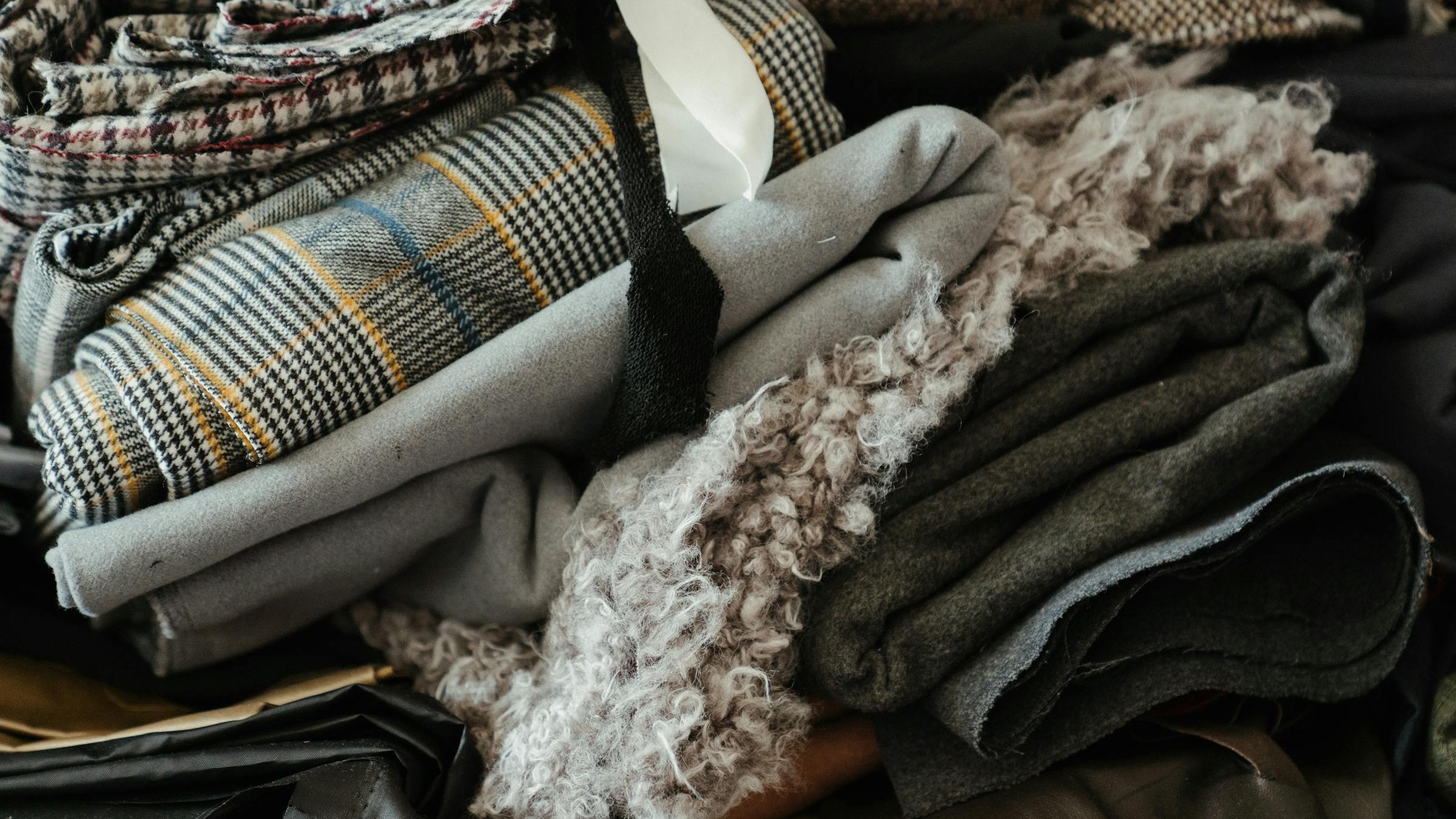
Scabal was founded in Brussels in 1938 by Otto Hertz, and the name is built from the trading interests behind it: English, Belgian, German and Luxembourg capital combined into one merchant house. It sells its own bunches season after season the way any cloth merchant does. What separates it from most of the merchants on our supplier list is that Scabal also owns a mill. In 1973 the house bought a historic weaving site in Huddersfield, Yorkshire, and that one decision explains the character of Scabal cloth better than the Brussels address ever will.
A merchant with its own loom
Most merchant houses buy finished cloth from independent mills and sell it under their own name. Scabal does that too, but it also weaves a real share of what it sells at its own site in Huddersfield, a mill the group has run since 1973. That makes it a hybrid: styled and sold from Brussels, woven in England. I have not found a public figure for how much of the current range comes off Scabal's own looms against how much is bought in, and I am not going to guess at one. What is documented is ownership of the mill itself, and that single fact should change how a buyer reads the cloth.
Huddersfield is also home to Huddersfield Fine Worsteds, a name built from several merged Yorkshire houses rather than one Brussels owner. Scabal is often mentioned alongside Europe's other big merchant names: Dormeuil and Holland & Sherry. Unlike those two houses, Scabal also owns the mill that weaves a share of what it sells.
Why the handle reads English
Handle an Italian worsted next to an English one and most tailors will tell you the same thing before they tell you anything else: English cloth tends to run drier and heavier, Italian cloth tends to run softer and more fluid. That split exists because of where and how the wool is finished, not because of a story someone tells in a showroom. Scabal's cloth is woven in Huddersfield, so it sits on the English side of that line even though the swatch book says Brussels. The mill is known for unusually soft, low-mineral water for scouring wool, which keeps the finish from turning coarse the way some heavier English worsteds can. I would not sell a client on Scabal expecting the fluid drape of an Italian mill. If that is the brief, I send them to a Biella house instead. If the brief is structure that holds a crease through a long day, Scabal earns its place, and our suit fabric guide covers how we weigh that trade-off against other mills.
Where the fineness stops making sense
Scabal pushed into very fine counts early. It was among the first houses to offer Super 150s, then 180s, then 200s, starting in 1990. Wool that fine photographs beautifully and drapes with real quality, but it is also less forgiving. A Super 200s jacket creases faster and shows wear at the cuff and seat sooner than a Super 120s jacket cut the same way. I never spec the top of that range for a client who wears the same three suits on a five-day rotation. I recommend it to the client who owns six jackets and wears each one once a week, because that is the only pattern of wear the cloth was built for.
The precious-fibre bunches are not a first order
Since 2000 Scabal has also produced bunches that weave gold, platinum or lapis lazuli fragments into the cloth. They are genuinely rare and they photograph like nothing else in a swatch book. They are also not what I would put in front of a boutique placing its first Scabal order. A shop that has never sold a Scabal jacket has no data on whether its own clients will pay for metal thread in the weave, and the minimum spend to find out is not small. Save the precious-fibre bunches for the client who has already bought two or three suits from you and asks what else you have. Leading with them is how a good bunch becomes a shelf item nobody touches.
What we can actually get you
We do not hold Scabal cloth in our Shanghai atelier. Nobody on our rack does except Zegna and Vitale Barberis Canonico. If a client wants Scabal, we place the order once you confirm the bunch and length, and Huddersfield's own dispatch time is added on top of our usual 14 to 20 working day build, from the same one-piece minimum as everything else we cut. We buy from Scabal as a customer, the same way any tailor or shop does. We are not a dealer and we do not represent the house, so check the bunch number and composition against Scabal's own site before a client's deposit goes down against it. For how a construction should pair with a cloth like this, see the canvas construction guide, and for the general test we apply before trusting any mill claim, our note on verifying mill cloth is real walks through it.