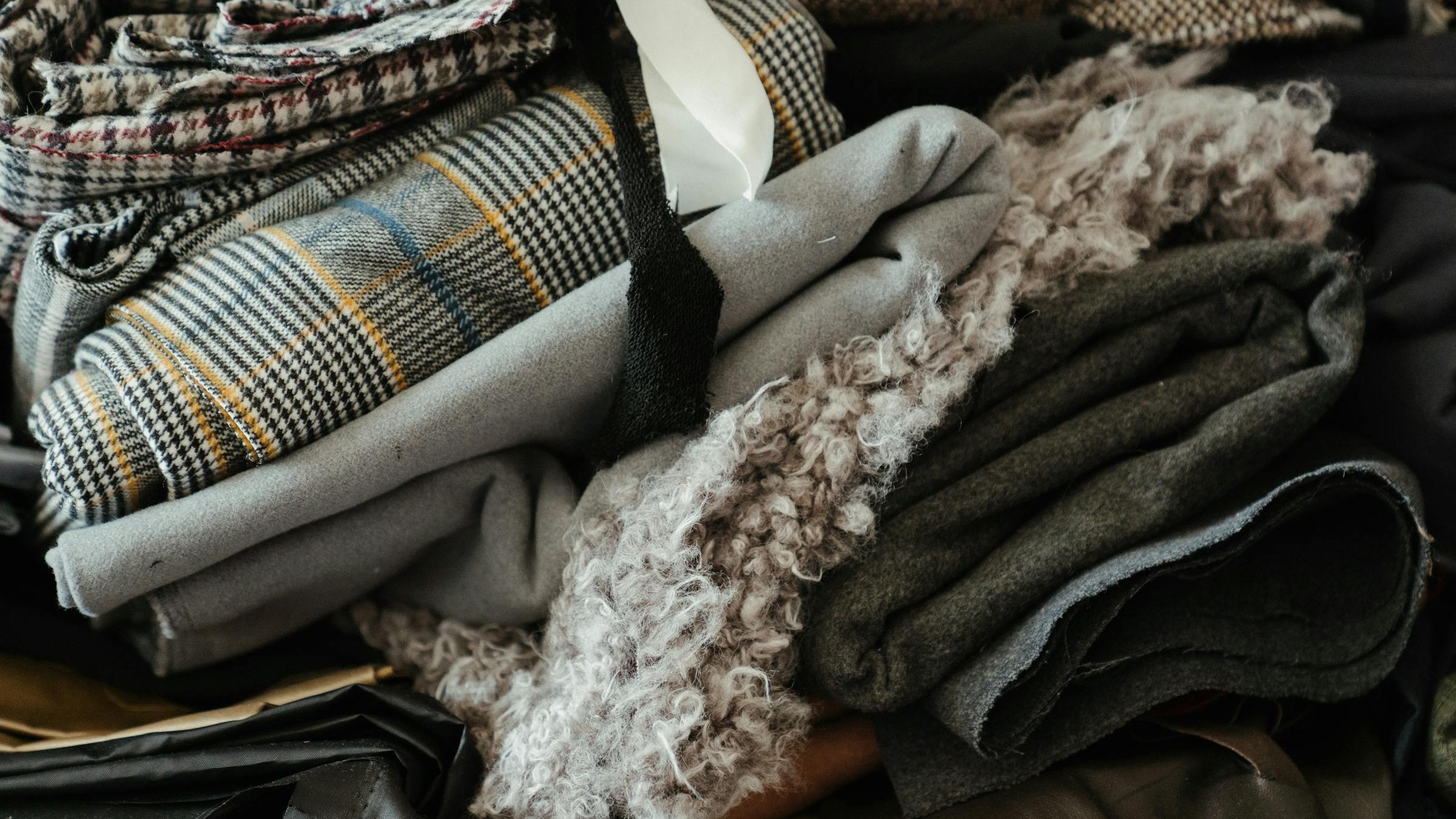
Solbiati has made one fiber, and one fiber only, since the 1960s. That is not a marketing line. Michele Solbiati opened the mill in 1874 in Busto Arsizio, weaving cotton and velvet like most of his neighbours. It was a later family owner, Vittorio Solbiati, who made the decision that still defines the company: when cheap synthetic fiber started eating into the Italian textile trade in the 1960s, he refused to chase it, committed the mill to linen, and dropped the rest. That is the kind of decision that tells you what a company actually believes, not what it prints on a hangtag.
I open with that history because it explains something a swatch card cannot: why this mill is worth a special-order wait when cheaper linen exists. A company that has spent sixty-odd years on one fiber has usually already solved problems a generalist mill has not gotten around to.
Linen creases. I am not going to write around that.
Linen comes from flax, a plant fiber with almost none of wool's natural elastic recovery. Wool fiber has a crimp that springs back after it bends. Flax does not. Wear linen through an afternoon at a desk and the fiber holds every crease it takes on: across the back of the trouser leg, into the elbow of the jacket, along the underarm seam. That is physics, not a flaw in the weaving, and no finishing trick removes it entirely.
For most of linen's history in Europe, that stiffness was the whole problem. Raw, unfinished linen was by most accounts too harsh a cloth for close tailoring, and it stayed a household fiber, sheets and table linen, rather than a menswear one. What changed its standing was finishing work, not the fiber itself. Solbiati was among the mills that pushed this hardest: new washing and softening treatments that made linen wearable against skin, and a crepe treatment that gave the surface texture instead of a flat, stiff weave.
The mill's main linen collection, Art du Lin, is a useful example of what that finishing actually trades away. The yarn is a twisted three-ply construction, which gives the cloth a springy, slightly raw hand on the reverse and a soft face on the right side. The matte wash finish means it does not form hard, sharp wrinkles the way plain linen does. The trade is that it also will not hold a crisp trouser crease. You get one or the other. I have not found a linen finish that gives you both, and I would be suspicious of any mill that claimed one did.
The conversation you owe the client before you cut
This is the part that actually protects the sale. If your client has never owned linen tailoring, do not let the first time he learns it creases be the first time he wears it out of the house. Tell him at the fitting, not after the complaint call.
I tell buyers three things before a linen order goes to cutting. First, it will crease within an hour of sitting down, and that crease will not fall out on its own before evening. Second, pressing brings it back, but ironing is now part of owning the garment, the same way polishing shoes is part of owning good leather ones. Third, this is a warm-weather cloth: linen suiting generally runs in a wide weight band, and anything under roughly 200 grams moves like a soft shirt rather than holding a jacket's shoulder line through a full day of sitting and standing. I do not cut a linen jacket under that weight for a client who needs it to still look like tailoring at six in the evening.
If you cannot have that conversation in your own words, with a straight face, do not put the client in linen. Sell him something that behaves the way he already expects a suit to behave, and save this cloth for a buyer who has time to hear you out first.
Who this cloth is wrong for
I would not put a client in linen tailoring if his suit's job is to look pressed and controlled across a boardroom table at four in the afternoon. It will not do that, and no amount of cutting skill changes what the fiber does once someone sits down in it. If a client has only ever worn fused, synthetic-blend suiting and associates a good suit with looking flat and machine-pressed, do not open with linen. He will read the first crease as a fault, and that assumption costs you the relationship, not just the return.
Linen earns its place with a different client: someone who already owns a jacket or two with texture and movement in it, going somewhere the temperature and the dress code both allow it. Sell it there and it is one of the more satisfying fabrics in the range. Sell it to the wrong client and it is a returned suit.
Ariston, the Naples merchant that also sells linen and silk-linen blends, makes the identical trade: a softer crease bought at the cost of some crispness. Brisbane Moss sits at the opposite end of the same shelf: heavier cottons built for the same off-duty register rather than the boardroom.
Who actually stands behind the cloth
Since 2010, Solbiati has sat inside the Loro Piana Group, itself part of LVMH. That is worth knowing because it changes what checking the mill actually means: the company behind your swatch card is a large, publicly documented group, not a family workshop you have to take on faith. If a partner boutique wants to verify what stands behind a bunch before committing a client's deposit, our guide to verifying that mill cloth is real walks through how we approach that check on every fabric we bring in, Solbiati included.
Ordering it under your own label
We do not hold Solbiati in the Shanghai warehouse. This is special-order fabric: we place the order against your confirmed job, and the mill's own supply time runs before our usual 14 to 20 working day cutting window even starts. If you need a linen suit landed inside a month, this is not the fabric for that order.
We buy Solbiati cloth as a customer of the mill, the same way any other maker does. We are not an authorised dealer, a licensee, or a representative of Solbiati, and we would not describe ourselves that way to a client. Before you commit a customer's deposit to a linen order, it is worth reading what to check on your first sample: a bolt's actual hand and weight matter more with linen than with almost anything else we cut. For where linen sits against the rest of the range, see the suit fabric guide.