Marling & Evans has been weaving in the Huddersfield textile district since 1782, which its own trade coverage rounds up to more than two hundred years, and that is one of the few round numbers in this trade that actually holds up. What changed more recently is ownership. In February 2016, the Italian wool group Angelico bought the company. The weaving stayed in Yorkshire. The name on the shareholder register did not. The first collection under the new ownership, for spring and summer 2017, was unveiled at Milano Unica, the Italian trade fair where mills and merchants show their books to the trade each season.
What still gets made in Huddersfield
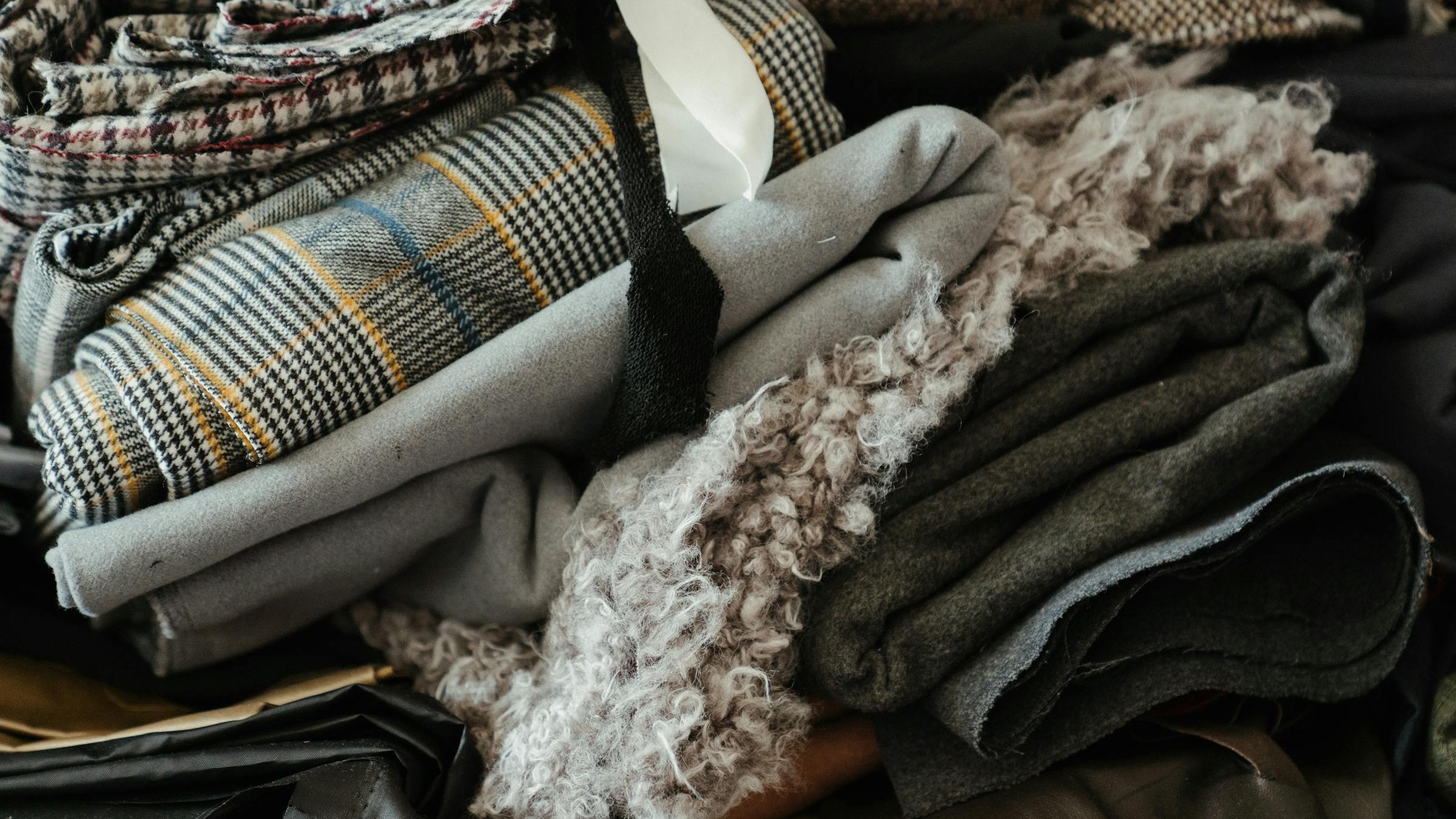
According to the acquisition announcement itself, Marling & Evans still weaves using what it calls singular, non-serial procedures, meaning small runs rather than mass production, and the spinning and finishing steps are outsourced to specialist craftsmen working within a few miles of the Huddersfield district. The announcement calls this zero-mile production. It also credits the district's soft water in finishing for the softness of the fibre. Beyond the undyed range and the covert twill, the wider offer includes flannels and melange cloth for jackets, carded coatings in Donegal and herringbone weaves, and cloth finished water-repellent for hunting jackets, still woven on traditional looms rather than run through faster modern machinery.
The mill's best-known signature is an ultrasoft covert twill in a Shetland and British lambswool blend, the same cloth reportedly used for years in the upholstery of Rolls-Royce cars. I have not sat in one of those cars to check it myself, so I would treat that particular detail as trade folklore worth repeating rather than a claim I can verify first-hand. What I can verify is that the twill, the district, and the small-batch weaving are still the mill's own description of itself, one change of ownership and two centuries later.
Two other English names on our list share that heavier, more rustic character: Brisbane Moss in West Yorkshire's Calder Valley, and Dugdale Bros, whose flagship Fearnought runs to 500 grams a metre, both a long way from the drape Biella wool is generally sold on.
The undyed story, and what it actually promises
Marling & Evans is best known now for a range of undyed, naturally coloured British wools, blended from three fleece colours, Shetland, Jacob, Welsh Black, rather than dyed to a formula. I would not call this range organic. I have not found a certification behind it, only a description of no dyes and no chemical additives in preparation, finished with natural soap. Those are real and checkable claims. Organic is a different, stricter word, and I do not use it for a product I cannot show is certified.
Undyed wool carries a real consequence a dyed navy does not: it cannot be rematched to a formula. A dye lot can be rebuilt from a recipe. A fleece blend cannot, because next season's Jacob and Welsh Black fleece will not carry exactly the same natural colour as this season's did. If a shop promises a client an identical repeat order in this range, that is a promise the mill itself cannot fully back. I would tell a client that up front rather than let them find out at the second fitting.
Who this cloth is wrong for
This is not a cloth for a client who lives on aeroplanes. It is a slow, small-batch weave built for colour and character, not for resisting a transatlantic flight or a week of daily wear in a hot office. Sell it to the client who wants a story in the weave and is buying a jacket, not a travelling uniform.
For a client who needs one suit to survive five days a week on a commuter train, I would point them toward a high-twist worsted instead and save this range for their second or third order, once they own something to rotate with it.
Ordering it under your own label
We do not hold Marling & Evans cloth in Shanghai. We order the specific bunch in against a confirmed job, then cut and make it under your own label from a one-piece minimum, in roughly 14 to 20 working days once the cloth is in our hands in Shanghai, with whatever time it takes to reach us from the mill added on top. We buy from Marling & Evans as a customer, not as a dealer, a licensee, or a representative of the mill or of Angelico.
There is no link to Marling & Evans' own site on this page. We could not get marlingandevansltd.co.uk to load from our own network, and our rule is simple: we only link a site we have opened ourselves. A search engine indexing a page is not the same as us having read it, and we are not going to send a buyer to a link we have not checked.
Related: suit fabric guide · how to verify mill cloth is real · suppliers