Journal Entry
Spring 2027 Weddings Are Booked in October: The Groom's Timeline From the Factory Side
A spring wedding date lands on a shop's calendar as a countdown, and the countdown starts sooner than most first-time grooms expect. What the factory side of that timeline looks like, and where a shop's own schedule has to sit ahead of ours.
The email came in on a Tuesday afternoon with a date in the subject line and very little else. Groom's suit, April 18th, can you still do it. It was the second week of September when it landed, which put the wedding a little over seven months out, and my first thought was not about the suit at all. It was about how many other emails like it were sitting in inboxes at shops all over the country that same week, because a spring date fixed in the last few months means a couple has just finished the part of planning that comes before suits: the venue, the caterer, the photographer. The groom's outfit is usually one of the last big decisions locked in, and one of the first ones due.
We do not sell to the groom directly. We cut for the shops that measure him. But the timeline a shop promises a couple only works if it accounts for what happens on our side of it, and that is the part most first-time bookings get wrong, in both directions. Some shops quote a date so far out it loses the sale to a competitor with a shorter answer. Others quote a date so tight that a single delayed fitting or a cloth that has to be reordered turns a wedding suit into a phone call nobody wants to make in March.
What the seven months are actually for
A groom rarely needs seven months of production. He needs seven months of a process that includes production as one step among several, and the steps outside our workshop take up more of that calendar than the ones inside it.
Wedding planning guides tend to land on the same range for a made-to-measure order: a first consultation four to five months before the date, with the full run from that appointment to a final fitting taking three to four months, by one tailoring timeline's account. Bigger wedding parties need more room. A group of four to six groomsmen is commonly advised to book ten to twelve weeks minimum, because the constraint is rarely how fast cloth can be cut. It is getting every man into a shop for a proper measurement session before anyone's calendar fills with the rest of the wedding.
None of that time sits inside our production window. What it covers, roughly:
- Consultation and cloth selection. A shop and a couple agree on the look, the cloth, the construction, and who in the wedding party is actually being fitted for a garment versus renting or wearing his own.
- Measurement. Every man measured properly, not estimated from a size he wore to a different event two years ago.
- The order going in. The point where the shop sends us a confirmed spec sheet and cloth reference, which is where our clock starts.
- Production. Our own 14 to 20 working days, from confirmed order to shipment, as spelled out here.
- Fitting and alteration. The suit arrives, the couple sees it, and there is time left to fix anything before the date rather than the week of it.
Seven months looks generous until it is broken into those five pieces, and the two a shop controls least, getting the wedding party measured and leaving room for a fitting after shipment, are the ones most likely to eat the buffer everyone assumed was there.
Where a shop's timeline actually breaks
I want to be specific about where this goes wrong, because it is rarely the factory step.
The first failure point is the measurement session that does not actually happen on schedule. A shop books a groom for a Tuesday, he reschedules for the following week because of work, and the four groomsmen he was supposed to bring in with him scatter across three more weeks because coordinating five adult men's calendars around one wedding is genuinely difficult. Every week of that delay comes directly out of the buffer built in at the start, before a single order has been placed with us.
The second is a cloth decision made without checking availability first. Our own signature range includes Zegna's Trofeo at 240 grams and Traveller at 250 grams, held cut and ready in Shanghai across 162 styles between them, alongside Vitale Barberis Canonico's Four Seasons book at 280 grams in 40 styles, also held on the rack. Anything in that group ships against our normal 14 to 20 working day window with nothing extra to wait on. A cloth outside it, from any of the other mills we work with, has to be ordered in before we can cut a stitch, and that step sits entirely outside our production clock and entirely outside a shop's control once the order is placed. A couple who falls in love with a specific bunch a shop does not hold is not a problem, but it is a decision that needs to happen in month one of the seven, not month five.
The third is treating a three-piece order as though the waistcoat adds time. It does not. Production runs the same 14 to 20 working days whether the order is a jacket and trouser or a full three-piece, because we cut the waistcoat alongside the other two pieces rather than as a separate job queued behind them. If a shop is quoting a couple a longer wait for the third piece, that time is coming from somewhere else in the process, not from us, and it is worth finding out where before promising it.
What we see on our end of a wedding order
From the cutting table, a wedding order looks almost exactly like any other order, with one difference: the date attached to it is fixed in a way most orders are not. A boutique reordering stock can absorb a week of slippage without anyone outside the shop noticing. A wedding order cannot, which is the actual argument for building the buffer described above rather than cutting it close and hoping.
What we do not see, and cannot promise around, is anything that happens before the spec sheet reaches us. We can tell a shop what 14 to 20 working days buys once an order is confirmed. We cannot shorten the weeks a couple spends deciding on cloth, or the weeks it takes to get five groomsmen through a fitting room, because those weeks happen entirely on the shop's side of the relationship.
Our size system runs to 47 measurement fields, 31 of them required, and a wedding order benefits from the same discipline any order does: take the measurements once, properly, rather than estimating and hoping alteration catches the gap later. A groom is usually the most cooperative client a shop will measure all year, motivated and paying attention. His groomsmen, coordinated separately and often less invested in the process, are where a shop's own measurement discipline actually gets tested.
A working spec-sheet checklist for a wedding order
Before an order goes to us, a shop's own checklist should cover:
- The date, worked backward. Fitting and alteration time, plus our 14 to 20 working days, plus the days it will realistically take to get every man measured, subtracted from the wedding date, not added forward from today.
- Cloth confirmed against what is held. Zegna Trofeo, Zegna Traveller and VBC Four Seasons ship on our standard window. Anything else gets checked for mill lead time before a couple commits to it.
- Every man in the party accounted for. Who is being measured for a made-to-measure garment, who is wearing his own, and who still needs a fitting slot booked.
- A single confirmed spec sheet per garment, not a verbal description relayed after the fact, with the waistcoat's fields, stomach, front chest and back chest, taken with the same care as the jacket, as we cover in the waistcoat piece.
- A buffer left after shipment, not against it, so a fitting and any alteration happen with weeks to spare rather than days.
None of this changes our end of the order. It changes whether the seven months a couple thought they had actually behaves like seven months once every step outside our workshop is accounted for.
What a shop can promise with confidence
The honest answer to the groom's email is not a single number. It is the range above, worked backward from his date rather than forward from today's. A shop that can walk a couple through that breakdown, consultation, measurement, order, our 14 to 20 working days, fitting, sounds more credible than one that just says yes, and it is also less likely to be the shop calling a couple in March to explain why the suit is still in Shanghai.
Part of that credibility is knowing when the calls even start arriving. Engagement season, the stretch from late November through early February when a run of holiday proposals turns into a wave of vendor inquiries, is well documented in the wedding trade press, and it sits right before the window a spring wedding's suit order needs to open. The email in my inbox that Tuesday in September was early against that curve. Most will not be, which is exactly why the shops that already have their own timeline worked out by October are the ones who do not lose a booking to a competitor with a faster-sounding answer.
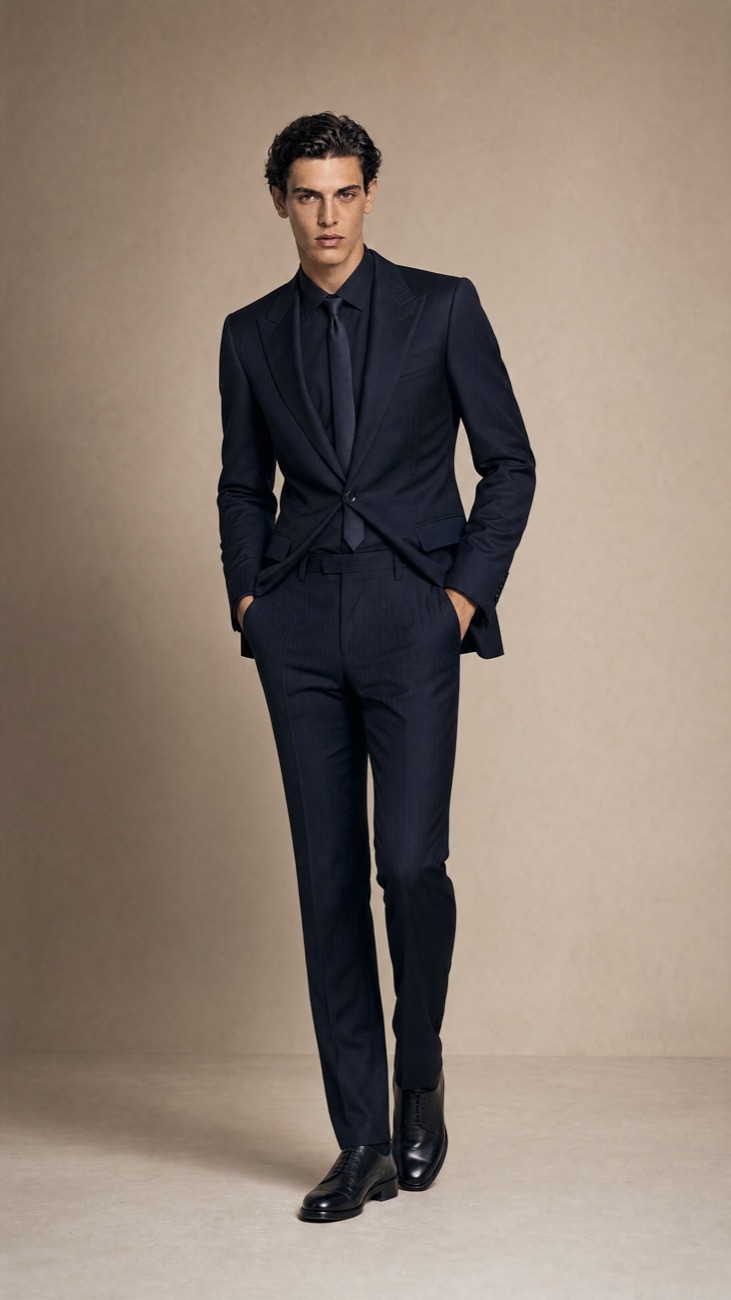
We build a full wedding line for shops around exactly this: textured cloth, three-piece orders and the seasonal detail a groom asks for, produced to measure from a one-piece minimum with nothing sitting in a warehouse waiting to be the wrong colour. If a spring 2027 date is already on your calendar, the order does not need to be placed today. But the measurement sessions and the cloth decision behind it do, and we're glad to talk through the schedule against your specific date before you promise a couple something the calendar cannot hold.
Frequently asked questions
How long does it take to make a made-to-measure wedding suit?
Our own production runs 14 to 20 working days from a confirmed order to shipment. That is not the whole timeline a groom experiences. Add the days a shop spends on measurement and cloth selection before the order goes in, and the days after shipment for a fitting and any alteration, and the real window a couple should plan around runs closer to two to three months even when nothing goes wrong.
How far in advance should a groom order a wedding suit?
For a made-to-measure order, several months ahead rather than a few weeks. A single groom's suit can move faster than that if a shop already has his measurements and a cloth in hand, but the safe answer for a first-time booking is to start as soon as the date and the venue are fixed, not after the invitations go out.
What about outfitting the whole wedding party, not just the groom?
That is a different order, not a bigger version of the same one. Every man in the party needs his own measurement session, and a shop cannot promise all of them will arrive at once unless the whole group books its fitting slots close together. Build in more runway for a party of four to six than for one groom, because the bottleneck is rarely production, it is getting every man into the shop.
Can a rush order still make a wedding date?
Sometimes, and it is worth asking rather than assuming. A single piece is a normal order for us regardless of timing, so a late booking is not turned away for being small. What a shop cannot buy back is the days lost to a bad measurement or a cloth that has to be reordered, which is exactly the risk a rush compresses hardest against.
Does adding a waistcoat or a full three-piece order change the timeline?
No. Production runs the same 14 to 20 working days whether the order is a two-piece or a three-piece, because the extra piece is cut alongside the jacket and trouser rather than after them. What can change the clock is a cloth we do not hold in Shanghai and have to order in from a mill, which is a sourcing question that sits before cutting, not a production one.