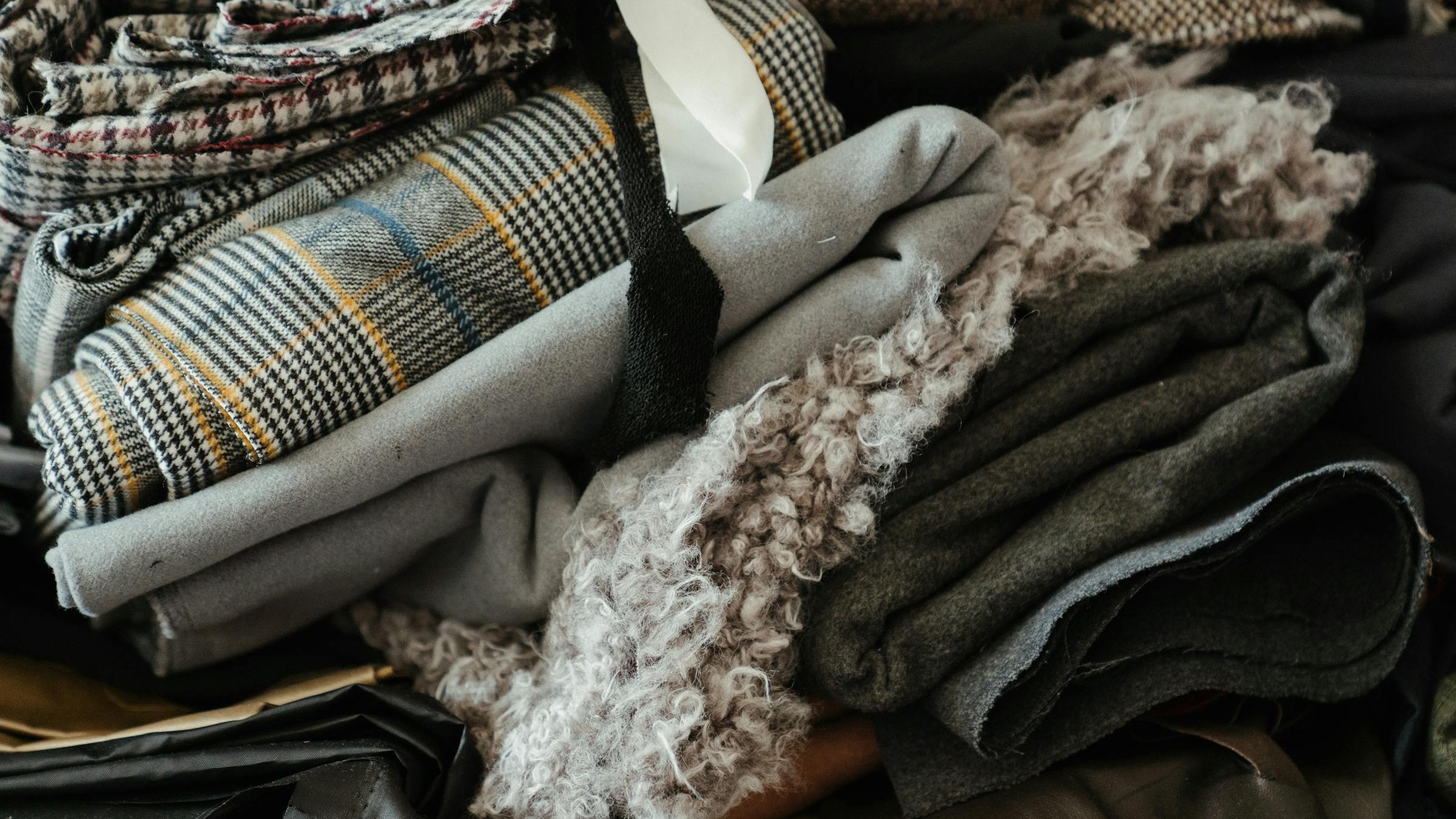
Ermenegildo Zegna opened his mill in Trivero, in the Biella foothills, on 11 May 1910. He was eighteen, the son of a watchmaker who had moved into wool, and he started with four looms. The mill he built is now one of nine Italian textile houses inside the group's own Luxury Textile Laboratory Platform, alongside a silk weaver, a superfine wool and cashmere combing plant, and a hattery still running machinery from the 1800s. None of that history is the useful part for a shop deciding what to put on a client. The useful part is that the cloth we actually cut arrives in two families that behave nothing alike, and mixing them up is the most common mistake made with this name.
Trofeo and Traveller are not interchangeable
Trofeo has carried Zegna's fine wool for more than fifty years. It is woven from Australian superfine merino, long fibre. Retailers commonly label it Super 130s to Super 150s, roughly 16 to 17 microns, though Zegna itself does not publish a super count for Trofeo, and I would rather say that plainly than repeat a retailer's number as if it came from the mill. Weight on retailers' own product pages commonly lands in the 240 to 250 gram band, light enough to move well across a shoulder and heavy enough not to embarrass itself on the back of a chair by the second hour of a lunch, but articles inside the book vary enough that I will not stretch one range across the whole collection. The long fibre is what keeps it from wrinkling as badly as other cloth that fine usually does, which is the one real engineering claim behind the name rather than a marketing line.
Traveller solves a different problem entirely. It is spun from high-twist Australian merino, the twist mechanical rather than chemical, so the fibre keeps its natural breathability and still snaps back into shape after a flight, a long meeting or an afternoon in a car. Weight runs from about 250 grams in the year-round articles up to 280 or 290 grams in the fall and winter weights, noticeably heavier and sturdier than Trofeo at its lightest. The trade for that recovery is a drier, less lustrous hand.
Do not sell Traveller as a cheaper or lighter Trofeo. It is neither, and a client who works that out later will not trust the next recommendation either. I will not put a client who has only ever touched a Super 150 dress cloth into Traveller as his first Zegna piece: he is buying back a memory of softness, and Traveller will not give it to him. Sell him Trofeo for the occasion suit. Once he owns one, Traveller earns its place as the suit built to survive his actual week. We go through Super numbers and weight bands in more depth in the suit fabric guide.
What we actually hold, and how fast it moves
We hold 162 Zegna styles in the Shanghai atelier right now: 99 from Trofeo, 63 from Traveller. That is the whole of what sits on our own rack, cut to order in about 14 to 20 working days from a one-piece minimum. It is not the whole Zegna range. Cross Ply, Vicuña and Tropical exist as books elsewhere in the Zegna world, and none of them are on our shelves. If a buyer asks me for one of those three, I say so plainly rather than quote a date I cannot promise, and I point them back to the mill's own channel instead of pretending our stock stretches further than it does. The only other mill we hold cut and ready in Shanghai is Vitale Barberis Canonico; together the two cover most of what a shop needs off our shelf without a special order.
The one-piece minimum matters more here than it does on a house range, because it lets a boutique test a single Trofeo jacket against a single Traveller jacket before committing a client's money to either.
Weight decides more than the label does
A fine cloth in the wrong weight disappoints regardless of which mill wove it. Push a client toward the light end of Trofeo for a suit he will wear to a boardroom every week, and by month three the knees and seat will show more wear than he expects from a Zegna label. Push him toward Traveller's fall weights for a summer wedding in a hot country, and he will spend the reception wishing he had chosen differently. The mill's name does not fix a weight mismatch, and no amount of brand loyalty helps a client avoid a shiny seat by month three.
If a client is choosing between Trofeo and Traveller at the same rough weight, the difference will be smaller than the swatch book suggests. If he is choosing between two weights inside the same book, the difference will be larger than he expects. Weight, not the family name, is where I start every recommendation.
Where zegna.com will not help you verify us
Search the name and the first thing that loads is zegna.com, the group's retail site, selling finished jackets and accessories at consumer prices with a shopping bag icon in the corner. That is the clothing house, not the mill, and it will not confirm anything about the cloth we cut. The textile side, the nine manufacturers that make up the group's own Luxury Textile Laboratory Platform, including Lanificio Ermenegildo Zegna itself, sits on the corporate site instead, under Our Filiera. That is the page I point a buyer to when they want to check the mill's own account of itself rather than take our word for it, which is why it is the website listed on this page rather than the shop. The same confusion trips up buyers checking Cerruti 1881 on our list: search that name and a Paris fashion house outranks the Biella mill we actually buy from.
I bring this up because it is exactly the kind of mix-up that costs a buyer ten minutes for nothing. Confirming a supplier's cloth should never require guessing which of two websites under one name is the right one to trust. Our own approach to that question is in the guide on verifying whether a supplier's mill cloth is real.
What to specify it with
Both families take canvas construction well. Traveller in particular suits a half-canvas business jacket that has to hold its shape through a working week, and it is one of the steadier recommendations for a client's first made-to-measure suit, forgiving of how real people actually treat their clothes. Trofeo rewards a lighter hand in the chest piece, since its whole appeal is drape and a soft break in the lapel, and burying that under heavy structure defeats the point of choosing it. For trousers in either cloth, the high-twist logic behind Traveller is the safer default: it keeps a pressed crease and survives a day of sitting more reliably than Trofeo does.
We cover canvas choice in more depth, with what each construction looks like from the inside, on the full canvas vs half canvas vs fused guide.
Ordering it under your own label
We cut both books in our own Shanghai atelier and make to measure under your label, from a one-piece minimum, in about 14 to 20 working days, with the Zegna reference travelling with the garment so a client can look it up himself. A reference on a garment is not worth much if nobody can trace it back to a real mill page, which is the whole reason it travels with the piece. I buy this cloth as a customer of the mill, the same way any tailoring house does. We are not an authorised dealer, a licensee or a representative of Zegna, and nothing on this page should read as if we were.
If your shop wants to see both weights side by side before committing a client's order, get in touch and I will send swatches from what we actually hold, not a catalogue of what the mill happens to publish. For the wider range of mills we work with, the supplier directory lists what each one is and is not.