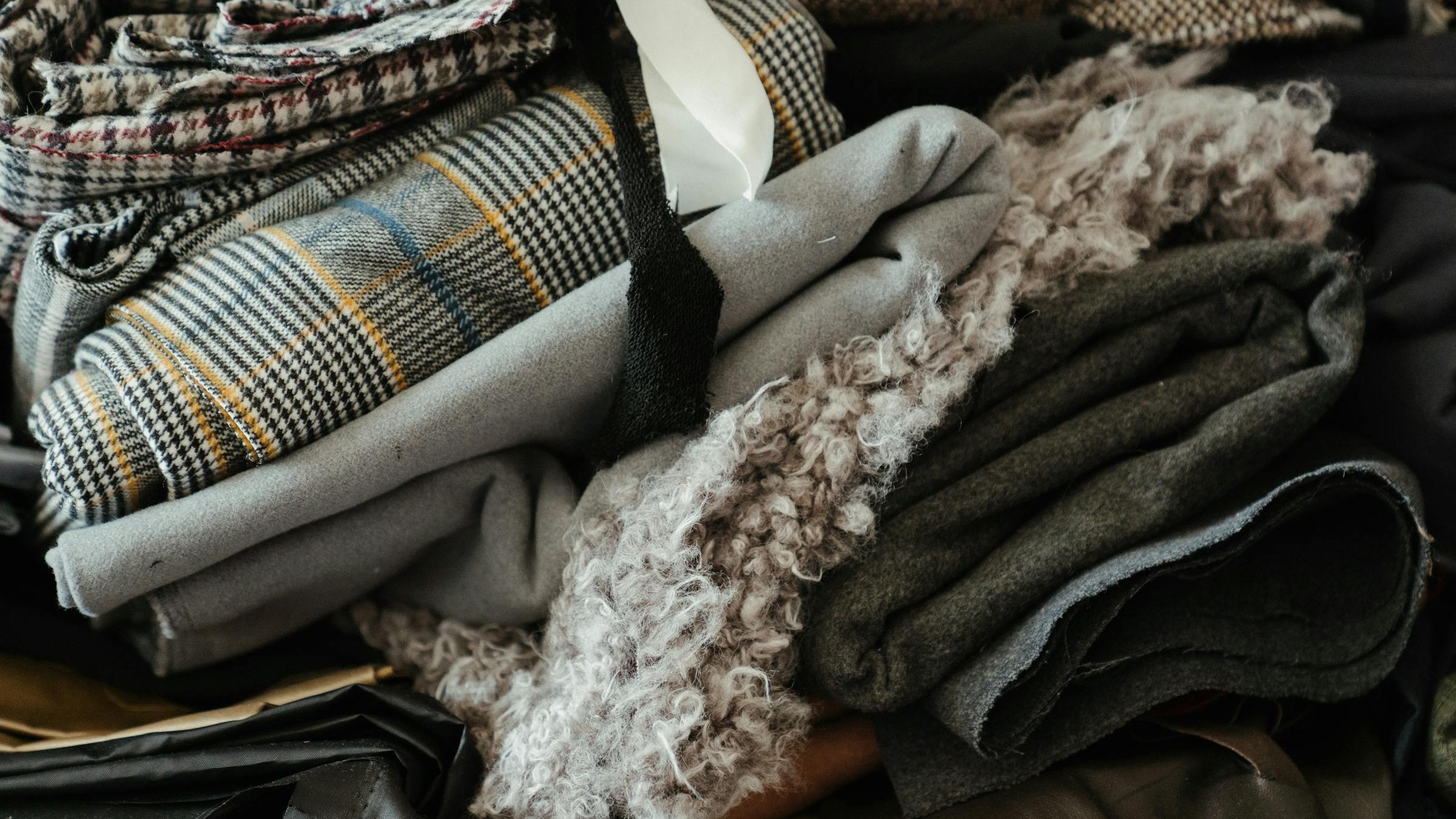
Caccioppoli's story starts outside Naples. In the early 1900s Vincenzo Caccioppoli left the city with his eldest son Raffaele to import cloth into Bogotá, Colombia, trading fabric sourced from Italy and the United States out of a shop called Almacen Italia. Around 1920, once the First World War had ended, the family judged the moment right to come home. They opened a fabric shop in Piazza Nicola Amore in Naples, and by the merchant's own account that address is still the company headquarters today, four generations later.
A merchant, not a mill
Caccioppoli does not weave. It buys finished cloth, mostly from mills in the Biella district of Piedmont, and has it finished with its own selvedge mark before selling it on in cut lengths to tailors. The merchant's own history names Loro Piana, Vitale Barberis Canonico and Zegna among the mills it bought from to supply Naples tailors in the middle of the twentieth century. That is the merchant model in one sentence: the value sits in the selection, the exclusivity of a pattern, and the relationship with a tailor, not in a loom. If you want to check whether a bolt is genuinely theirs, the selvedge marking is the thing to look for, the same test that applies to any merchant cloth. Our guide to verifying mill cloth covers what that check looks like in practice.
What Naples has to do with the cloth
Neapolitan tailoring built its reputation on the opposite of British structure: a soft, almost unpadded shoulder known as spalla camicia, a lighter canvas, and a jacket cut to move with the body in a warm climate rather than hold a rigid line. Caccioppoli's collections lean into cloth that suits that construction: soft-handle cashmere blends, Donegal tweeds and herringbone jacketings meant to drape rather than stand up on their own. That is also where I would stop a client. Put a heavily fused, stiff canvas under a soft Neapolitan cloth and you get neither the structure of a British suit nor the ease of a Naples one, just a jacket fighting itself. If a shop's construction program runs on fused or heavy full-canvas suits, I would not lead with Caccioppoli's softest jacketings. They are wasted there. See our canvas construction guide for how we pair canvas weight to a cloth like this before cutting. Ariston, the other Naples merchant house on our list, works the same city's tailoring tradition from a different angle: linen and printed cloth rather than Caccioppoli's cashmere-blend jacketings.
Two collections a year, not a rolling catalogue
Caccioppoli releases new collections twice a year: one in January for the following summer season, one in September for winter, with a large share of each season's patterns kept exclusive to the house. That rhythm means a specific bunch is not always orderable. If a client falls for a pattern from a book that has since rolled over to the next season, the honest answer is that it may not come back, not that we can have it in two weeks.
One address for a century, and a domain that is not them
The family's own account puts them back in Naples by 1920, trading from Piazza Nicola Amore, and that is still the address today across four generations. I put weight on that kind of continuity when I judge a merchant's claims: a house that has occupied the same street corner since the 1920s has a great deal more to lose from selling mislabeled cloth than a name that changed hands twice in the last decade. It is also why getting the merchant's real website right matters. Search the name and caccioppoli.com is easy to land on, but that domain belongs to an unrelated personal site with no connection to the cloth business, and it would be careless to link a client to it. The merchant's own site, in English, sits at caccioppolinapoli.it instead, and that mismatch is exactly the kind of thing worth checking before you send a buyer anywhere. It is not the only name on our list with this problem. Alumo's obvious domain redirects to an unrelated Canadian company; its real site is a different address entirely.
How ordering actually works
We do not hold Caccioppoli cloth in Shanghai. We order it against a confirmed bunch and length once you approve it, and the merchant's own dispatch time is added on top of our normal 14 to 20 working day build, from the same one-piece minimum as everything else we cut. We buy from Caccioppoli, and from merchants like it, as a customer, never as a dealer or a licensee. Ask us for the bunch reference and selvedge detail before you commit to a client, the same check we would expect a buyer to run on us. See our suit fabric guide for how we think about matching cloth to construction, or get in touch to check availability on a specific pattern.