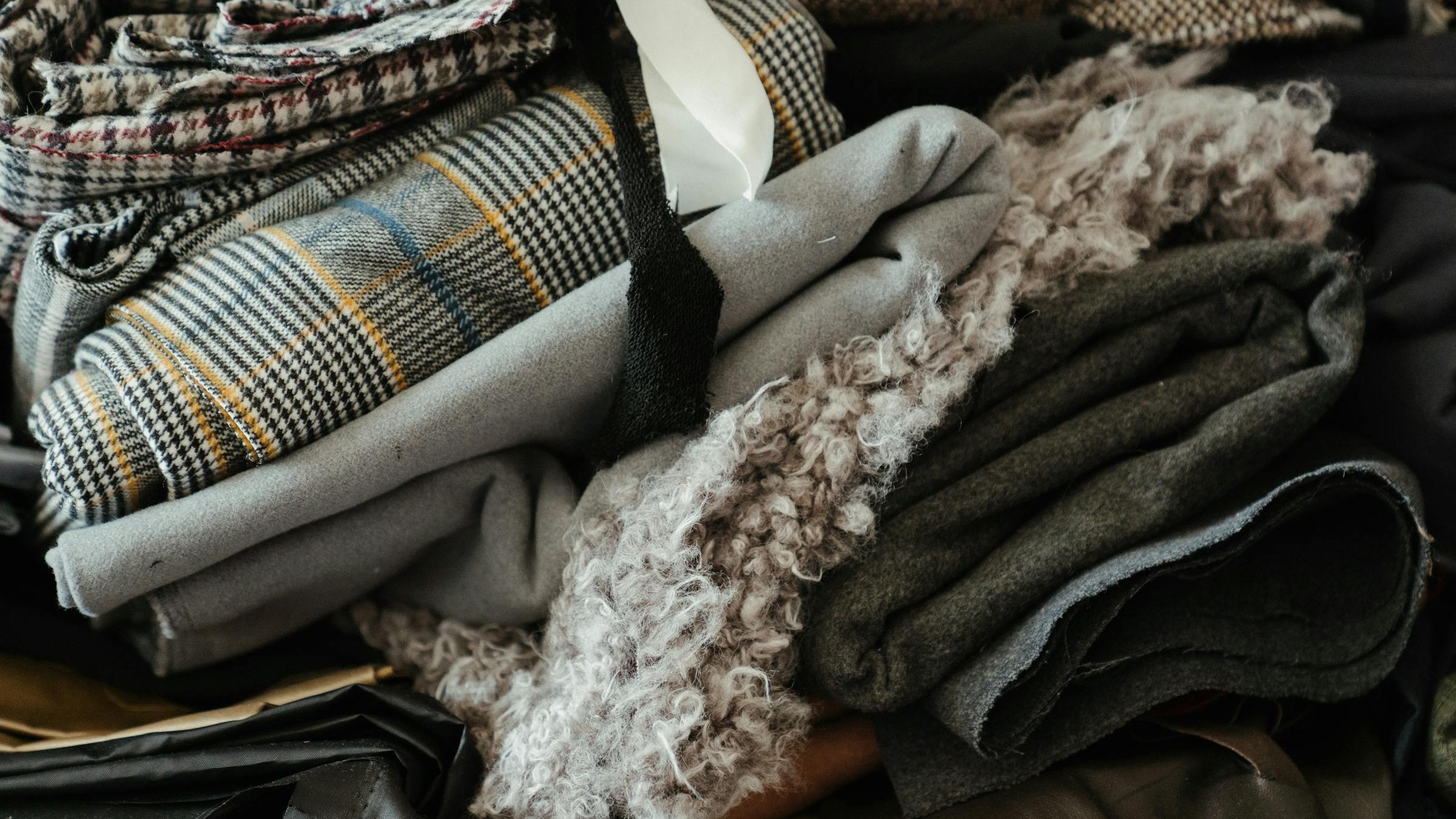
Stylbiella is based in Biella, in Piedmont, in the district that also gives its address to Zegna, Vitale Barberis Canonico, Cerruti and Drago. We hold the first two in Shanghai and order the other two in against a confirmed job. That address is doing a lot of work in how the name gets sold, so before I write anything about the cloth itself, I want to be honest about what a Biella postcode actually promises a buyer, which is less than the marketing around it usually implies.
What the water and the guilds actually built
Biella sits at the foot of the Alps, with the mountain water and pasture that wool processing has always needed. The town's wool workers' and weavers' guilds were already regulated by statute in 1245, which is not a marketing claim, it is documented town history, and it sits roughly six centuries before most of the mill names a buyer would recognise today were founded. A silk factory followed in 1695, and the shift to mechanised wool production, the point where Biella became an industrial centre rather than a guild town, dates to 1835. Other special-order Biella names on our own list, among them Reda, founded in Valle Mosso in 1865, and Guabello, founded in Mongrando in 1815, trace their own roots to this same district.
That depth is why the technical vocabulary of this trade, wale count, twist, finish, still comes out of this one valley more than anywhere else in Italy. It is a real advantage, and it is also not evidence about any single company operating there today. A district builds a vocabulary and a supply of skilled labour. It does not, on its own, build any one company's quality control.
A district is not a guarantee, and 1999 proved it
Around 1999 and 2000, a downturn hit the local wool sector badly enough that a number of Biella mills closed for good, unable to compete with cheaper imported cloth. A famous district does not insure any single name inside it against a bad decade, and it never has. I mention this because Biella gets used in marketing copy the way Italian does everywhere else, as a word meant to end the conversation rather than start it.
Do not take a shared postcode as a substitute for checking the specific company behind it. Biella explains why the skills exist in that valley. It does not tell you whether Stylbiella specifically wove the length in front of you, finished it, or bought it in from a neighbour and put its own ticket on it, and I have not been able to settle that question from what the company publishes about itself.
Two founding stories that do not agree, and what I am doing about that
Search for Stylbiella's history and you will find two different answers. One puts the company's roots at 1663, framing it as one of the valley's oldest names. Another credits a cloth merchant named Piero Perino with starting the business in 1975, after years spent selling Biella wool to tailors and designing for other mills in the district. Stylbiella's own site does not give a date at all. It talks about heritage and an authentic Italian story without attaching a year to either.
I am not going to pick one of those two stories for you. When a company's own founding date will not settle from its own materials, and two outside sources disagree by three hundred years, that disagreement is itself useful information, more useful than either date on its own. For what it is worth, 1663 is also the real, well-documented founding year of Vitale Barberis Canonico, a mill we do hold and cut in Shanghai, which makes me suspect the two stories have simply been crossed somewhere online rather than Stylbiella quietly being the older of the two houses.
The habit worth taking from this is not specific to Stylbiella. Before you repeat a founding date to a client, especially the kind of specific, impressive-sounding one that makes a shop's own story better, check whether the company itself will stand behind it in writing. Our own piece on verifying a mill's cloth claims walks through the same habit in more detail. If the company will not confirm it, leave the number out and sell the cloth on what you can actually see and feel instead.
What Stylbiella says plainly about itself
Away from the founding date, the company's own site is more specific. It describes itself as a fully Italian fabric brand in heritage, taste, proposal and production, and says it works exclusively in the made-to-measure space with what it calls a contemporary approach, aiming for its own version of high price-to-quality performance. The collections associated with the name lean toward wool and cashmere blends, consistent with what wider trade coverage reports about the house, even where I cannot trace every claim back to Stylbiella's own materials.
That is a narrower, more honest set of claims than a heritage Italian mill, and it is also enough to work with. A client asking for something from Biella that is not one of the four bigger names already on our list has a real option here, as long as nobody oversells the story behind it.
Ordering it
We do not hold Stylbiella cloth in Shanghai the way we hold Zegna or Vitale Barberis Canonico. A client's order goes to Stylbiella as a special order against a confirmed job, and the cloth has to arrive before we cut, which adds real time on top of our own schedule. We buy it as a customer, the same as any other atelier, with no trading company in between and no authorised-dealer status or exclusivity attached.
Our suit fabric guide covers weight and construction in general terms once cloth like this is actually in hand. Get in touch if you want a straight answer on whether a specific Stylbiella bunch is realistic for your timeline before you quote a client on it.