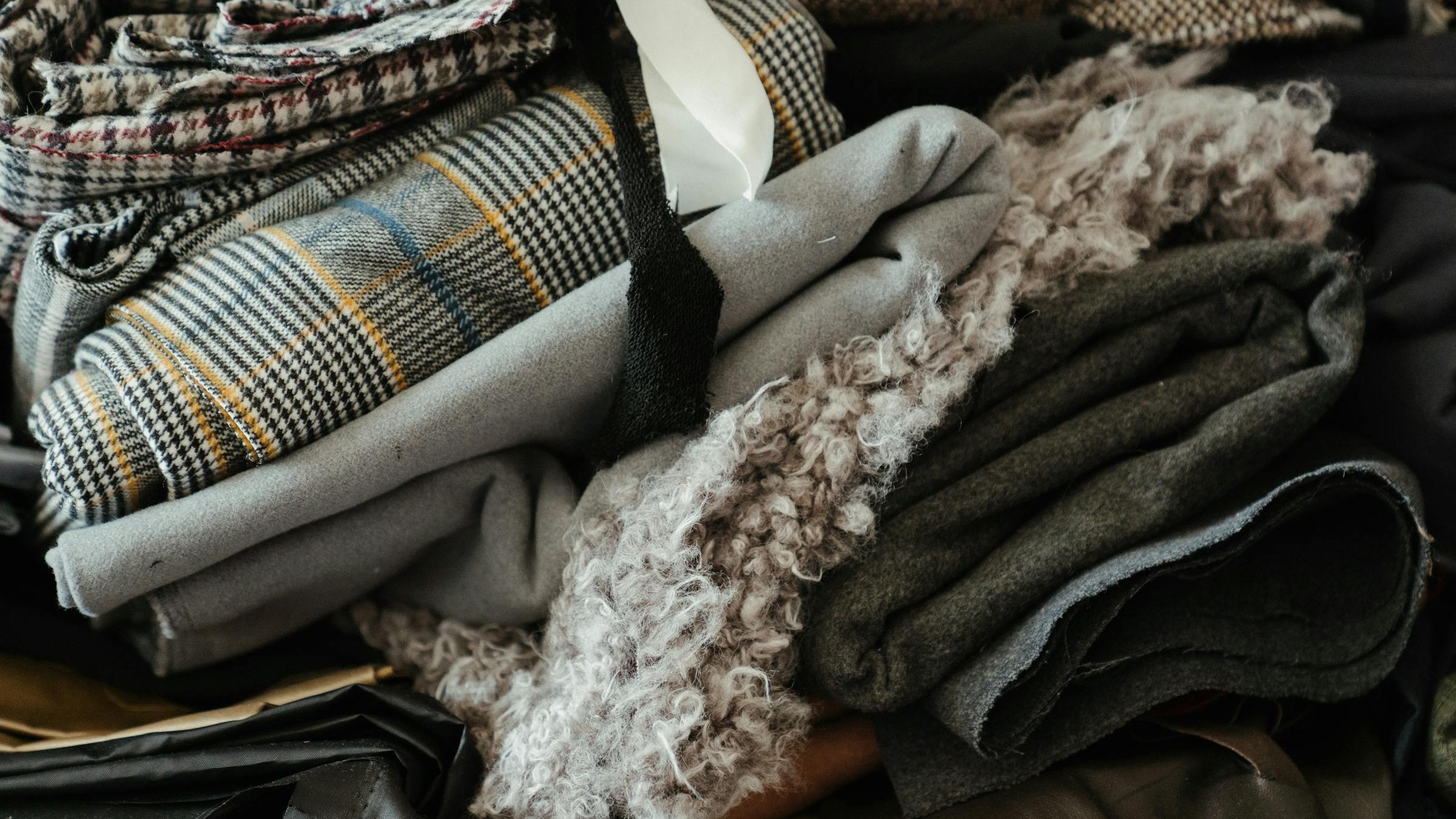
Gladson began as Gladson of England in 1948, though the company's own history page traces its roots to the late 1930s, when Benjamin Solomon and his four brothers sold English fabrics to wholesale manufacturers out of a scatter of warehouses on 4th Avenue, Manhattan. The name comes from Ben's wife's name, Gladys, plus the word son. Almost ninety years on, the company still runs from Manhattan, but it is worth saying plainly what it is and is not. Gladson does not weave. It is a merchant, and that distinction changes how a shop should use it.
What buying from a merchant actually means
On its own site, under a section it calls Excellence, Gladson names the mills it buys from: Vitale Barberis Canonico, Reda, E. Thomas and Carlo Barbera. That list is the merchant's real job. A mill owns looms and weaves what it weaves. A merchant owns relationships with several mills at once and turns them into a single library of numbered sample books, bunches in trade language, so a shop can see VBC sitting next to Carlo Barbera in the same appointment instead of building four separate mill relationships from nothing.
One example makes this concrete. Among Gladson's own collections is a book called Best of Vitale Barberis Canonico, filed under its own volume number like every other book in the library. VBC wove the cloth. Gladson chose it, bound it into its own book, and sells it under a Gladson volume number. Nothing dishonest is happening here, but it means the word Gladson on a swatch tells a buyer who curated the book, not who wove what is inside it.
I would not let a spec sheet say Gladson cloth and stop there. I ask for the bunch name and, where it matters to the client, the mill behind it, the same question I would put to any merchant, because a merchant's name describes a catalogue, not a fibre's origin.
Two networks under one name
Gladson operates as a division of HMS International, the wholesale name the business has traded under since 1974. In 2009, HMS International bought Huddersfield Fine Worsted in England, bringing several historic British mill names under the same ownership: Broadhead & Graves, Josiah France, Learoyd Brothers, and Martin Sons & Company, along with the merchant houses John G Hardy, Hunt & Winterbotham, and J & J Minnis. Gladson's about page also states that its English sister company holds a Royal Warrant tied to the late Queen Elizabeth II. I have not confirmed whether that warrant has been reissued under the current monarch, so I would check the date on it myself before repeating it to a client as a present-tense fact.
What this means in practice: on the Italian side, Gladson buys from VBC, Reda, Carlo Barbera and E. Thomas as a customer, the same as we do. On the English side, its corporate sibling actually owns mills. Those are two different relationships wearing one storefront name, and I would not describe Gladson itself as a weaver just because a company under the same ownership happens to be one.
What is actually in the books
Gladson organises its library by garment type. Suitings run through books such as Alazar, Bedlam, Chelsea IV, Crown Classic, Fresco, Genesis. Jacketing includes Carlo Barbera Jacketings, Portofino, plus a genuine Harris Tweed book. Harris Tweed is a name protected by its own act of parliament and can only be applied to cloth handwoven in the Outer Hebrides from Hebridean-spun yarn, so its presence in a merchant's library is itself a fact worth checking rather than taking on trust. Trousers, formal cloth and linings each get their own separate books, and shirting does too.
Alongside the named-mill books, Gladson also sells cloth under proprietary names of its own: QX2, Fresco, Genesis, Bedlam, Bamboo, Flash. The site describes each as unique to Gladson. I take that claim for what it actually says: a statement about distribution, not a statement about which mill wove the cloth. Gladson does not publish that part on the collections page, and neither would most merchants in its position.
Ordering it under your own label
We do not hold Gladson cloth in our Shanghai atelier. It sits on Gladson's shelves in New York, not ours, so a shop that needs something off the floor this month should look at what we already stock rather than open a Gladson order against a deadline. For a client who can wait, we order the named book in against a confirmed order, then cut and make under your own label from a one-piece minimum, in roughly 14 to 20 working days once the cloth is in our hands in Shanghai, with whatever time Gladson itself needs to ship added on top of that.
We buy from Gladson as a customer, in the same way a shop buys from us. We are not an authorised dealer, a licensee or a representative of Gladson or of the mills behind its books, and we do not present ourselves as one.
Related: suit fabric guide · how to verify mill cloth is real · suppliers