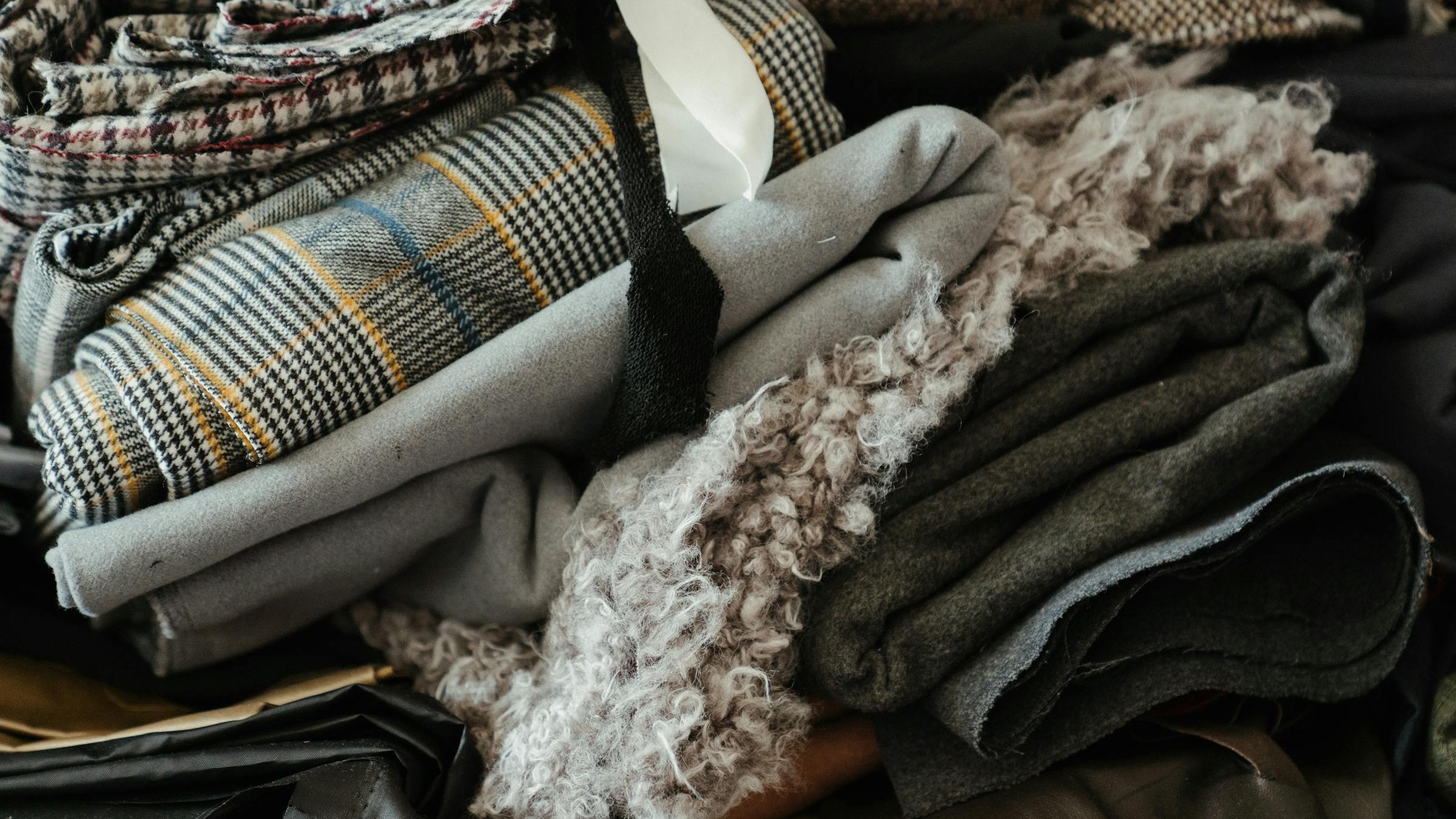
Huddersfield Fine Worsteds is not one mill with one story. The name was put together in 1976, when a set of historic Yorkshire cloth houses merged under a single catalogue, and the oldest of those houses had already been weaving for more than four centuries by the time that merger happened. For a buyer this matters more than the merger date itself. Ask which house a given bunch actually comes from, because HFW covers several distinct traditions wearing one label, and the answer changes what the cloth is actually good for.
A merged name, several older houses
The 1976 catalogue brought together names that had each run their own mills and merchant houses for generations: Hardy Minnis, a Scottish cloth merchant founded in 1890; Hunt & Winterbotham, whose original site at Cam Mills in Dursley, Gloucestershire, has recorded cloth production since 1532, with the company itself registered in 1887; and Martin Sons & Co, whose heritage runs back to the 1840s. Each kept its own bunch identity once it moved under the HFW name.
That is the practical point for a buyer. When I quote HFW cloth to a shop, I name the house inside the bunch reference, Hardy Minnis or otherwise, not just HFW, because that is the detail a tailor will actually ask about once the swatch is on the table. Asking only whether a cloth is HFW gets you a true but nearly useless answer, the same trap as asking a supplier whether their cloth is Italian instead of asking for the bunch number. The same test applies here: a merged name you cannot subdivide is a weaker claim than a bunch reference you can check.
Alsport, and the Royal Warrant behind it
Hardy Minnis's best-known cloth is Alsport, a thornproof weave built for field and shooting wear. In 1929 the Duke of York, later King George VI, chose a Hardy Minnis cloth for the Brigade of Guards regimental tweed, and Hardy Minnis has held a Royal Warrant to supply cloth to the Royal Household since the 1930s.
None of that makes Alsport a business cloth. It runs 16 to 22oz, 500 to 700 grams, heavy enough to shrug off brambles and stand up to a wet moor. I would not put a client's office suit in it. Wear 500 grams of thornproof wool indoors on a mild day and he will have his jacket off before the second meeting. Alsport earns its reputation outdoors, in a country jacket or a heritage commission, and it was never built for a desk.
What the range says next to Dugdale's
HFW's current catalogue runs to around 188 bunches, spanning tweed-weight country cloths down to lighter suiting. That breadth is the direct result of the merger: several older houses, several old specialities, folded into one book. It is also the real difference between the two Huddersfield merchants on our supplier list. Dugdale Bros has stayed one family's line since 1896 and built its name around a single heavy signature cloth. HFW is several older houses under one merged roof, so the range is wider and the story depends on which predecessor's bunch is actually in your hand. Neither approach is better; they answer different questions, and I tell shops that up front rather than letting them assume Huddersfield means one thing.
A third name on our list, Scabal, also weaves in Huddersfield, at a mill it has owned since 1973, though the house itself is run out of Brussels rather than Yorkshire.
Special order, not shelf stock
We do not hold HFW cloth in Shanghai. If a shop needs a finished garment inside a month, this is not the trip to spend on it. We hold Zegna and VBC and can cut those the week an order is confirmed; HFW goes through a special order, with the mill's own lead time added on top of ours, before a metre is cut. I will not tell a client we hold something we do not. Special order means special order, not a formality we skip past.
We buy HFW cloth as a customer of the merchant, the same way any tailoring house does. We are not an authorised dealer, a licensee, or a representative of Huddersfield Fine Worsteds. The cloth is British; the cutting and sewing happen in our own atelier in Shanghai, same as everything else we make. We call the finished garment made to measure, not bespoke, and we would rather lose the fancier word than misuse it.
What to specify it with
The lighter end of HFW's range takes a half canvas construction well, the same as most worsted suiting we cut. The heavier country cloths, Alsport included, want a fuller canvas and minimal fusing: a stiff interlining fights a heavy weave instead of supporting it, and the two together turn a jacket into a board. If you are choosing construction alongside the cloth, our guide to canvas and fused builds covers the trade-off in more detail.
Related: suppliers directory · suit fabric guide · what to check on your first sample