Nota del diario
Cómo verificar que un fabricante de trajes usa de verdad tejido de fábrica italiana
Pide tres cosas por escrito antes de hacer el pedido: la referencia del muestrario, el peso en gramos por metro y la referencia de la fábrica en tus documentos. Un control que cualquier comprador puede hacer en un correo, también con nosotros.
Se verifica pidiendo tres cosas por escrito, antes de que se mueva el dinero: el nombre y el número de referencia del muestrario, la composición y el peso en gramos por metro, y la confirmación de que la referencia de la fábrica aparecerá en tus documentos de pedido. Un fabricante que trabaja con muestrarios reales responde a las tres en un solo correo, normalmente en tres líneas. Un fabricante que revende tejido sin marca responde con un párrafo sobre la herencia italiana. Esa diferencia es toda la prueba, y funciona con cualquier proveedor, nosotros incluidos.
El control en tres pasos
- Pregunta qué muestrario, y cuál es la referencia. No «¿usáis tejido italiano?» sino «¿qué muestrario, qué referencia?». Una fábrica vende libros de muestras numerados, no un país. Una respuesta con un número se puede comprobar con la fábrica; una respuesta con un adjetivo, no.
- Pide la composición y el peso en gramos por metro. El peso es la cifra que decide cómo se comporta el traje terminado, y es la que un proveedor que lee un muestrario real tiene delante. Sin peso, no hay muestrario.
- Pide la referencia de la fábrica en tus documentos. Antes de hacer el pedido, consigue la confirmación escrita de que el muestrario y la referencia se imprimirán en la confirmación de pedido y en la factura. Eso compromete al proveedor, por adelantado, con una afirmación concreta en un papel concreto.
Para aplicar este control a nosotros: nuestro directorio de proveedores recoge las 33 tejedurías y comerciantes a los que compramos, y cada página indica si tenemos ese tejido en stock en Shanghái o lo pedimos. Dos casas están en la estantería, Zegna y Vitale Barberis Canonico. El resto, Loro Piana y Holland & Sherry entre ellos, se pide contra pedido confirmado, y te decimos cuál es cuál antes de que le pases un presupuesto a tu cliente.
El resto de este artículo explica por qué funcionan esas tres preguntas, y qué hacer con las respuestas.
Lo que «tejido italiano» te dice
Es la segunda semana de la temporada y llevo seis horas con tejido en las manos. Hacia la cuarta cita, un comprador de Amberes me hace la pregunta que oigo cada temporada, siempre en voz un poco baja, como si fuera de mala educación: ¿cómo sé que este es el tejido que dices que es?
Es la única pregunta de la sala que importa, y casi nadie la hace en voz alta.
Todos los proveedores que conozcas te dirán que usan tejido italiano. La mayoría dice la verdad en el sentido más estrecho posible, y todos saben que no puedes comprobarlo.
Ese es todo el problema. Una afirmación que no se puede comprobar no aporta información. No cuesta nada hacerla, así que todos la hacen, así que no te dice nada sobre a quién merece la pena hacerle un pedido.
Compárala con otra frase: este muestrario, de esta fábrica, este número de referencia, este peso, y la referencia impresa en tus documentos de pedido. Esa se puede verificar, y menos gente la dice, exactamente por esa razón.
Así que la prueba tiene menos que ver con el tejido que con la disposición del proveedor a ser concreto por escrito. Todo lo que sigue es una forma de averiguarlo.
Paso uno: pide el muestrario, no el país
Una fábrica no vende «lana italiana». Vende muestrarios: libros de muestras numerados, publicados por temporada, cada uno con un conjunto definido de tejidos, con composiciones y pesos declarados.
Un estambre Super 110's en sarga de 280 gramos, de un muestrario con nombre, es algo que existe en el mundo y que se puede señalar. «Lana italiana» es una categoría con una bandera colgada.
Así que en lugar de ¿usáis tejido italiano?, pregunta:
¿Qué muestrario, y cuál es la referencia?
Cuando un proveedor responde a una pregunta sobre tejido con un adjetivo, has aprendido algo. Cuando responde con un número, has aprendido algo bastante mejor.
Fíjate en lo que hace esta pregunta incluso cuando la respuesta decepciona. Un proveedor que dice compramos tejido sin marca tejido según nuestra especificación, aquí tienes la composición y el peso te ha dicho la verdad y puede ser un socio excelente. Del que hay que alejarse es del que sigue diciendo «italiano».
Paso dos: composición y peso, en gramos
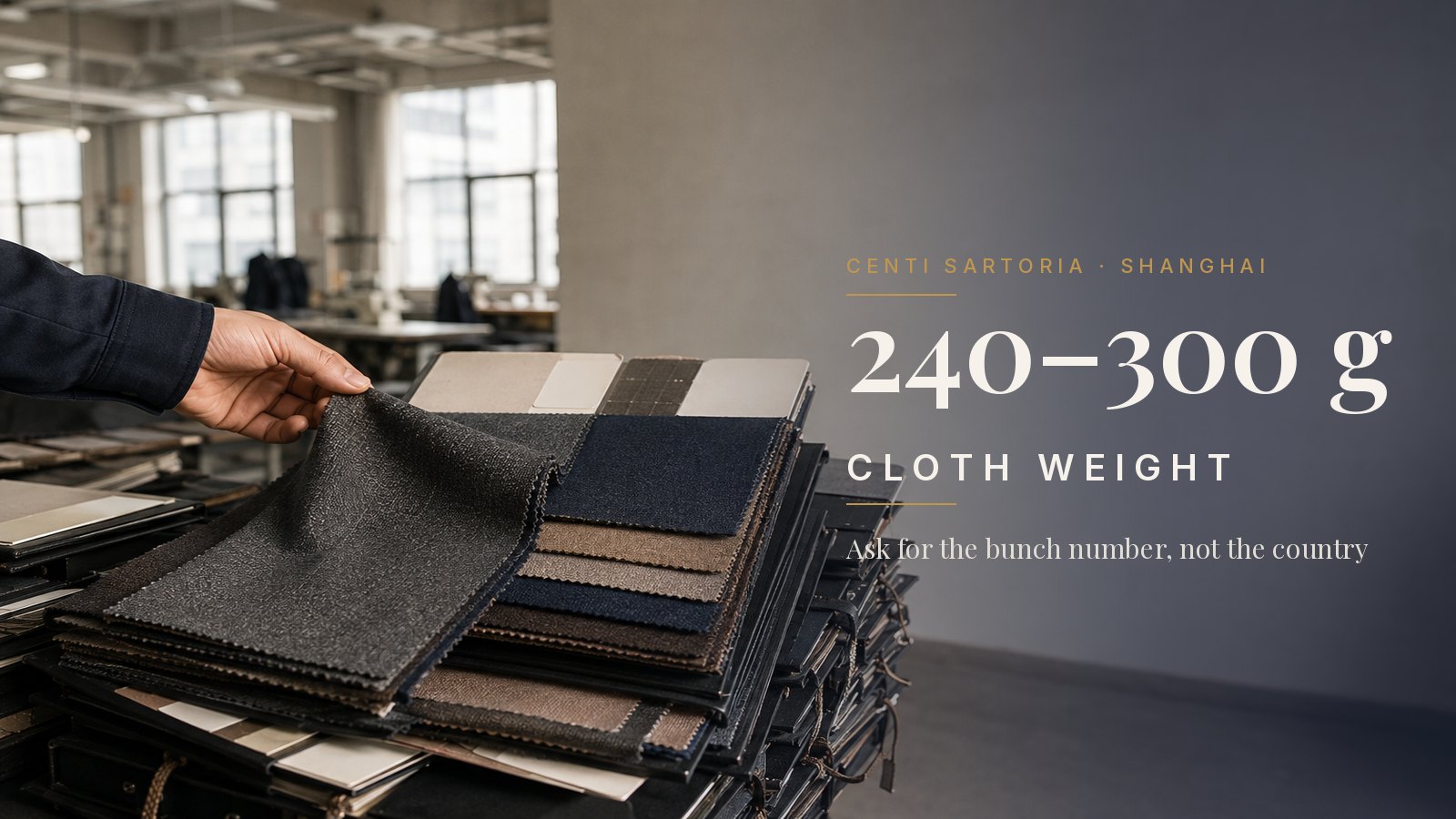
El peso es la cifra que los aficionados nunca piden y la que decide la mayor parte de cómo se comporta el traje terminado. Por debajo de 240 g es peso de verano y se arrugará. De 240 a 300 g es donde está la mayoría de los trajes de negocios. Por encima de 340 g es otoño e invierno. Un proveedor que no puede darte un peso no está leyendo un muestrario.
La composición importa por la misma razón. Un muestrario la declara con exactitud, hasta el porcentaje de seda o mohair de una mezcla. Un revendedor la declara de forma aproximada, porque lee una etiqueta y no una ficha de fábrica.
Paso tres: la referencia en tus documentos
Pídelo en un solo correo y no por teléfono, porque quieres la respuesta en una forma que siga existiendo dentro de seis meses.
Lo tercero es la confirmación de que la referencia de la fábrica aparecerá en tus documentos de pedido. Esto es lo que separa el campo, porque compromete al proveedor, por adelantado, con una afirmación concreta en un papel concreto.
Ninguna de las tres cosas es difícil para un proveedor que hace lo que dice, y las tres son incómodas para uno que no. Esa asimetría es todo el valor de preguntar.
La prueba del orillo
Muchas fábricas tejen su nombre en el orillo, el borde acabado del rollo. Pídelo en el paquete con tu muestra.
Quiero ser claro sobre cuánto demuestra esto por sí solo, que es menos de lo que la gente piensa. El orillo se puede recortar. Una fotografía de un orillo demuestra que un orillo existe en algún sitio, y cualquiera decidido a engañarte puede sortear este control concreto sin mucho esfuerzo.
Aun así se gana su sitio, por la misma razón que todo lo demás aquí: es concreto, fácil para un proveedor honesto y molesto para uno deshonesto. Estás observando cómo se comporta alguien cuando se le pide precisión, que es un ejercicio distinto de construir un caso para un tribunal.
Un presupuesto con especificación fija
Esta es la prueba que yo haría, y cuesta unos pocos correos.
Elige una prenda y fíjala por completo. Un dos piezas de media entretela, un muestrario con nombre, un peso declarado, el mismo forro, los mismos botones, todo igual. Envía esa especificación idéntica a cada proveedor de tu lista y luego lee las respuestas por su forma, no por su precio.
El proveedor útil vuelve con una respuesta línea a línea: tejido, confección, fornituras, tu etiqueta, embalaje, y transporte y aranceles indicados por separado. La palabra ex-works o FOB aparece en algún sitio y explica cuál de las dos quiere decir. Del que hay que tener cuidado es del que vuelve con una sola cifra y palabras cálidas.
Descubrirás, al hacerlo, que los presupuestos nunca fueron comparables desde el principio. Dos proveedores que presupuestan la misma prenda con Incoterms distintos pueden diferir en un tercio antes de que nadie haya sido deshonesto en nada. Esta es la forma más habitual en que un proveedor barato resulta no serlo, y solo se ve fijando la prenda y leyendo la estructura de la respuesta.
Lo que ponemos por escrito
Prefiero aplicarnos todo esto a nosotros antes que pedirte que me creas.
Tenemos cuenta con 33 tejedurías y comerciantes, y cada uno tiene una página en nuestro directorio de proveedores que dice si el tejido está en stock en Shanghái o se pide. En stock significa que podemos empezar a cortar: 162 referencias de Zegna entre Trofeo y Traveller, y 40 referencias de Vitale Barberis Canonico del libro Four Seasons, en la estantería ahora mismo. Pedido significa que el plazo propio de la fábrica se suma al nuestro, y te lo decimos antes de que presupuestes a un cliente. Para todo lo que presupuestamos desde una fábrica, recibes el muestrario y la referencia antes de hacer el pedido.
Nuestra gama propia es un caso distinto: está en nuestro edificio y no en una fábrica, así que no hay un número de muestrario externo que entregar, y la composición y el peso de la tarjeta de muestra son nuestros para publicarlos, no para copiarlos del libro de otro. Cuando una línea de esa gama lleva una composición en la tarjeta, es una sola fibra, sin mezclas no declaradas. El peso de todo lo que tenemos, gama propia y tejido de fábrica juntos, va de 98 a 440 gramos, lo que por sí solo basta para explicar por qué dos trajes que técnicamente son de lana pueden comportarse de forma totalmente distinta en una tarde calurosa. Pide muestras y recibirás el orillo donde la fábrica lo teje.
Luego está lo que media industria difumina, y nosotros no.
El tejido es europeo o australiano, según la línea. Las prendas se cortan y cosen en Shanghái, en nuestro propio taller, por nuestros propios sastres. El origen son en realidad tres preguntas, y las respondemos por separado en lugar de fundirlas en una sola palabra halagadora: dónde creció la fibra, dónde se acabó el tejido, dónde se hizo la prenda.
Soy consciente de que decir esto nos cuesta algo con cierto tipo de comprador. Merece la pena, y no por virtud. Un proveedor que es vago sobre el origen para ganar tu pedido te ha mostrado exactamente cómo tratará la siguiente pregunta incómoda, una vez que tenga tu anticipo.
La versión corta
Si te llevas una sola cosa, que sea la sustitución: deja de preguntar de dónde es el tejido y empieza a preguntar qué muestrario es, cuánto pesa y si la referencia va en tus documentos.
Los proveedores que merecen tu dinero responderán en un correo. El resto te enviará un párrafo sobre la herencia italiana, y tendrás tu respuesta de todos modos.
Si quieres hacernos esa prueba, dinos la prenda y la presupuestaremos como es debido, con el muestrario y el peso en la página. El directorio de proveedores recoge cada fábrica a la que compramos y si la tenemos en stock. Nuestra guía de tejidos para traje explica qué significan las especificaciones, y si estás en una fase anterior, la guía para crear una marca de ropa tiene las otras nueve preguntas que merece la pena hacerle a una fábrica antes de enviar dinero.
Preguntas frecuentes
¿Cómo verifico que un fabricante de trajes usa de verdad tejido de fábrica italiana?
Pide tres cosas por escrito antes de hacer el pedido: el nombre y el número de referencia del muestrario, la composición y el peso en gramos por metro, y la confirmación de que la referencia de la fábrica aparecerá en tus documentos de pedido. Un proveedor que trabaja con muestrarios reales de fábrica responde a las tres en un solo correo. Un proveedor que revende tejido sin marca responde con adjetivos sobre calidad y país.
¿Qué es un muestrario, y por qué importa más que el país?
Un muestrario es el libro de muestras numerado que una fábrica publica cada temporada, con un conjunto concreto de tejidos, sus composiciones y sus pesos. Es algo que existe y que se puede señalar, mientras que «tejido italiano» no cuesta nada decirlo y no se puede comprobar. Cuando pides una referencia de muestrario estás pidiendo la única parte de la afirmación que es falsable.
¿El orillo demuestra algo de verdad?
Por sí solo, no. Muchas fábricas tejen su nombre en el orillo, pero el orillo se puede cortar y una fotografía demuestra poco. Es útil como uno de tres controles, junto con la referencia del muestrario en tus documentos y un presupuesto con especificación idéntica. Lo que importa más que cualquier prueba aislada es si el proveedor está dispuesto a ser concreto por escrito.
¿A qué fábricas compra realmente Centi Sartoria?
A 33 tejedurías y comerciantes, cada uno con su propia página en nuestro directorio de proveedores, que indica si tenemos el tejido en stock en Shanghái o lo pedimos. Dos casas están en stock: Zegna, 162 referencias entre Trofeo y Traveller, y Vitale Barberis Canonico, 40 referencias del libro Four Seasons. Todo lo demás, Loro Piana y Holland & Sherry incluidos, se pide contra pedido confirmado.
¿Dónde se fabrican los trajes de Centi Sartoria?
El tejido es europeo o australiano según la línea. Las prendas se cortan y cosen en nuestro propio taller en Shanghái, por nuestros propios sastres, y lo decimos en cada página en lugar de dejar que el origen del tejido sugiera el de la prenda. Un proveedor que difumina el origen para ganar un pedido difuminará otras cosas una vez que lo tenga.